
A glittering set of gold jewelry, buried or lost more than 1,100 years ago, has emerged from the sands of central Saudi Arabia, offering a rare glimpse into wealth, movement, and craftsmanship in the Abbasid world.
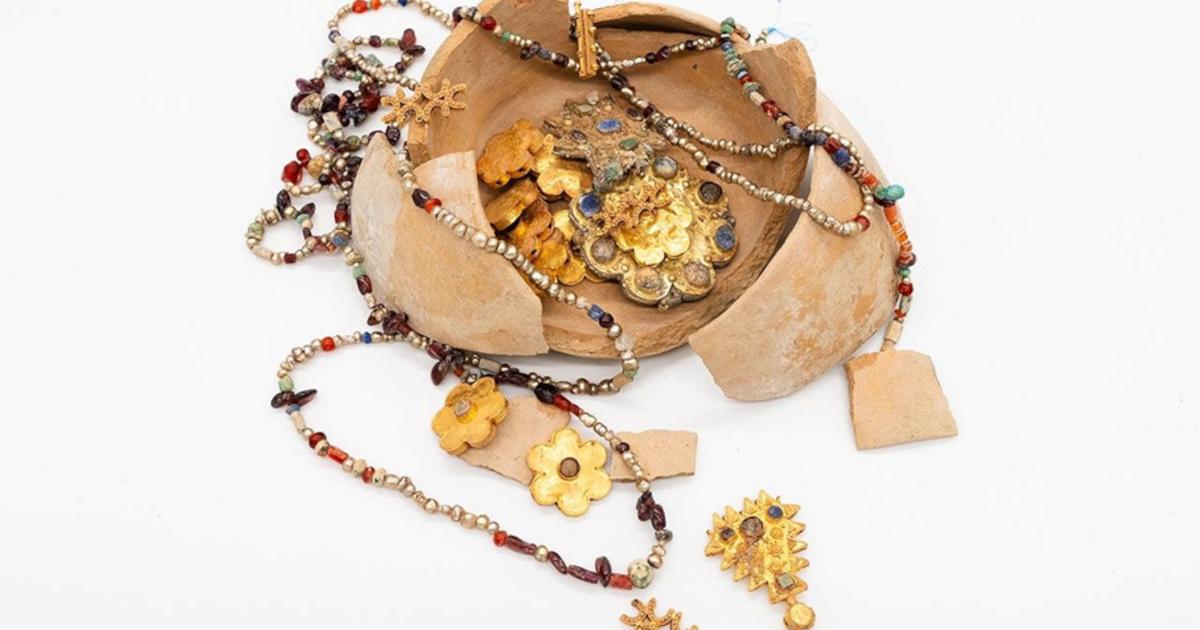
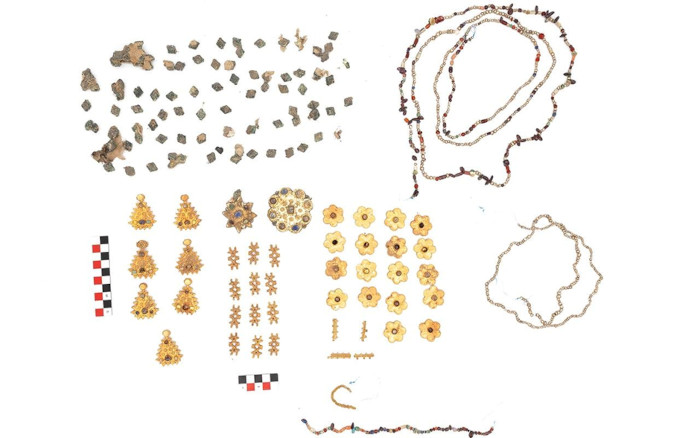
Archaeologists working at the Dariyah archaeological site in the Al-Qassim region have uncovered a collection of 100 gold jewelry pieces dating to the Abbasid period. The discovery was announced after the Saudi Heritage Commission completed its fourth consecutive season of excavation and survey at the site.
The pieces appear to have belonged to a single private adornment set. That detail makes the find especially striking. This was not a scatter of isolated ornaments. It was likely a carefully assembled group of personal jewelry, perhaps worn by an elite woman, a wealthy traveler, a merchant family member, or someone connected to the busy pilgrimage and trade routes that crossed the Arabian Peninsula.
A private treasure from the Abbasid age
The Abbasid era, which began in the 8th century, was one of the most dynamic periods in early Islamic history. From Baghdad and Basra to the pilgrimage roads of Arabia, the caliphate linked distant regions through trade, scholarship, religion, and luxury production.
At Dariyah, that vast world now appears in miniature through gold.
The collection includes pendants, decorated discs, gold spacers, and beads set with colored stones. Some ornaments preserve floral designs arranged within geometric frames, a visual language closely associated with Islamic art. One large disc-shaped piece stands out for its balanced arrangement of colored stones around a central motif, suggesting both technical skill and refined aesthetic taste.
These were not ordinary objects. The jewelry reflects a level of wealth and craftsmanship far beyond everyday domestic use. According to the Saudi Heritage Commission, the pieces were made using advanced goldsmithing techniques, including hammering thin gold sheets, pressing decorative patterns into the surface, and setting stones into prepared gold frames.
The precision matters. It points to trained artisans, access to valuable materials, and a social world in which jewelry worked as more than decoration. Gold could mark rank, family wealth, mobility, and cultural identity.
Gold on the road to Mecca
Dariyah’s location helps explain why such a collection may have reached this part of Arabia. The site lies southwest of Al-Qassim, among valleys and mountain routes that once formed part of wider movement corridors across the peninsula.
The area was linked to the Basran Hajj route, used by pilgrims traveling from Iraq toward Mecca. These roads were religious arteries, but they were also economic ones. Pilgrims, merchants, scholars, officials, goods, stories, and artistic styles moved along them.
That makes the jewelry more than a beautiful treasure. It may be evidence of a settlement connected to the pulse of Abbasid movement.
A traveler could have brought the set from another region. A local elite family may have acquired it through trade. It might have been hidden during a moment of danger and never recovered. For now, the owner remains unknown, which gives the discovery much of its force. Someone once valued these pieces enough to keep them together. Then, for reasons still unclear, they vanished from use.
A settlement, not just a hoard
The wider excavation at Dariyah shows that the gold was not found in an empty landscape. Archaeologists also uncovered stone building foundations, mudbrick walls, plastered rooms, hearths, pottery vessels, glass fragments, soapstone objects, and metal tools.
Together, these finds point to a settled community active during the late ninth century AD. Dariyah was not merely a stop in the desert or a passing campsite. It appears to have been part of a lived landscape shaped by trade, pilgrimage, and regional exchange.
That context changes the meaning of the gold. Without the settlement remains, the jewelry would be an impressive luxury hoard. With them, it becomes a window into daily life along one of the early Islamic world’s most important movement networks.
Dr. Jasir Suliman Alherbish, CEO of the Saudi Heritage Commission, said the discovery reflects the richness of Saudi Arabia’s cultural heritage and the Kingdom’s historical role as a crossroads of trade routes and cultural exchange.
The Dariyah gold collection now adds a vivid new chapter to the archaeology of early Islamic Arabia. It reminds us that the great routes of the Abbasid world were not empty lines between cities. They were living corridors where faith, commerce, wealth, and craftsmanship met.
More than 1,100 years later, a private treasure from that world has returned to light.
Cover Image Credit: Saudi Arabia Ministry of Culture