

On a floodplain in Ethiopia’s Afar Rift, early Homo sapiens left behind stone tools, animal bones and human remains that open an unusually close window onto life and death 100,000 years ago.
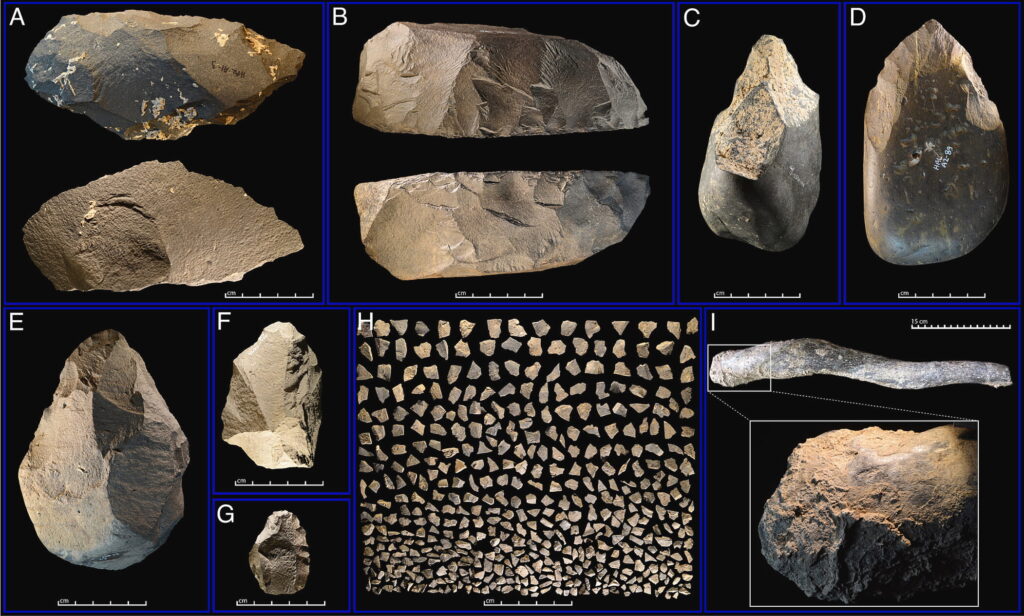
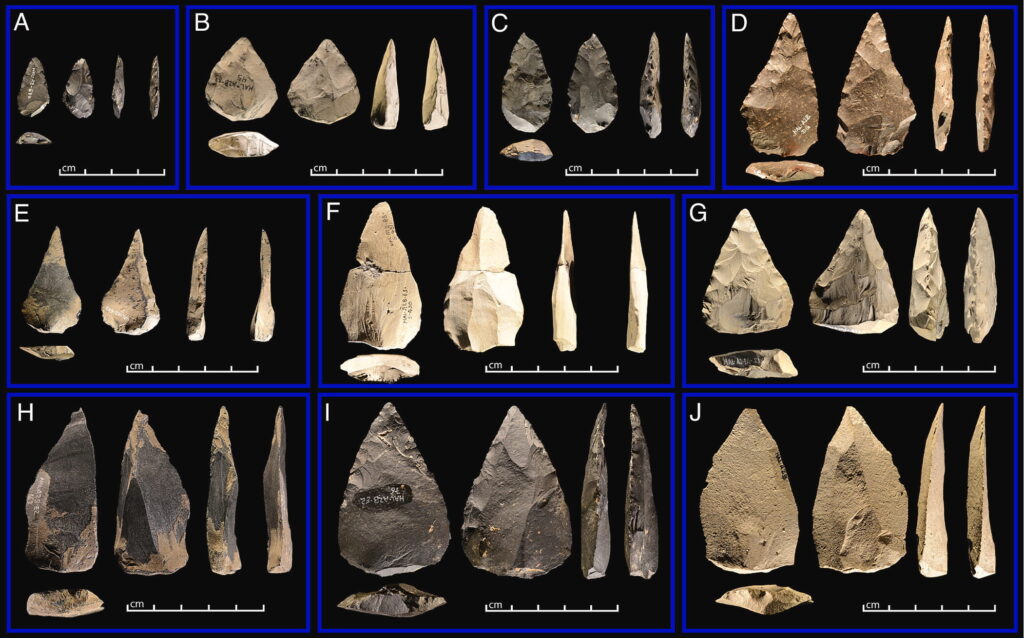
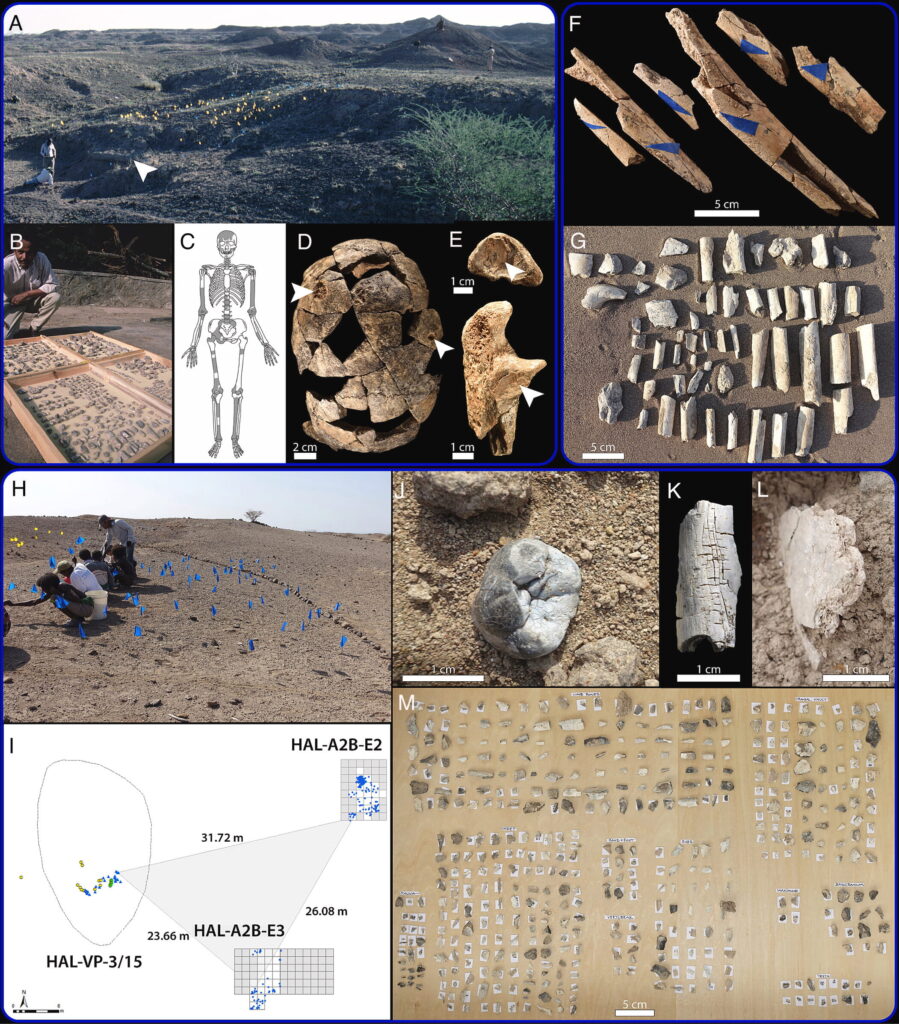
A new study published in Proceedings of the National Academy of Sciences reports discoveries from the Halibee Member of the Dawaitoli Formation, part of the long-running Middle Awash research area in northeastern Ethiopia. The finds include thousands of Middle Stone Age stone tools, more than 3,000 animal fossils and partial remains of three Homo sapiens individuals.
Among them are human bones that had been exposed to high temperatures. Researchers say the burning may indicate cremation, raising the possibility that the practice of treating the dead with fire began far earlier than previously known.
The evidence remains cautious, but its implications are striking. If the burned remains reflect intentional treatment of the body, they could represent the earliest known trace of human cremation.
A rare open-air record from the Middle Stone Age
Many early human sites are known from caves, where deposits can be narrow, compressed or shaped by repeated occupation over long periods. Halibee is different. It preserves an open-air landscape where artifacts and fossils remained in unusually stable positions.
That makes the site valuable for more than its age. Researchers can study how tools, bones and sediments relate to one another across a wider area, rather than trying to reconstruct human activity from isolated cave layers.
The site dates to around 100,000 years ago, a period when Homo sapiens communities in Africa were already showing flexible behavior, mobility and technological skill. At Halibee, that picture becomes more physical. It is not just a story of tools. It is a scene of people moving through a living landscape shaped by water, animals and seasonal change.
Three human remains, three after-death stories
The most compelling part of the study is the human fossil record. The three partial Homo sapiens skeletons do not appear to share the same postmortem history.
One individual seems to have been rapidly buried by accumulating sediment. Another shows damage linked to carnivores. A third preserves evidence of intense burning.
This contrast gives the discovery its force. It suggests that death on this ancient floodplain did not follow a single pattern. Bodies could be buried quickly by natural processes, disturbed by predators or exposed to fire.
The burned bones are the most provocative evidence. High-temperature burning is not easy to explain, but the researchers avoid presenting it as proof of ritual cremation. Natural fires, accidental burning or other processes remain possible. Still, the possibility of intentional cremation cannot be dismissed.
For archaeology, that distinction matters. Cremation is not simply burning. It implies a deliberate act, and possibly a cultural response to death. If that interpretation is confirmed, the Afar Rift remains would move one of humanity’s oldest mortuary behaviors deep into the Middle Stone Age.
A floodplain that drew people back
The landscape itself helps explain why early humans returned to Halibee. Geological and fossil evidence points to a seasonally flooded plain connected to the ancient Awash River. In an otherwise dry region, these water cycles created a more favorable setting with shade, raw materials and animal life.
The stone tools suggest repeated short visits rather than permanent settlement. People came to the floodplain, made or used tools, moved through the area and returned when conditions were favorable.
Ferhat Kaya of the University of Oulu, one of the researchers involved in the project, said the findings show how strongly local water systems shaped early human life. In this case, the rhythms of the Awash River may have mattered more than broad global climate shifts.
That detail gives the site a sharper human dimension. These groups were not passively living under climate pressure. They were reading a changing landscape and using it when it offered water, shelter and resources.
Obsidian hints at wider movement
Most of the stone tools were made from local volcanic rocks, especially basalt. But researchers also identified rare obsidian artifacts. Obsidian is volcanic glass, sharp and useful, but it was not common in the immediate area.
Its presence suggests that early Homo sapiens either moved across larger distances or had access to material from beyond the local floodplain. Even in small quantities, obsidian can point to wider mobility and more complex knowledge of the landscape.
The animal fossils deepen that picture. The assemblage includes monkeys, rodents and large mammals, showing that Halibee once supported a diverse ecosystem. The presence of tree-associated monkey species suggests a wooded environment, not a barren desert plain.
For early humans, this would have been a place of opportunity and danger. Water attracted animals. Animals attracted predators. Humans entered that world with tools, movement strategies and, perhaps, emerging ways of handling the dead.
A difficult question from 100,000 years ago
The discovery does not settle the origins of cremation. It opens the question in a new and older setting.
That is what makes the Halibee evidence powerful. The site does not offer a simple claim. It preserves a rare combination of human fossils, tools, animal remains and ancient floodplain sediments in one place. Together, they show early Homo sapiens living in a changing environment and leaving behind traces of behavior that still resist easy explanation.
The burned bones may prove to be the earliest known sign of human cremation. Or they may reflect another encounter between fire, landscape and the dead.
Either way, they bring us closer to a moment in deep human history when death left marks that still speak. Not clearly. Not completely. But enough to suggest that 100,000 years ago, early humans in Ethiopia were already part of a world where bodies, fire and memory may have begun to meet.
Cover Image: Surveying, sieving, and fossil recovery at the research site Afar Rift in Ethiopia. Credit: Ferhat Kaya
Yonas Beyene et al, Halibee member archaeology: Middle Stone Age environment, technology, and postmortem modifications, Proceedings of the National Academy of Sciences (2026). DOI: 10.1073/pnas.2534441123