
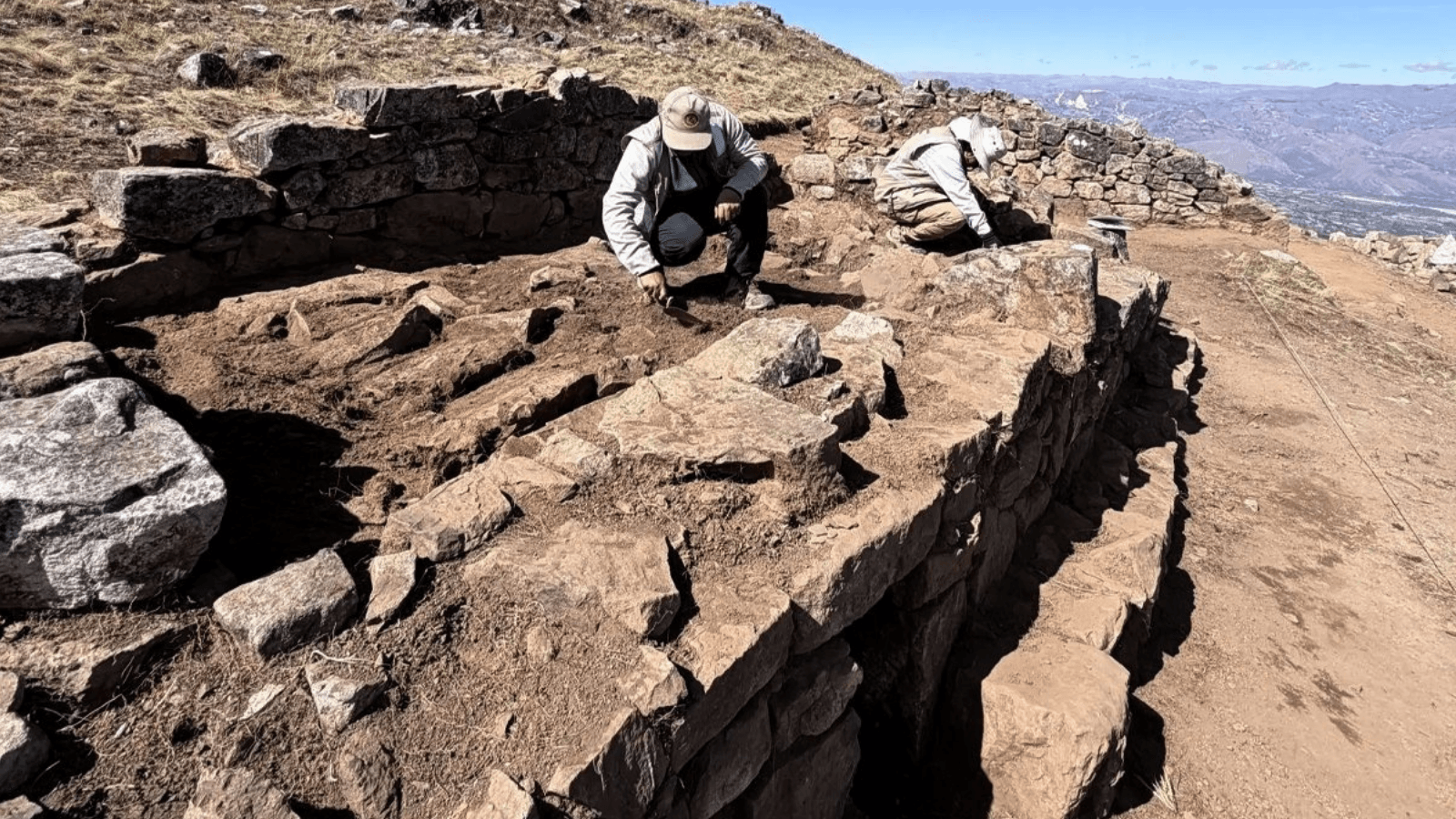
Archaeologists working at 3,400 metres above sea level in northern Peru have uncovered 12 circular structures believed to be Inca storehouses, alongside a separate building fitted with two stone ventilation ducts. The finds suggest that the cold winds sweeping across the summit may have formed part of the storage system itself.
The structures were excavated at Wancasanga, an archaeological site overlooking the Condebamba Valley in Cajabamba Province. The mountaintop is known locally as Huaman Orco or Chauchabamba.
Fieldwork was conducted during the first season of the Wancasanga Archaeological Research Project, led by Peruvian archaeologist Jerry Solano Calderón and funded by the District Municipality of Condebamba.
Twelve circular buildings arranged in a crescent
The first systematic investigation of Wancasanga concentrated on Sectors C and D. In Excavation Unit 02, archaeologists exposed 12 circular buildings arranged in a crescent along the edge of the terrain.
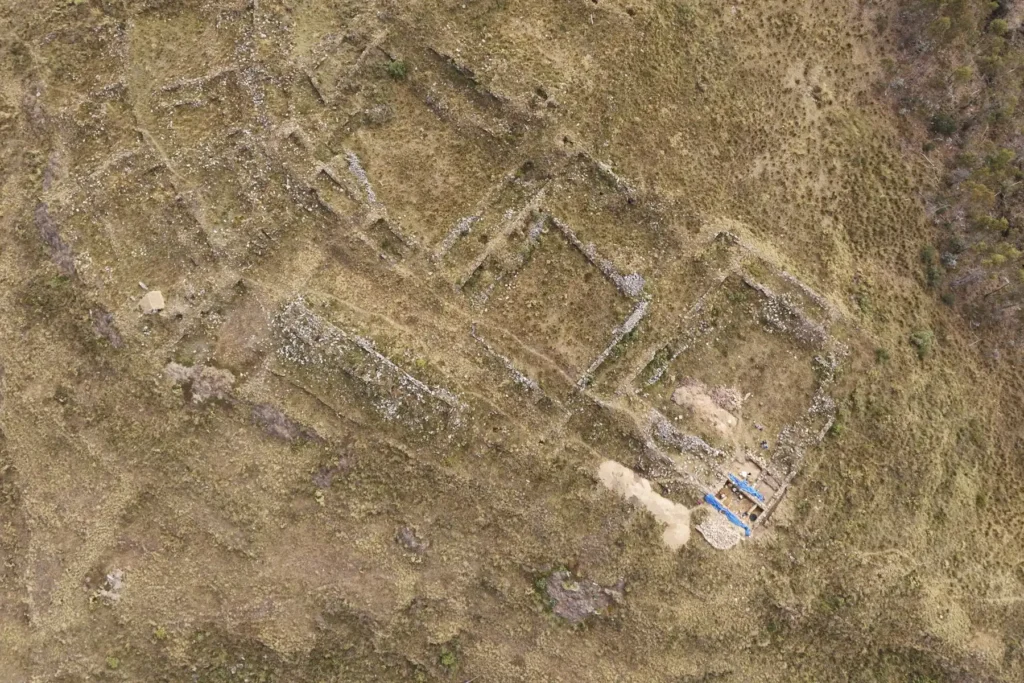
Their shape, position and repeated layout have led the team to interpret them provisionally as colcas, storehouses used to support the Inca state’s extensive system for collecting and distributing resources.
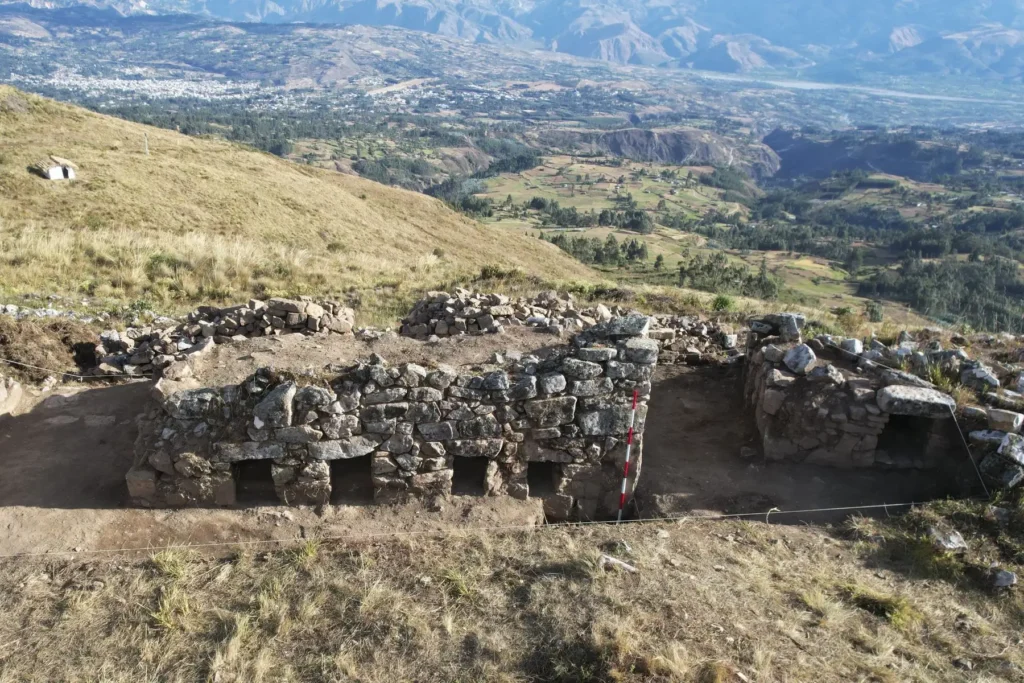
A few metres away, Excavation Unit 01 revealed an isolated building containing two covered channels. Unlike the 12 circular structures, this building has produced direct architectural evidence of a system that could have circulated air through its interior.
Project archaeologist Oswaldo Ezeta Latoche explained that the sides of the ducts were built from hewn and partially dressed stone blocks. Large slabs, or lajas, had apparently been laid across them as covers.
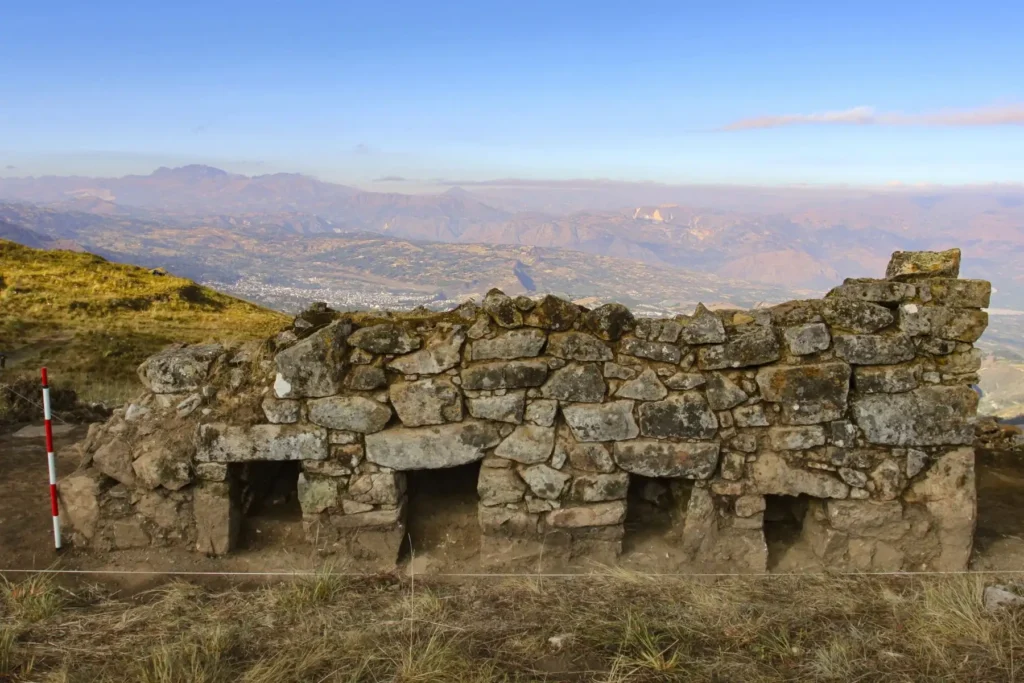
“This configuration would have allowed air to circulate inside the structures,” Ezeta told Peru’s state news agency, Agencia Andina.
The evidence does not yet show that all 12 circular buildings were linked to the two ducts. Archaeologists have documented a probable group of storehouses and a nearby structure equipped for air circulation, but further excavation is needed to determine how the buildings operated together.
A storage site built around the wind
Location appears to have been central to Wancasanga’s design. The structures stand at the western end of Sector C, an area with greater exposure to the prevailing winds.
“The structures are located toward the western end of Sector C, an area exposed to a greater incidence of winds,” Solano said. He added that this condition would have favoured the operation of the ventilation ducts.
Building storage facilities in exposed, elevated locations was not unusual in the Inca world. Colcas were often positioned on cool, dry hillsides, where natural airflow and drainage helped reduce moisture and protect stored materials.
Ventilation channels have also been documented at Inca storage buildings associated with the Qhapaq Ñan, the road network that connected distant parts of the empire. This architectural similarity does not prove that Wancasanga was directly connected to a particular branch of the road, but it supports the team’s interpretation of the site as a storage installation.
The Wancasanga buildings may therefore have been placed on the summit deliberately, using the mountain’s cold air rather than relying on the stone walls alone to control conditions inside.
Inca pottery found inside one structure
Fragments of an aríbalo were recovered from one of the suspected colcas. The narrow-necked vessel is strongly associated with the Inca period and provides important evidence linking the use of the structure to that period.
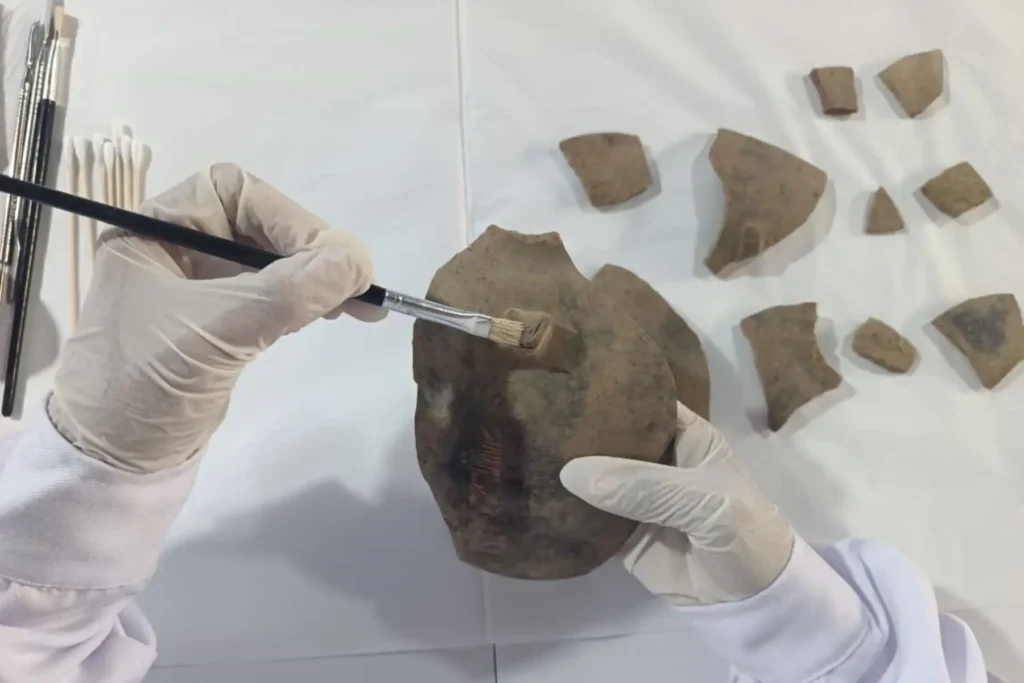
Aríbalos were used to hold and transport liquids, including maize beer, or chicha. The fragments from Wancasanga do not reveal what was kept inside the vessel, but their presence strengthens the case that the complex was occupied or used under Inca rule.
Researchers have not yet determined what the circular buildings stored. Colcas elsewhere in the Andes held maize, potatoes, textiles, equipment and supplies intended for state officials, labourers, armies or communities affected by shortages.
Plant remains, soil samples and residues from floors or pottery may eventually establish what passed through Wancasanga. Until those analyses are completed, describing the buildings specifically as food stores would go beyond the available evidence.
A northern valley with a much older history
Wancasanga was not unknown before the current excavations. In 1989, architect José Pineda Quevedo surveyed settlement patterns across the Condebamba Valley and produced the first archaeological division of the site into sectors.
His research examined approximately 2,000 years of settlement in a valley situated between the pre-Hispanic cultural spheres of Cajamarca and Huamachuco. The Inca occupation was therefore one of the latest chapters in a landscape that had supported communities long before imperial expansion reached the region.
This setting gives the new discovery wider significance. The excavations could help show how the Inca state introduced its storage and administrative practices into an established northern Andean landscape, and whether it adapted older local facilities or constructed a new complex.
Excavations resume after more than three decades
The 2026 project marks the first systematic excavation at Wancasanga following Pineda Quevedo’s earlier survey. Work was authorized under a resolution issued by Peru’s cultural authorities and included archaeological investigation in Sectors C and D.
The research team includes archaeologists Oswaldo Ezeta Latoche and Diana Agapito Torres, anthropologist Anny Vega Fajardo, conservation specialist Susy Esquivel Valverde and communications specialist Felipe Arroyo Cornejo. Residents of Chauchabamba have participated in the excavation and educational activities, while the Yachayhuasi Museum of Cajabamba has assisted with photographic documentation.
Future seasons are expected to investigate Wancasanga’s relationship with nearby archaeological sites, including Ichabamba. They will also need to establish the age of the individual buildings, identify what they stored and determine whether the isolated structure and its ventilation ducts belonged to the same operational system as the 12 circular buildings.
Cover Image Credit: Wancasanga Archaeological Research Project / Agencia Andina