
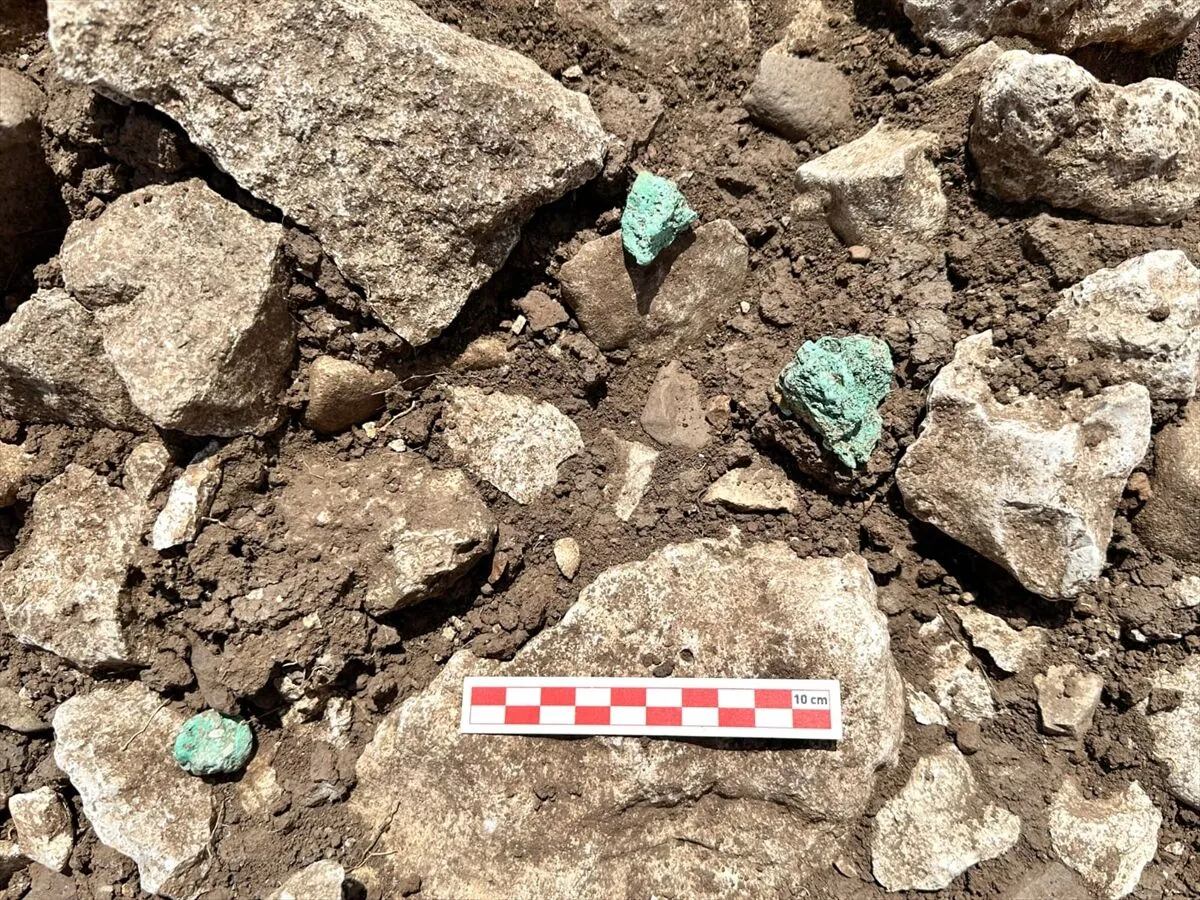
Archaeologists have discovered a 9,000-year-old malachite and copper workshop at Çayönü Tepesi in southeastern Türkiye. The stone-paved workspace contained raw and partly worked malachite, processed samples, copper beads and other copper objects, preserving several stages of Neolithic production within the same excavated area.
The excavation team uncovered the workshop during the 2026 season near Ergani in Diyarbakır Province. Provisionally dated to 6900–6800 BC, it covers approximately five square meters in the western part of the settlement.
Excavators identified at least six postholes around a stone-paved surface at its center. The postholes may have supported a light roof or shade, suggesting that the workspace was arranged for repeated craft activity.
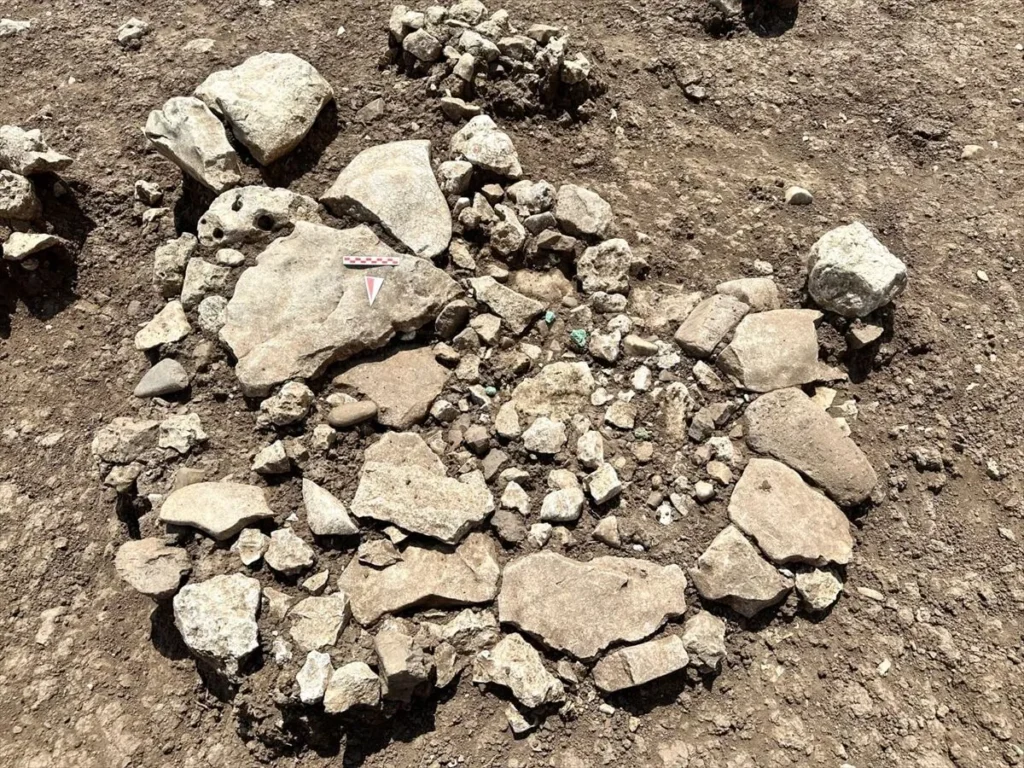
Malachite found at different stages of preparation
Archaeologists recovered 18 malachite pieces from the center of the workshop. Approximately 24 or 25 examples were recorded within and immediately around the structure, while the wider working area produced about 42 malachite and copper finds.
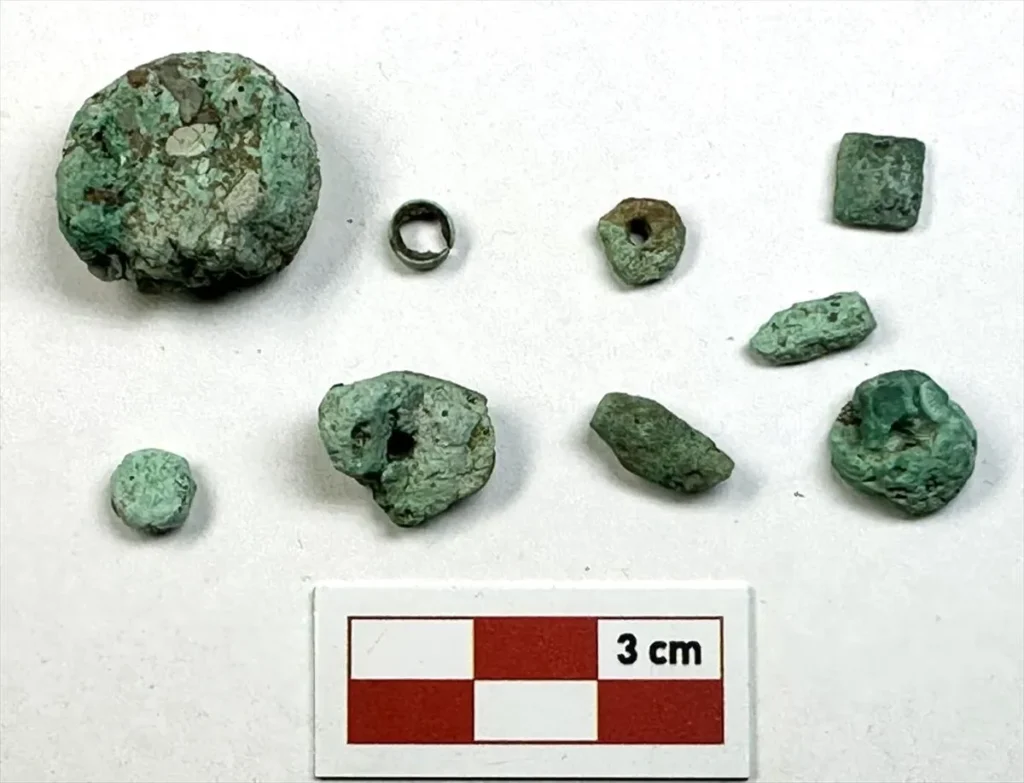
The assemblage includes raw malachite, partly worked material, worked malachite pieces, copper beads and other small copper objects. Their concentration within a defined workspace indicates that materials were being prepared at Çayönü rather than arriving exclusively as completed objects.
Türkiye’s Minister of Culture and Tourism, Mehmet Nuri Ersoy, announced the discovery and described it as evidence of specialized production at the settlement. Associate Professor Savaş Sarıaltun of Çanakkale Onsekiz Mart University directs the excavations at Çayönü.
Official accounts have referred to the area as a “mining workshop.” However, the structure lies inside the settlement and is not evidence of a mine. The excavated context is more accurately understood as a place where malachite and copper were prepared or worked.
Why malachite is not proof of copper smelting
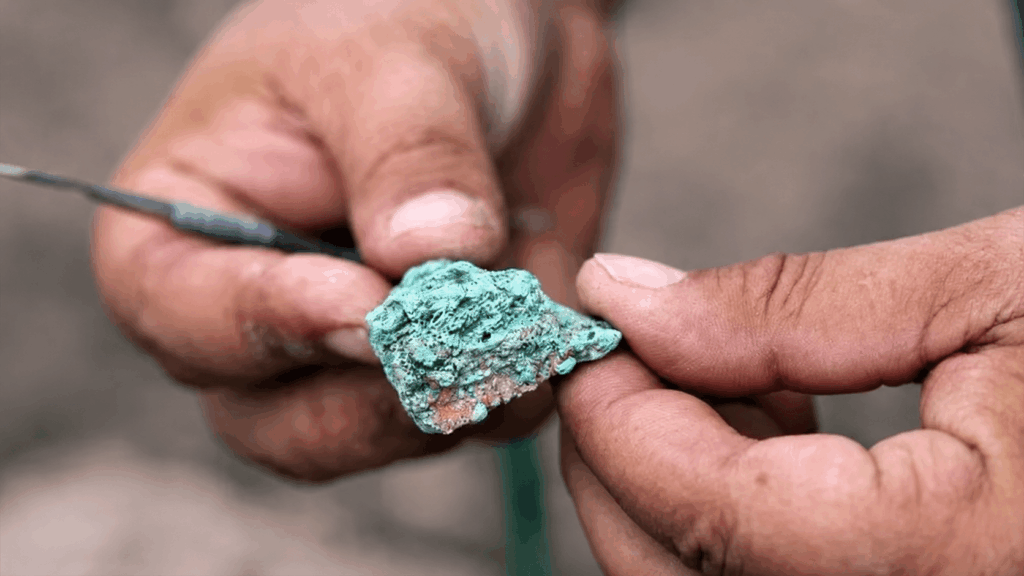
Malachite is a green copper carbonate mineral. Although later communities used it as an ore from which copper could be extracted, Neolithic people collected and shaped green minerals before established smelting technologies appeared.
Malachite could be ground, polished, perforated or used as an inlay. Its presence at an archaeological site therefore records the selection and working of a valued mineral but does not by itself establish that copper was extracted from it.
Archaeologists normally look for slag, furnaces, crucibles or chemically altered remains when identifying copper smelting. None of these has been reported from the newly discovered workshop. The evidence currently supports malachite processing and copper working, not the conversion of copper ore into metal.
The copper objects require separate laboratory analysis. Their chemical composition and microscopic structure may reveal whether they were made from naturally occurring metallic copper, how they were shaped and whether they were heated during production.
This distinction places the discovery within a technological period long before smelting and casting became widespread. Çayönü’s inhabitants were already learning to work metal while stone, bone and antler remained the principal materials for most tools.
Copper had surprised excavators since 1964
Excavators began finding metal objects at Çayönü during the first excavation season in 1964. One of the earliest examples was a small copper implement described as a reamer or awl, recovered from a Neolithic context considered exceptionally early for worked metal.
Further excavation produced copper beads, pins, hooks, awls and other small objects. Some beads had been fashioned by hammering copper into thin sheets and rolling those sheets into tubes.
Analytical studies also identified evidence for annealing in earlier copper objects from Çayönü. Hammering makes copper harder but gradually more brittle; heating allows the material to be worked further without cracking. Recognizing this behavior required knowledge that could only have developed through repeated handling and experimentation.
These discoveries established Çayönü as one of the principal sites for examining the beginnings of metalworking in Southwest Asia. Its wider Neolithic sequence also includes a 9,500-year-old red-floored public building, showing that specialized material knowledge developed alongside increasingly organized communal architecture.
The western sector may have housed craft activity
Earlier studies noted that Çayönü’s copper objects, ornaments and possible production debris were not distributed evenly across the settlement. Researchers proposed that ornament manufacture may have been concentrated in the western sector, while several copper implements occurred farther east.
The team also uncovered the 2026 workshop in the western sector. Its paved surface, postholes and concentration of material at different stages of preparation provide architectural support for the idea that some crafts were assigned particular areas.
This pattern indicates spatially organized production, although it cannot establish whether the people working there were full-time specialists. The workshop nevertheless preserves evidence of repeated procedures and skills maintained across generations.
A practice with deep roots at Çayönü
The Turkish Ministry of Culture and Tourism places the earliest copper and malachite use at Çayönü at approximately 9100 BC. Published archaeometallurgical research has more commonly placed the site’s substantial evidence for native copper working and annealing within the ninth millennium BC.
The newly discovered workshop dates to 6900–6800 BC. Its position within the later settlement sequence indicates that knowledge of copper minerals and metallic copper persisted for more than two millennia, rather than appearing as a short-lived experiment.
Çayönü stood near the copper-rich Ergani region, but the source of its Neolithic material has not been established. The proximity of the later Ergani Maden deposits makes local access plausible, yet geological proximity alone cannot demonstrate prehistoric exploitation. Mineralogical and chemical analyses will be needed to identify possible sources.
Excavations in the western area also produced pottery associated with the early Ceramic Neolithic and the Proto-Hassuna horizon. These finds have been provisionally dated to 6800–6600 BC, while radiocarbon dating and other archaeometric studies are continuing to clarify their relationship with the workshop.
The discovery places raw malachite, worked pieces and copper objects inside a defined production area dating to the early seventh millennium BC. It supplies a physical setting for technological practices that earlier excavations at Çayönü had documented mainly through individual objects and their distribution across the settlement.