-
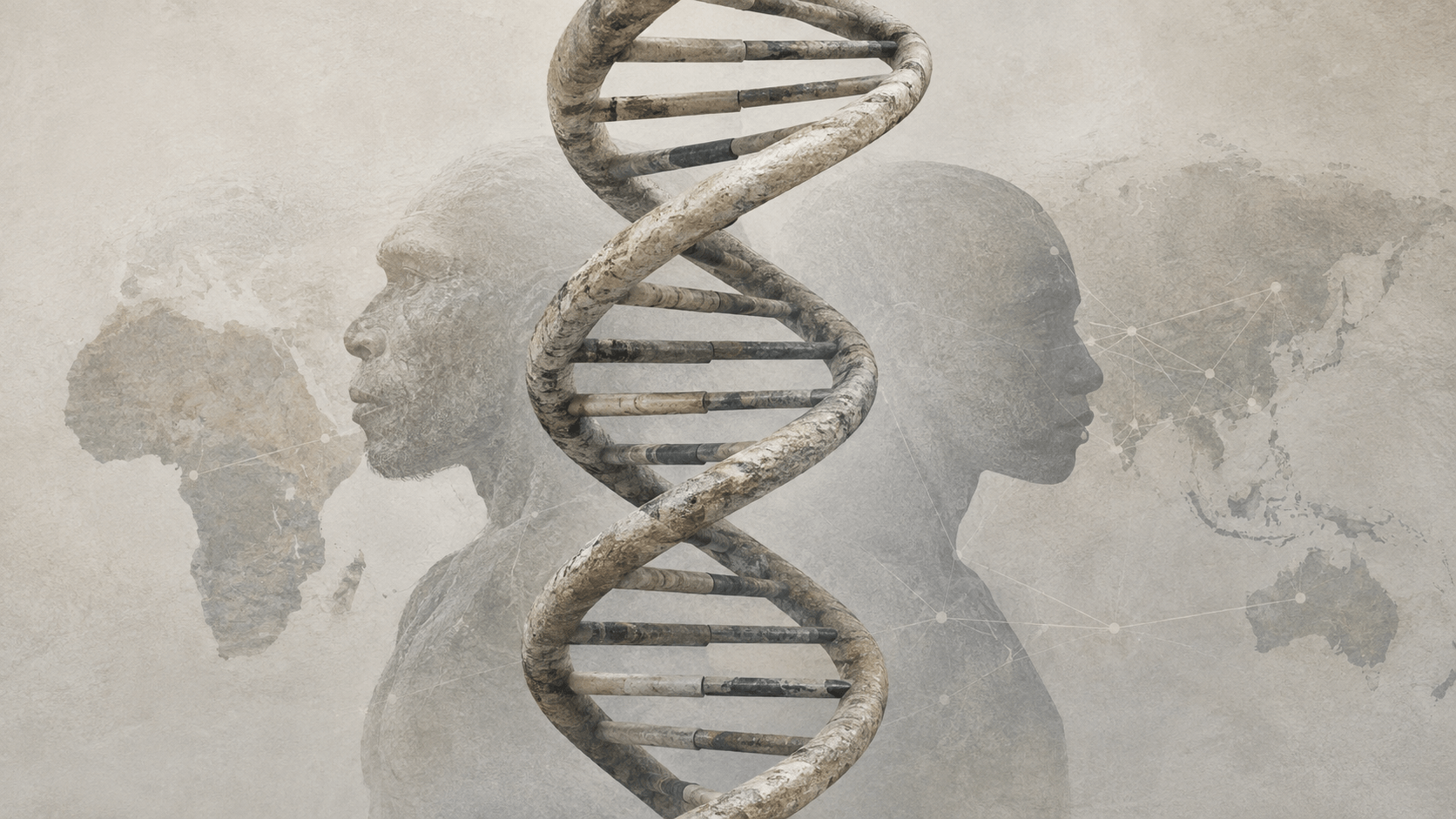
Two Unknown Human Lineages Still Survive in Modern DNA, One Traces Back 1.8 Million Years
Modern human DNA appears to preserve traces of two ancient human populations that scientists have never identified directly from ancient genomes. One of those lineages may reach back to a population that split from other human ancestors roughly 1.8 million years ago. The finding comes from a new study published in Science, in which UC…
-
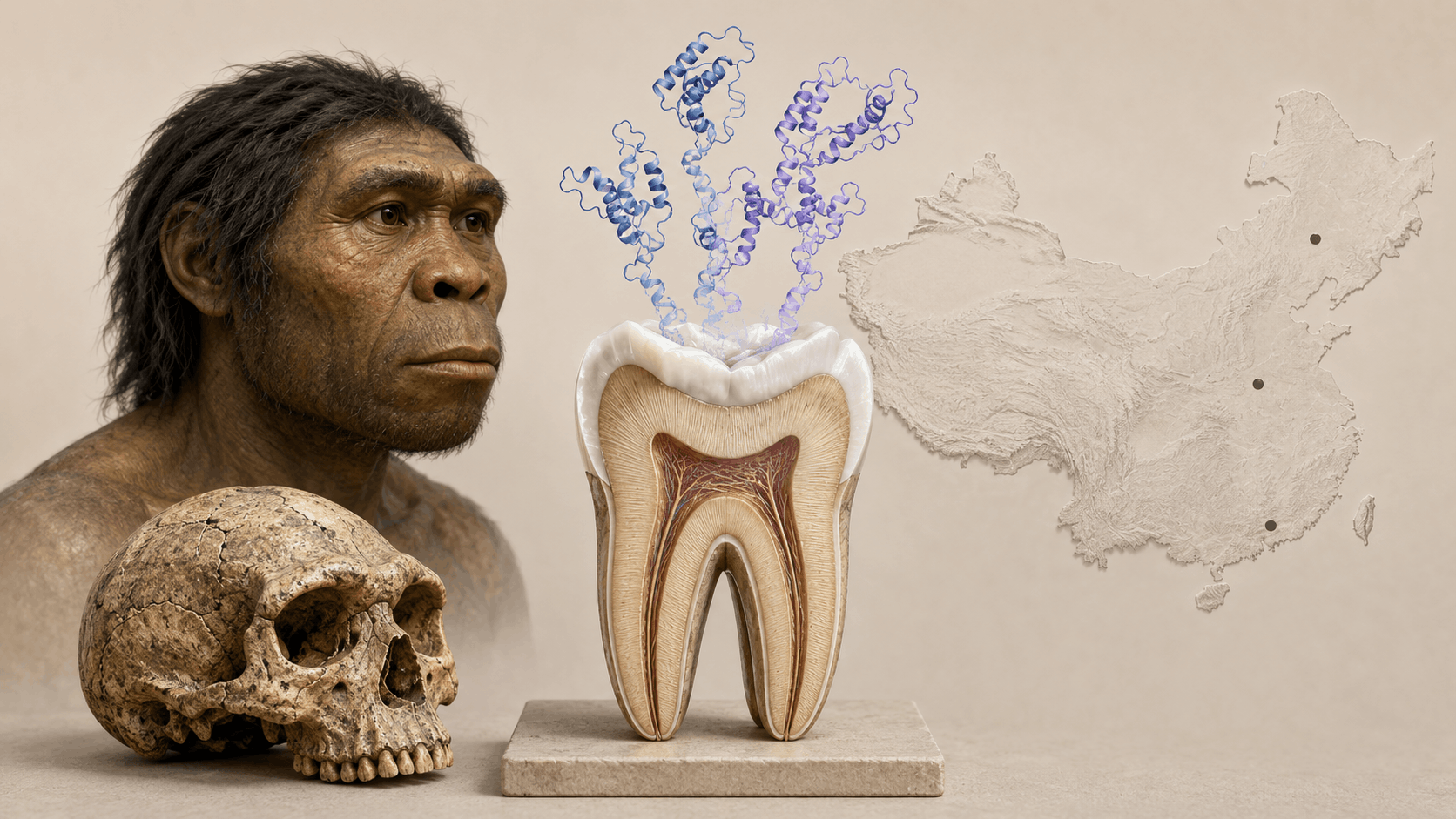
400,000-Year-Old Teeth in China Reveal the First Molecular Evidence from Homo erectus
Chinese scientists have recovered the first molecular data from Homo erectus, using proteins preserved inside 400,000-year-old teeth from China. The discovery, published in Nature, does not involve ancient DNA. Instead, it opens a rarer and more durable archive: tooth enamel, where biochemical traces can survive long after genetic material has disappeared. For a species long…
-
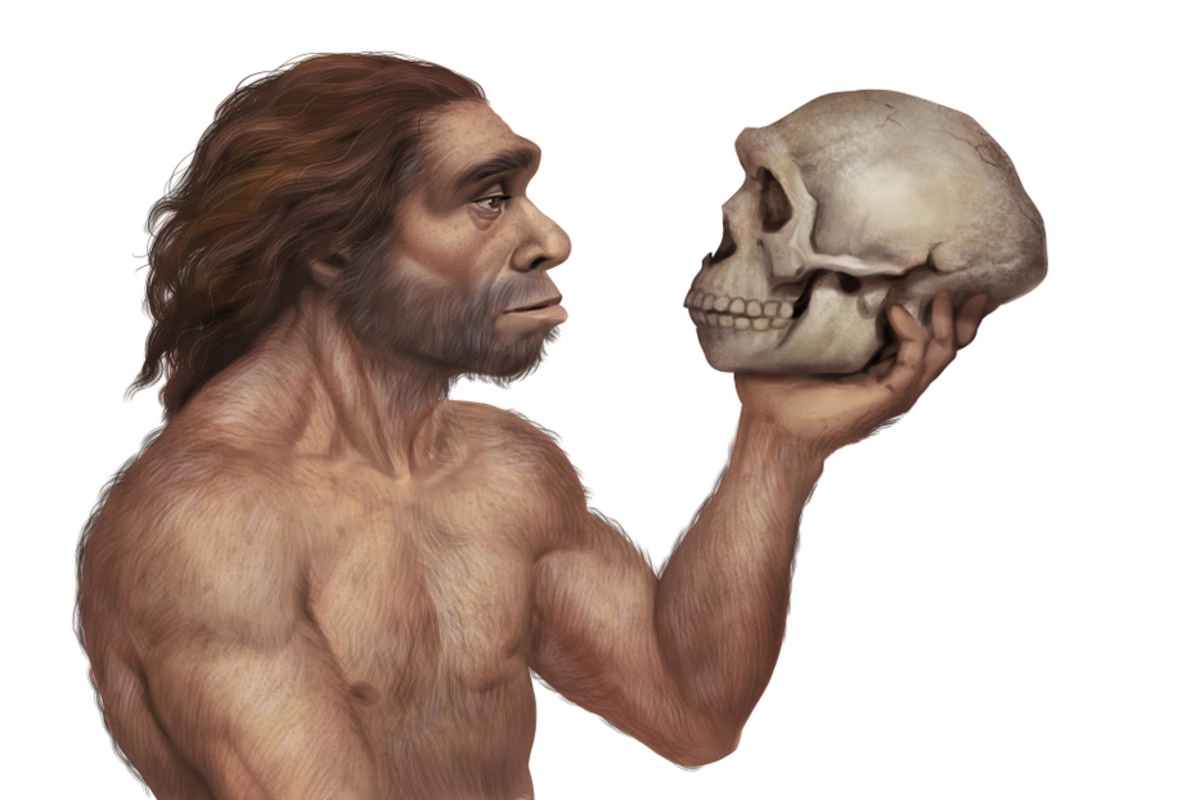
146,000-Year-Old Skull Sheds Light on Mysterious Denisovan Humans
A major breakthrough has brought scientists closer to solving a long-standing mystery about the Denisovans — an extinct group of ancient humans closely related to modern humans and Neanderthals. A remarkably well-preserved 146,000-year-old skull discovered in Harbin, northeastern China, is now believed to represent one of the clearest examples of a Denisovan fossil ever found.…