
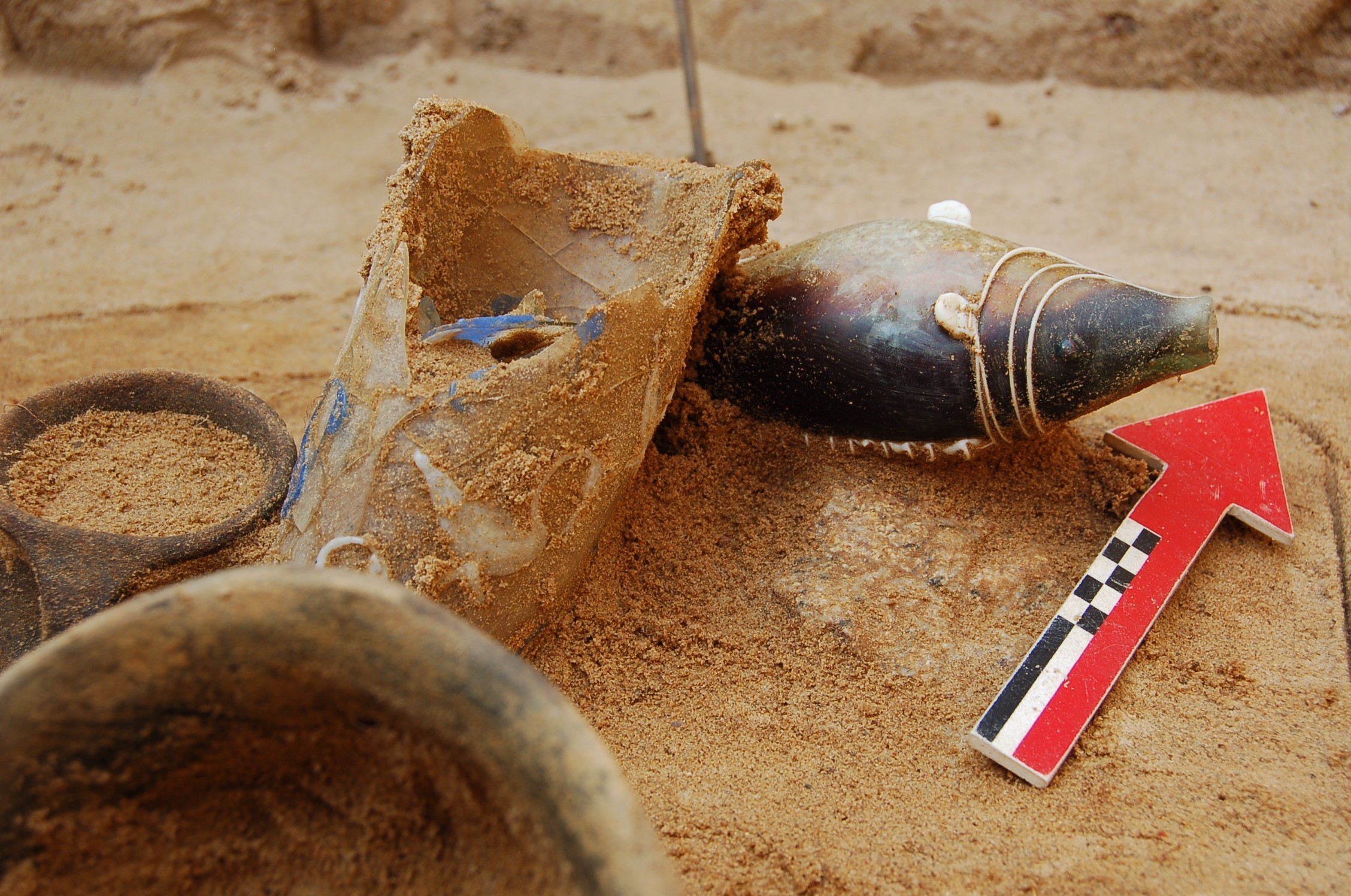
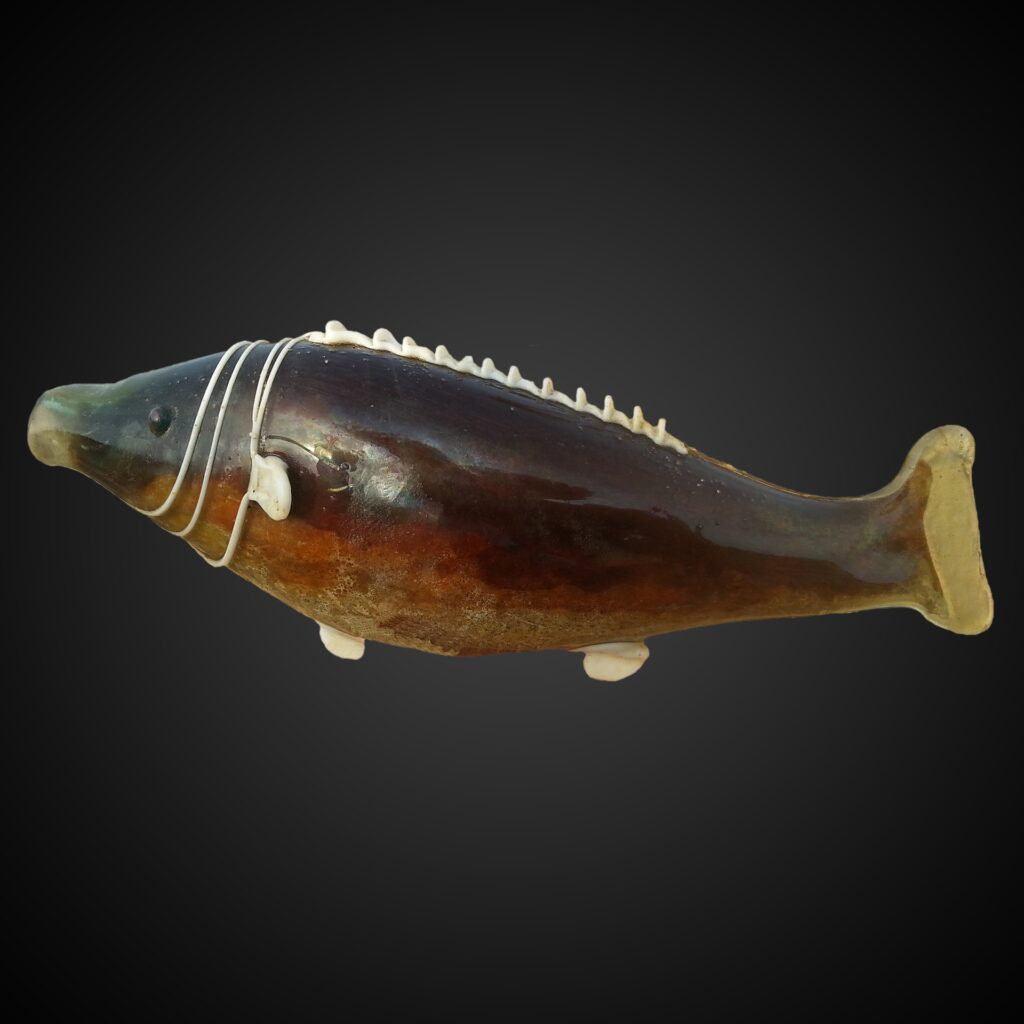
A fish-shaped Roman glass vessel found in a woman’s grave in northern Poland has become one of the most striking objects from the Czarnówko cemetery, a vast burial ground near Lębork. Dating to the late 2nd or very early 3rd century CE, the delicate vessel points to a world in which Roman luxury goods travelled far beyond the empire’s political borders.
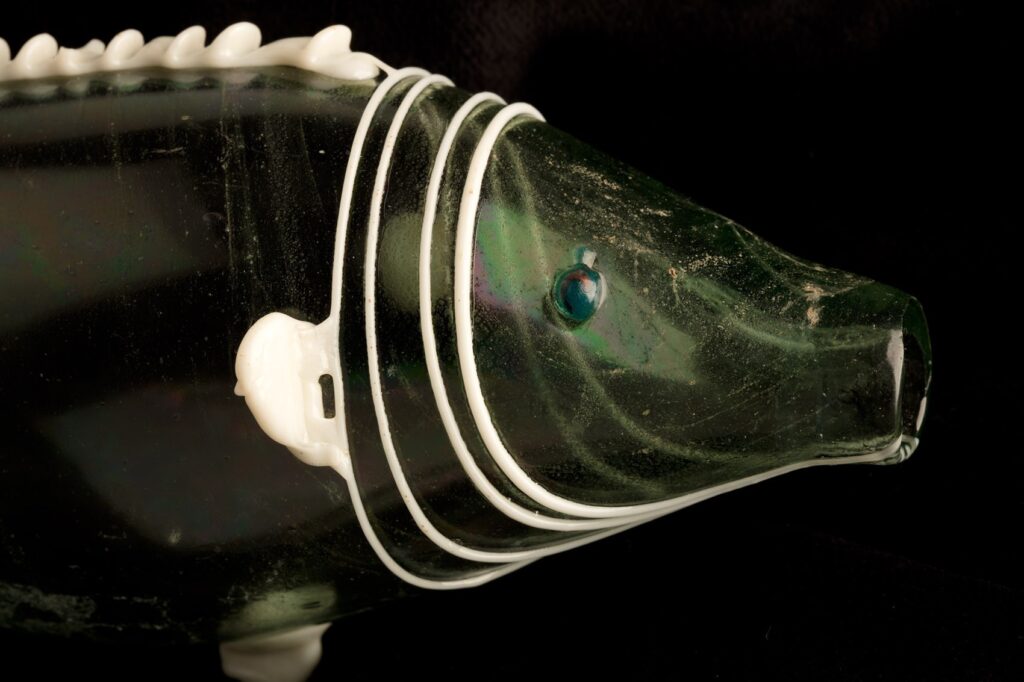
The object, now held by the Lębork Museum, was discovered in 2015 during archaeological work at Czarnówko. It is made from almost colourless glass with a faint greenish tint and is considered one of the best-preserved vessels of its type known today. Researchers believe it may have served as a container for perfume, scented oil, or another precious liquid.
What makes the find especially important is not only its shape or state of preservation. The glass fish was found far outside the Roman Empire, in a region that belonged to what scholars call Barbaricum, the broad zone of non-Roman Europe that still maintained close and varied contact with the imperial world.
From Roman workshops to the Baltic coast
The vessel was almost certainly made within the Roman Empire. Researchers have suggested two possible production areas: workshops in the eastern provinces, where glassmaking had deep roots, or the region around Cologne, one of the major centres of Roman glass production in Germania Inferior.
Either possibility makes the same point. The glass fish was an imported luxury object. Before it was placed in the grave at Czarnówko, it had travelled through networks that connected the Roman world with communities near the Baltic Sea.
Those networks were not simple. Some Roman goods moved through trade. Others may have circulated as diplomatic gifts, elite exchanges, military payments, or objects acquired through service, alliance, or conflict. In the end, the route of this particular vessel cannot be reconstructed with certainty. Its final destination, however, is clear: a burial in northern Poland, where it became part of a local funerary tradition.
Two rare Roman glass vessels in one grave
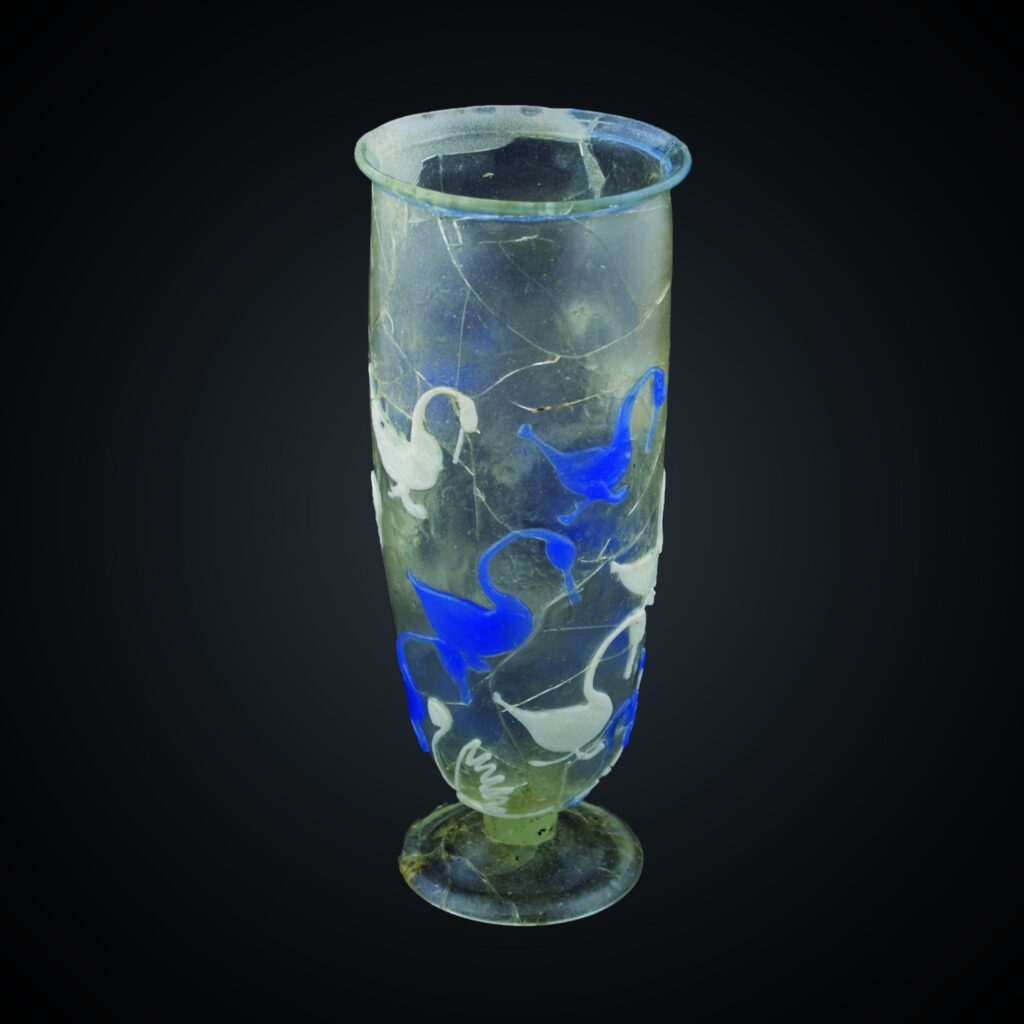
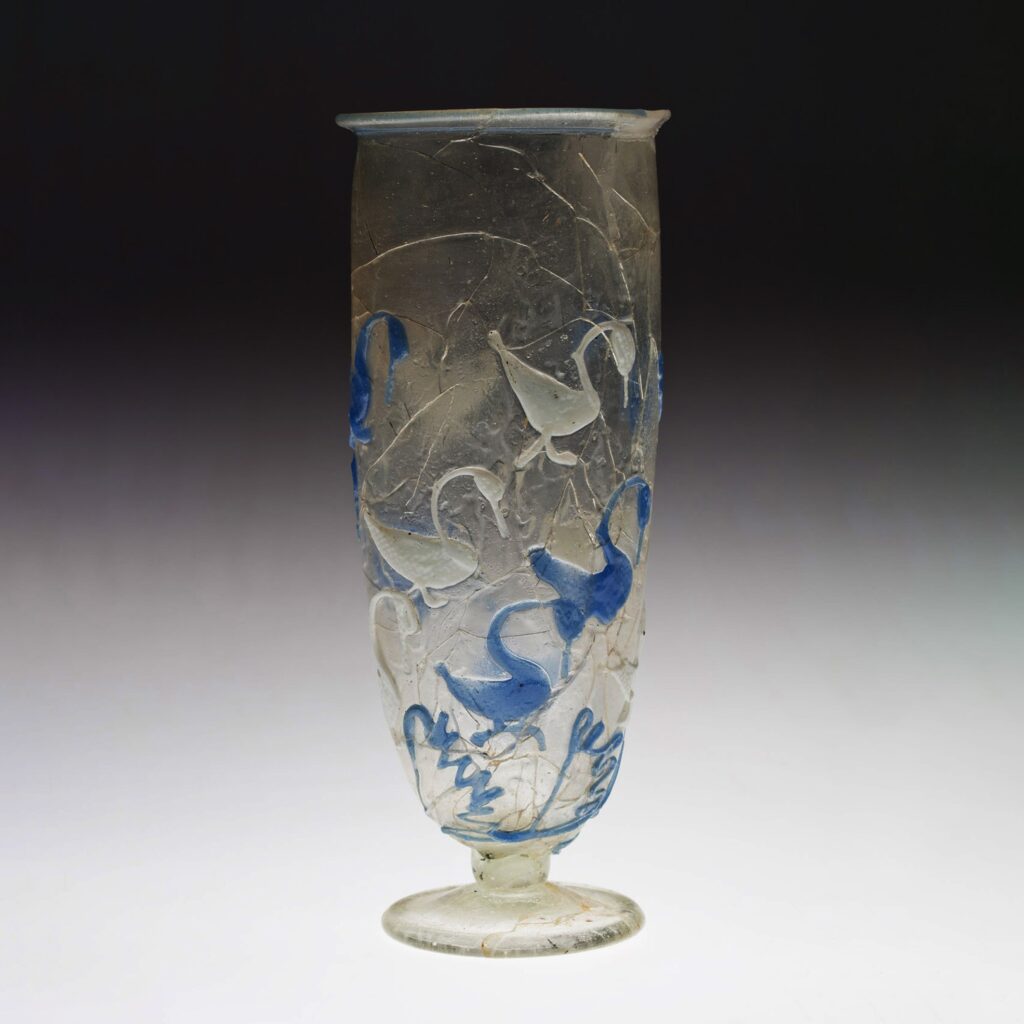
The young woman’s grave contained more than the glass fish. Archaeologists also found an exceptional Roman glass goblet decorated with swan motifs. That second object changes the reading of the burial. This was not a single imported curiosity. It was a grave furnished with two rare Roman glass vessels, both associated with high-quality production.
Such a combination suggests access to goods that were not available to ordinary households. It may point to the woman’s social position, or to the status of the family or group that buried her. As always, the evidence has limits. A grave cannot tell us everything about a person’s life. But the objects placed beside the dead were chosen carefully, and in this case the choice is telling.
Roman glass was not just useful. It was difficult to make, visually distinctive, and often expensive. In a northern European cemetery, a vessel shaped like a fish would have stood out sharply from local material culture.
Czarnówko and the Roman Iron Age in northern Europe
Czarnówko is one of the most important Roman-period cemeteries in Poland. More than 2,000 graves have been recorded there, making it a key site for the study of East Pomerania during the Roman Iron Age.
The cemetery is usually discussed in relation to the Wielbark culture, an archaeological culture of the southern Baltic region in the first centuries CE. Finds from Czarnówko show how strongly this area was tied into wider exchange systems. Imported vessels, ornaments, metal objects, and other goods reached local elites, even though the region lay outside Roman rule.
That distinction matters. Rome did not need to govern a region for Roman objects to shape local prestige. In places such as Czarnówko, imported goods could be selected, displayed, buried, and reinterpreted within local customs.
The glass fish belongs to that process. It is a Roman object, but its archaeological meaning was created in a non-Roman cemetery.
A rare form in Roman glassmaking
Roman glassmakers were capable of remarkable technical control. By the 1st and 2nd centuries CE, glassblowing and mould-blowing allowed workshops to produce vessels in more varied and expressive forms. Some were made as animals, fruits, heads, or other shapes that went beyond ordinary tableware.
Fish-shaped glass vessels form a small and rare group. Surviving examples are limited, and many are fragmentary. The Czarnówko vessel stands out because it is so well preserved and because it was found in a secure archaeological context, inside a grave.
Its form also suggests a more personal use. Small figured vessels of this kind are often linked with perfumes, scented oils, or other valuable substances. If that interpretation is correct, the object belonged to the world of personal care and display before it became a grave good.
Perfume, prestige and burial memory
The burial of the glass fish shows how a luxury object could change meaning after death. In life, it may have held scent or oil. In the grave, it became part of a statement about status, memory, and connection to distant places.
That is what gives the find its wider importance. It does not simply show that Roman goods reached northern Poland. It shows that they were valued there, selected for burial, and folded into local ideas of rank and identity.
Nearly 1,800 years later, the vessel still carries that layered history. It speaks of Roman workshops, long-distance exchange, a woman buried at Czarnówko, and a community that chose to place rare glass beside her.
Today, the glass fish is preserved in the Lębork Museum and can also be viewed as a 3D model. Small as it is, it remains one of the clearest examples of how far Roman luxury could travel beyond the empire’s frontiers.