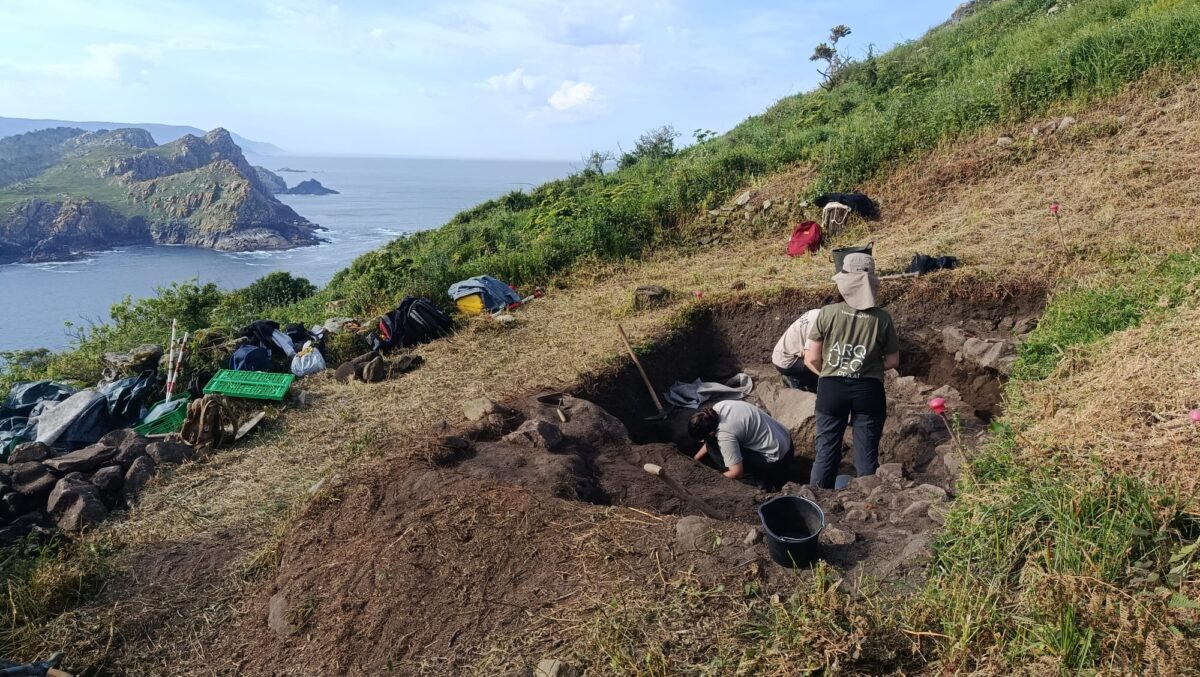
Researchers from the Universidade de Vigo have confirmed the first large castro-period domestic structure ever documented in Spain’s Cíes Islands, offering the clearest evidence yet that people lived in the archipelago before Roman power reached this part of the Atlantic coast.
The discovery was made at Castro de Hortas, an Iron Age hillfort on the southern end of Faro Island. Today, the Cíes Islands are known for beaches, cliffs and protected natural landscapes. The new excavation shows that long before that modern image took shape, these islands were part of a lived Atlantic world.
A hillfort above the Vigo estuary
The latest campaign took place between late April and early May 2026. It was led by the Grupo de Estudos en Arqueoloxía, Antigüidade e Territorio at the Universidade de Vigo, in collaboration with the Galician Atlantic Islands Maritime-Terrestrial National Park.
The team opened two trenches on the eastern slope of Castro de Hortas. The work followed an earlier 2025 campaign, which had already revealed walls and a floor surface. This year’s excavation expanded that evidence and gave the site a much wider historical frame.
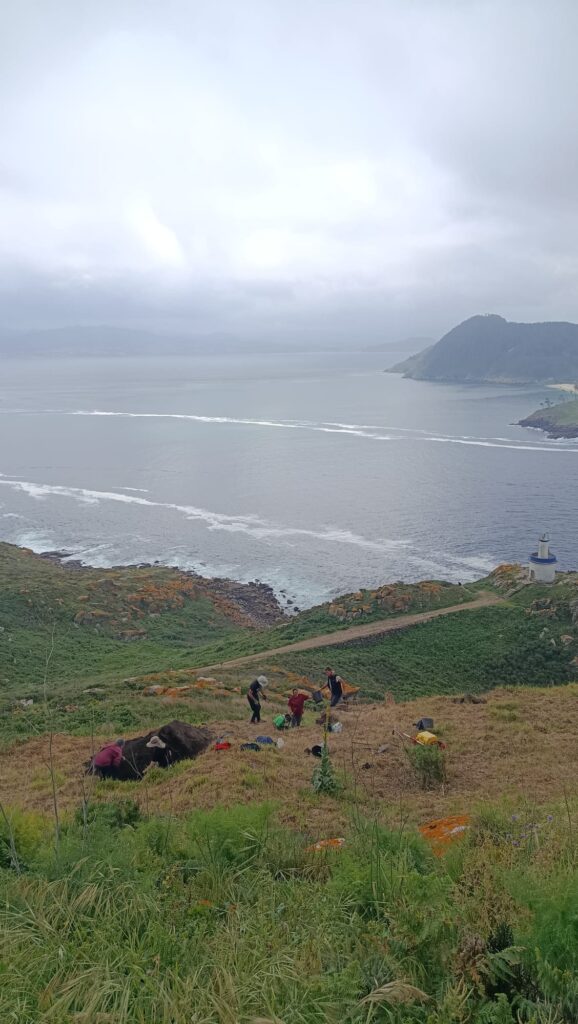
Archaeologists identified occupation phases from the castro period, Late Antiquity and the early Middle Ages. One level dates to around the 5th and 6th centuries AD. Another belongs to the 9th and 10th centuries AD.
This sequence is important because it shows that Castro de Hortas was not a brief or isolated settlement. The hillfort remained useful, meaningful or repeatedly occupied across many centuries.
The first confirmed castro-period house in the Cíes Islands
The strongest evidence came from the second trench. Archaeologists opened it in an area where a change in the ground suggested the possible presence of a defensive wall. Instead, they uncovered a large refuse area linked to the daily life of the hillfort’s inhabitants.
The deposit was found outside a large house from the castro period. According to the researchers, this is the first such domestic structure securely documented in the Cíes archipelago.
That changes the interpretation of the site. Island activity can sometimes be difficult to read. A few objects may point to temporary visits, seasonal work or short-term use. A large house, however, gives a firmer signal. It points to a community with a more stable presence on Faro Island before Roman influence transformed the region.
Castro de Hortas stood in a position of clear strategic value. From the hillfort, inhabitants could observe movement through the Vigo estuary, one of the key maritime corridors of northwest Iberia. The site faced the sea, but it was not cut off from the world. It was placed directly beside the routes that connected people, goods and ideas along the Atlantic edge.
A three-meter-deep archive of ancient meals
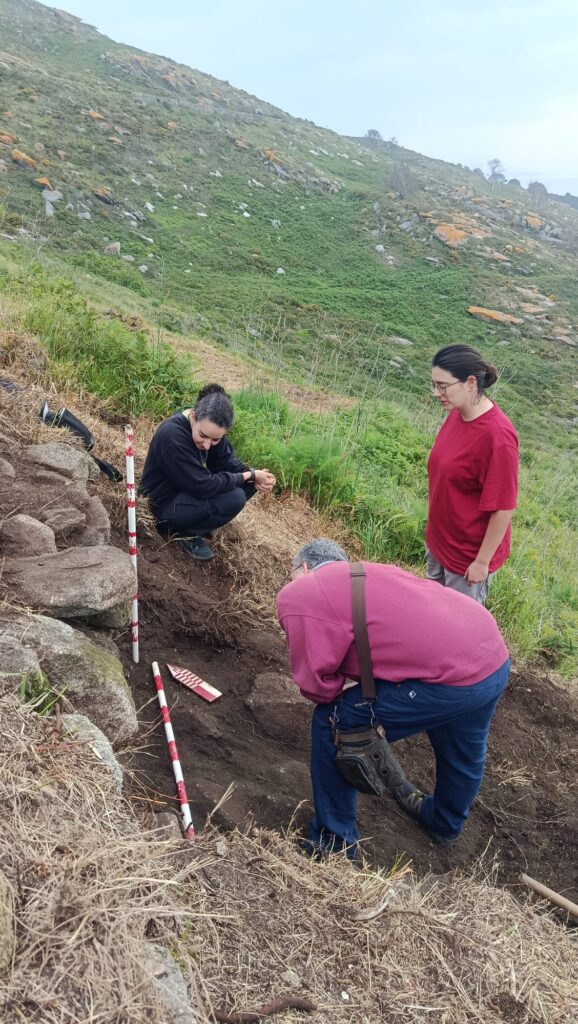
Near the house, archaeologists uncovered a shell midden almost three meters deep. It may look like ancient rubbish, but for researchers it is one of the most useful kinds of archaeological evidence.
Shell middens preserve traces of food, waste, fishing, gathering and everyday survival. In an island setting, they can reveal how people balanced marine resources with livestock, agriculture and exchange.
The team recovered numerous faunal remains from the deposit. These samples will be studied by specialists at the University of León, who will examine what the inhabitants of Castro de Hortas ate and how they used the surrounding land and sea.
The excavation also produced a large quantity of ceramics. These finds will be analyzed in the GEAAT laboratory at the Ourense campus, where researchers hope to refine the chronology and better understand the material culture of the settlement.
An island landscape with a deeper human past
The Cíes Islands form part of the Galician Atlantic Islands National Park. The archipelago is made up mainly of Monteagudo, Faro and San Martiño. Its western side faces the open Atlantic, with cliffs rising more than 150 meters. Its eastern side turns toward the Vigo estuary, where calmer waters and beaches created a very different environment.
That contrast made the islands valuable. They offered access to marine resources, visibility over maritime movement and sheltered areas suitable for human activity.
Previous heritage records had already noted prehistoric use of the islands, and shell deposits at As Hortas suggested a diet closely tied to shellfish and fish. The 2026 campaign now gives that picture a stronger foundation. Castro de Hortas was not just a place where people passed through. It was a settlement with domestic architecture, food waste, ceramics and a long sequence of occupation.
The Sentinela project protects threatened heritage
The excavation is part of the Sentinela project, which studies threatened cultural heritage across the islands of the national park. Its goal is to catalogue cultural assets and monitor sites affected by erosion, natural processes and human activity. The project is expected to conclude in July 2026.
For Galicia, the discovery adds a new chapter to the history of the Cíes Islands. It shows that these Atlantic islands were not only scenic landmarks, medieval spaces or later protected landscapes. They were inhabited places, shaped by Iron Age communities whose lives were tied to the sea below them.
The house at Castro de Hortas gives that story a clearer outline. Beneath the soil of Faro Island, archaeologists have found evidence of people who built, ate, worked and watched the Atlantic long before the Roman world reached the coast.
Cover Image Credit: Universidade de Vigo