
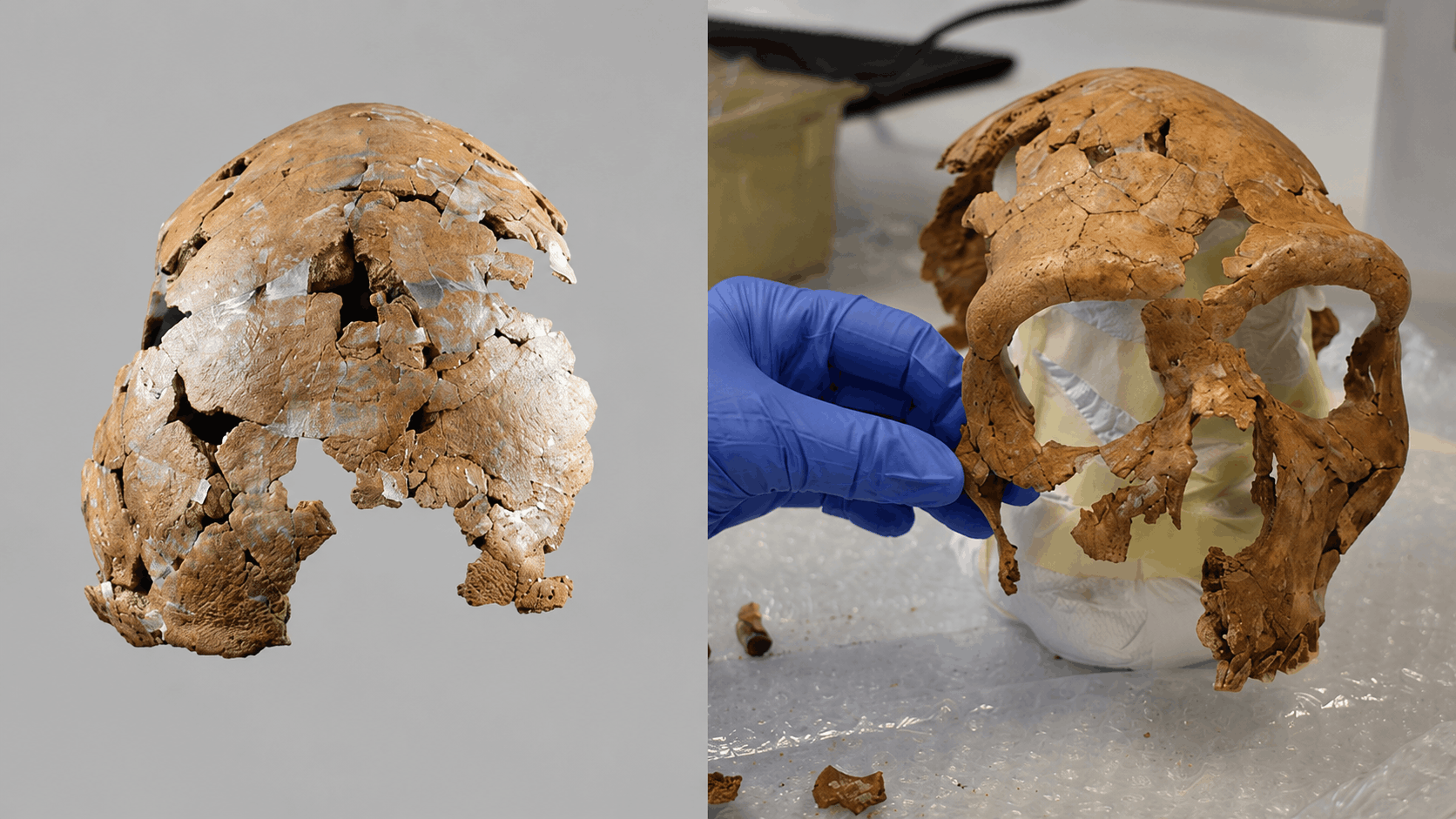
Shanidar Z Neanderthal, one of the most fragile human relatives ever recovered from Shanidar Cave in Iraqi Kurdistan, is giving scientists a rare chance to examine a 75,000-year-old body that almost did not survive excavation.
The remains, found during renewed archaeological work at the famous cave, included much of the upper body of an adult Neanderthal. But the discovery came with an immediate problem. The skull had been crushed almost flat. The bones were delicate, fragmented and embedded in sediment so tightly that a normal excavation could have destroyed the very evidence researchers hoped to study.
A new study published in Antiquity shows how scientists conserved, documented and gradually reassembled the remains of Shanidar Z, turning a collapsed mass of bone and earth into a stable scientific record. The work does not simply add another Neanderthal fossil to museum collections. It shows how modern conservation can decide whether a prehistoric body remains readable at all.
A Skull Flattened by 75,000 Years of Pressure
Shanidar Z was uncovered during excavations carried out in 2018 and 2019 at Shanidar Cave, a site already known as one of the most important Neanderthal locations in the world. The individual’s skull lay above the left upper limb, with the thorax below. By the time archaeologists reached it, the skull had been completely flattened and the surrounding bones had become friable, crushed and highly vulnerable.
This was not the kind of fossil that could simply be lifted from the ground.
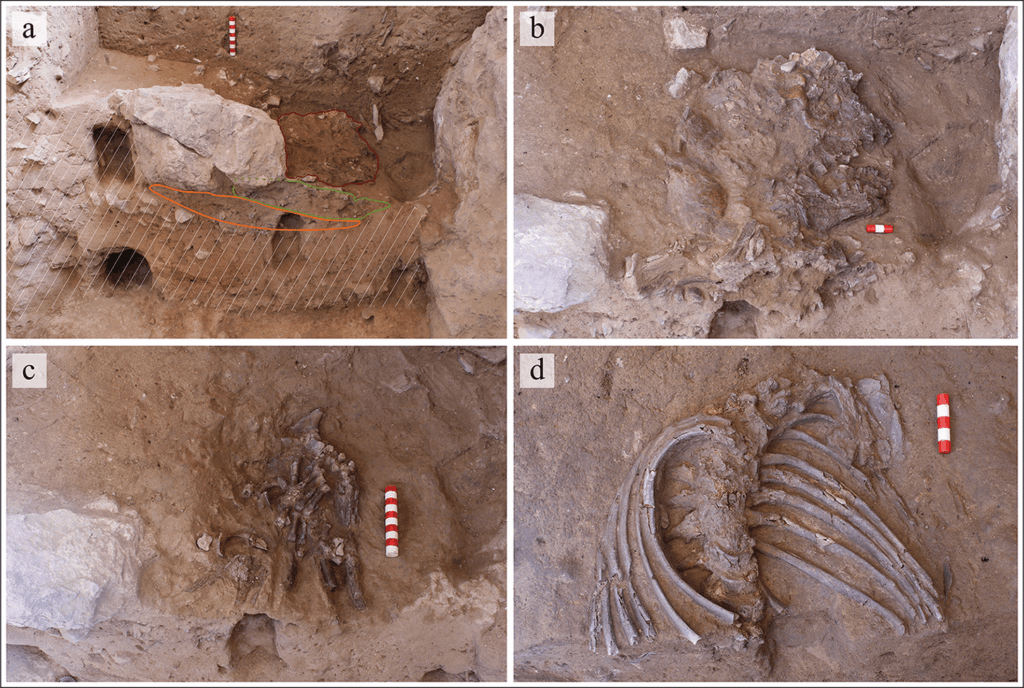
The researchers first stabilized the remains while they were still in place. Instead of removing the bones one by one, they lifted most of them inside 46 small blocks of sediment, following natural cracks in the deposit. Each block was wrapped in aluminium foil, placed in protective bags and cushioned inside rigid plastic boxes before being transported to Cambridge.
The Second Excavation Happened in the Laboratory
Once the blocks reached the University of Cambridge, the work slowed down even further. Before the packages were opened, they were scanned using micro-CT technology. This allowed the team to see the hidden position of bone fragments inside the sediment and foil before touching them directly.
Only then did the laboratory excavation begin.
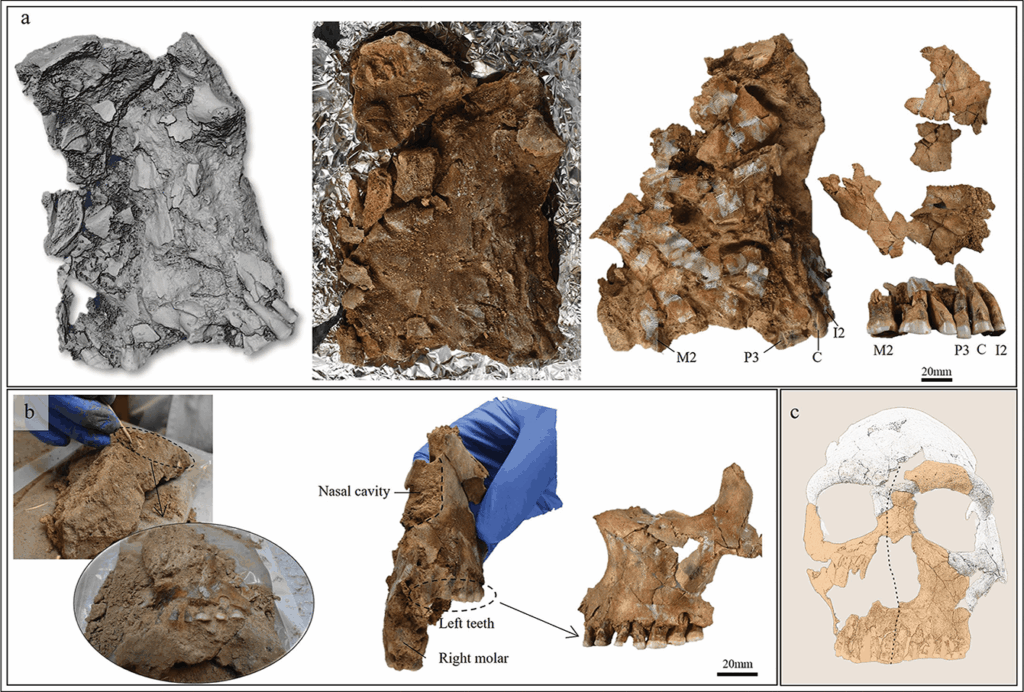
Researchers used soft brushes, bamboo skewers, scalpels and dental tools to remove the surrounding sediment. Each fragment was cleaned, strengthened and recorded through written notes, photographs, videos and a dedicated database. The process was less like conventional restoration and more like a second excavation, carried out under controlled conditions and at a much smaller scale.
This level of documentation matters. Shanidar Z is not only a set of bones. The position, condition and displacement of each fragment can help researchers understand what happened to the body after death, how it was affected by sediment pressure and how it relates to other Neanderthal remains found in the same part of the cave.
Rebuilding a Prehistoric Puzzle
The skull became the most demanding part of the project. It had been fractured into many pieces and distorted by long-term compression. To stabilize the bone, researchers used Paraloid B72, an acrylic resin widely used in archaeological conservation because it is stable and can be removed with solvent if necessary.

That reversibility is important. Good conservation should not trap future researchers inside the decisions of the present. As new imaging, chemical and genetic methods develop, fossils need to remain available for fresh analysis.
Piece by piece, the team cleaned and reassembled parts of the skull and upper body. The upper-limb bones are now well reconstructed, while work continues on the more fragmented thoracic remains. Further digital and physical restoration of the skull is expected to help correct small distortions and fill gaps between preserved elements.
The result is not a simple reconstruction for display. It is a controlled scientific recovery of a body that had almost disappeared into the cave floor.
Why Shanidar Cave Still Matters
Shanidar Cave has shaped Neanderthal research for more than half a century. Excavations led by Ralph Solecki between 1951 and 1960 uncovered the remains of 10 Neanderthals and helped transform scientific debate about Neanderthal behaviour.
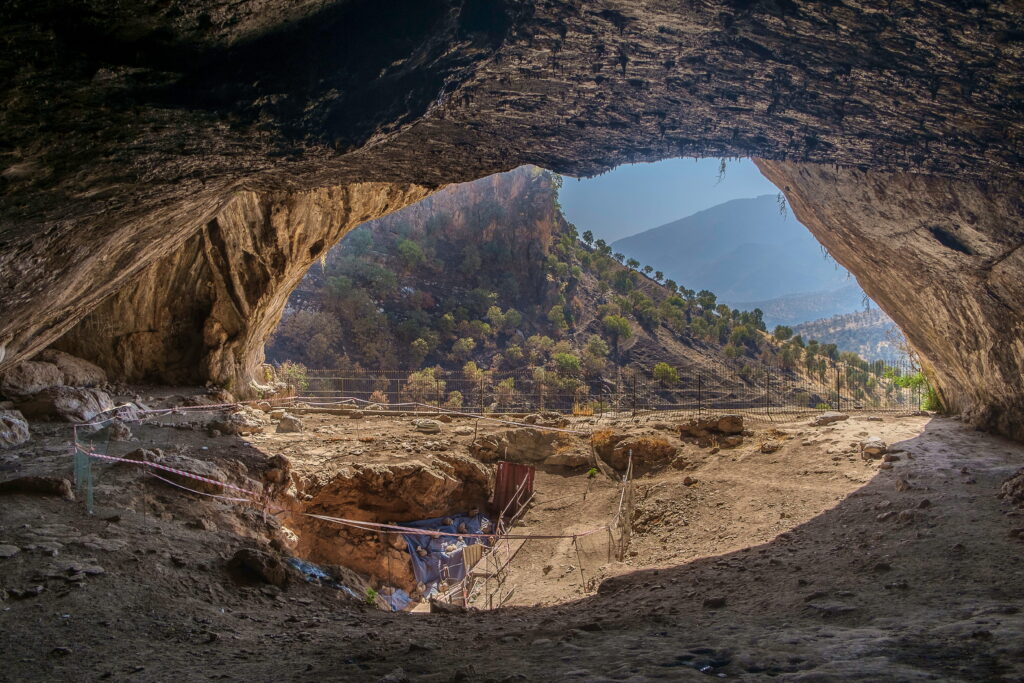
The cave became especially famous because of discussions around possible care for injured individuals and the controversial idea of Neanderthal burial practices. Some earlier interpretations, including the so-called “flower burial,” remain debated. But the wider importance of Shanidar is not in one claim alone. It lies in the repeated presence of Neanderthal bodies in the same cave environment.
Excavations resumed in 2015, bringing modern methods to a site first explored in a very different scientific era. Shanidar Z is one of the clearest examples of what that renewed work can offer.
A Body Among Other Neanderthals
The location of Shanidar Z makes the find especially significant. The remains were associated with a cluster of Neanderthal individuals at the site, raising careful questions about whether Neanderthals returned to particular places in the cave when dealing with their dead.
The new study does not claim to prove a cemetery or a formal burial ritual. That would go too far. But it does strengthen the case for asking more precise questions about Neanderthal mortuary behaviour. Were bodies placed in particular parts of the cave? Did later individuals come into contact with earlier remains? Was Shanidar used repeatedly in ways that carried social meaning?
These are difficult questions, and Shanidar Z cannot answer them alone. But without conservation, the evidence needed to ask them would have been lost.
The Science of Saving What Is Almost Gone
The story of Shanidar Z is powerful because it shifts attention from discovery to survival. Archaeology often celebrates the moment something is found. This study shows that the real breakthrough may come later, in the slow work of keeping a damaged object scientifically alive.
A skull crushed flat for 75,000 years has now been stabilized, documented and partly reassembled. Its fragments can help researchers study Neanderthal anatomy, site formation, body treatment and the long afterlife of human remains inside one of the world’s most important prehistoric caves.
Cover Image Credit: Two views from the reconstruction of the Shanidar Z Neanderthal skull. Photographs by Lucía López-Polín, from “Conservation of the Shanidar Z Neanderthal,” Antiquity / Cambridge University Press.