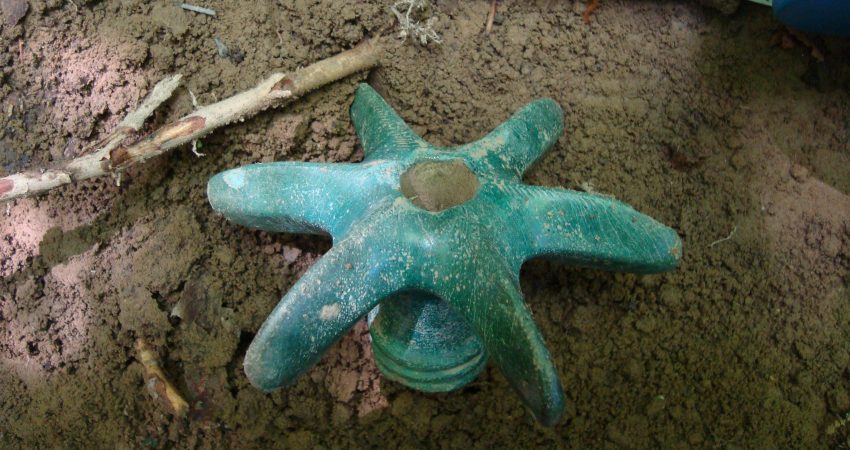
A small metal object found near Dukla in southeastern Poland has raised a question far larger than its size: how did a possible 3,000-year-old mace head, perhaps linked to the Near East, end up in this part of the Carpathian borderlands?
The object was discovered during a licensed search carried out by members of the Exploration and Historical Association “Galicja.” At first, the team was not looking for Bronze Age material at all. Their aim was to document traces of the Second World War, especially remains connected with the events of September 1939 and the activities of Poland’s Border Protection Corps in the Dukla area.
Instead, the search brought them face to face with something much older.
Mace heads were once fitted to shafts and used as striking weapons. In many ancient societies, however, they were more than tools of combat. Some examples also carried meanings of authority, rank, or ritual power. That is why the Dukla object has drawn attention. If its proposed date and possible Near Eastern connection are confirmed, it could point to a much wider world of movement, exchange, or symbolic influence during the Bronze Age.
A search for wartime traces led to an older mystery
The object was noticed on June 1, 2019, by Krzysztof Wiśniewski, a member of the Galicja association. The search had been organized legally, after permission was obtained from the landowner and the required application was submitted to the heritage protection office in Krosno.
The chosen area was small, and the expectations were modest. The team expected military debris, buttons, buckles, fragments of equipment, and other traces left behind by the wars that passed through this region.
That is exactly what appeared at first. Among the finds were a British button, an aluminum medallion, a damaged Austro-Hungarian regimental button marked with the number 2, and an Austrian buckle from the First World War. These objects made sense in a landscape shaped by conflict.
Then Wiśniewski opened a small hole in the ground and saw a green-patinated object unlike the rest.
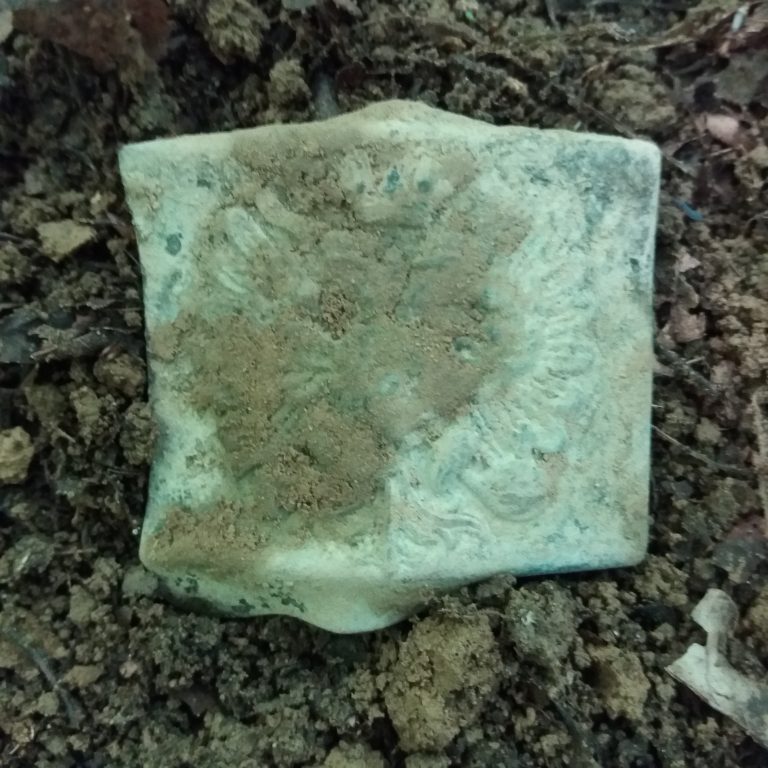
Photo by Artur Hejnar
A green-patinated find that did not fit the field
The metal object immediately stood out. It did not look like an ordinary piece of wartime scrap, nor did it resemble the usual minor finds recovered during detector surveys. Members of the team gathered around it, trying to identify what they were looking at.
The group contacted archaeologist Dr. Wojciech Pasterkiewicz, who arrived at the site shortly afterward. But the answer was not immediate. According to the association’s account, the archaeologist was also struck by the object’s unusual form and could not easily match it with material familiar from local archaeological contexts.
That uncertainty became part of the story. Other specialists consulted later were also cautious. The working interpretation identified the object as a mace head, while early comparisons suggested that it might have links with the Near East.
A single lost object, not a hoard
After the discovery, the surrounding area was checked again with metal detectors. No comparable object or associated group of finds was recovered. That detail matters. It suggests that the mace head may not have come from a hoard, a grave, or a larger archaeological deposit. It may have been a single lost object.
But “single” does not mean simple.
If the object was indeed made nearly 3,000 years ago and reflects a Near Eastern type, its presence in southeastern Poland would require explanation. Was it carried by a person moving across long-distance routes? Did it change hands many times before reaching the region? Was it valued as a weapon, a symbol, or an object with prestige attached to it?
At this stage, those questions remain open. A reported parallel from the area of Zolochiv in western Ukraine gives researchers another point of comparison, but it does not prove a direct connection. It does, however, remind us that Bronze Age Europe was not isolated. Objects, materials, ideas, and styles could travel across surprisingly long distances.
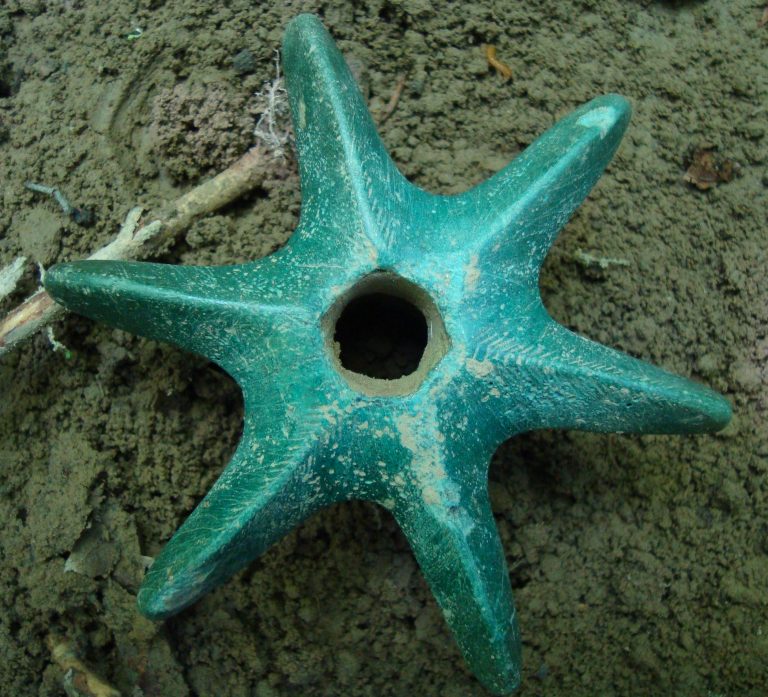
Photo: Artur Hejnar
Dukla’s history gains a much older layer
Dukla is better known for its modern military history than for Bronze Age discoveries. The wider region carries many traces of the First and Second World Wars, and that was the reason the Galicja team had gone into the field in the first place.
The mace head changes the scale of the story. It adds a much older layer to a landscape usually read through the lens of twentieth-century conflict.
The main question remains unanswered: how did a possible 3,000-year-old mace head reach the Dukla area?