
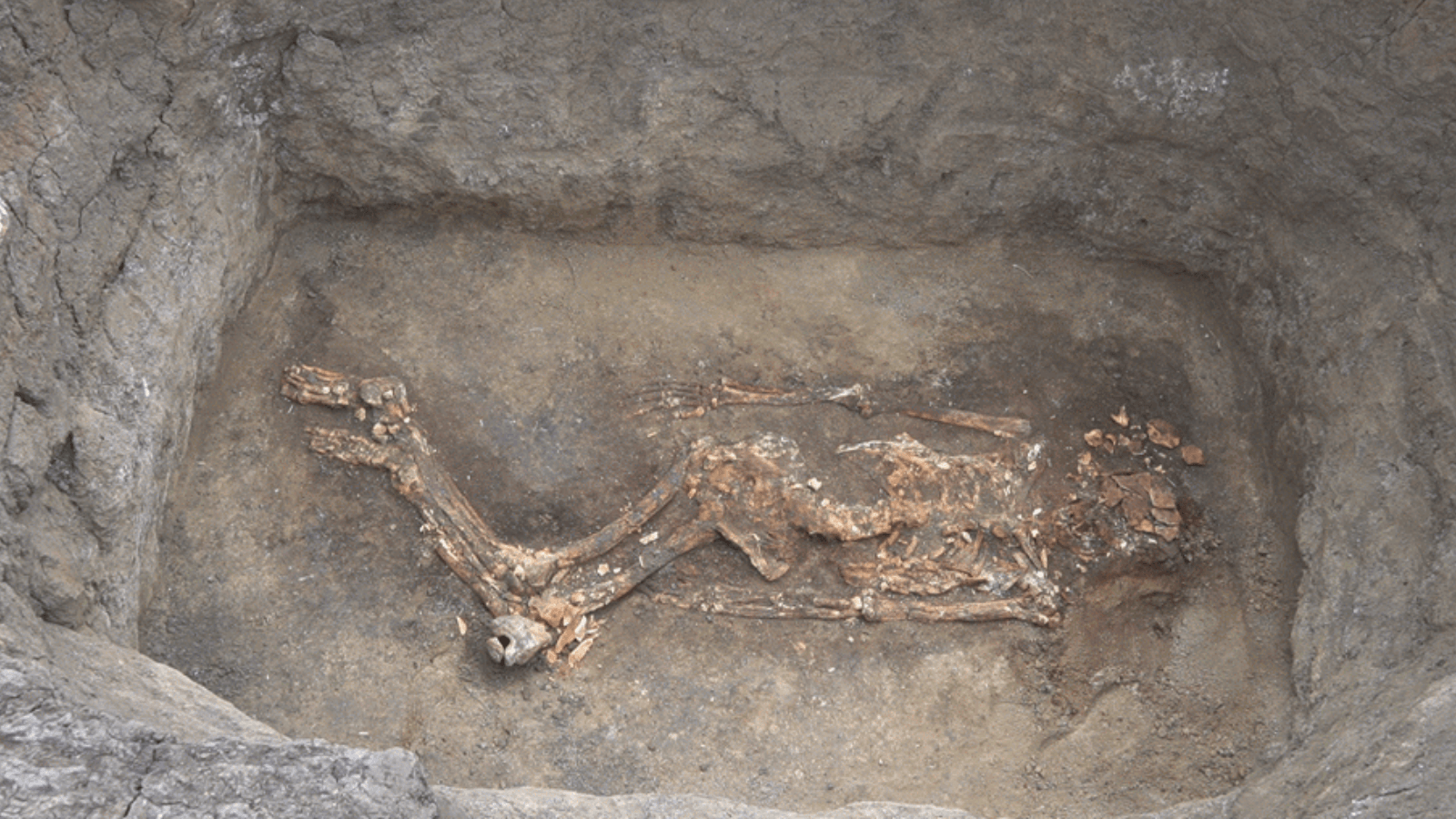
Archaeologists excavating a burial mound in northeastern Bulgaria have found traces of blue pigment on a skeleton dating back approximately 5,000 years. The central grave has been linked to the Yamnaya culture, whose funerary traditions are commonly associated with red ochre rather than blue coloring.
The burial was uncovered inside the so-called Great Mound near the village of Plachi Dol in Bulgaria’s Dobrich Province. A Bulgarian-Polish team returned to the site in August 2026, resuming an excavation left unfinished more than four decades ago.
Associate Professor Stefan Alexandrov of the National Archaeological Institute with Museum at the Bulgarian Academy of Sciences, who directs the excavation, identified it as the mound’s central, or primary, grave. Researchers believe the first earthen mound was raised over this burial before the monument was enlarged in later phases.
The grave has been assigned to the Early Bronze Age and associated with the Yamnaya culture. No direct radiocarbon date for the newly discovered individual has yet been announced, making its estimated age dependent on the burial’s archaeological context and characteristic features.
Blue pigment applied directly to the bones
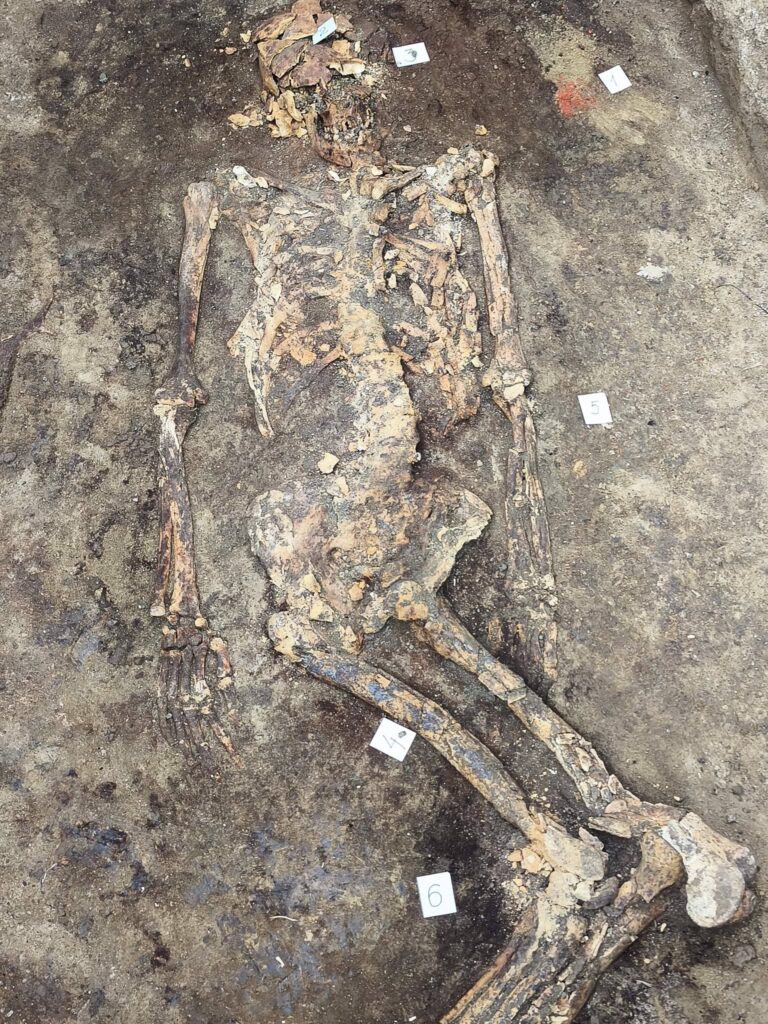
Red ochre is frequently documented in Yamnaya burials across the Pontic-Caspian steppe, the Lower Danube and the Balkans. It could be scattered over the body, placed inside the grave or applied to particular parts of the skeleton.
At Plachi Dol, archaeologists identified red ochre on the skull and limbs but also encountered an unexpected blue substance. Preliminary observations indicate that the blue pigment may have been deliberately applied directly to the bones.
Dr. Rositsa Lyubomirova Manova, a conservation specialist and deputy director of the excavation, told the regional news outlet IA Dobruja that additional analysis would be needed to identify the material. Researchers have not yet established whether it was produced from a mineral or an organic substance.
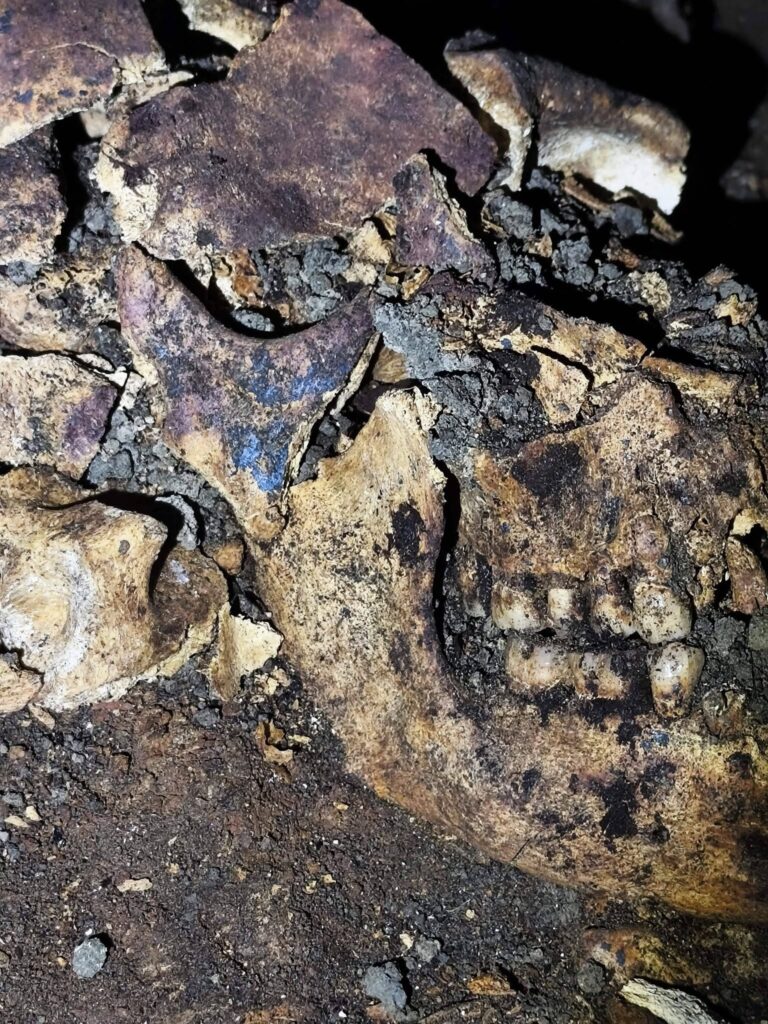
The results will also help determine whether the color formed part of the original burial ritual. Minerals in the soil, contact with objects and chemical processes occurring after burial can alter the appearance of human remains, so the identification of a deliberately applied pigment must be confirmed in the laboratory.
The skeleton rested on an organic layer interpreted as a mat or burial bedding. Examination under ultraviolet light revealed yellow-orange fluorescence in parts of this material, possibly preserving evidence of organic colorants that are no longer visible.
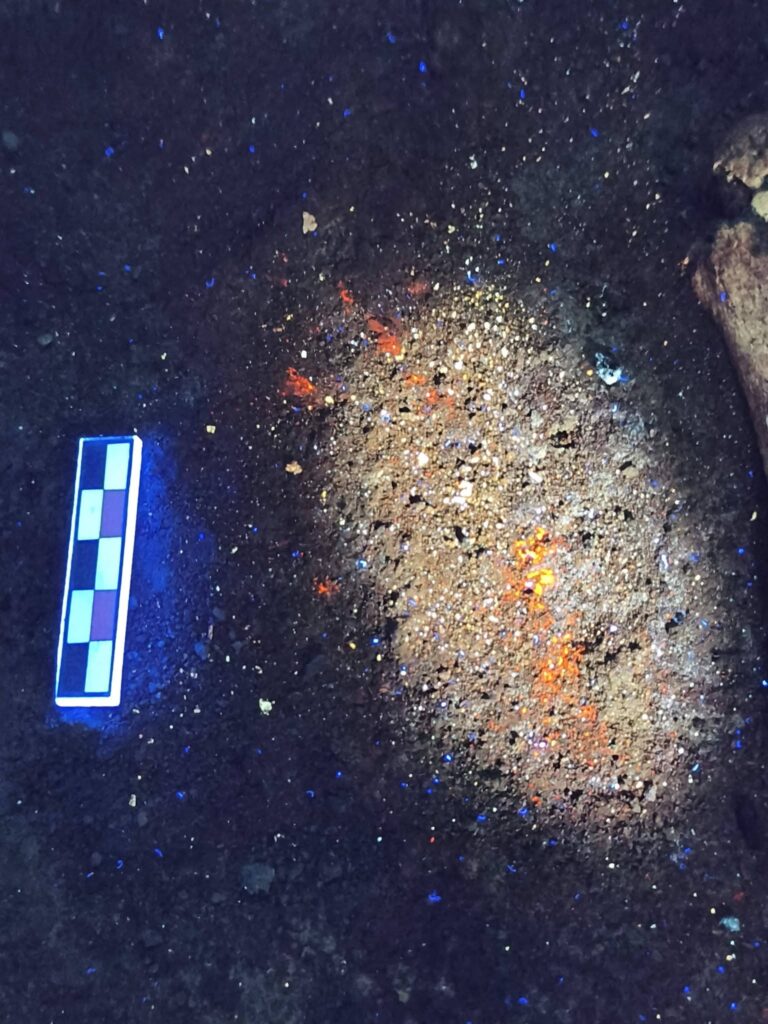
The findings raise the possibility that the grave originally had a much richer visual appearance. Red, blue and perhaps additional organic colors may have been used to prepare the body and the surface on which it was placed.
A young man beneath the mound
The deceased had been placed on his back with his knees bent and his arms extended alongside his body. The deep, approximately rectangular grave pit also retained evidence of a wooden covering.
Professor Volker Heyd of the University of Helsinki, a member of the international team, described the arrangement as characteristic of early Yamnaya funerary practice in the Balkans and western Black Sea region. Such graves are connected with communities that reached southeastern Europe from the steppes north of the Black Sea during the late fourth and early third millennia BC.
A preliminary anthropological assessment suggests that the individual was a man who died at about 24 years of age. Alexandrov described him as tall and physically robust, although more detailed anthropological and genetic studies will be required to confirm the initial assessment.
No conventional grave inventory was reported with the primary burial. Alexandrov noted that the absence of valuable objects was not unusual for early Yamnaya graves, placing greater importance on the construction of the tomb and the treatment of the body.
Manova suggested that the extensive use of color may have reflected ritual ideas or the social position of the deceased. These interpretations remain tentative until the pigments, organic remains and skeleton have undergone further examination.
A study published in Studia Praehistorica in 2025 provides a useful comparison, although it examined a different Yamnaya-related burial in northeastern Bulgaria. Manova and her colleagues found evidence that calcium carbonate and hematite had been deliberately applied to skeletal remains, possibly to preserve the body or maintain the memory of an ancestor associated with social authority.
The newly discovered blue substance has not been connected with either material. Its composition and purpose remain open questions.
A cemetery revisited after four decades
The Plachi Dol cemetery consists of five burial mounds located south of the village. An international team led by Ivan Panayotov and Valentin Dergachev excavated the site in 1979 and 1980, but work on the largest mound ended after part of the central excavation profile collapsed.
Earlier investigations revealed another notable Early Bronze Age burial dating to around 2700 BC. Its grave pit had been covered by a four-wheeled vehicle, helping establish Plachi Dol as an important site for the study of Yamnaya burial practices in the northeastern Balkans.
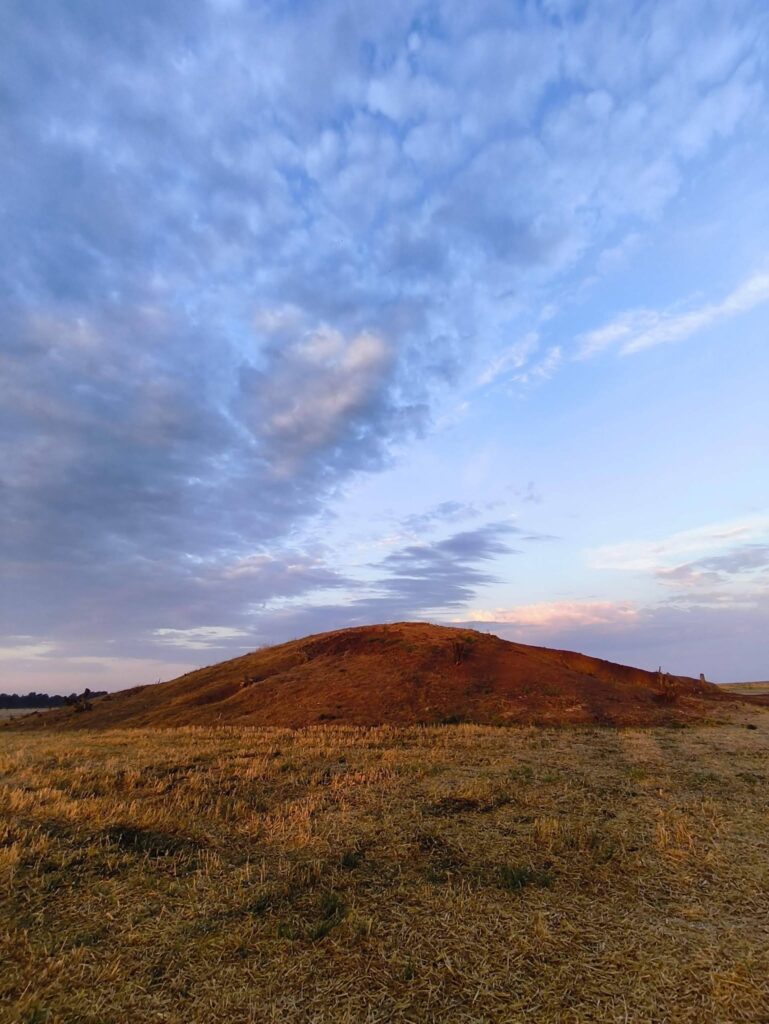
Later radiocarbon research placed early Yamnaya graves from the cemetery broadly between 3100 and 2900 BC. A subsequent phase, marked by changes in the position of the body, was dated between approximately 2900 and 2500 BC. These ranges provide context for the new grave but do not constitute a direct date for its occupant.
The renewed excavation began on August 3, 2026, as a collaboration between Bulgarian and Polish researchers. Alexandrov leads the archaeological work, while Professor Piotr Włodarczak directs the Polish team. The Regional History Museum in Dobrich is supporting the project and will receive the recovered archaeological material.
Researchers believe the Great Mound developed through at least three successive construction stages associated with different burials. Elsewhere within it, the current excavation has uncovered three large silver pendants in a separate Early Bronze Age grave and recovered two matching fragments of an anthropomorphic stone stele.
The reuse and reinterpretation of prehistoric burial mounds continued across later periods, as demonstrated by a Bronze Age mound in Britain that subsequently became a Roman sanctuary and was associated with medieval gallows.
Laboratory examination of the blue material will focus on its chemical composition and how it reached the bones. The results should clarify whether the Plachi Dol burial preserves an intentional use of blue in a funerary tradition overwhelmingly recognized today through its association with red ochre.