
Archaeologists excavating the ancient city of Phanagoria have uncovered an extensive wine-producing district dating to the first centuries AD. Five wineries, dozens of large fermentation vessels and nearby commercial buildings point to production on a scale far beyond the needs of individual households.
The discovery was announced following the 2026 excavation season at Phanagoria, on Russia’s Taman Peninsula near the Kerch Strait, where the Black Sea meets the Sea of Azov. The ancient city was one of the principal centers of the Bosporan Kingdom and remained inhabited for around 1,500 years.
The excavations are being conducted by the Phanagoria Archaeological Expedition of the Institute of Archaeology of the Russian Academy of Sciences, led by Vladimir Kuznetsov. The research is supported by the Volnoe Delo Foundation, which announced the latest findings on August 27.
According to the foundation, the newly identified production district extended across several urban blocks near Phanagoria’s harbor. Archaeologists also documented buildings interpreted as warehouses and shops, placing wine production, storage and sale within the same part of the city.
Five wineries identified so far
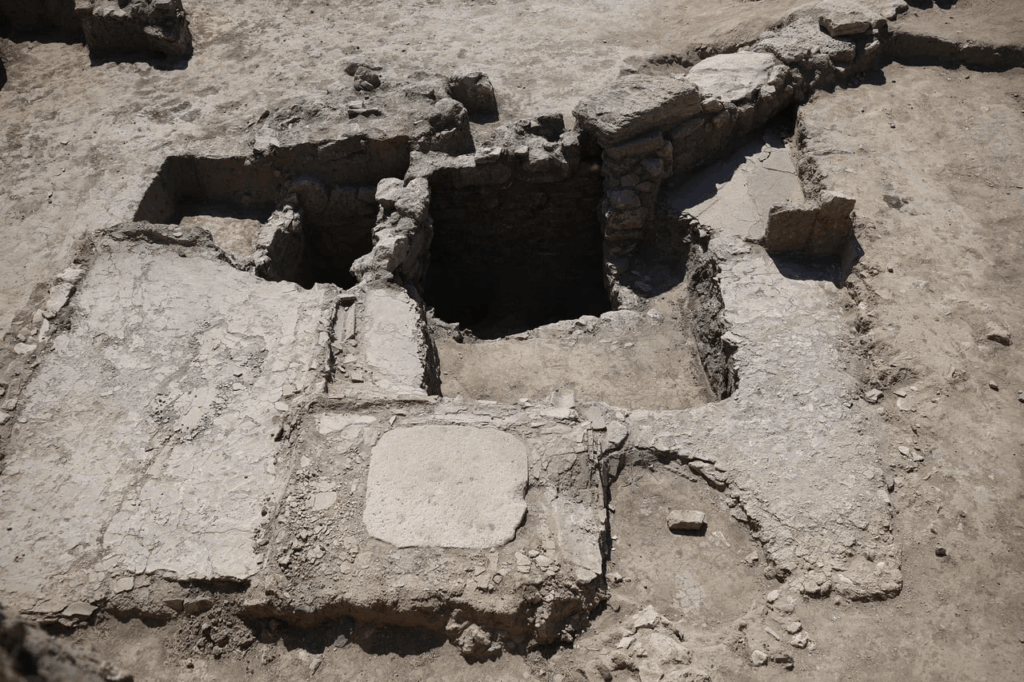
Remains of five separate wine-production facilities have been uncovered in the investigated area. The largest is estimated to have produced approximately 30 tonnes of wine annually, although the total output of the district has not yet been established.
The Volnoe Delo Foundation has suggested that hundreds of such installations may once have operated at Phanagoria, potentially producing thousands of tonnes of wine each year. This broader estimate reflects the presumed extent of production across the city rather than the measured output of the five wineries excavated so far.
The concentration of workshops, storage facilities and commercial spaces nevertheless shows that winemaking was a specialized and organized part of Phanagoria’s urban economy.
From crushed grapes to fermentation vessels
The excavated installations preserve evidence for several stages of ancient winemaking. Grapes were crushed underfoot on specially prepared platforms coated with water-resistant mortar made from sand, lime, shells and crushed ceramics.
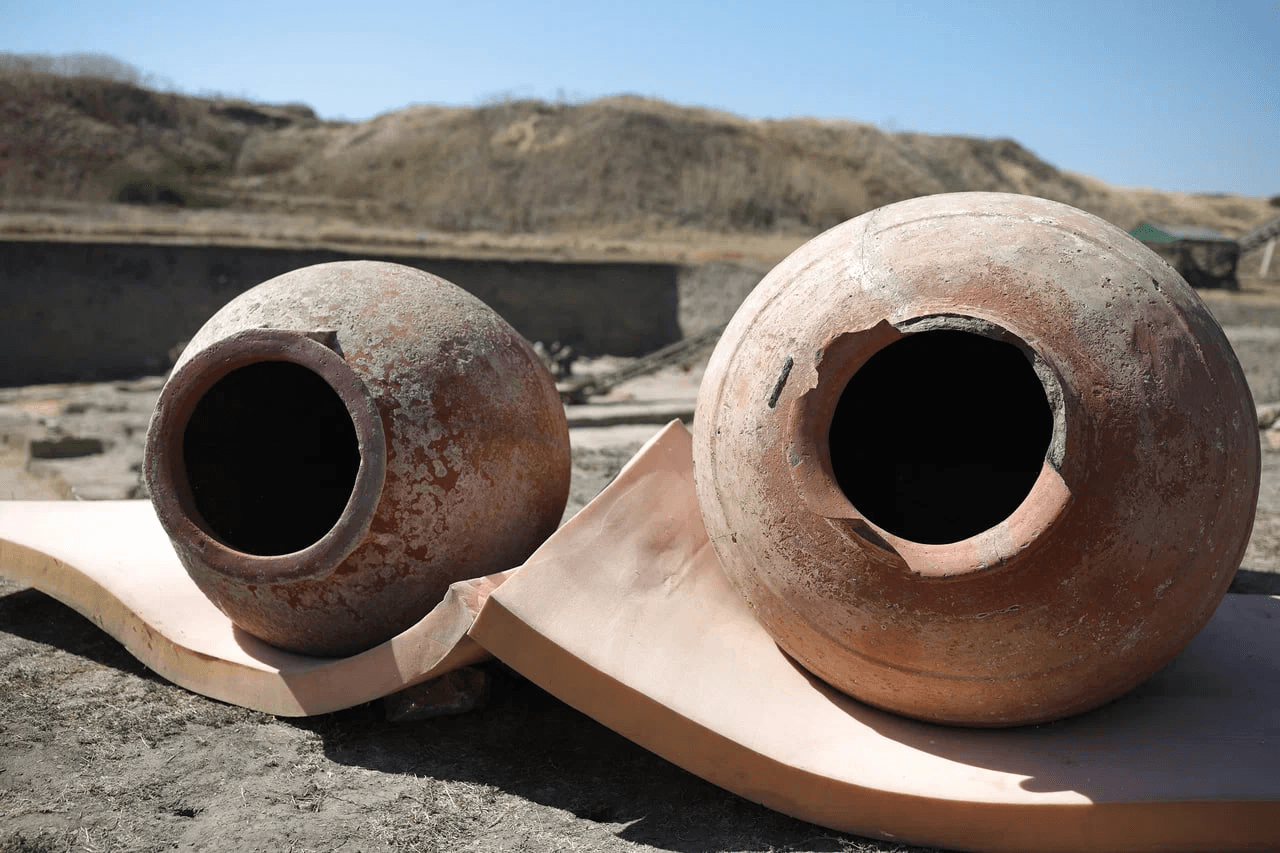
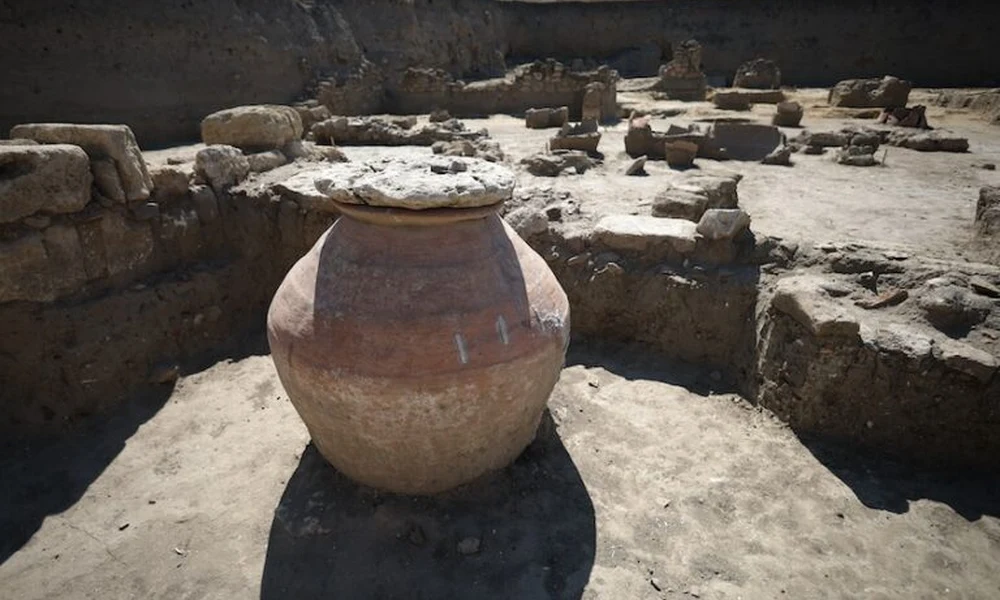
The juice was then transferred into large ceramic vessels known as pithoi, where it was left to ferment. Archaeologists recorded approximately 60 pithoi, each capable of holding between 600 and 800 liters. Some survived almost intact, while the positions of others could be identified only from impressions left in the ground.
After fermentation, the wine was poured into amphorae for storage, sale or transport. According to the foundation, traces associated with burning sulfur remain visible inside some vessels. Sulfur was burned in containers as a disinfectant before they were filled, helping to reduce the risk of the wine spoiling.
The foundation also reports that both red and white wine were produced at Phanagoria, although the grape varieties have not yet been identified. Researchers plan to analyze material recovered during the excavations in an attempt to determine the composition of the wine and the varieties of grapes used.
A commercial district beside the harbor
The wineries were located within the city rather than in an isolated agricultural zone. Their position close to warehouses, shops and the harbor suggests that wine could be moved directly from production and storage areas into local markets or onto ships.
The foundation also reported that hundreds of gold and copper coins were recovered in the wine-producing district. Their presence supports the interpretation of the area as a busy commercial quarter, although the dates and archaeological contexts of the coins have not yet been detailed publicly.
Wine produced at Phanagoria was consumed within the city and traded with neighboring settlements. Some of it was also exported to Greek-founded communities along the northern Black Sea coast, where amphorae served as the principal containers for maritime transport.
Wine in the Bosporan Kingdom
Founded by Greek settlers in the sixth century BC, Phanagoria later became the capital of the Asian territories of the Bosporan Kingdom. Its position near the Kerch Strait connected the fertile lands of the Taman Peninsula with shipping routes across the Black Sea.
Local climate and soil conditions supported extensive vineyards around the city. Wine was an important part of everyday consumption alongside bread and olive oil, while its production and distribution generated income for the urban economy.
Wine also had a place in Phanagoria’s religious life. Dionysus, the Greek god associated with wine and fertility, was among the deities worshipped in the city. Images of Dionysus, satyrs, maenads and grape clusters have been found on coins, amphorae and terracotta figurines from the site.
Excavation of the district is now providing a clearer picture of the infrastructure behind that economy. Crushing platforms, fermentation vessels, amphorae, warehouses and shops were concentrated close to the harbor, allowing wine to pass through successive stages of production and trade within the same part of the ancient city.
Cover Image: Large ceramic vessels recovered during excavations at Phanagoria, where archaeologists identified an extensive ancient wine-producing district. Credit: Volnoe Delo Foundation