
Archaeologists in eastern France have uncovered an unusual Gallic-period burial that raises new questions about how some rural communities treated the dead more than 2,400 years ago.
The discovery was made during an Inrap excavation at Saint-Apollinaire, near Dijon, where researchers identified a small rural settlement dating to the beginning of the 5th century BC. The site included a few storage silos and a well. But one of those silos contained something far more unexpected: two adult human skeletons placed in an intertwined position.
According to the excavation team, the find is unprecedented in the Dijonnais region. It is not simply the presence of human remains inside a silo that makes the discovery remarkable. It is the careful arrangement of the two bodies, their physical connection, and the later manipulation of a skull that suggest a complex funerary practice.
Two bodies placed at the bottom of a silo
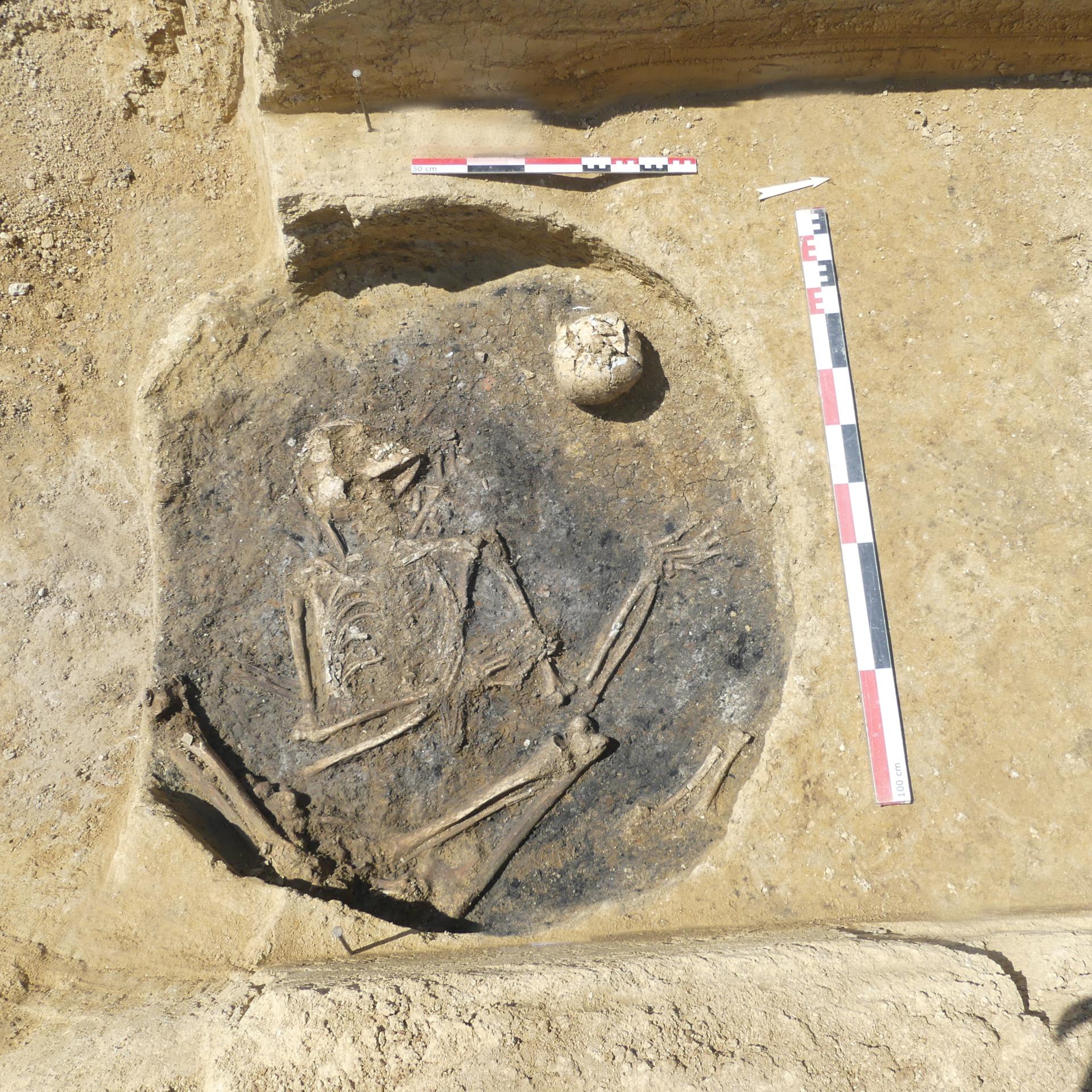
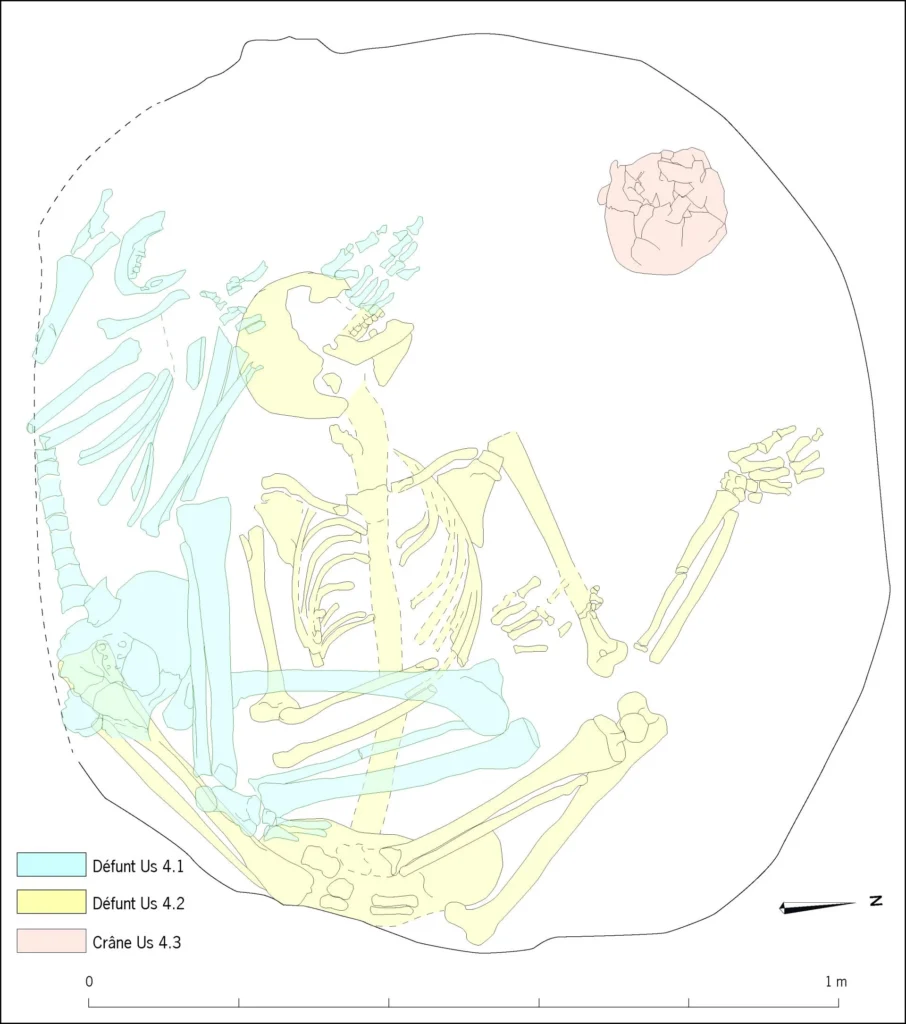
The first individual had been laid on the bottom of the silo, resting on the back with the head turned toward the southwest. The legs were positioned almost cross-legged, with the knees opened outward in a constrained posture. The arms were also bent. The right forearm rested across the ribs, with the hand placed near the left elbow, while the left arm extended away from the chest.
This was not the natural position of a body casually placed in a pit. The posture appears deliberate, shaped by the narrow space but also by choices made during the burial.
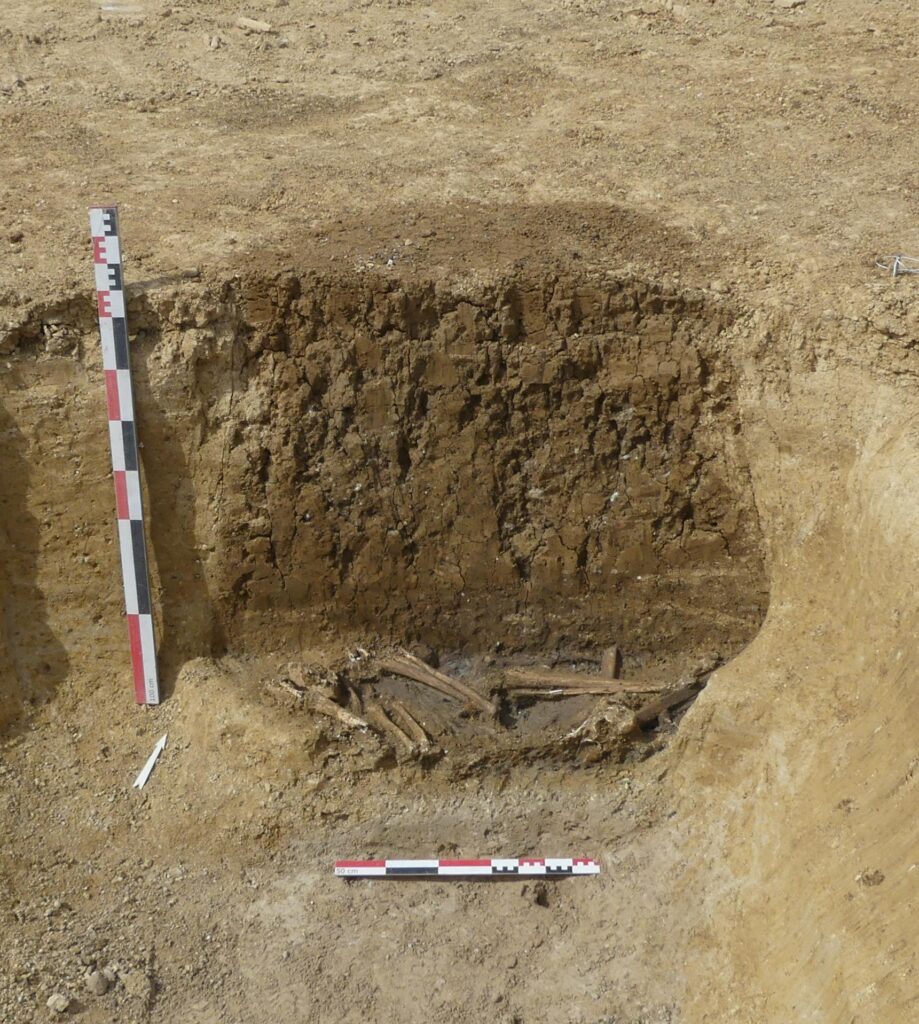
The second adult was placed partly over the first. The body rested partly on the back and partly on the right side, pressed against the curved edge of the silo. Only the lower jaw remains from the skull, oriented toward the west. The skeleton was tightly curled. The arms were strongly flexed in front of the chest, with the hands drawn toward the left shoulder.
The legs were folded in an uneven position. The right thigh had been raised, with the knee placed near the left elbow. The left leg was sharply bent, with its lower part folded beneath the thigh.
The two skeletons meet most clearly at the lower limbs and feet. This physical interlocking is one of the strongest signs that the bodies were not deposited at random.
A burial carried out at the same time
For archaeologists, one detail is especially important. There was no sediment layer between the two bodies. The lower skeleton also showed no disturbance that would suggest the second body was added much later.
Inrap
That means the two individuals were almost certainly placed in the silo during the same burial event.
This changes the interpretation of the find. The Saint-Apollinaire burial was not merely a double deposition in a reused storage pit. The bodies appear to have been arranged together, with contact between them forming part of the burial itself. The intention seems to have been to associate the two dead in a visible and physical way.
In a small rural settlement, a structure originally designed for storage became the setting for a carefully organized funerary act.
A skull removed after burial
The silo was apparently not sealed immediately after the two bodies were placed inside. Evidence suggests that it remained accessible for later interventions.
One of these interventions involved the skull of the second individual. Most of the skull is missing, while the mandible remained in place. At a later stage, a separate skull without a lower jaw was deposited at a higher level above the skeletons.
It is not yet clear whether this skull belonged to the second individual or to a third person. That question remains open.
Even so, the sequence is important. It suggests that the burial space was revisited after the initial deposition. The dead were not simply buried and forgotten. The silo may have remained part of a continuing ritual process, involving the removal and later placement of human remains.
Charred plants may point to an offering
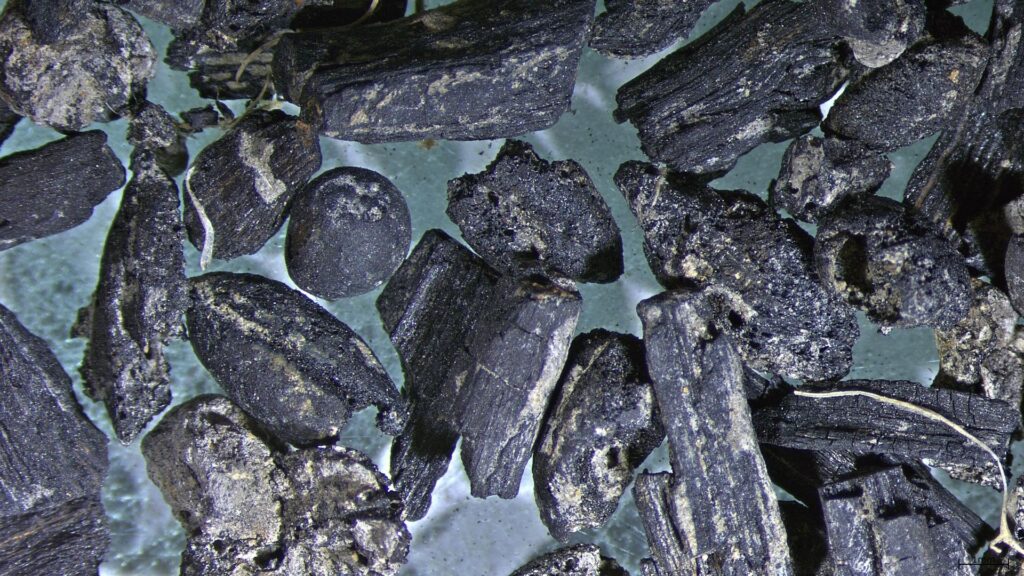
The two skeletons rested directly on a charcoal-rich layer containing many preserved plant remains. Archaeobotanical analysis identified barley, bread wheat, and einkorn wheat, cereals commonly found in silos from this period.
The layer also contained legumes, including lentils and vetches. Acorns and hazel buds offer clues about the surrounding vegetation and local environment.
More unusual, however, was the presence of grape pips, wild apple seeds, and sloes. These remains may point to something beyond ordinary agricultural waste. Researchers suggest they could represent a food deposit, perhaps an offering placed with the dead.
That possibility gives the Saint-Apollinaire burial a deeper significance. The find brings together bodies, food, fire-altered plant remains, and later manipulation of human bones inside a structure once used for storage.
The discovery shows that rural life in early Gallic France cannot be understood only through farming, wells, and silos. In this case, a storage pit became a place where the living arranged, revisited, and perhaps remembered the dead.
For the Dijon region, the two entwined skeletons from Saint-Apollinaire now stand as one of the most unusual archaeological discoveries from the beginning of the Gallic period.
Cover Image: Human remains found at the bottom of the silo currently under excavation. Credit: Régis Labeaune, Inrap