
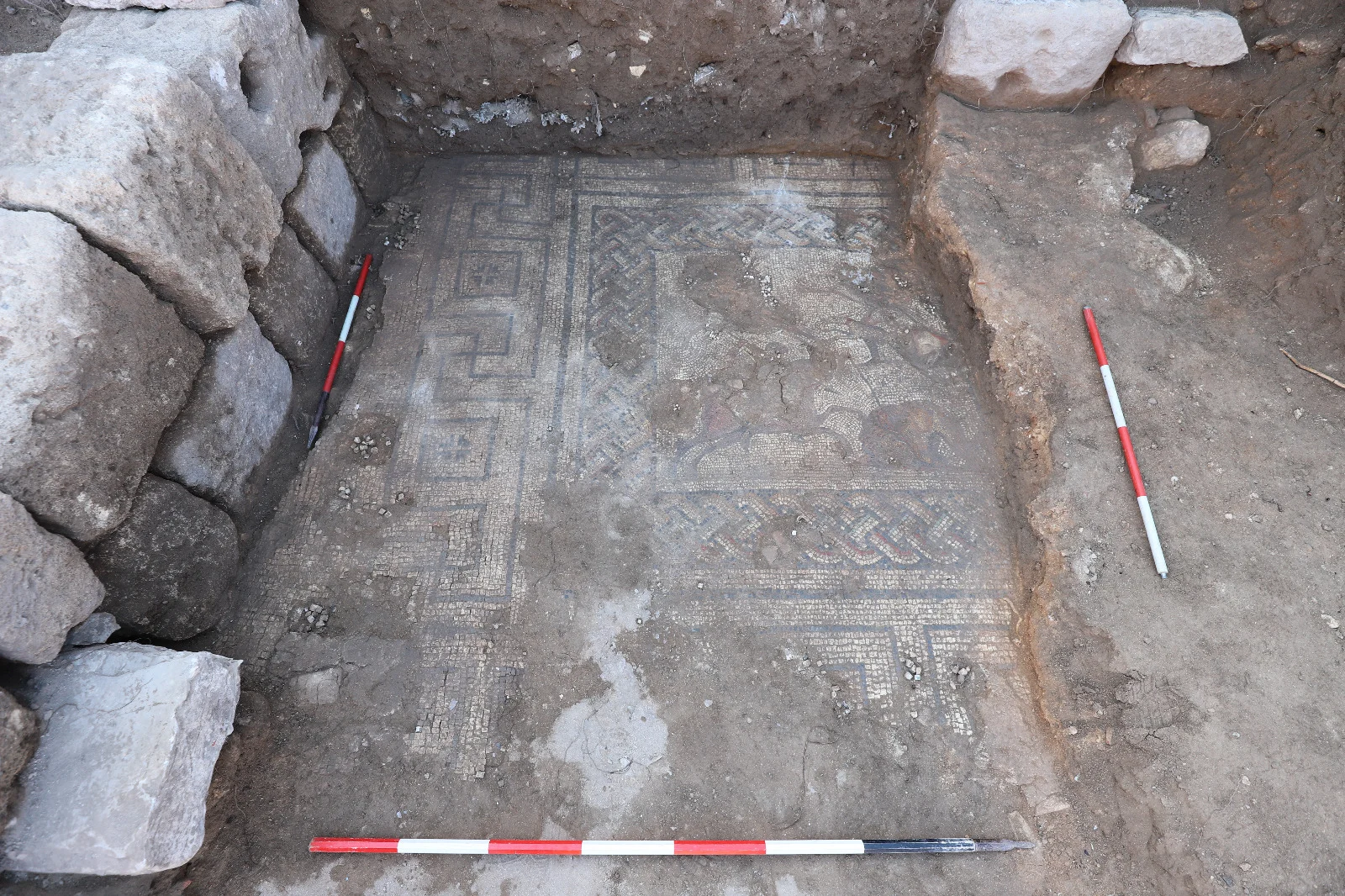
A Roman hunting mosaic hidden beneath the soil for more than half a century has reemerged at Capo Boeo in Marsala, bringing one of ancient Lilybaeum’s most striking domestic artworks back into view.
The mosaic floor, decorated with a dramatic venatio, or hunting scene, was first uncovered in 1972 by archaeologist Carmela Angela Di Stefano between the Church of San Giovanni Battista al Boeo and Viale Isonzo. After its discovery, the pavement was covered again for protection. Now, during new archaeological investigations linked to the Archaeological Park of Lilibeo-Marsala, the scene is being exposed once more.
The discovery belongs to the so-called Domus della Venatio, a late Roman residence named after the hunting mosaic that once decorated its floor. Its return to light is not only a conservation story. Archaeologists are also trying to understand how the house was used, how it changed over time and what happened to this part of the city as ancient Lilybaeum moved toward the medieval world.
A Roman floor returns at Capo Boeo
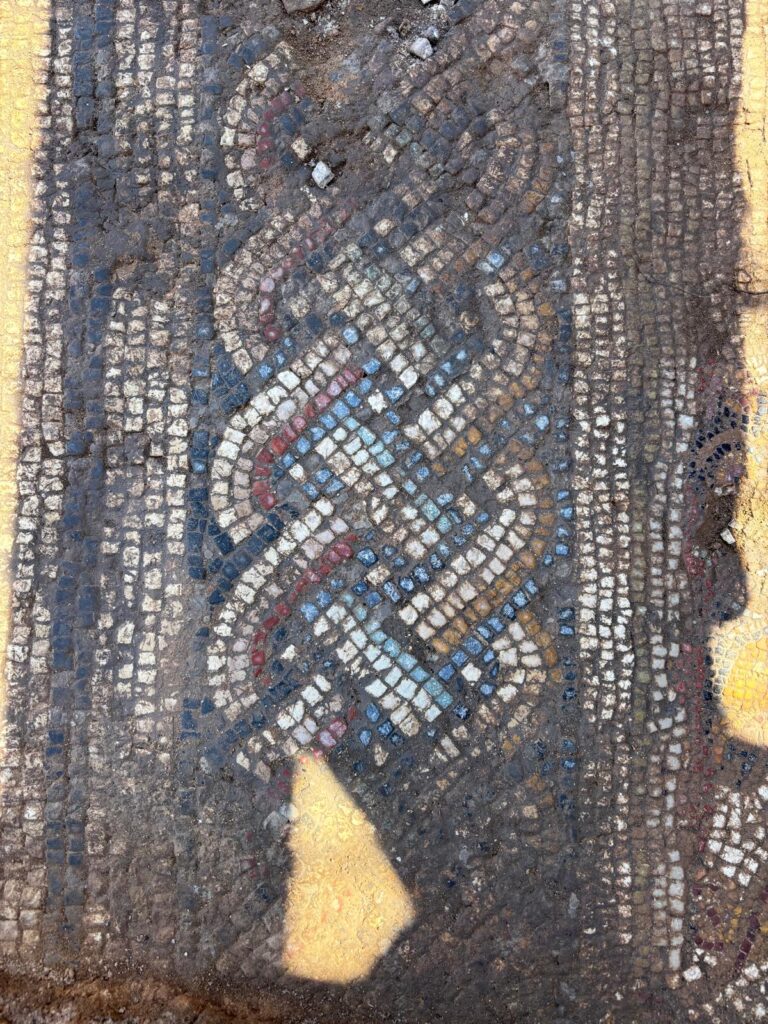
The mosaic is a refined example of Roman imperial mosaic work. It was made in opus tessellatum, using very small tesserae to create movement, depth and volume. The surviving surface preserves a rich palette of black, blue, light blue, red, ochre yellow and brown, with tonal shifts that give the figures a sense of weight and perspective.
This was not a simple decorative pavement. It was a carefully staged image, built for a room where visual display mattered. In a Roman house, such a floor could signal wealth, taste and cultural identity. The viewer was not meant only to walk over it. The scene invited attention.
Two borders frame the composition. The outer frame has an interlaced meander alternating with small panels centered by cruciform flowers. The inner frame uses a four-strand braid in vivid blue and red, broken by white tesserae. The result is almost pictorial, as if the hunt had been set inside a stone frame.
A hunt frozen in stone
The venatio unfolds across two registers. In the upper section, a male figure in a short tunic and high footwear follows a running dog. He appears to be hunting a deer, although only the animal’s legs are visible because a large gap has damaged the left side of the scene.
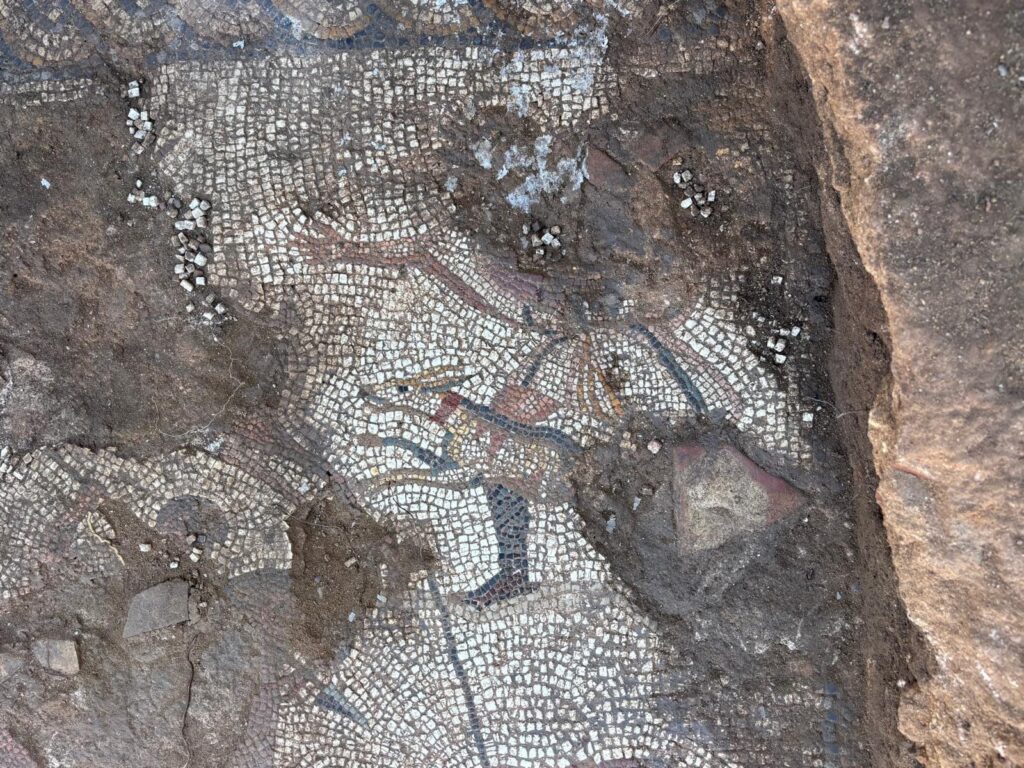
The lower register is more intense. A mounted hunter drives a spear toward a lion collapsed on the ground. The animal is shown wounded, bleeding from the impact of a long lance. Even with missing sections, the scene still holds its force. The viewer can read the pursuit, the blow and the Roman fascination with the controlled violence of the hunt.
Hunting scenes were common in Roman elite settings. They could evoke aristocratic leisure, mastery over nature and the wider world of spectacle familiar from amphitheater culture. In Lilybaeum, a Mediterranean port facing the sea routes between Sicily and North Africa, such imagery would have carried particular weight.
The missing section may change the picture
One important part of the mosaic remains unresolved. The right side of the scene was not excavated in 1972. Archaeologists say two pavement levels overlap there, and the area will be investigated in a future campaign using a careful stratigraphic method.
That makes the current work more than the recovery of a beautiful floor. The unexcavated section may help reveal the full composition of the hunting scene, the layout of the room and the different phases of the house.
Earlier research on the Domus della Venatio has also pointed to thick burning layers above the floors. These traces may suggest a sudden destructive episode in the 5th century, although the wider evidence from Capo Boeo also points to longer occupation and transformation in the area. The house, in other words, may preserve both a moment of rupture and a longer story of urban change.
Lilybaeum’s changing cityscape
The setting gives the mosaic much of its historical importance. Capo Boeo preserves a key part of ancient Lilybaeum, one of western Sicily’s major cities. From its position at the island’s western edge, Lilybaeum controlled access to important Mediterranean routes and remained closely tied to the sea.
The Archaeological Park of Lilibeo-Marsala today occupies a rare position inside a modern city. Ancient remains, modern streets and the coastline meet in the same urban landscape. This makes the rediscovered mosaic especially valuable, because it connects a private Roman house with the broader evolution of Marsala itself.
The new campaign is also part of wider research into the less understood phases of late Roman, Byzantine, Islamic and early medieval Lilybaeum. During this long transition, the ancient city eventually became Marsā ‘Alī, the name behind modern Marsala.
A mosaic returning to public life
Anna Occhipinti, director of the Archaeological Park of Lilibeo-Marsala, said the aim is to enhance this important example of mosaic art by including it in visitor routes and returning a precious testimony of the city’s history to the public.
The work is being carried out with the collaboration of ArcheOfficina and the scientific contribution of park archaeologist Maria Grazia Griffo. Regional cultural heritage officials have also emphasized the unusual character of the Lilibeo park, which sits between the sea, the protected archaeological area and the modern city.
For visitors, the mosaic may soon become one of the most memorable stops in the park. For archaeologists, it offers something more complex: a floor that preserves a Roman image of the hunt, a damaged but still powerful domestic space and a clue to the changing life of one of Sicily’s great Mediterranean cities.