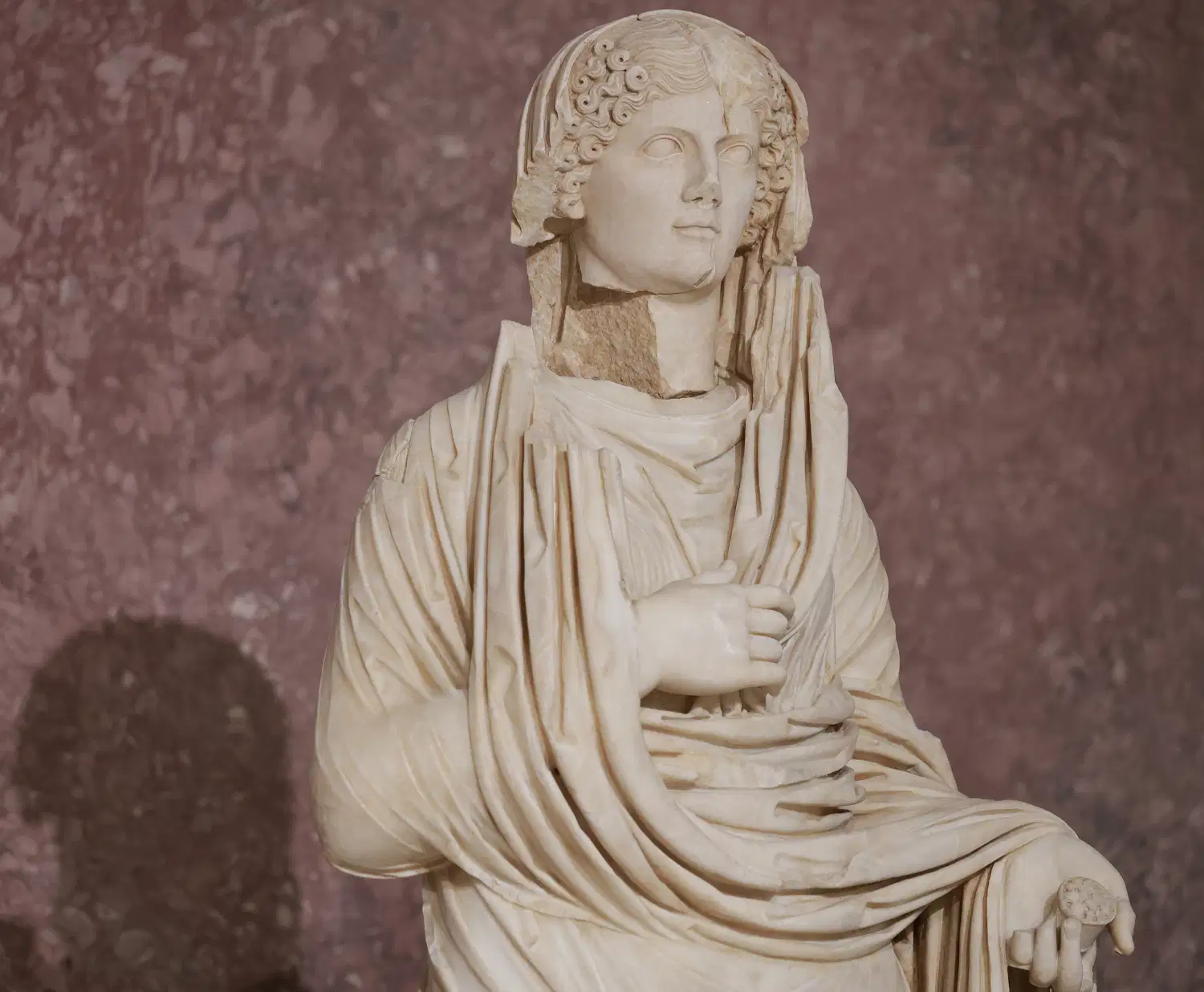
For years, the face of Agrippina the Elder had been difficult to read. Old waxes, oxidized oils, varnish and surface grime had darkened the marble, softening the details of one of the most important Roman portraits ever found at ancient Veleia.
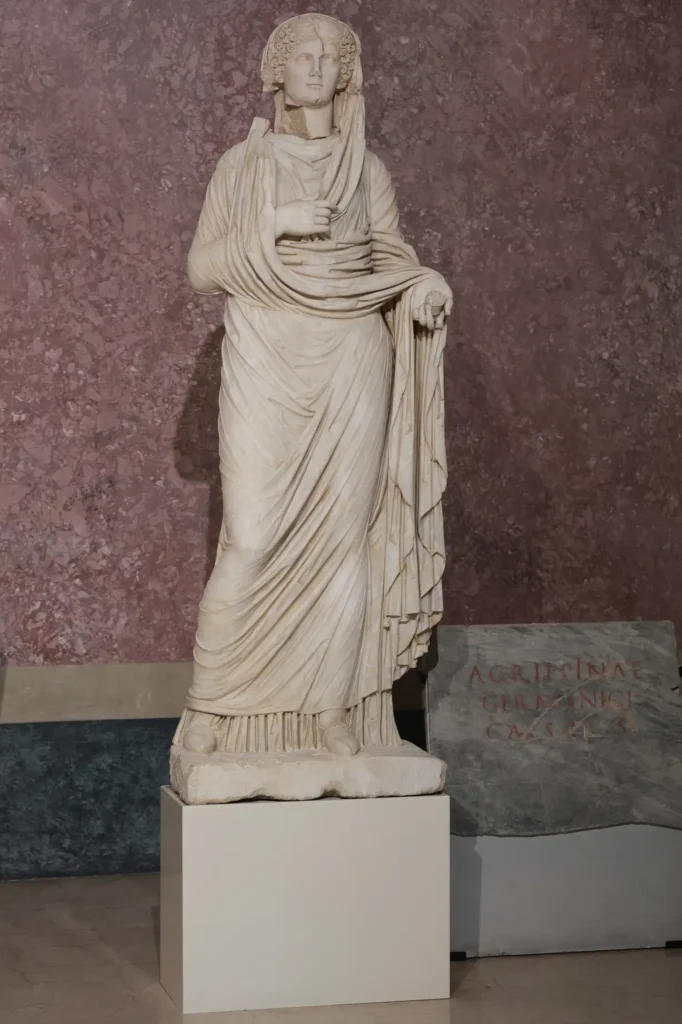
Now, after a careful restoration in Parma, the larger than life-sized statue has returned to public view at the Archaeological Museum of Parma. The intervention has not simply made the sculpture brighter. It has allowed scholars and visitors to see the work with a clarity that had been lost under earlier restoration layers.
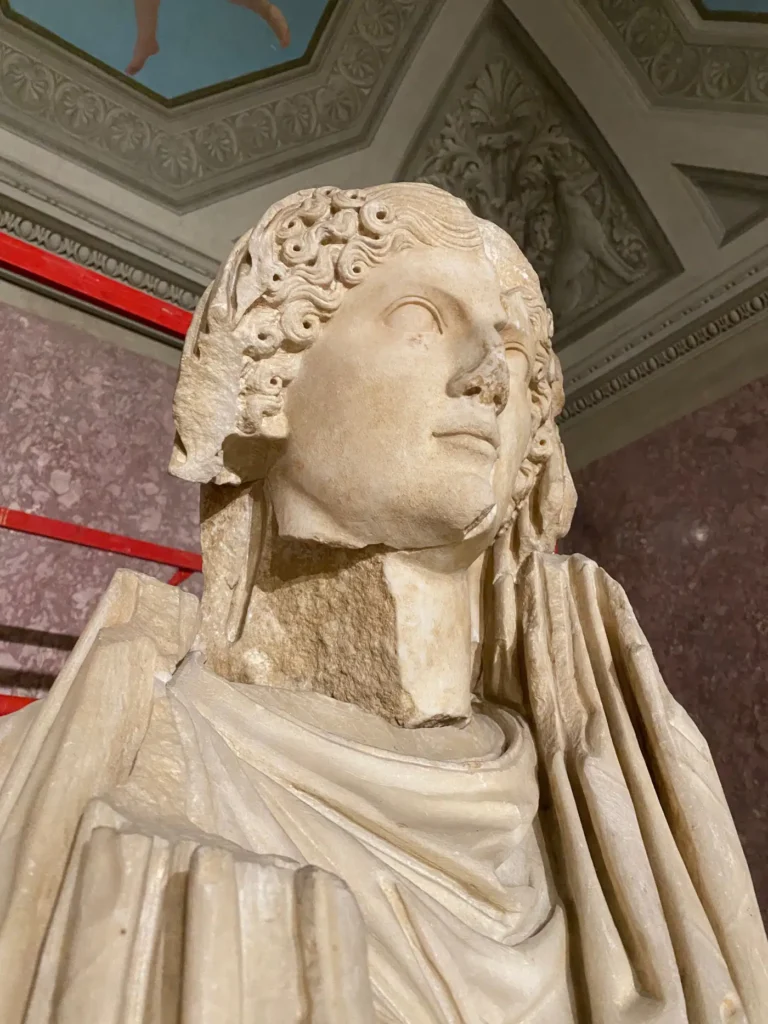
The most striking result emerged on the face. Once the darkened coatings were removed, conservators could see that Agrippina’s head was carved from a block of pure white marble, different from the veined marble used for the rest of the body. That contrast, long obscured, gives the statue a sharper visual presence and offers a closer look at how shaped the image of one of the most powerful women of the Julio-Claudian world.
A face hidden under old restorations
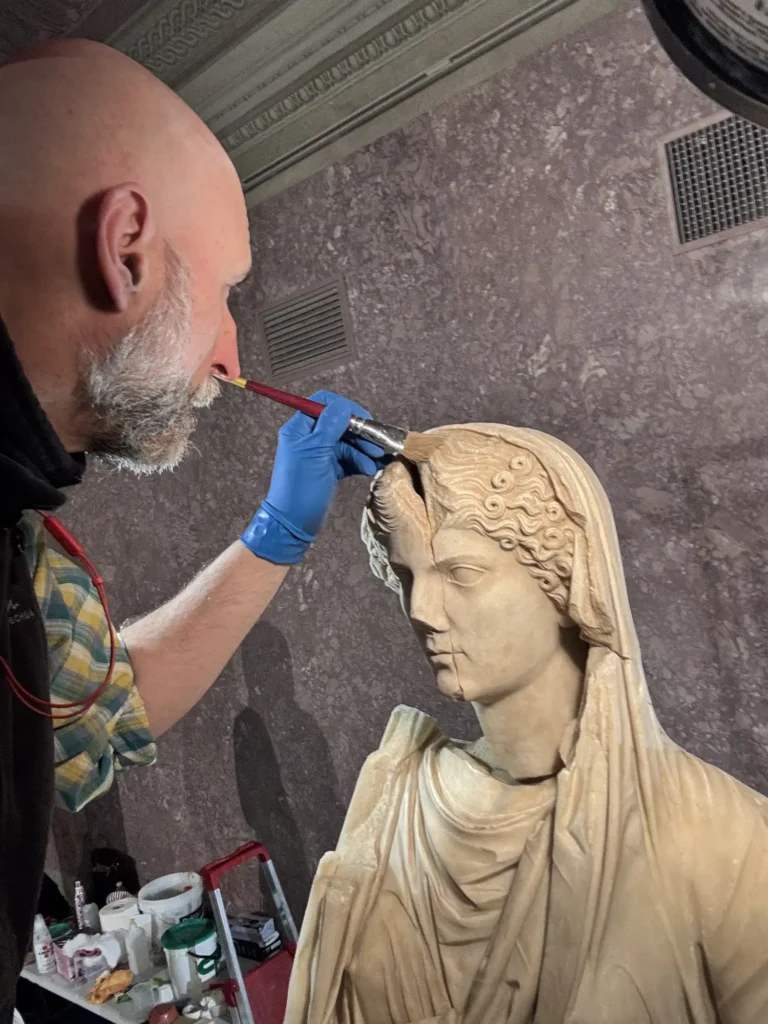
The restoration was presented at the Complesso Monumentale della Pilotta in Parma, which oversees the Archaeological Museum. The work focused on removing thick layers left by older interventions, including waxes and oily substances that had oxidized over time.
Those materials had altered the appearance of the sculpture. The marble surface looked heavier and darker than it should. Fine details in the drapery, carved decoration and facial modelling were harder to distinguish. After cleaning, the figure recovered much of its original legibility.
For a Roman portrait, this matters. Marble was not a neutral material. Its color, surface and finish helped shape how a public figure was seen. In Agrippina’s case, the newly visible difference between the white head and the veined body adds an important technical detail to the study of the statue.
A dynasty gathered in marble
The statue comes from the ancient city of Veleia, in what is now Emilia-Romagna in northern Italy. It was part of a famous group of twelve marble portraits representing members of the Julio-Claudian imperial family.
The group once stood on a long podium inside the basilica of Veleia. Excavations began there in 1760 under Duke Philip of Bourbon, making these statues among the earliest and most significant finds from the site.
The display included some of the most recognizable figures of Rome’s first imperial dynasty: Augustus, Livia, Tiberius, Drusus the Elder, Drusus the Younger, Caligula, Drusilla, Agrippina the Elder, Agrippina the Younger and Nero as a child. Lucius Calpurnius Piso, connected to the Roman elite and believed to have played an important role in the commission, was also represented.
This was not casual decoration. In a provincial Roman city, such a group announced closeness to imperial power. It placed Veleia inside the political and symbolic world of Rome’s ruling house.
Agrippina was not a minor figure
Agrippina the Elder was carved in marble because her image carried weight.
She was closely tied to Augustus’ family, married to the celebrated general Germanicus, mother of Caligula and grandmother of Nero. Her life moved through the center of Julio-Claudian politics, where family, succession and danger were often inseparable.
Ancient sources remembered her as a woman of unusual public visibility. After the death of Germanicus, she returned to Italy carrying his ashes, a scene that became one of the most powerful images of grief and political tension in early imperial Rome. Later, under Tiberius, she was exiled and died in AD 33.
Seen against that history, the Veleia statue is more than a fine portrait. It is a public image of a woman whose bloodline and memory mattered deeply to Rome’s first dynasty.
A restored statue, a sharper reading of Veleia
The restoration also changes how the whole Veleia group can be read. Agrippina now stands again among her relatives with clearer features, cleaner surfaces and a stronger sense of material contrast.
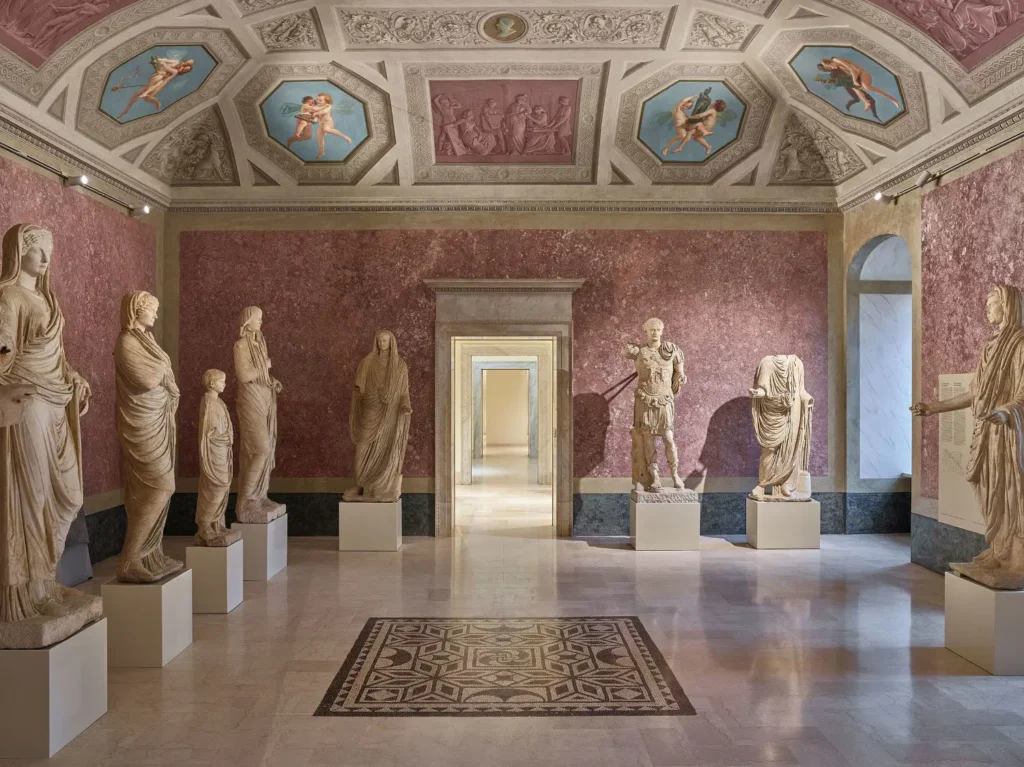
For visitors, the result is immediate. The sculpture no longer appears as a darkened museum object shaped mainly by age and old treatments. It reads again as a carefully made imperial portrait, designed to speak through posture, fabric, facial expression and marble.
For archaeologists and historians, the restored statue offers another way to examine the relationship between Veleia and the imperial family. The city’s basilica once used these marble figures to show loyalty, status and connection to Rome. In Parma, that message can now be seen with greater precision.
Agrippina’s face had not disappeared, but it had been muted. The restoration has given it back its force.