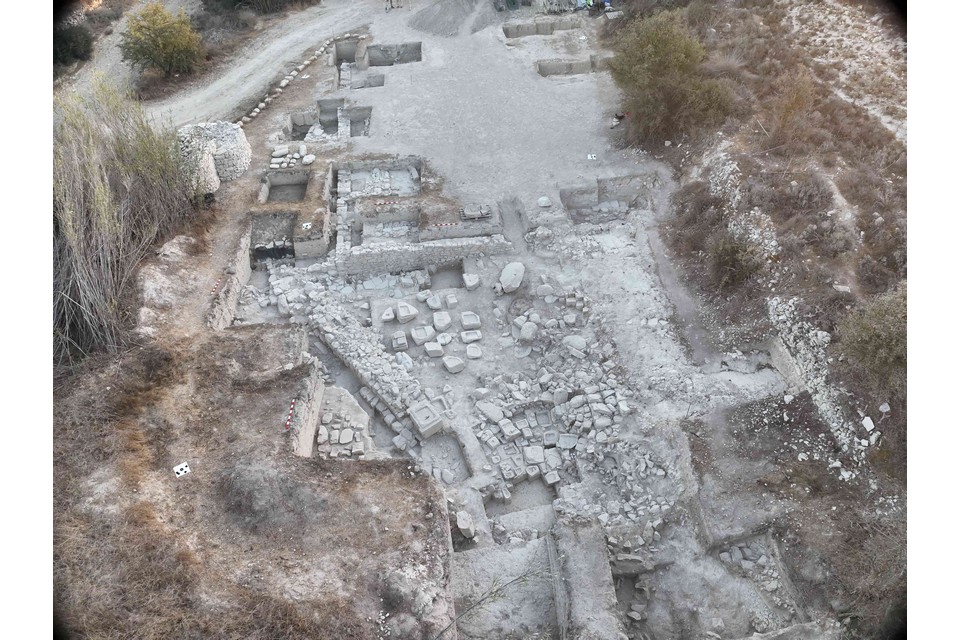
For more than a century, the Sanctuary of Apollo at Frangissa survived mostly as an old archaeological story. First explored in 1885, then poorly published and eventually lost from the map, the rural sanctuary near Pera Oreinis in Cyprus had become one of those places known more through fragments than through the ground itself.
Now archaeologists have returned to the site with modern methods, and the sanctuary is beginning to speak again.
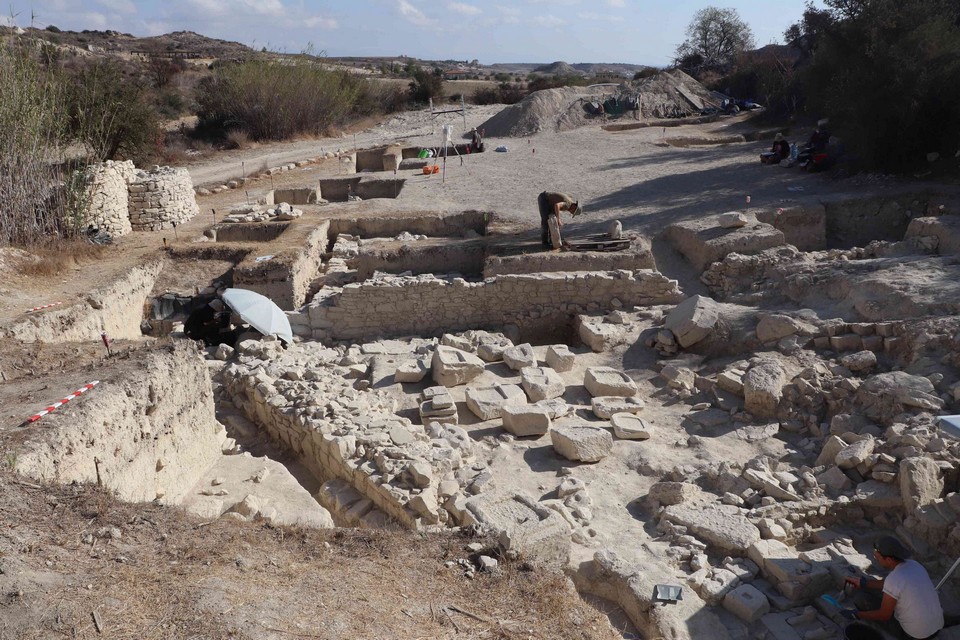
The latest excavation at Frangissa has uncovered more than 20 ancient votive statue bases still standing in their original positions. Some still preserve the feet of the statues that once rose above them. Others were found tightly arranged beside earlier dedications, creating a rare view of how worshippers shaped, crowded, and renewed a sacred space over generations.
The discovery was announced by Cyprus’ Department of Antiquities following the fifth modern excavation season at the Sanctuary of Apollo. The project is directed by Dr. Matthias Recke of the University of Frankfurt, with fieldwork led by Dr. Philipp Kobusch of the University of Rostock.
Ancient offerings found in their original sacred layout
The most striking part of the discovery is not simply the number of statue bases. It is their position.
In many ancient sanctuaries, offerings were broken, moved, reused, or scattered by later building activity and early excavations. Frangissa is different. Archaeologists found a group of votive bases still standing where ancient worshippers had placed them more than 2,500 years ago.
That makes the sanctuary unusually valuable. Instead of studying isolated objects removed from their setting, researchers can now examine how the dedications were arranged inside the sacred area. The bases show how worshippers approached the god, where they placed their offerings, and how later generations respected or reorganized older monuments.
Some bases had been set so closely together that the sanctuary must have looked dense with statues. In other places, newer dedications were placed above older ones in a way that allowed both to remain visible. This suggests that Frangissa was not repeatedly cleared and rebuilt from scratch. Its sacred memory was layered.
Clay figures stood on stone pedestals
One detail from the excavation may change how scholars understand votive practice in ancient Cyprus.
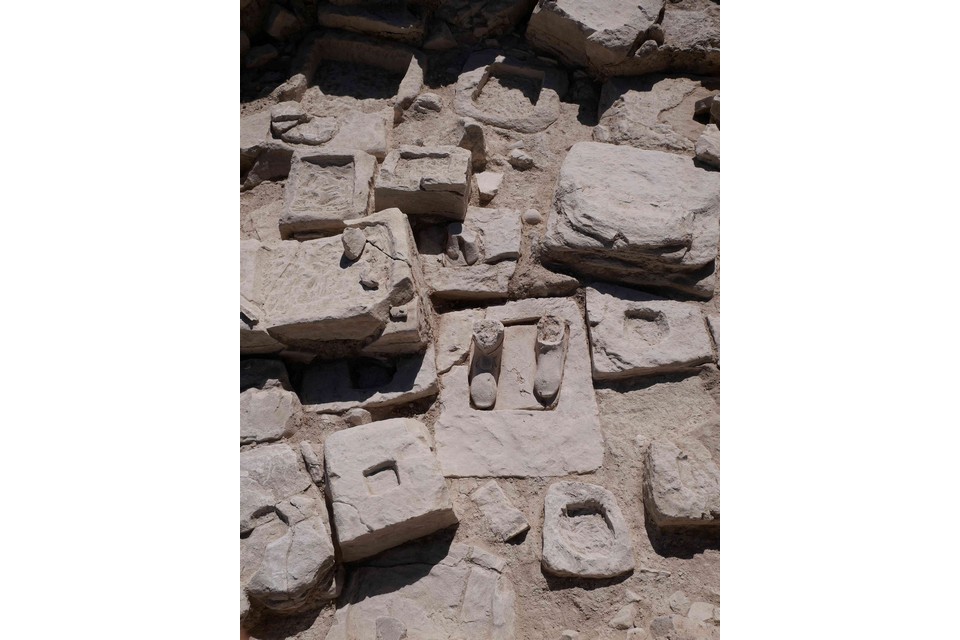
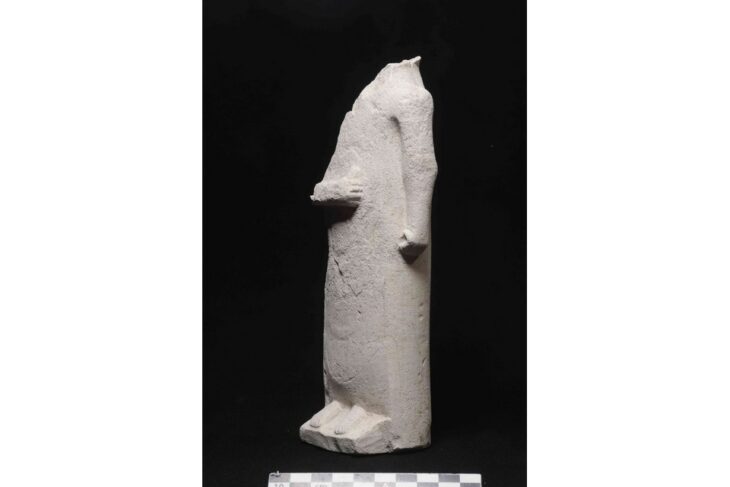
Archaeologists found terracotta feet attached to several limestone bases. This provides the first clear archaeological evidence in Cyprus that clay votive figures could be mounted on carved stone pedestals, rather than simply being placed on the ground.
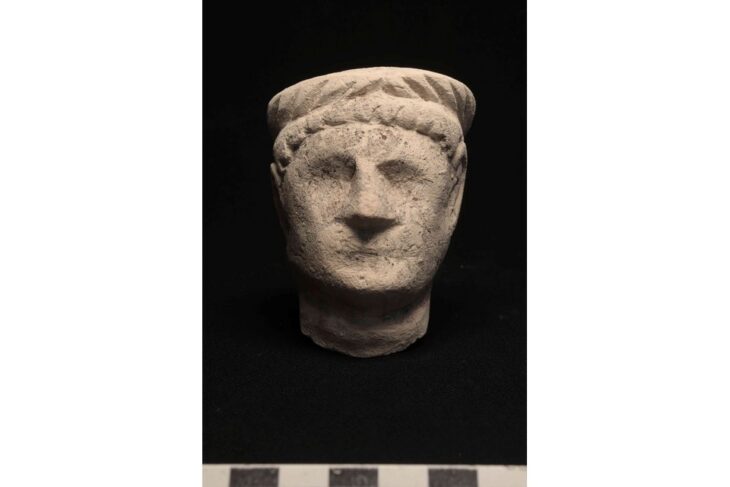
The detail is small, but important. Terracotta votive figures were common in Cypriot sanctuaries, while limestone statuary also played a major role in local religious art. At Frangissa, the two traditions appear to meet physically. Clay figures could be elevated, displayed, and integrated into the same monumental language as stone sculpture.
That tells us something about ancient worshippers. These offerings were not casual deposits. They were arranged for visibility. They had a place, a height, and probably a social meaning.
A forgotten sanctuary returns after 140 years
The Sanctuary of Apollo at Frangissa was first excavated in 1885 by the German archaeologist Max Ohnefalsch-Richter, one of the early figures in Cypriot archaeology. His work brought important finds to light, but the excavation was never fully published by modern standards. Over time, even the exact location of the sanctuary was forgotten.
Modern surveys eventually identified the site again near the village of Pera Oreinis, in the foothills west of Nicosia. The renewed excavation has allowed researchers to study the sanctuary with proper stratigraphic recording, careful documentation, and a much clearer sense of context.
The location matters. Frangissa stood in the island’s interior, away from the coastal cities that often dominate the archaeology of ancient Cyprus. Rural sanctuaries like this were not marginal spaces. They connected local communities, trade routes, political identities, and religious devotion.
Apollo was one of the most important gods worshipped in ancient Cyprus. Associated with protection, healing, music, prophecy, and sacred landscapes, he often occupied a powerful place in rural religious life. At Frangissa, his sanctuary appears to have served as a place where communities expressed status, memory, and devotion through visible offerings.
Older dedications were buried beneath a new ritual layer
The excavation also confirmed the sanctuary’s Archaic-period phase through undisturbed layers of pottery. Until now, this early phase had mostly been suggested by sculpture fragments found around the site. The discovery of intact Archaic layers gives archaeologists firmer evidence for the sanctuary’s chronology.
Even more intriguing is what happened later.
Researchers found that some earlier statue bases had been intentionally covered with leveling material before a new layer of monuments was installed above them. More than 100 additional statue bases, probably uncovered during the 1885 excavation and later dumped into refill soil, were also recovered during the current campaign.
This raises a central question. Was the sanctuary reorganized after destruction, perhaps caused by unrest or natural disaster? Or did the sacred space simply become too crowded as its popularity grew?
For now, archaeologists are keeping both possibilities open. What is clear is that Frangissa did not remain static. It changed, expanded, and absorbed older offerings into new ritual arrangements.
Frangissa opens a rare window onto ancient Cyprus
The rediscovery of the Sanctuary of Apollo is becoming one of the most important recent developments in Cypriot sanctuary archaeology. Its value lies in the combination of preserved layout, intact pottery layers, terracotta fragments, and evidence for long-term ritual change.
Together, these finds show how ancient Cypriots used sacred space not only to honor a god, but also to display memory, wealth, and identity. A votive statue was more than an object. It was a public statement, placed where others could see it and where the god was believed to receive it.
Further excavations are expected to clarify the sanctuary’s architectural development, possible destruction phases, and changing ritual practices from the Archaic through the Hellenistic period.
For a site once lost after its first excavation, Frangissa has returned with unusual force. More than 140 years after archaeologists first entered the sanctuary, its ancient offerings are finally being read where they were meant to stand.
Cyprus Department of Antiquities, Deputy Ministry of Culture
Cover Image Credit: Cyprus Department of Antiquities, Deputy Ministry of Culture