
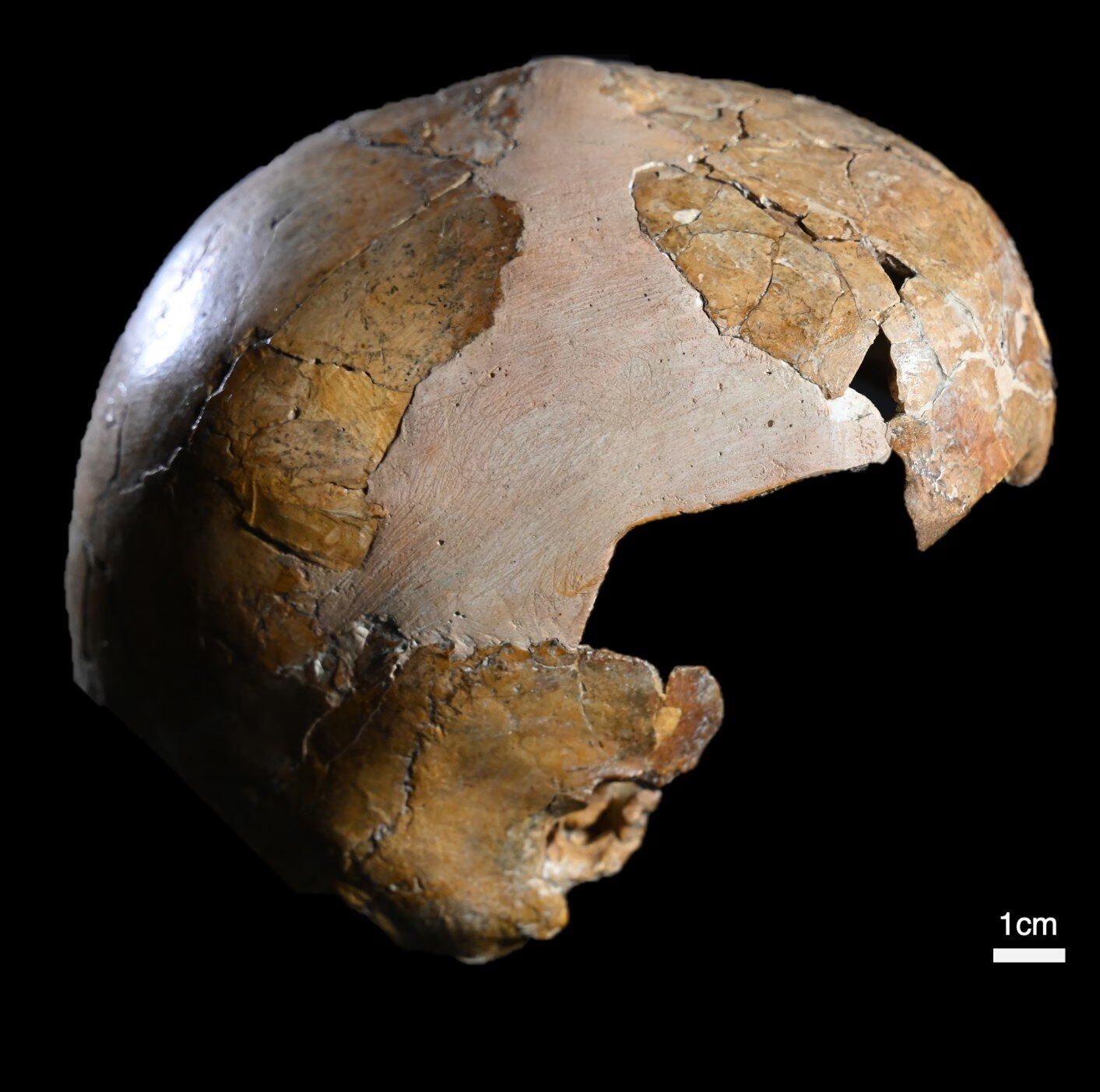
A 5-year-old child skeleton discovered nearly 90 years ago in Skhul Cave on Mount Carmel exhibits both Neanderthal and Homo sapiens traits. According to an international team from Tel Aviv University and the French National Center for Scientific Research (CNRS), this fossil represents the earliest physical evidence of social and biological interactions between the two human groups in the Levant.
An international team re-examined a child skeleton discovered in Skhul Cave nearly 90 years ago using modern imaging technology. Led by Prof. Israel Hershkovitz (Tel Aviv University) and Dr. Anne Dambricourt-Malassé (CNRS), the study focused on the child’s skull, lower jaw, and inner ear structures, revealing a mosaic of traits from both Neanderthals and Homo sapiens.
What They Found
Using micro-CT scanning at the Shmunis Family Anthropology Institute, researchers created high-resolution 3D reconstructions, including internal vascular pathways.
- Skull vault: Rounded, elevated—typical of Homo sapiens.
- Inner ear (labyrinth): Neandertal-like morphology.
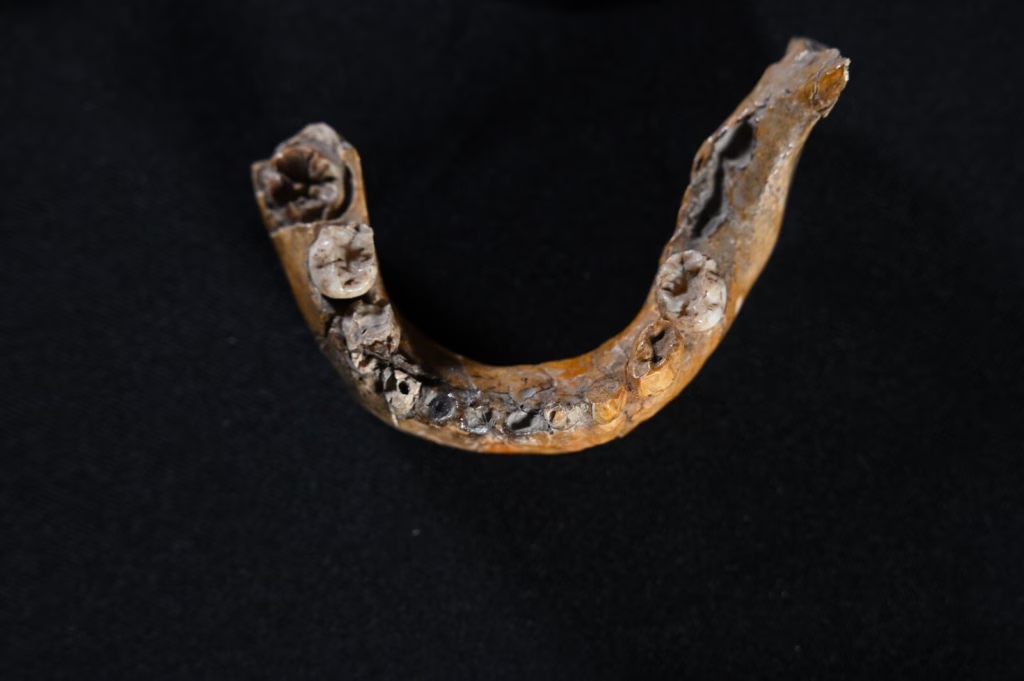
- Lower jaw and cranial vascular patterns: Align with Neandertal traits.
This morphological mosaic indicates not only cultural contact but early biological mixing between the two groups.
Why It Matters
Genetic evidence previously suggested that Neanderthals and Homo sapiens interbred 60–40 thousand years ago. The Skhul Child indicates that interactions in the Levant occurred much earlier, potentially over a long period, leaving morphological traces in some individuals.
Regional Background: The Levant as a Contact Zone
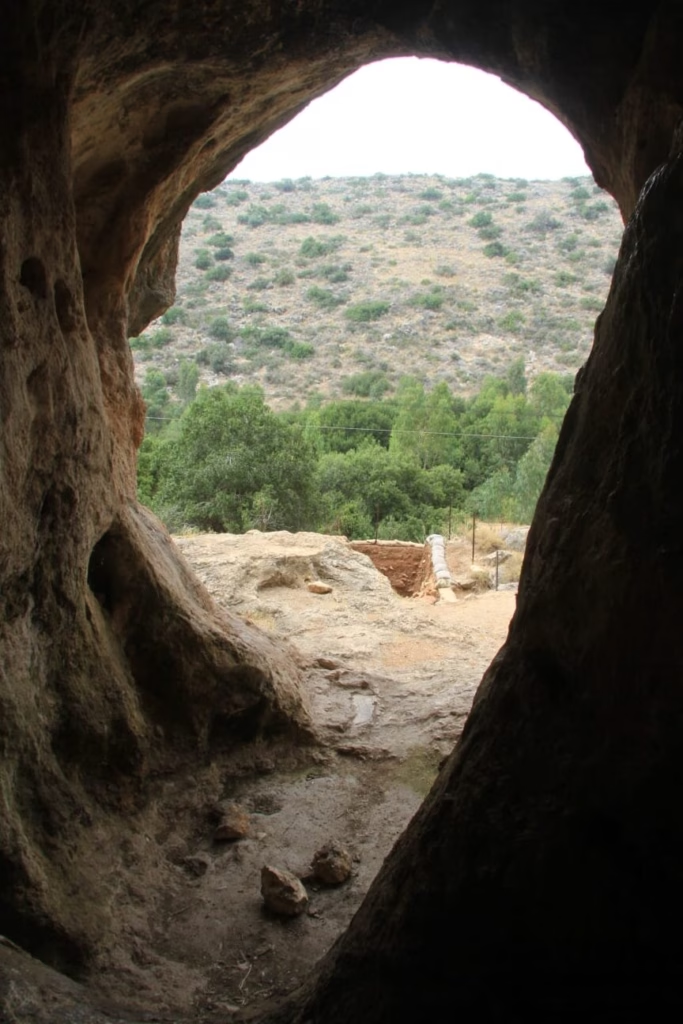
Neanderthals were traditionally thought to have evolved in Europe and reached the Levant around 70,000 years ago. However, Hershkovitz et al., 2021 (Science) documented early Neanderthals in the region as far back as 400,000 years ago. In this framework, local Neanderthals (“Nesher Ramla Homo”) may have interacted with migrating African Homo sapiens around 200,000 years ago, creating a plausible scenario for prolonged contact and occasional interbreeding.
“Earliest” Claim
The Skhul Child is among the oldest known human fossils displaying both Neanderthal and Homo sapiens features. By comparison, the 1998 Lapedo Valley Child from Portugal (~28,000 years old) appears over 100,000 years younger.
Methodology
- Imaging: Micro-CT scanning and 3D reconstruction, including intracranial vessels.
- Comparative dataset: Skhul material compared with Qafzeh Cave specimens, other Levant fossils, and reference Neanderthal and Homo sapiens morphologies.
- Limitation: No DNA; conclusions drawn from morphological comparisons.
Scientific Implications
- What it shows: Early and long-term interactions between Neanderthals and Homo sapiens in the Levant; some individuals display mixed morphological signatures.
- What it does not show: Parentage details or gene flow direction; future ancient DNA analyses may clarify.
Conclusion: Levant as a “Melting Pot”
Researchers propose that local Neanderthal populations were eventually absorbed into Homo sapiens, paralleling later European Neanderthal disappearance. The Skhul Child represents an early chapter in this long interaction.
Bastien Bouvier et al, A new analysis of the neurocranium and mandible of the Skhūl I child: Taxonomic conclusions and cultural implications, L’Anthropologie (2025). DOI: 10.1016/j.anthro.2025.103385