
A nearly 2,000-year-old wooden boat has been recovered from Israel’s Sea of Galilee, and experts suggest it could be connected to one of Christianity’s most well-known accounts.
In 1986, a severe drought exposed the shoreline of the Sea of Galilee, prompting amateur archaeologists Moshe and Yuval Lufan to investigate. Using a metal detector, they discovered iron nails in the mud and uncovered an oval wooden structure. Subsequent analysis confirmed the vessel was built during the Roman period, with radiocarbon dating pinpointing it to the first century.
Remarkably, as the boat emerged, rain returned, forming a double rainbow over the area—an occurrence some archaeologists have linked symbolically to biblical accounts.
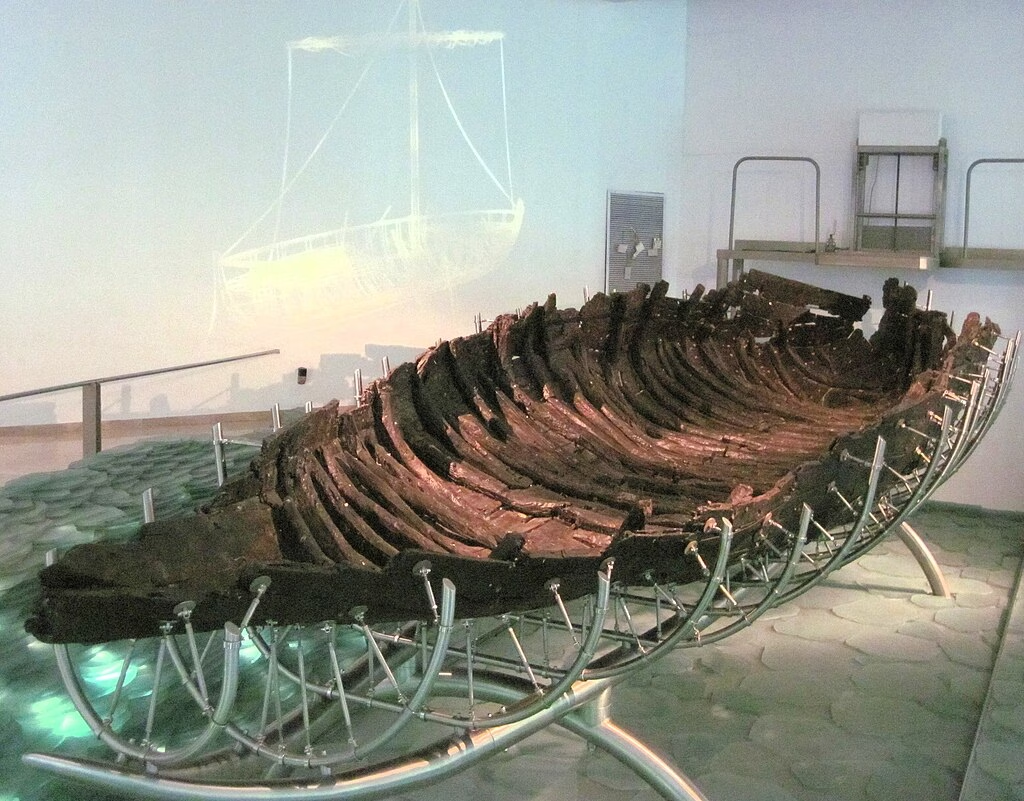
Biblical archaeologist Danny Herman told the Daily Mail: “This is a 2,000-year-old boat from the Sea of Galilee, the type mentioned in the Gospels, and sized for about twelve people. It aligns with one of the most famous stories every Christian knows: Jesus walking on water and calming the storm.”
Dutch archaeologist Dr. Kurt Raveh confirmed the dating, noting construction could have taken place anytime between the first century BCE and the first century CE. However, there is no evidence that Jesus ever saw or used this particular boat, as the lake would have hosted roughly 600 vessels at the time.
The boat’s size and materials suggest it belonged to poor fishermen, echoing Gospel descriptions of Jesus’ disciples. The discovery of an oil lamp nearby indicates it was used for night journeys, potentially reflecting the biblical account of Jesus calming the storm after sending his disciples across the lake.
Excavation teams faced a race against time, as winter rains threatened to submerge the vessel again. Once removed from the mud, the ancient wood began to crumble upon exposure to air. Archaeologists stabilized it using fiberglass and insulating foam before transporting it safely. To prevent decay and allow public viewing, the mud was replaced with a transparent chemical solution.
Since 2000, the boat has been on display at the Yigal Allon Museum in Ginosar, Israel. Herman emphasized: “This is not just an archaeological artifact; it may be directly connected to the story of Jesus on the Sea of Galilee.”