
Language may feel like the sharpest line separating humans from the rest of the animal world. It carries myth, law, memory, and mathematics. Yet a 2020 study suggests that one of its most fundamental cognitive foundations long predates humanity itself.
Published in Science Advances, the research — led by Professor Simon Townsend at the University of Warwick — indicates that a key structural component of language may have evolved at least 30 to 40 million years ago in ancient primates.
Not language itself — but the mental machinery required to build it.
The Structure Beneath Speech
Language is more than vocabulary. It is architecture.
Consider the sentence: “The dog that bit the cat ran away.” We instinctively understand that it was the dog — not the cat — that ran. This requires processing relationships between words that are separated in the sentence, a feature known as non-adjacent dependency processing.
For decades, this ability was regarded as a distinctly human trait — one of the defining features of linguistic cognition.
The Warwick-led study challenged that assumption.
Testing Grammar Without Words
To explore whether this structural capacity might exist beyond humans, researchers designed experiments using artificial sound sequences rather than real language. These “artificial grammars” consisted of meaningless tones arranged according to specific structural rules.
This method allowed scientists to compare pattern recognition abilities across species without relying on shared vocabulary.
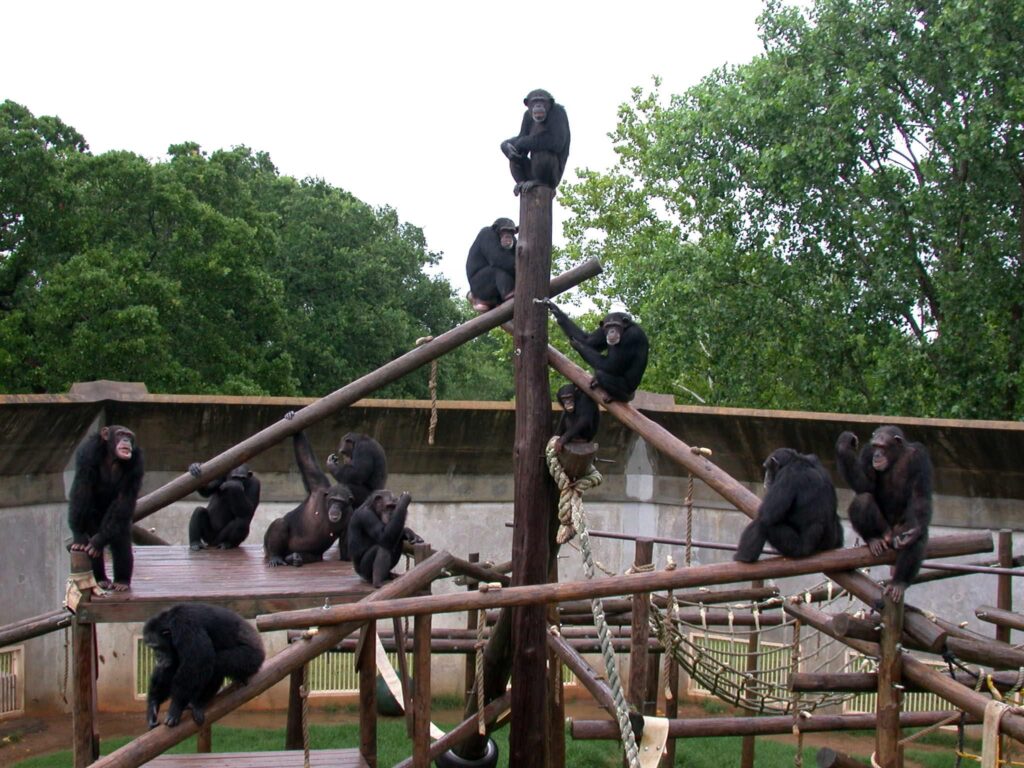
The experiments involved humans, chimpanzees, and common marmosets. Despite differences in their natural communication systems, all three species successfully processed both adjacent and non-adjacent relationships within the sound sequences.
The implication is subtle but profound.
If these primates can process structural dependencies in sequences, then the cognitive foundation required for such processing must be evolutionarily ancient.
An Inherited Cognitive Tool
The researchers concluded that this capacity likely existed in the last common ancestor shared by humans and other primates — pushing its evolutionary origins back tens of millions of years.
This does not mean early primates possessed language. But it does suggest that one of language’s core computational building blocks was already in place long before Homo sapiens emerged.
In evolutionary terms, language may not represent a sudden cognitive revolution. Instead, it may be the result of gradual refinement — a layering of complexity onto neural systems that were already present deep in primate history.
Rethinking What Makes Us Human
Even several years after publication, the study continues to shape discussions about language evolution and human uniqueness.
If the ability to process structural relationships predates humanity, then the origins of language may lie not in a dramatic evolutionary leap, but in the modification of ancient cognitive tools.
The question, then, is no longer simply when humans began to speak.
It is how an inherited primate capacity was transformed into the intricate linguistic systems that define our species today.
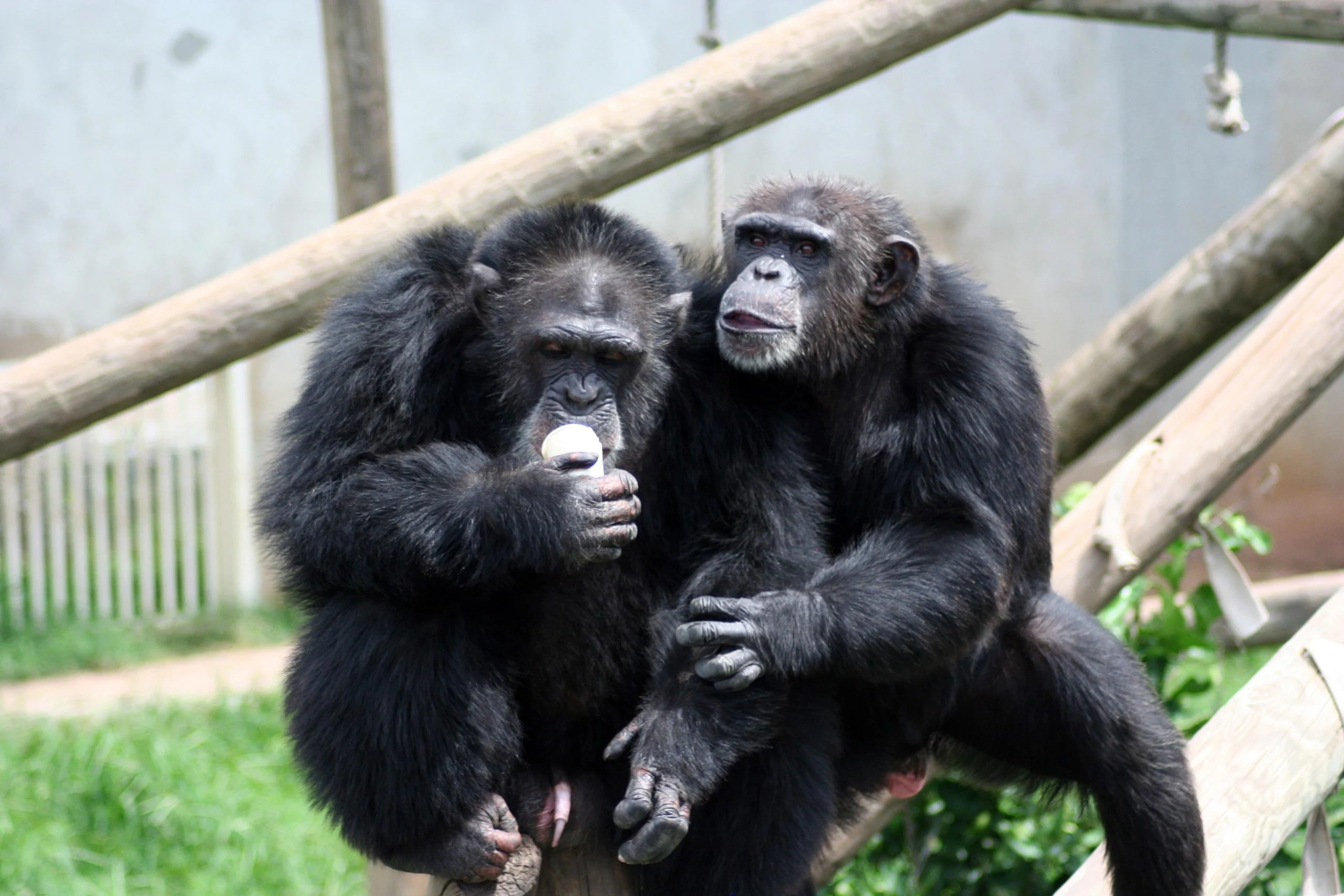
Cover Image: Chimpanzees Tina and Martin were studied at the National Center for Chimpanzee Care in Texas. Credit: University of Warwick