
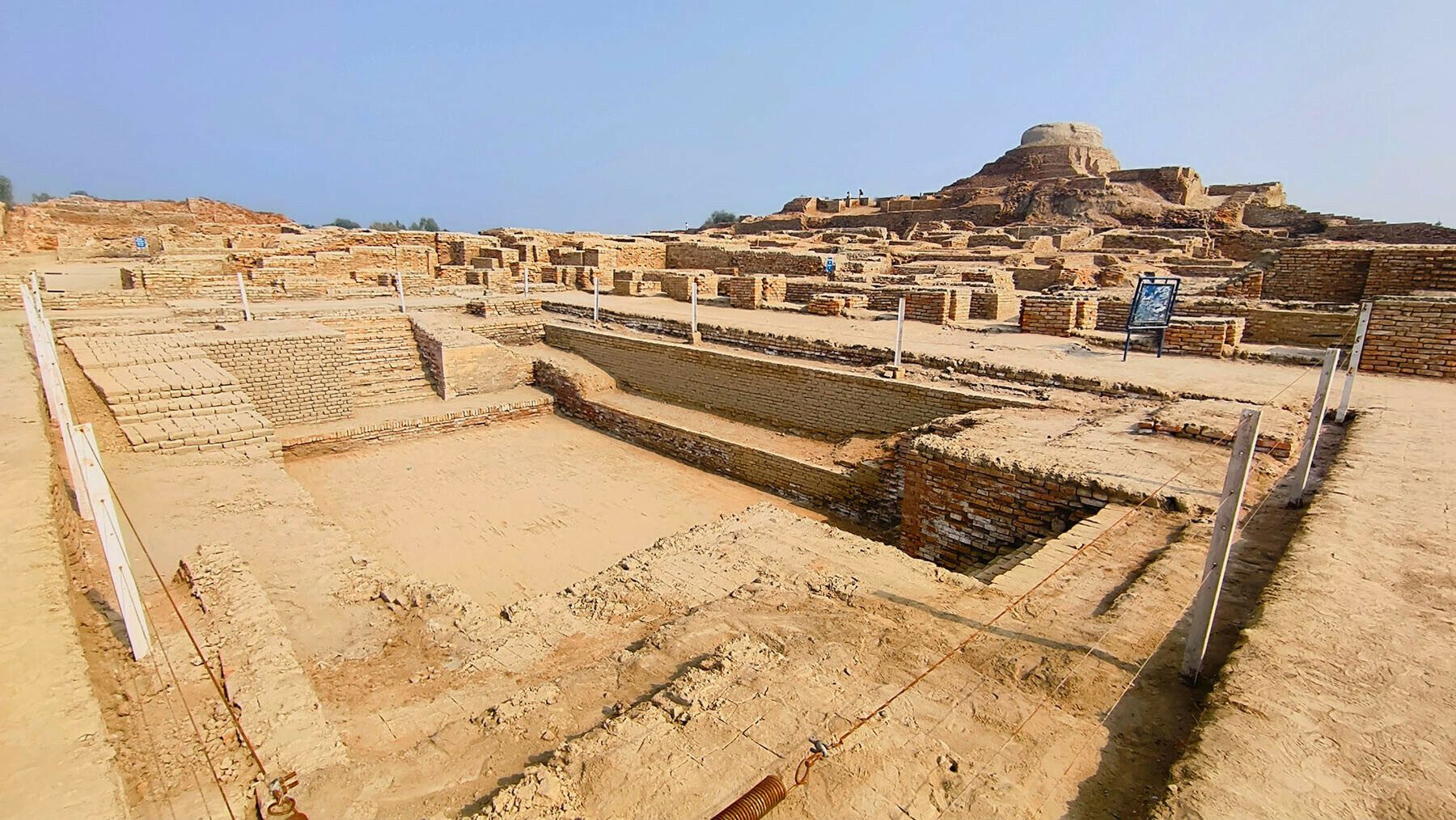
New excavations at Mohenjo-daro have pushed the origins of urban development at the site further back than previously established. Radiocarbon dates obtained from a massive mud-brick city wall show that its earliest construction began around 2700–2600 BCE, placing it at the end of the Early Harappan (Kot Diji) phase—before the rise of the Mature Harappan urban system.
The findings suggest that Mohenjo-daro was already transitioning toward urban complexity before the civilization reached its classical peak.
A Misidentified Structure Reconsidered
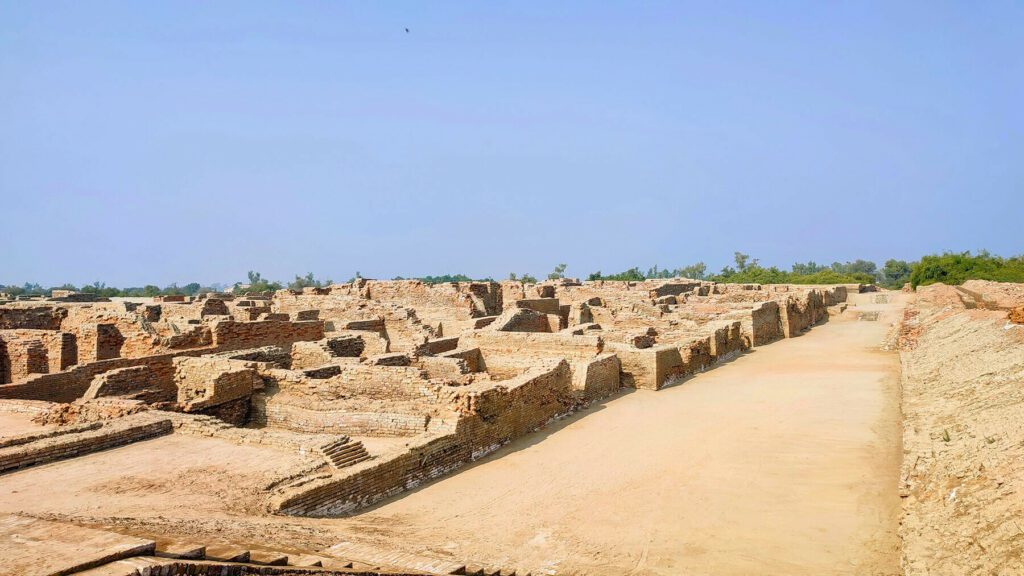
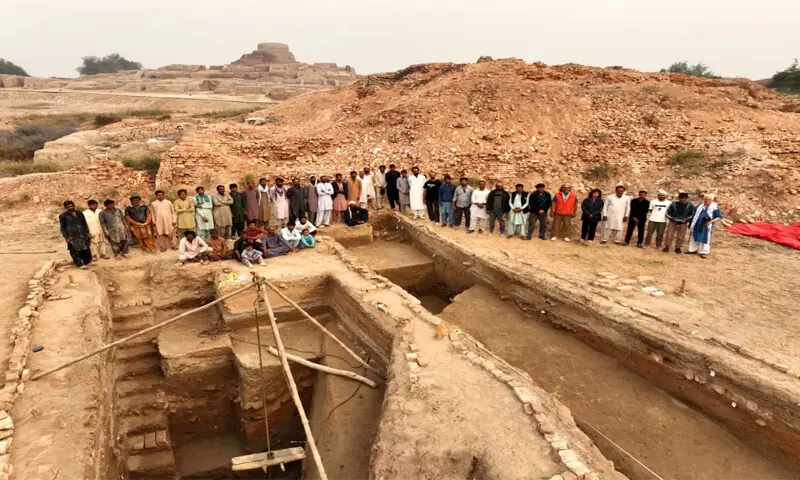
The structure at the center of the discovery was first uncovered in 1950 by Sir Mortimer Wheeler, who interpreted it as a flood-control feature. New excavations, however, demonstrate that it is a multi-phase city wall, built and expanded over several centuries.
Radiocarbon samples taken from its earliest layers confirm that the first phase predates the Mature Harappan period, fundamentally altering how the site’s development is understood.
Evidence Beneath the Wall
Even more significant are the layers below.
Deep coring beneath the wall revealed Kot Dijian pottery and earlier occupation deposits, indicating that a substantial settlement existed before the construction of the city wall. This confirms that Mohenjo-daro did not begin as a fully planned city, but evolved from an earlier community that gradually adopted urban features.
Expansion During the Harappan Peak
Later phases of the wall align with the Mature Harappan period, beginning around 2600 BCE. The structure was expanded and maintained until at least 2200 BCE, reflecting long-term investment in urban infrastructure.
This continuity points to a stable and organized society capable of sustained planning rather than a short-lived construction phase.
A Regional Pattern
Similar Early Harappan occupation layers and early fortifications have also been documented at Harappa in Punjab, dating to roughly 2800–2600 BCE. Together, these findings indicate that urbanization across the Indus region developed gradually over several centuries.
A Longer Timeline for an Iconic City
The new evidence reframes Mohenjo-daro not as a city that appeared suddenly during the Mature Harappan phase, but as a settlement with deep roots in earlier cultural phases.
Its urban character emerged over time—layer by layer—well before reaching the scale and sophistication for which it is now known.
Cover Image: Mud-brick city wall remains at Mohenjo-daro, recently re-dated through radiocarbon analysis to the late Early Harappan (Kot Diji) phase. Credit: Zain Siddiqui