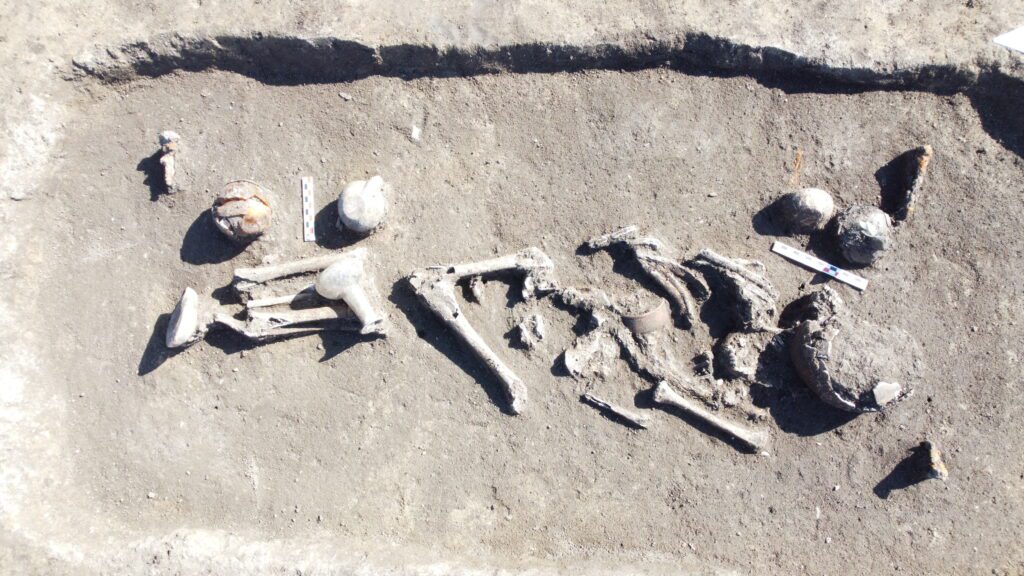
A quiet construction project in western Romania has unexpectedly exposed a deeply human story from the Roman world—one marked not only by daily life and ritual, but also by loss. At Cristești, in Mureș County, archaeologists have uncovered a 2nd–3rd century AD Roman cemetery, where a mass grave containing the remains of around 20 children now raises urgent questions about disease, mortality, and community life in Roman Dacia.
The discovery emerged during preventive excavations carried out across a five-hectare area. Although the site had long been known to scholars as part of a well-developed Roman settlement, the location of its burial grounds had remained elusive—until now.
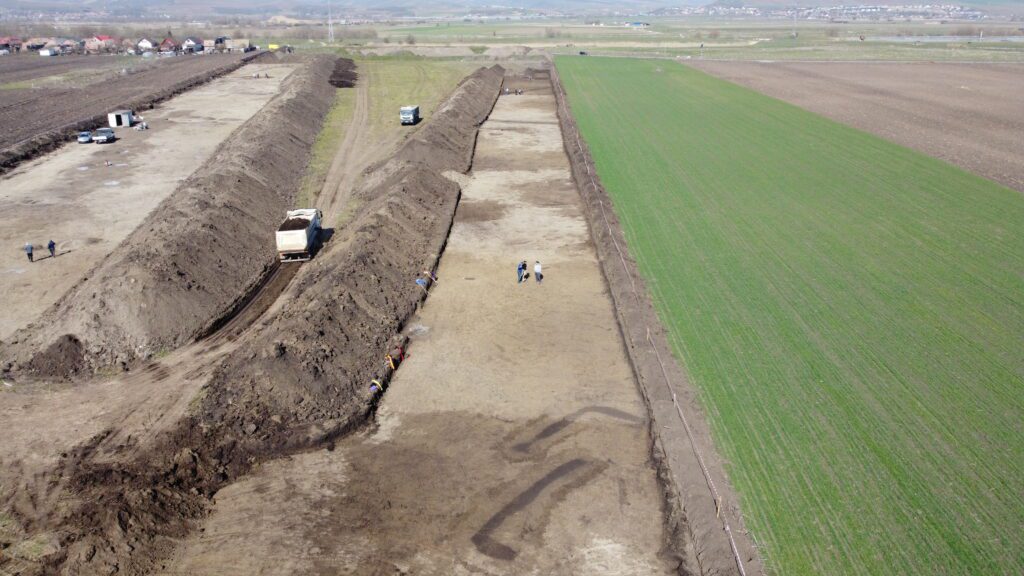
A Cemetery Hidden in Plain Sight
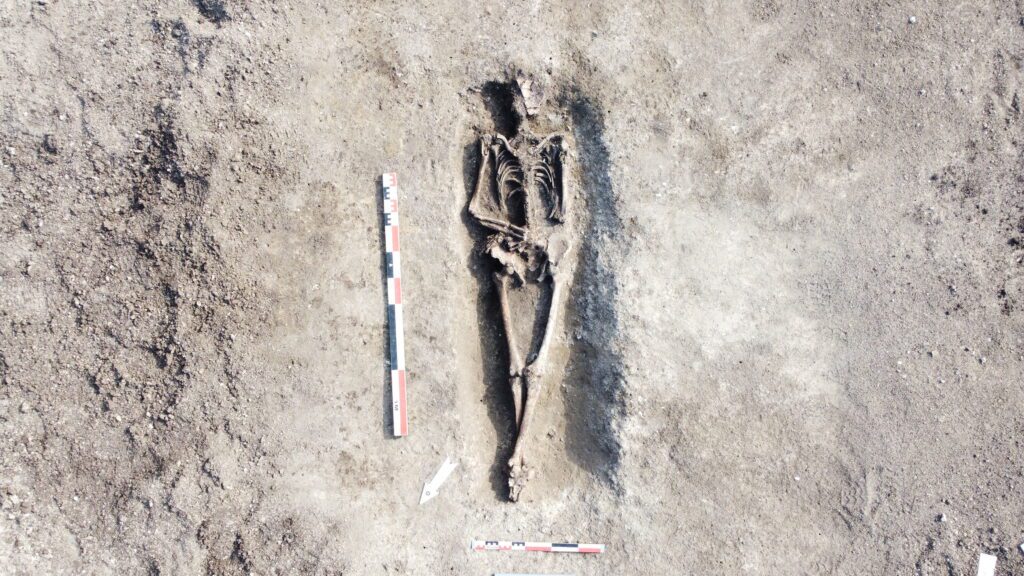
So far, archaeologists have identified approximately 30 graves, ten of which have been fully excavated. Even at this early stage, the findings are beginning to sketch a portrait of a provincial Roman community living on the edge of empire.
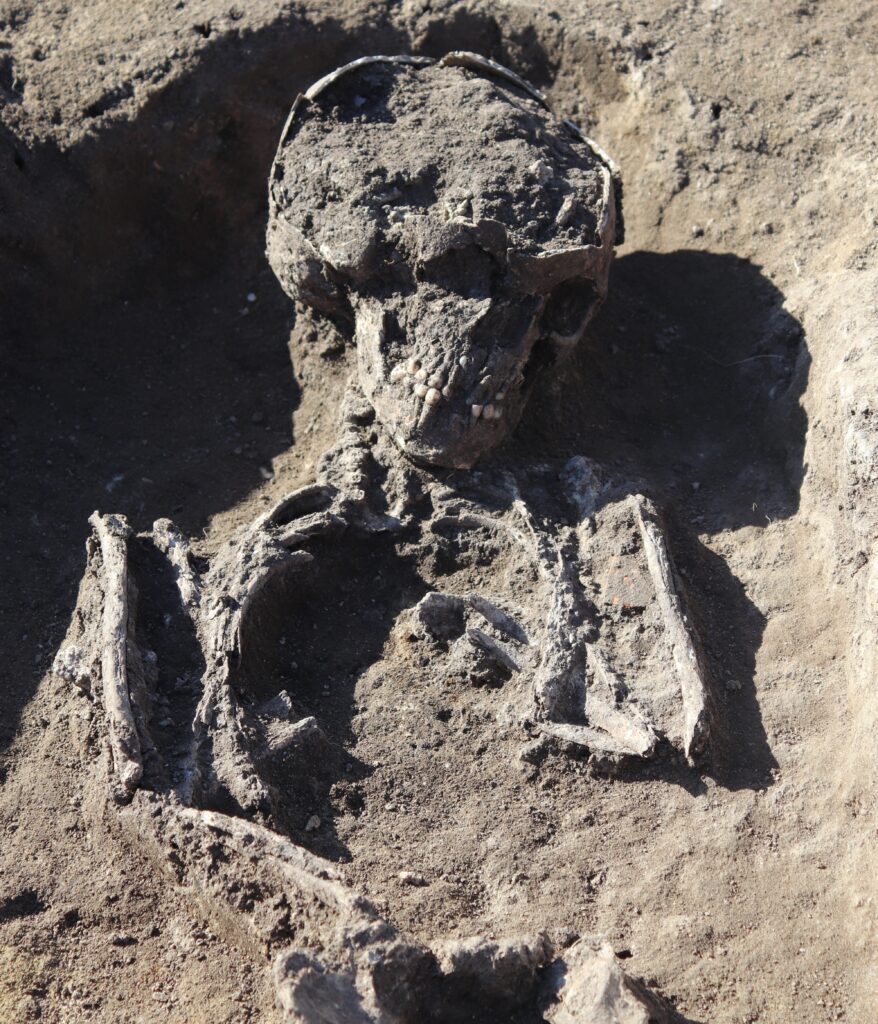
Preliminary analysis suggests a striking demographic pattern. Of the excavated burials, the majority belong to children, alongside a smaller number of adults. This imbalance alone hints at a period of elevated mortality—but it is the mass grave that makes the picture far more unsettling.
Inside a single burial pit, researchers uncovered the skeletal remains of roughly 20 children. The bodies appear to have been interred within a relatively short time frame, suggesting a sudden and concentrated mortality event.
Archaeologists cautiously point to a possible epidemic—an interpretation supported by parallels from other Roman-era sites, where outbreaks of disease left similar traces in the archaeological record.
Signs of Life—and Status—in Death
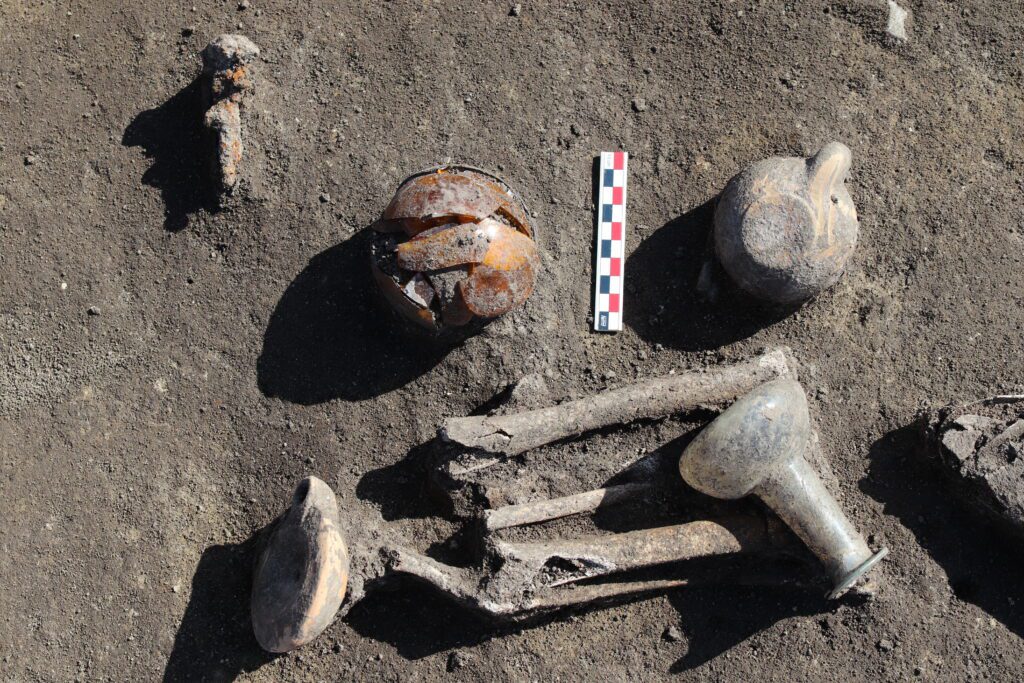
Despite the tragic nature of some burials, others reveal a community that maintained established Roman funerary traditions. Several graves contained surprisingly rich grave goods, especially for what appears to have been a population of modest social standing.
Among the finds are ceramic vessels, delicate glass objects, coins, jewelry, and oil lamps—items that reflect both everyday life and beliefs about the afterlife.
Two cremation burials were also identified, in which the remains of the deceased had been burned and placed in containers. This practice, well documented across the Roman world, coexisted with inhumation during this period, illustrating the diversity of funerary customs even within a single community.
Dating the Dead
Coins recovered from the site provide a firm chronological anchor. One notable example bears the image of Faustina, wife of Emperor Antoninus Pius, minted around AD 141.
This places the cemetery firmly within the 2nd–3rd centuries AD, a time when the Roman province of Dacia was undergoing consolidation and expansion following its conquest earlier in the century.
It was also a period of strong military presence in the region. Historical records indicate that the Ala I Gallorum et Bosporanorum milliaria, a cavalry unit numbering roughly one thousand soldiers, was stationed nearby. Their presence likely influenced both the economic and social fabric of the settlement.
A Missing Piece of the Settlement
What makes this discovery particularly significant is not only what was found—but where.
Previous research had already confirmed the existence of a thriving Roman settlement at Cristești, including evidence of craft production and a notable pottery center. Yet the cemetery associated with this community had never been located.
Its discovery now completes a crucial part of the settlement’s spatial organization. In keeping with Roman customs, the burial ground appears to have been situated outside the inhabited area, likely along a route leading in or out of the settlement.
What Comes Next
Excavations began in mid-February and are ongoing. As more graves are uncovered, archaeologists expect to refine their understanding of the cemetery’s layout and its relationship to the broader settlement.
The human remains and associated artifacts will be transferred to the Mureș County Museum, where they will undergo conservation and detailed scientific analysis. These studies may reveal insights into age distribution, health conditions, diet, and causes of death within this Roman community.
For now, the Cristești cemetery stands as a rare and powerful window into life—and death—on the Roman frontier.
Not just a burial ground, but a record of a community shaped by empire, tradition, and, perhaps, an unseen crisis that struck its youngest members hardest.
All images: Courtesy of Muzeul Județean Mureș