
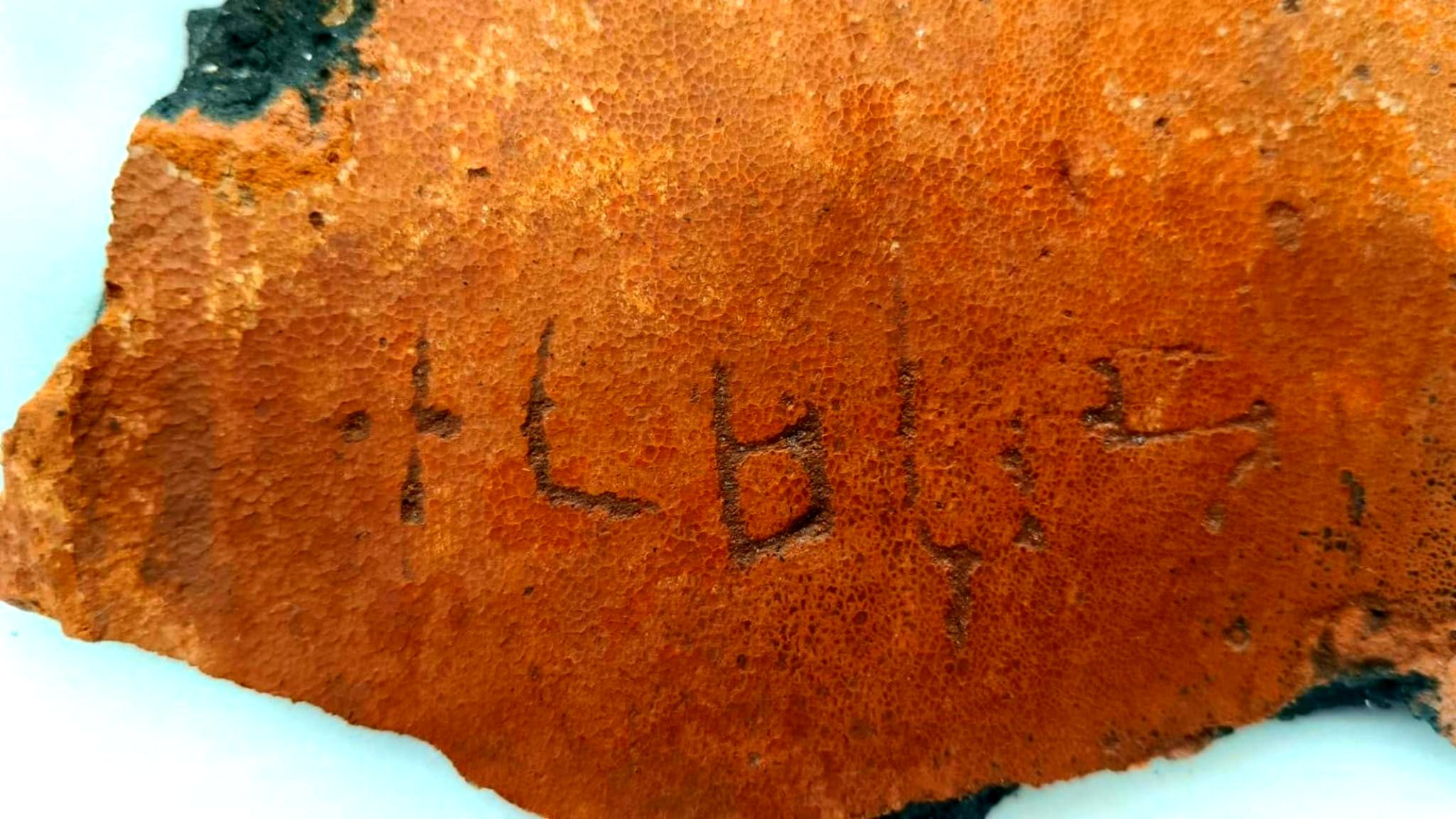
A Tamil-Brahmi inscribed potsherd discovered during excavations in southern India is offering new insight into the early political landscape of the region and the spread of writing in everyday life.
The find comes from Kumarikkalpalayam in Tamil Nadu, where archaeologists from the Archaeological Survey of India (ASI) are investigating a multi-layered habitation site that dates from the Iron Age into the Early Historic period.
The Name “Irumpurai” and Its Chera Connection
The fragment, part of a black-and-red ware storage jar, bears five Tamil-Brahmi characters. Epigraphic analysis identifies the inscription as “Irumpurai.”
This name carries historical weight.
“Irumpurai” is associated with elite titles linked to the Chera dynasty, one of the three major powers of ancient South India during the Sangam period. The Cheras are known for their influence over trade networks and urban centers, particularly around Karur—located roughly 95 kilometers from the excavation site.
The appearance of this name on a utilitarian object suggests that the settlement may have been connected, directly or indirectly, to regional political structures rather than functioning in isolation.
Dating the Inscription
Based on paleographic features, the inscription is dated to the late 1st century BCE to the early 1st century CE—a formative period in which early Tamil polities were consolidating power.
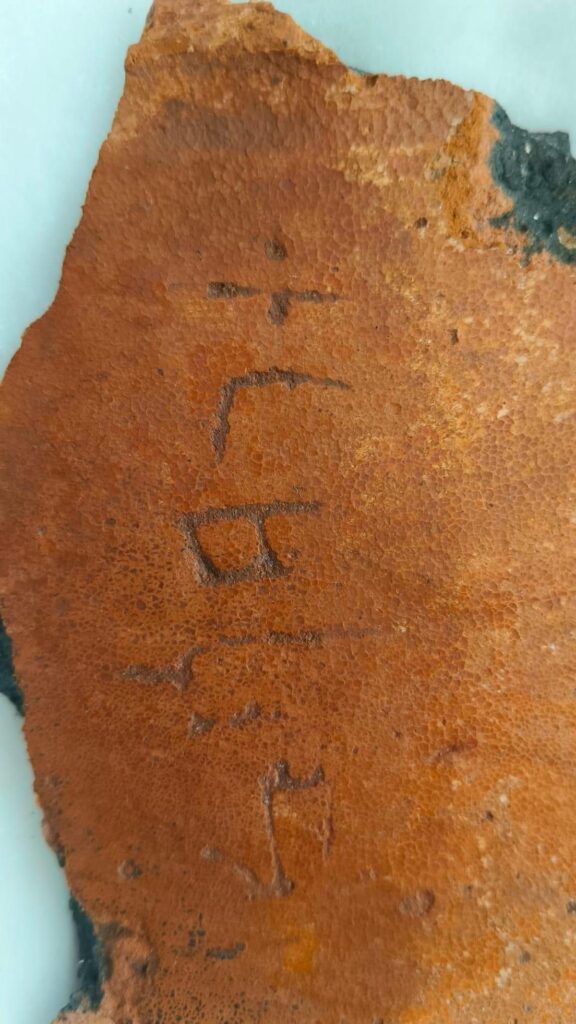
Tamil-Brahmi, a regional adaptation of the Brahmi script, represents one of the earliest writing systems used in South India. Its presence on pottery fragments like this one reflects a broader shift:
writing was no longer confined to monumental or elite contexts, but had entered everyday material culture.
A Settlement with Deep Chronological Layers
The excavation site itself presents a complex archaeological landscape. Located within an agricultural field in Uthukuli Taluk, the mound is part of a broader cultural zone that includes a nearby megalithic burial complex.
In addition to the inscribed potsherd, archaeologists have uncovered a range of ceramic types, including black-and-red ware, red-slipped ware, and russet-coated pottery. These finds indicate continuous occupation from the Iron Age through the Early Historic period, pointing to long-term settlement stability.
The coexistence of habitation layers and burial features suggests a community with deep-rooted cultural continuity, where daily life and mortuary practices were closely intertwined.
A Monument Echoed in Sangam Literature
The site also features a striking megalithic monument: a 26-foot-tall menhir, one of the most prominent standing stones in the region.
Archaeologists note that this monument is mentioned in the 249th verse of the Akananuru, a classical Tamil Sangam anthology. Such correlations between literary sources and archaeological evidence are rare and significant, offering a unique opportunity to align textual tradition with physical remains.
The ASI is currently working to designate the menhir as a protected monument, recognizing its cultural and historical importance.
A Small Find with Wider Implications
Although modest in size, the inscribed potsherd carries considerable interpretive weight.
The presence of a Chera-associated title at Kumarikkalpalayam suggests that the site may have participated in broader political or economic networks centered in early historic South India.
At the same time, the use of Tamil-Brahmi on a functional storage vessel highlights a critical transformation: literacy was becoming embedded in everyday practices, not limited to inscriptions of power or ritual.