
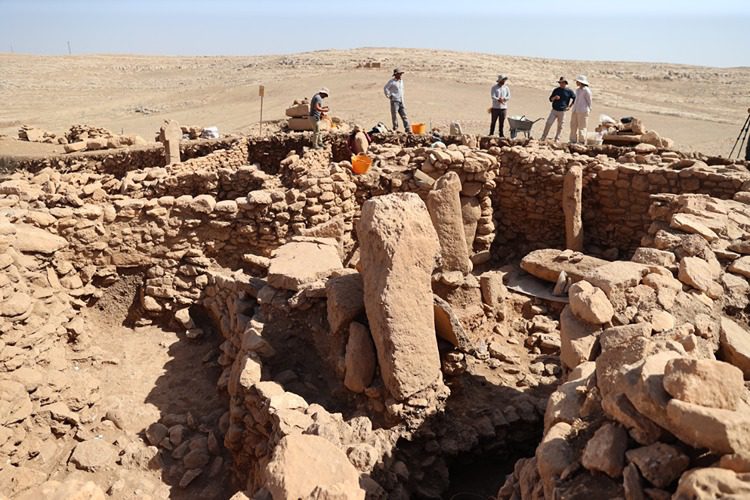
In the barren hills of southeastern Turkey, Karahantepe is quietly rewriting what we thought we knew about humanity’s earliest monuments.
For decades, Göbeklitepe stood as an enigma — a site of stone circles and sacred carvings often described as the world’s first temple.
Now, new evidence from Karahantepe suggests a more complex story: these were not places apart from life, but places where life and ritual merged.
A City Emerging from Stone
Under the leadership of Prof. Dr. Necmi Karul, the Karahantepe excavations — part of the Taş Tepeler Project — have revealed a settlement sprawling across 14 hectares.
Nearly a quarter of this expanse is dotted with limestone quarries where pillars were carved, while the rest appears to form one of the largest Neolithic living spaces ever found in Anatolia.
Beneath layers of time, archaeologists have uncovered both small domestic dwellings and monumental public buildings — proof that these ancient builders were shaping more than shrines; they were shaping a community.
Rethinking Göbeklitepe
For years, scholars have debated whether Göbeklitepe was a temple, a meeting ground, or something in between.
Karahantepe now enters that debate as a critical counterpart.
Prof. Karul explains:
“These structures teach us many things, but most importantly, they address the question long debated at Göbeklitepe — whether these were gathering places or ritual centers.
Karahantepe has provided crucial insights. The coexistence of domestic and communal structures shows that these were living environments.”
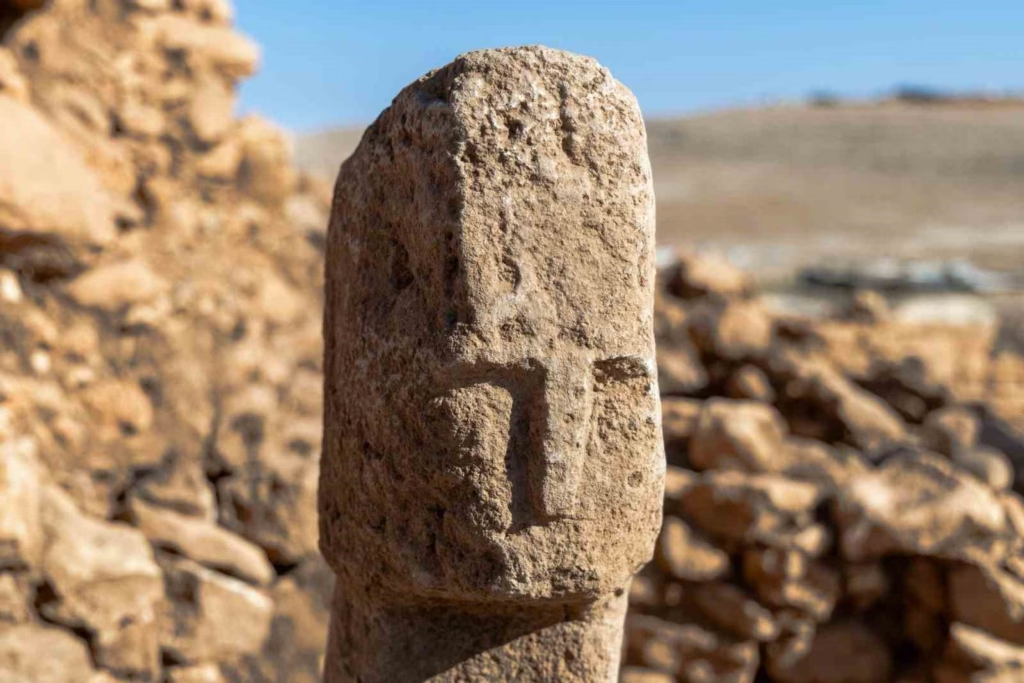
In this light, Göbeklitepe may not have stood alone as a sanctuary of the gods but as part of a living landscape where communities worked, feasted, and performed rituals side by side.
A Monumental Core, A Living World
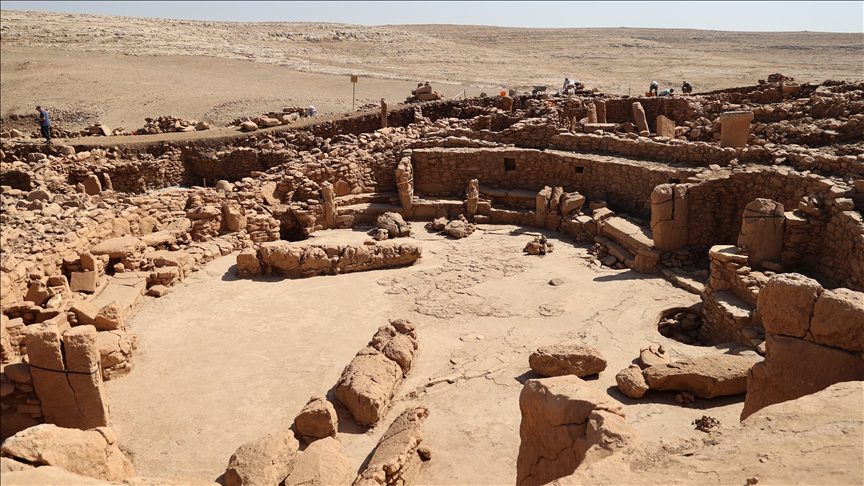
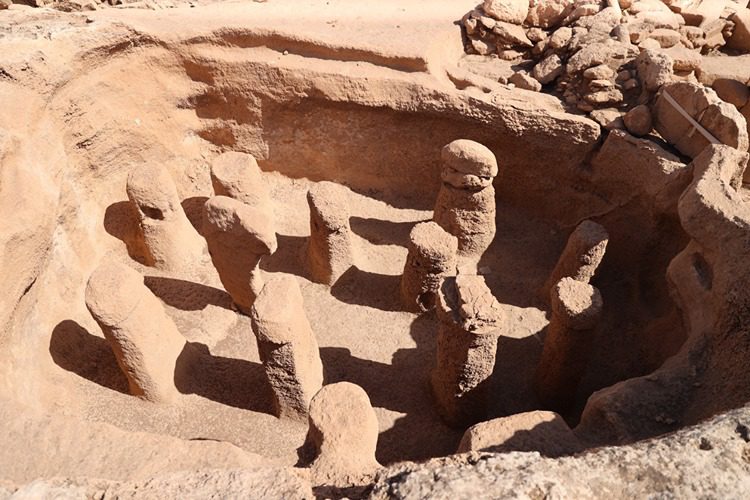
At the heart of Karahantepe lies a 28-meter-wide circular structure, likely used for centuries.
It may have hosted communal gatherings, rituals, or decision-making — the beginnings of organized social space.
Radiocarbon dating pushes its origins back to 9400 BCE, placing it in the same cultural horizon as Göbeklitepe and revealing a shared architectural logic: the sacred built into daily life.
The Dawn of Craft and Food
Finds from the site — flint tools, animal bones, grinding stones — map the shift from hunting to food production.
In earlier phases, tools point to hunting; later, to woodwork, architecture, and grain processing.
Last year, researchers even found traces of early breadmaking, suggesting that Karahantepe’s people were among the first to transform wild cereals into sustenance.
Here, stone, grain, and faith formed the pillars of the same world.
From Monument to Meaning
Karahantepe blurs the line between temple and town.
It redefines Göbeklitepe not as an isolated ritual complex, but as part of a broader Neolithic revolution — a world where architecture expressed not only belief but also the organization of life itself.