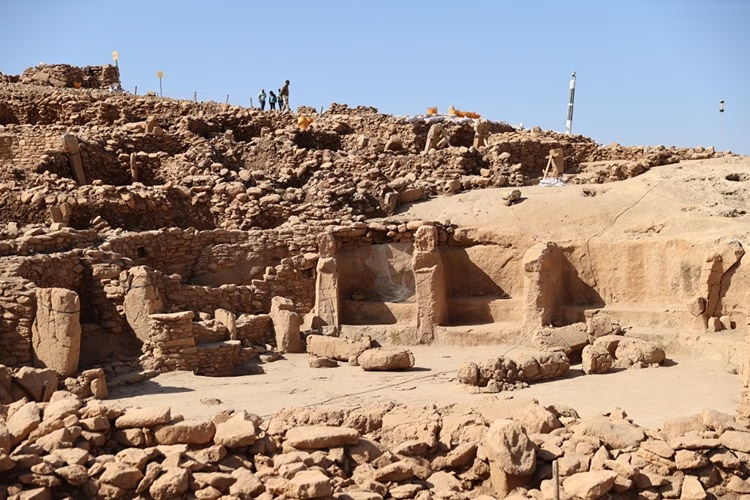
Archaeologists excavating the Neolithic site of Karahantepe in southeastern Türkiye have uncovered more than 30 small, subterranean dwellings dating back around 11,000 years. The discovery provides the clearest glimpse yet into how early Anatolian communities lived, worked, and organized their daily routines — long before the rise of cities or agriculture as we know them.
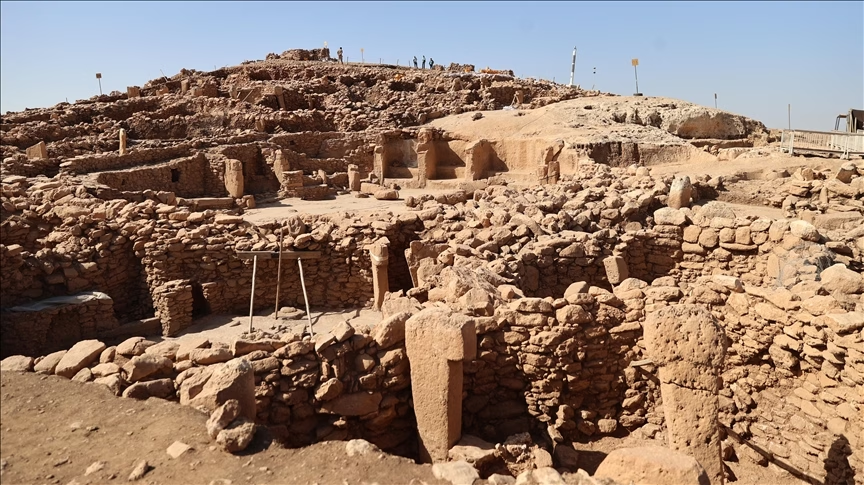
Directed by Prof. Dr. Necmi Karul as part of the Taş Tepeler (Stone Hills) Project, the excavations revealed that these domestic structures formed a compact, honeycomb-like settlement pattern surrounding a large public building at the site’s center.
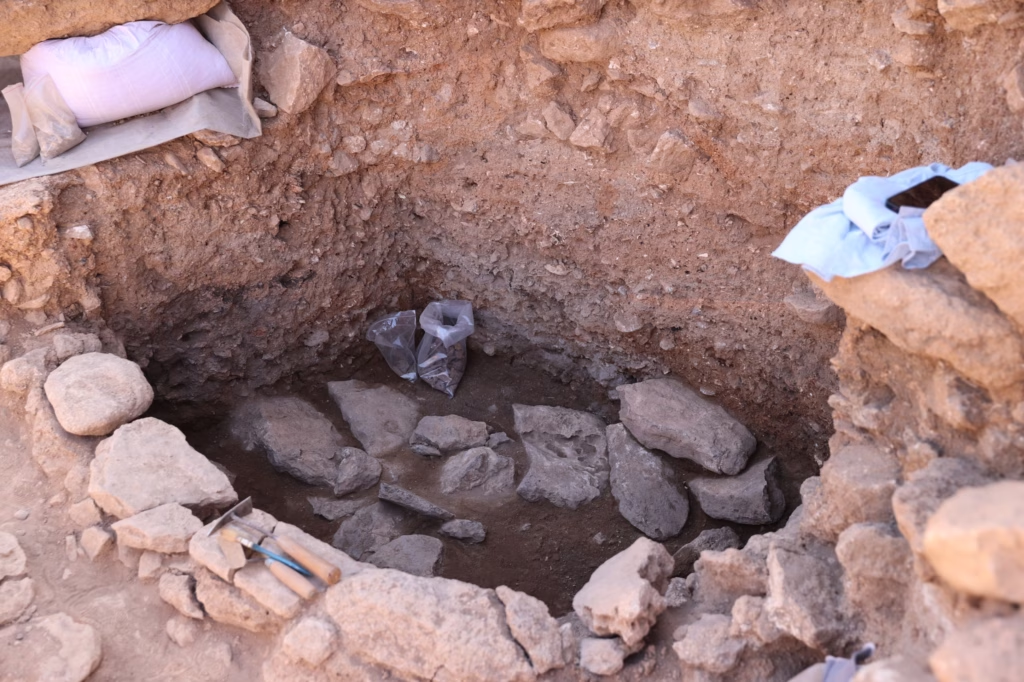
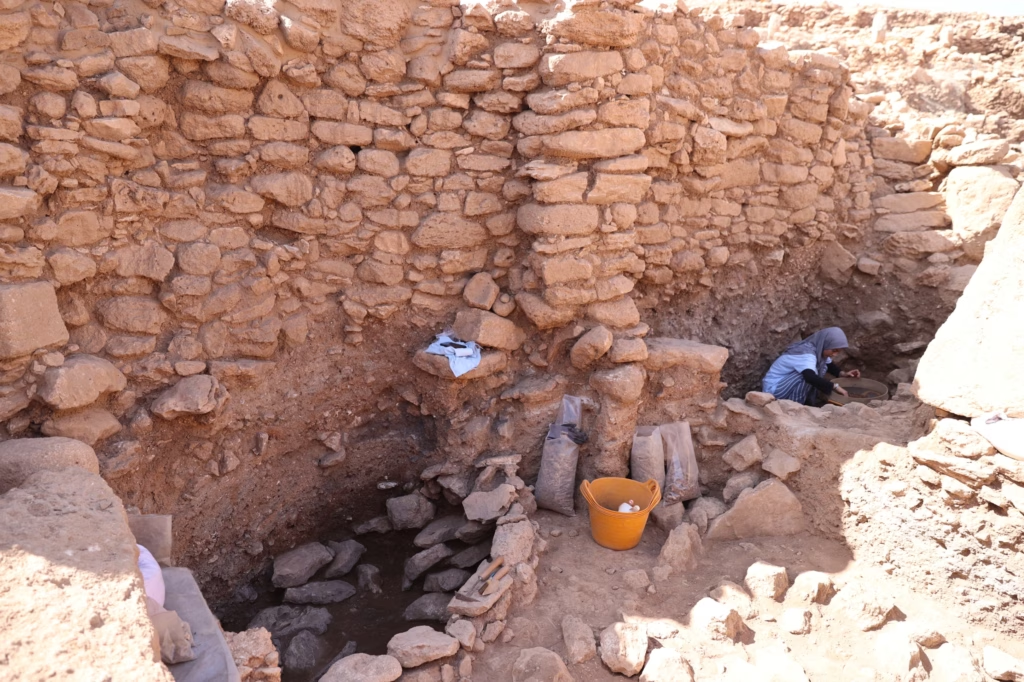
“We have uncovered more than 30 huts where daily life continued in Karahantepe,” said Karul. “Some were carved directly into bedrock, while others were built on earlier fills. They range from three to six meters in diameter, with oval, asymmetric walls. Inside, we find hearths, standing stones, and compartments possibly used for storage or grinding.”
Built entirely below ground level, the dwellings were intentionally filled with soil when abandoned — a practice also observed in Karahantepe’s monumental structures. Many of the standing stones within them were broken or deliberately toppled before the spaces were sealed.
Archaeologists are now carefully restoring and repositioning the stones to reconstruct the original spatial organization of the site, offering a tangible sense of how one of the world’s earliest settled communities may have looked and functioned.
From Ritual to Routine: A New Perspective on Karahantepe
Part of the same cultural network as Göbeklitepe, Karahantepe is one of the largest and most complex Neolithic centers within the Taş Tepeler region of Şanlıurfa.
Dating to around 9500 BCE, it belongs to a formative period when humans across Upper Mesopotamia began to experiment with permanent architecture, symbolic art, and communal living.
The site is famous for its monumental T-shaped pillars and carved human and animal reliefs — hallmarks of early symbolic architecture.
However, the newly discovered huts reveal that ritual and daily life coexisted: these early communities maintained places for ceremony and social gathering alongside practical domestic areas.
This duality challenges the long-held assumption that sites like Karahantepe were solely ceremonial. Instead, they appear to have been multifunctional settlements, where symbolic and everyday aspects of life were deeply intertwined.
Archaeological and Cultural Context
Karahantepe stands among 12 Neolithic sites collectively known as the Taş Tepeler Project, stretching across the Harran Plain. Together, they mark one of the world’s earliest landscapes of organized human construction — predating pottery and agriculture but showing the roots of both.
While Göbeklitepe first revealed the ritual sophistication of early Neolithic societies, Karahantepe’s domestic areas are now illuminating the social and architectural foundations of those same people — bridging the gap between ceremony and survival.
Source: Anatolian Archaeology