-
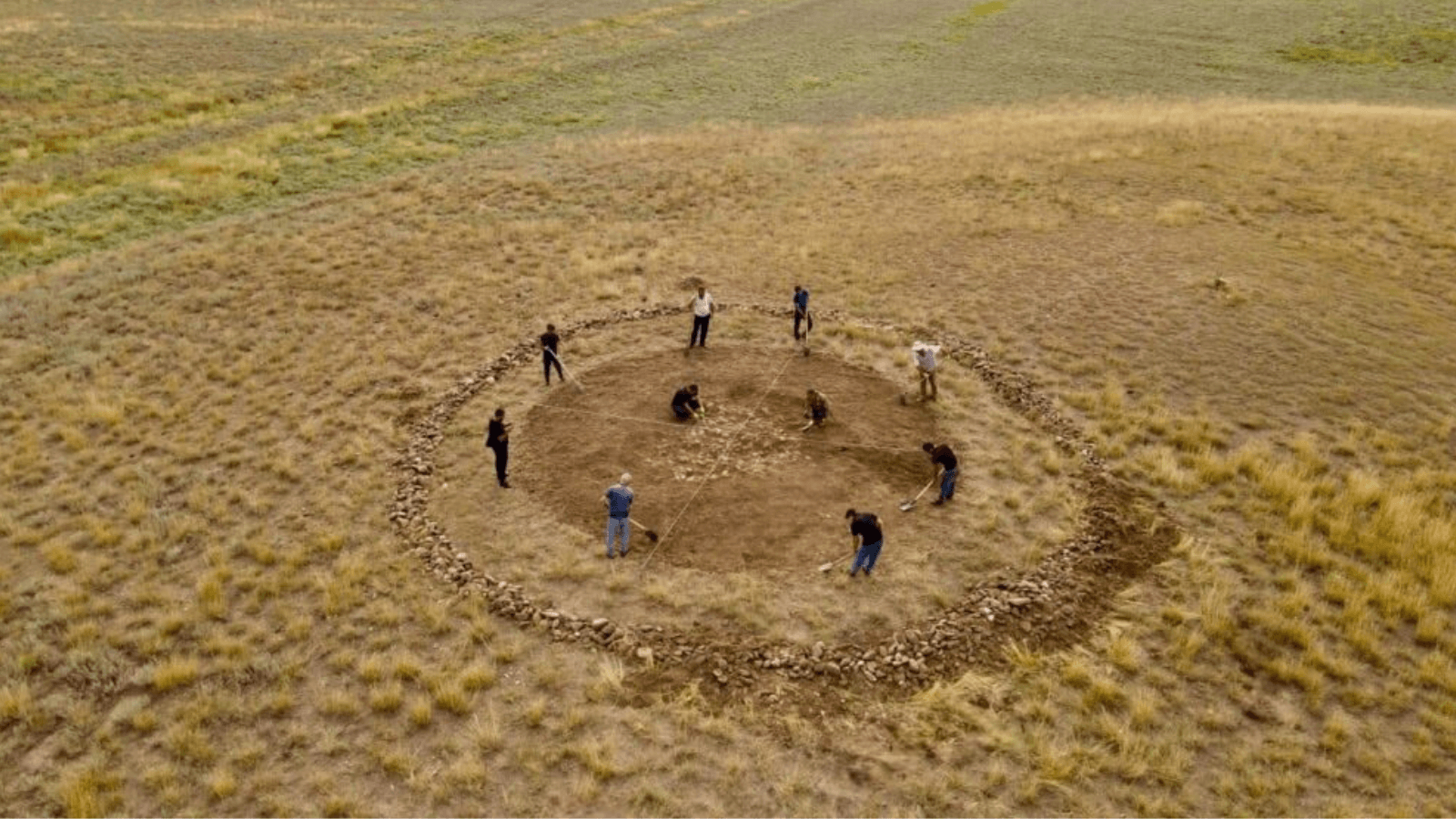
3,600-Year-Old Kurgan in Azerbaijan Reveals a Bronze Age Symbol of Power
Archaeologists excavating a 3,600-year-old kurgan in western Azerbaijan have uncovered a polished stone staff head that may once have served as an emblem of authority. A bronze dagger and finely worked arrowheads found in the same burial suggest that the person laid to rest there held an elevated military and social position. The burial, designated…
-
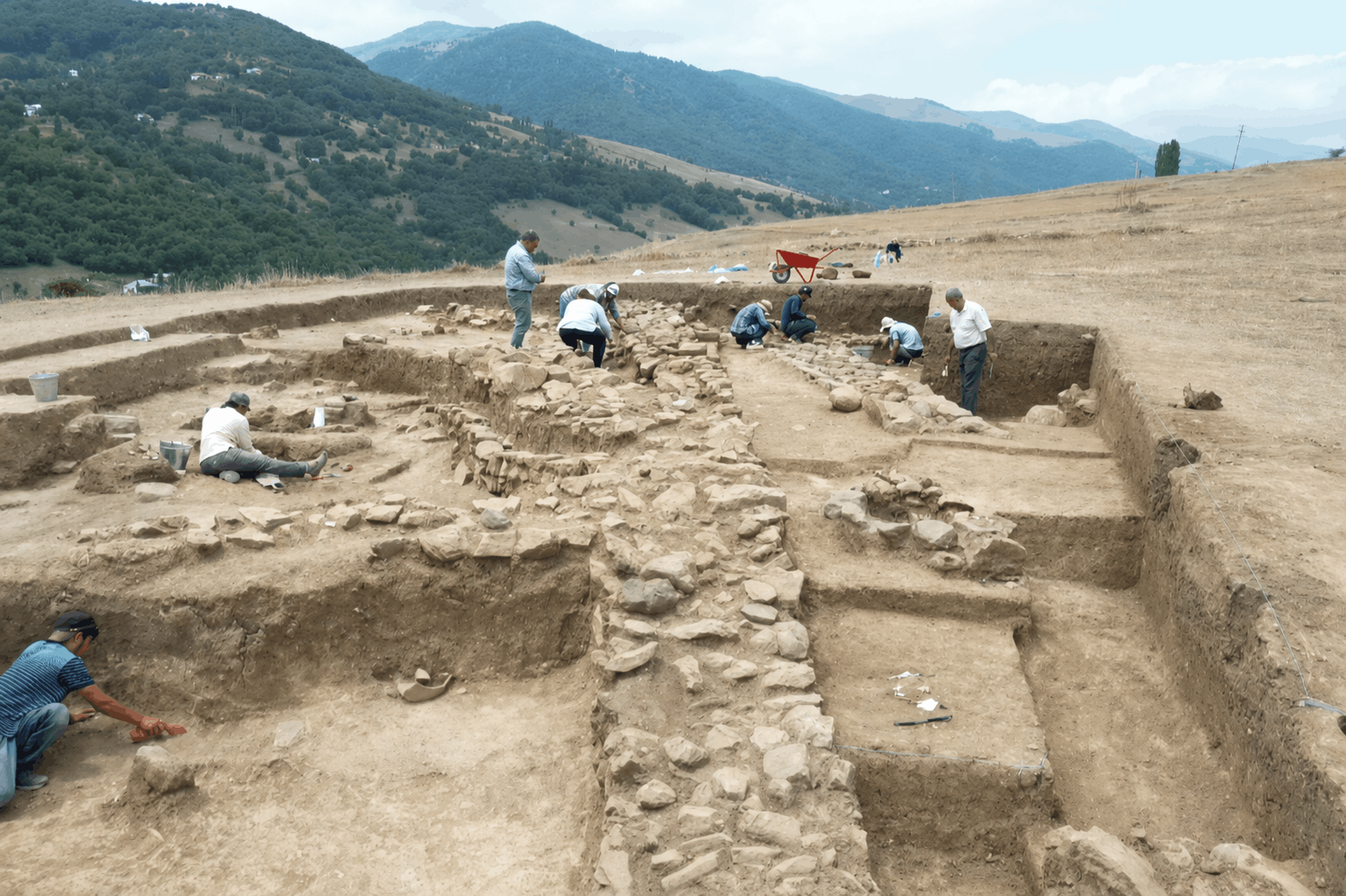
2,200-Year-Old Atropatene Settlement Found in Azerbaijan’s Mountains
Archaeologists have uncovered a large settlement dating back around 2,200 years in the mountains of southern Azerbaijan, within the historical sphere of ancient Atropatene. The site contains substantial buildings, rooms, defensive sections and evidence of production activity. The settlement, known as Seyidin Yeri, lies near Urakaran village in the Yardimli district, on the left bank…
-
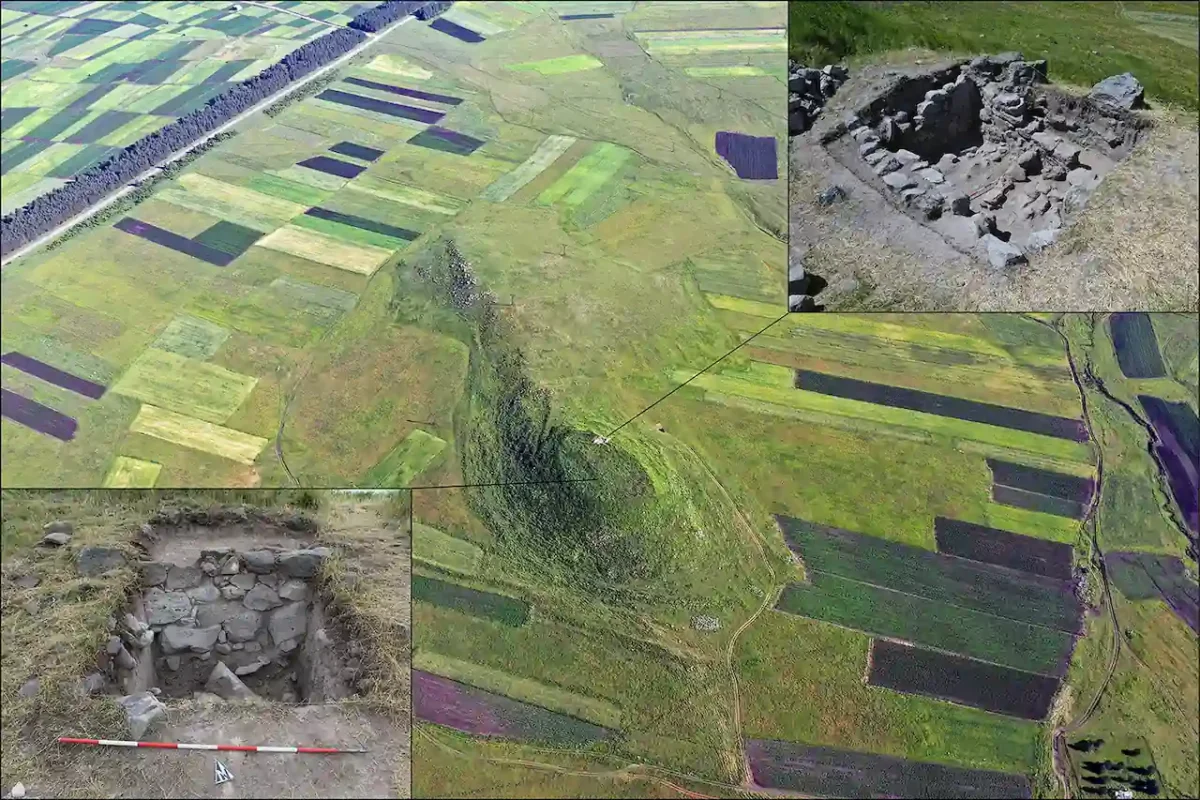
Bronze Sun Disk and Painted Clay Plaques Discovered in Georgia’s Highlands
A finely decorated bronze sun disk and rare painted clay plaques discovered on Georgia’s Javakheti Plateau are shedding new light on a little-explored highland region of the South Caucasus. At first glance, the high volcanic plateau of Javakheti, in southern Georgia, appears inhospitable. Long winters, sparse vegetation, and elevations rising above 2,000 meters define a…
-
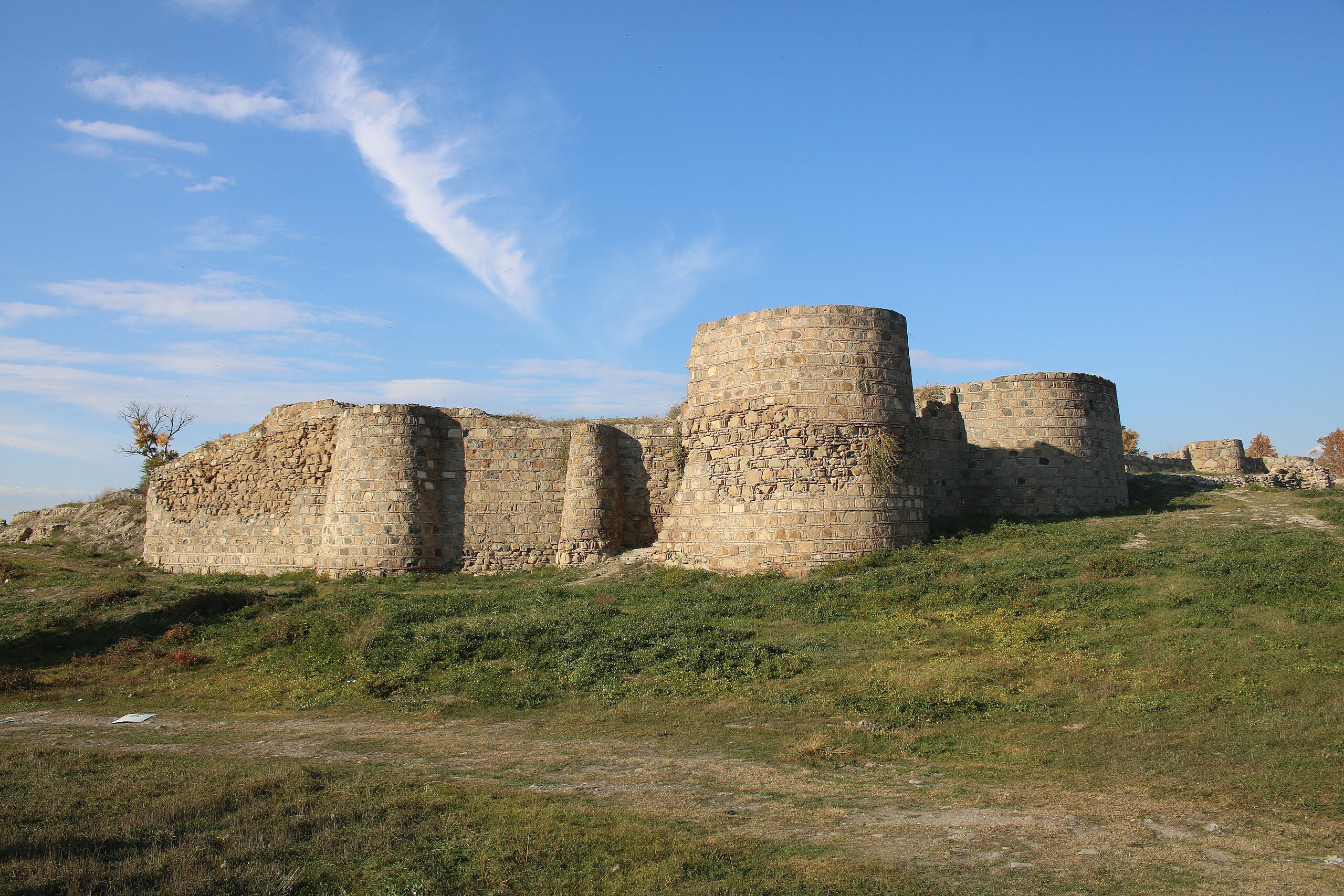
Rare 9th–10th Century Helmet and Chain-Mail Unearthed at Rustavi Fortress — A First for the South Caucasus
Archaeologists in Georgia have unearthed a remarkable relic of medieval warfare — a full chain-mail shirt and an iron helmet with a facial guard — during excavations at the ancient fortress of Rustavi. The 9th–10th century armor, found inside the fortress’s sixth chamber, marks the first discovery of its kind in the entire South Caucasus.…