
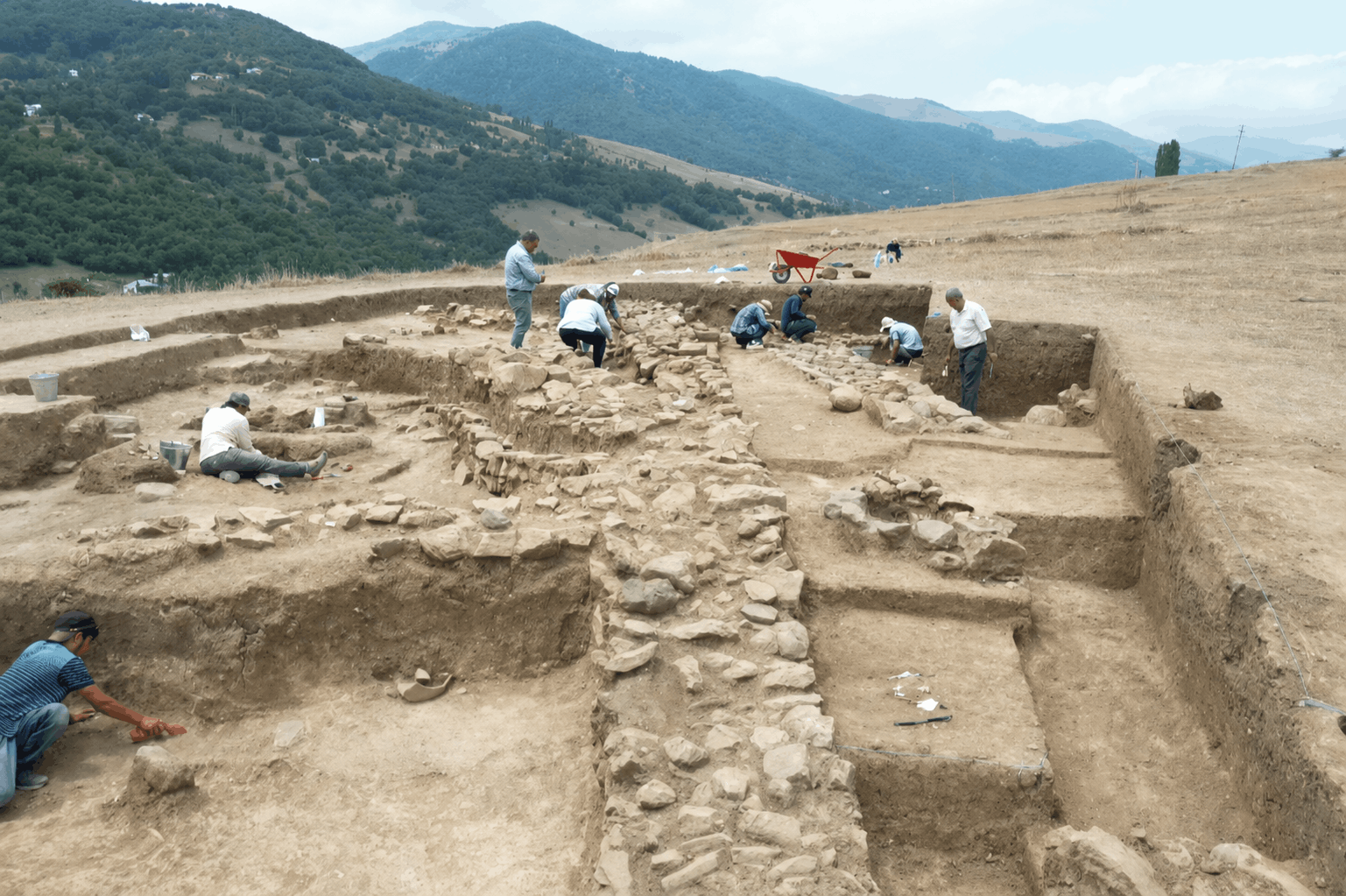
Archaeologists have uncovered a large settlement dating back around 2,200 years in the mountains of southern Azerbaijan, within the historical sphere of ancient Atropatene. The site contains substantial buildings, rooms, defensive sections and evidence of production activity.
The settlement, known as Seyidin Yeri, lies near Urakaran village in the Yardimli district, on the left bank of the Vilash River. It is being excavated by a joint Azerbaijani-American expedition.
Researchers describe Seyidin Yeri as the first large urban-type settlement associated with the Atropatene period to be studied in Azerbaijan’s southeastern highlands. Earlier work at the site documented multi-phase stone architecture, plaster floors and deposits rich in archaeological material.
Buildings Constructed Over Several Centuries
The latest excavations exposed large buildings belonging to several phases of occupation. Although constructed at different times, some possibly centuries apart, the structures fall within the same broad chronological period.
Rooms have been uncovered inside the complex, while parts of the architecture appear to have functioned as defensive fortifications.
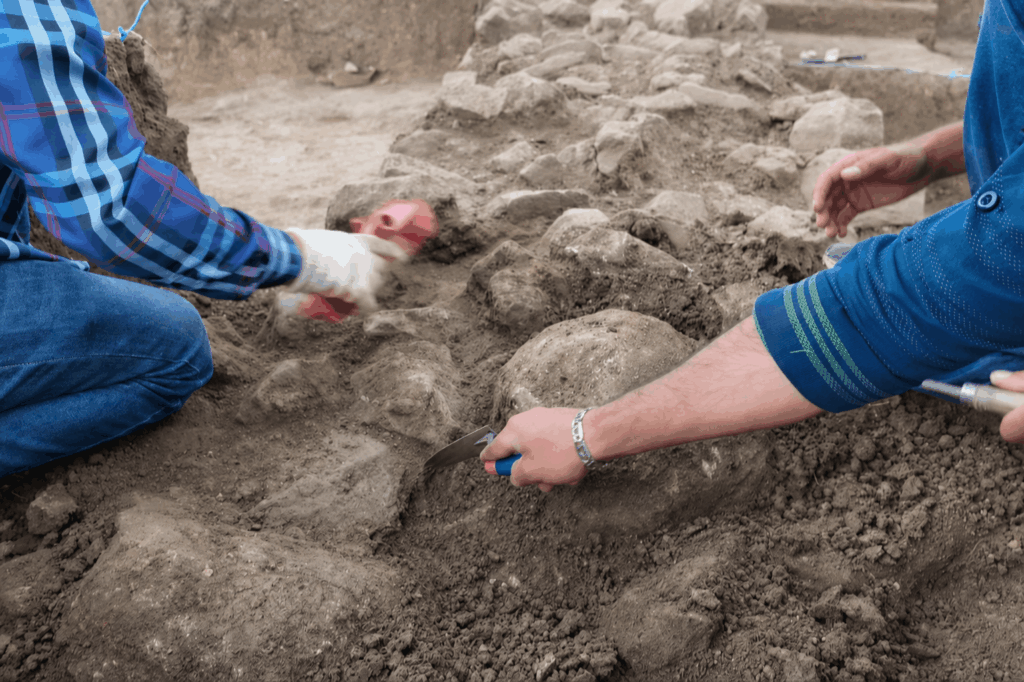
Jeyhun Eminli, head of the expedition and a researcher at the Institute of Archaeology and Anthropology of the Azerbaijan National Academy of Sciences, dated the main remains to approximately 2,200 years ago.
The size and durability of the buildings are notable in a region once thought to have been only sparsely occupied. A study published after the 2024 excavation season described Seyidin Yeri as a substantial Late Iron Age settlement whose inhabitants invested in large-scale construction.
Atropatene’s Mountain Frontier
Atropatene emerged in the late fourth century BCE following Alexander the Great’s conquest of the Achaemenid Empire. It took its name from Atropates, the former Persian governor of Media, who retained control of the northern part of the region after Alexander’s death.
The kingdom was centered mainly in what is now northwestern Iran. Its political boundaries changed over time, and its connections with communities farther north in the South Caucasus remain an area of archaeological research. Ancient Greek writers referred to the kingdom as Media Atropatene, while later forms of the name contributed to the development of the name Azerbaijan.
The Yardimli expedition places Seyidin Yeri within the wider Atropatene cultural and historical sphere. The discovery provides new material for studying communities living in the highlands between the Iranian plateau and the South Caucasus.
Fire Brought Down the Ceilings
Evidence of a destructive fire was found inside parts of the settlement.
According to Eminli, wooden ceiling elements burned before collapsing into the rooms below. Archaeologists have not yet announced whether the fire affected the whole complex or only individual buildings.
The collapsed layers may preserve objects and other remains close to where they were located when the buildings were abandoned or destroyed. The cause and precise date of the fire are still unknown.
Evidence of Local Glass Production
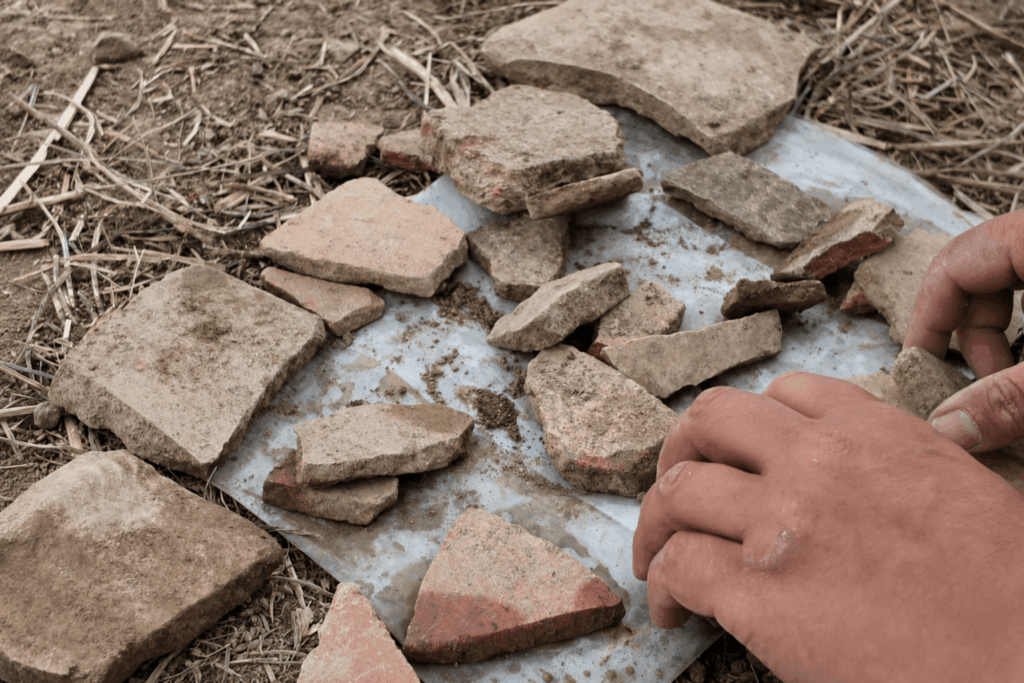
Finds from the site have also been interpreted as evidence of local glass production beginning in the early first century CE.
The expedition has not yet released details of the glassworking material or the techniques used to identify it. For now, the evidence suggests that at least some specialized production took place at the settlement during a later phase of its occupation.
Other traces of economic activity were also reported, but their nature has not yet been fully described.
Older Remains May Lie Below
Lara Fabian of the University of California, Los Angeles, said the excavation has produced material older than the main 2,200-year-old structures.
This raises the possibility that Seyidin Yeri developed over a longer period than the exposed architecture currently shows. Deeper excavation will be needed to establish when activity at the site began.
Researchers have collected a large number of organic samples, which will be examined at Hamilton College in the United States. The results are expected to refine the chronology of the settlement and its different occupation phases.
Only part of the complex has been uncovered. Larger excavations and modern survey methods are planned to determine its full extent and layout.