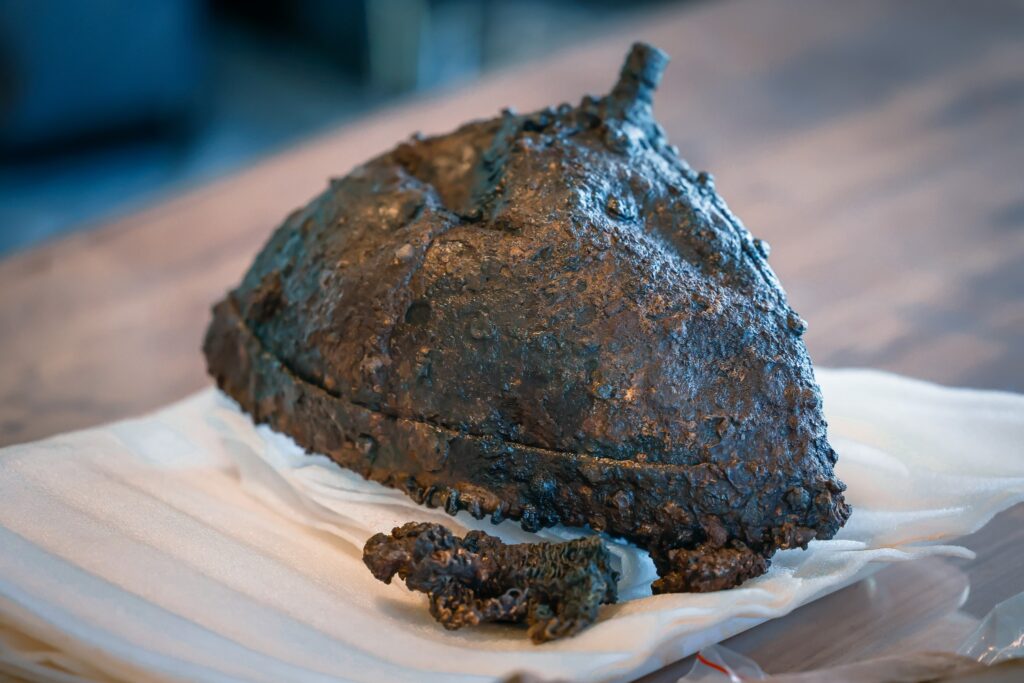
Archaeologists in Georgia have unearthed a remarkable relic of medieval warfare — a full chain-mail shirt and an iron helmet with a facial guard — during excavations at the ancient fortress of Rustavi. The 9th–10th century armor, found inside the fortress’s sixth chamber, marks the first discovery of its kind in the entire South Caucasus.
The find, described by experts as “without precedent,” sheds new light on Georgia’s martial technology during the formative centuries of its feudal era. “We uncovered an iron helmet complete with its muzzle plate and, beside it, a nearly intact chain-mail cuirass. Nothing comparable has ever been recorded in the region,” said Nazibrola Pachikashvili, director of the Rustavi Museum and leader of the ongoing excavation.
A Fortress with Deep Roots
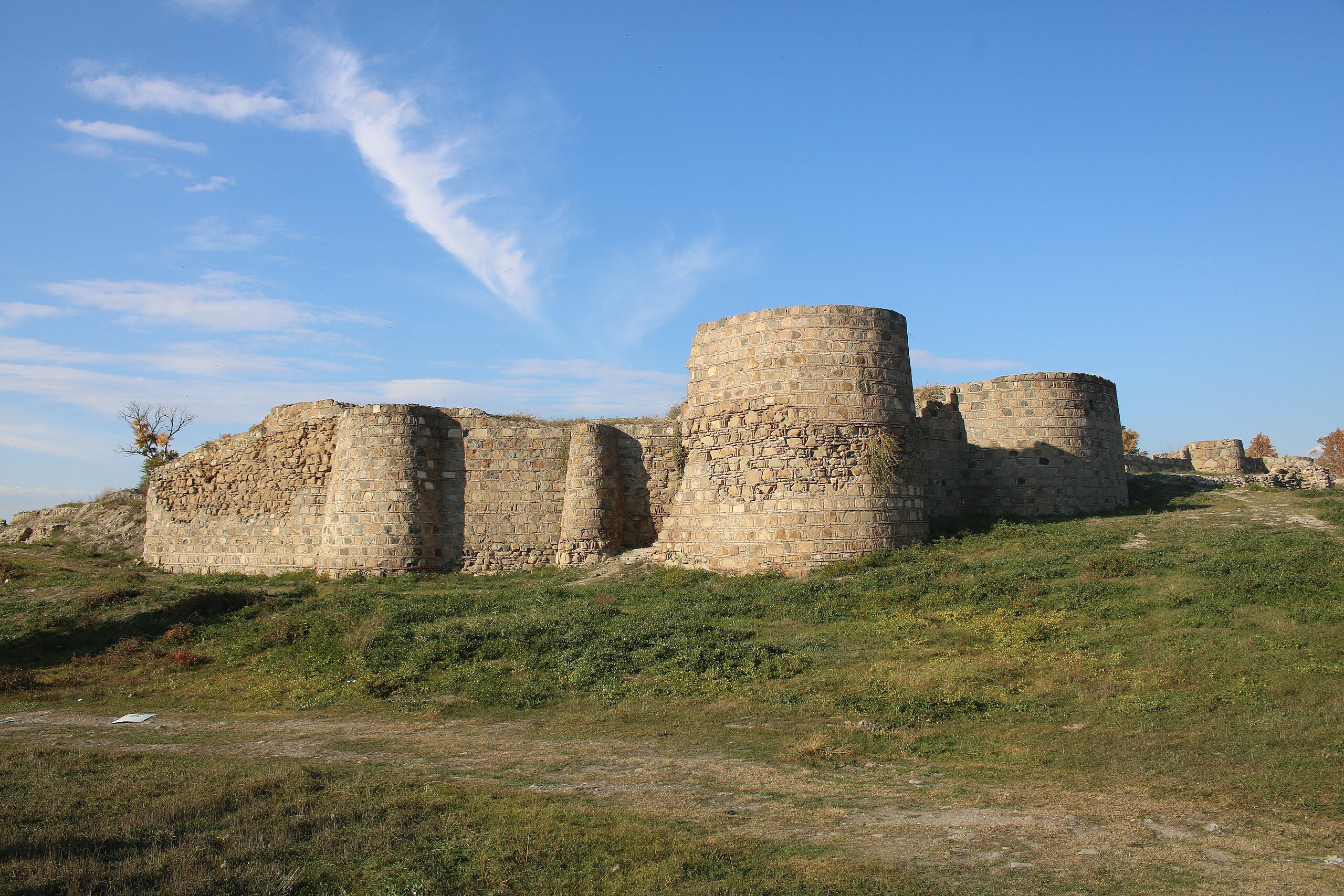
Perched above the Kura River, just 25 kilometers southeast of Tbilisi, Rustavi Fortress ranks among the oldest fortifications in the region. Historical chronicles list Rustavi alongside early urban centers such as Mtskheta and Uplistsikhe — key cities of the ancient Kingdom of Iberia. The fortress has seen repeated phases of reconstruction across centuries: first in the early medieval period (5th–8th centuries), again between the 9th and 11th centuries, and finally under Georgian kings of the 12th–13th centuries.
Traces of wall frescoes still survive on its inner surfaces — an unusual feature for military strongholds — hinting that the site also held ceremonial or administrative importance. Excavations launched in mid-2025 by Rustavi Municipality aim to expose the palace complex that once stood within the fortress walls. More than a hundred participants — archaeologists, students, and volunteers — are currently involved in the work.
The Armour of an Elite Warrior
Preliminary analysis suggests that the helmet and mail likely belonged to a high-ranking soldier or commander defending Rustavi’s southeastern frontier. The helmet, crafted from iron with a detachable muzzle plate, reveals a design lineage possibly influenced by Byzantine or Persian prototypes. The interlinked iron rings of the chain-mail, astonishingly well preserved despite humid soil conditions, reflect the high level of metallurgical skill achieved by local artisans.
“The craftsmanship is extraordinary,” noted researchers involved in the study. “This level of precision shows that Georgian armourers were fully capable of producing complex military equipment equal to that of neighboring empires.”
Rewriting the Military Map of the Caucasus
Surviving examples of early medieval armour are exceedingly rare across the Caucasus — most having corroded or been lost to centuries of warfare and burial conditions. The Rustavi discovery, therefore, fills a critical gap in the region’s archaeological record, offering direct physical evidence of the weapons and defenses used during the volatile period of Arab–Byzantine rivalry and Georgian state formation.
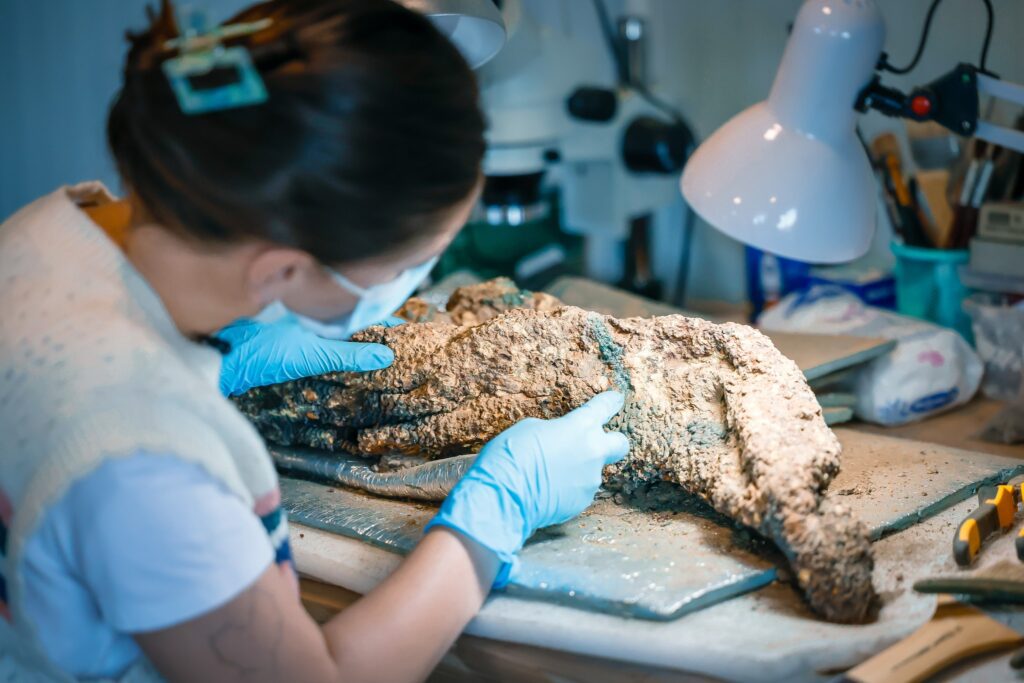
Metallurgical testing is now underway to determine the alloys and forging techniques. Early results suggest local production rather than import, strengthening the case for Rustavi as a regional military hub during the early Middle Ages.
Linking Past and Present
Rustavi’s municipality plans to turn the fortress into an open-air museum, where visitors will be able to walk through active excavation zones and trace three millennia of urban and defensive evolution. Once conservation is complete, the newly found armour will go on display at the Rustavi Museum.
“This discovery gives a face — or perhaps a shield — to the people who once guarded these walls,” one archaeologist reflected. “It’s not just about the metal; it’s about the lives and the legacy it represents.”
As the restoration continues, the silent iron of Rustavi speaks volumes: forged in a turbulent frontier, tempered by empire and resilience, it now returns as tangible proof of a medieval Georgia that once stood at the crossroads of power and endurance.
Cover Image Credit: Mehman Ibragimov- Wikipedia