-
1,500-Year-Old ‘Golden Shoes’ Found in Noblewoman’s Grave Reveal Ties to the Hunnic World
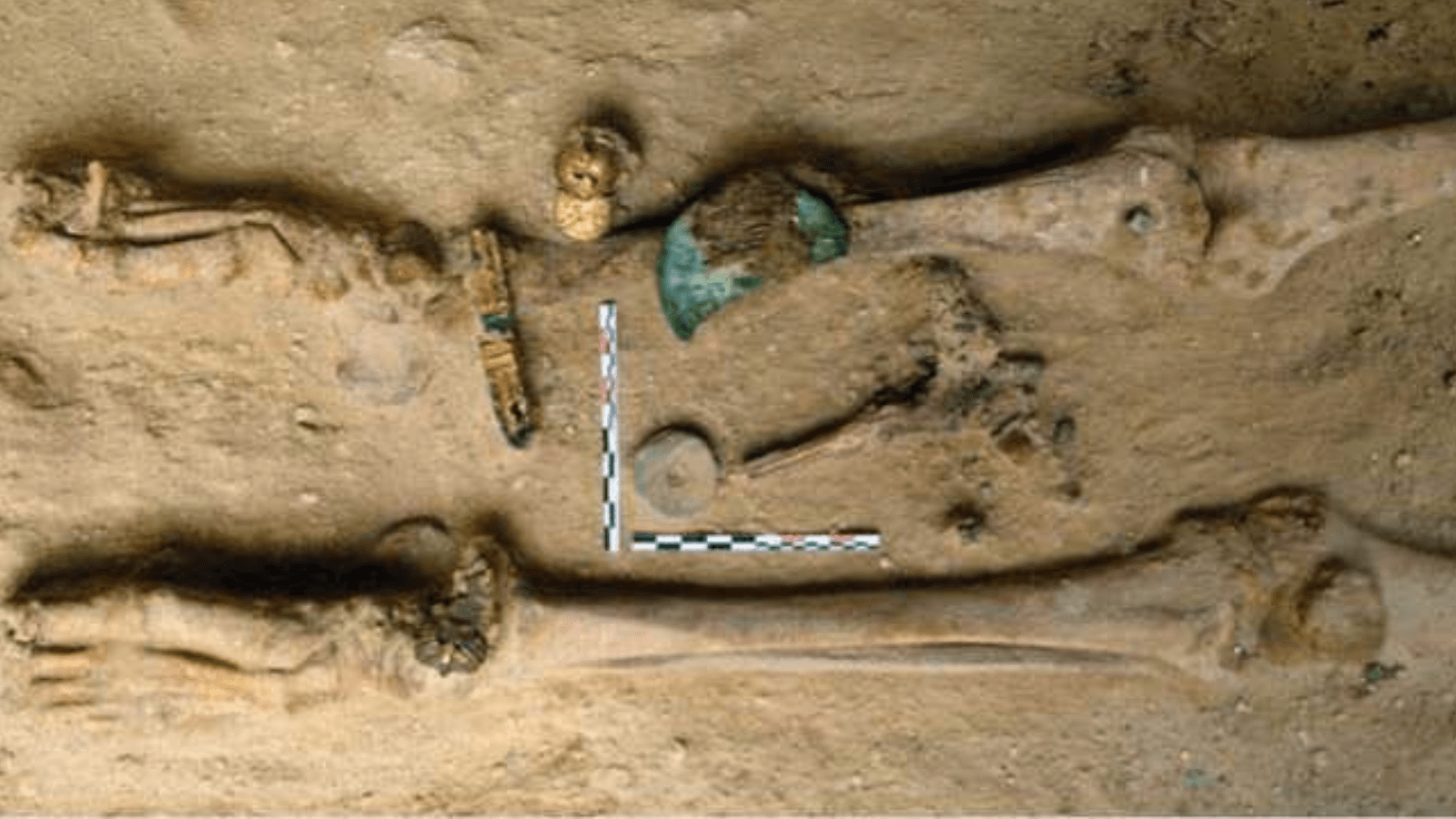
A richly furnished grave on Kazakhstan’s Caspian coast has revealed 1,500-year-old gold-covered shoe fittings belonging to a noblewoman whose burial shows striking connections with the Hunnic world. The objects, sometimes described as “golden shoes,” were not footwear made entirely of precious metal. Archaeologists instead recovered elaborate shoe buckles and strap fittings covered with thin gold…
-
Ancient DNA Study Including Kazakhstan’s “Golden Man” Reveals Family Networks Behind Scythian Elite Power
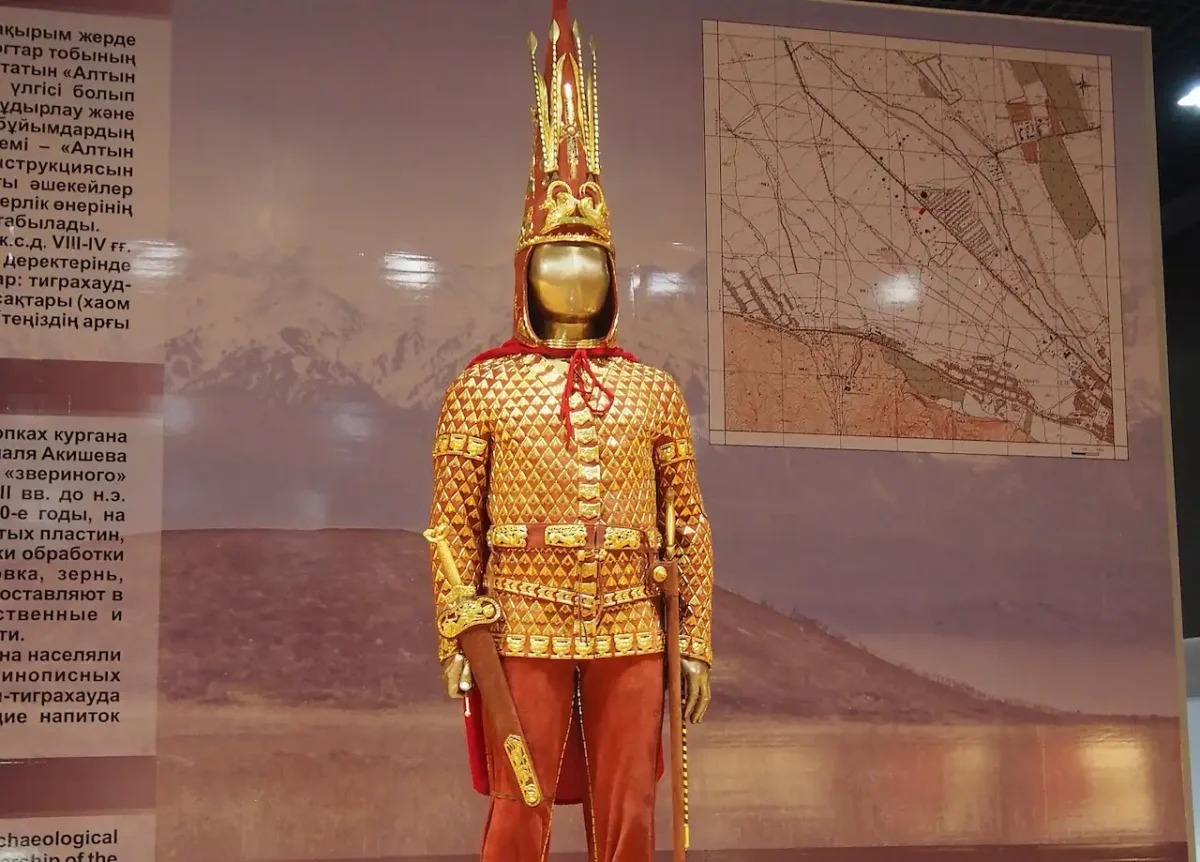
Gold, horses, weapons, and monumental kurgans have long shaped the image of Scythian elite power. But a new study published in Science Advances suggests that power among some Scythian and Saka groups may also have depended on something less visible in the archaeological record: family ties. Based on ancient DNA from Iron Age burials across…
-
“My Name Is Aba”: Rare Old Turkic Inscription Found Among 1,200 Petroglyphs in Kazakhstan
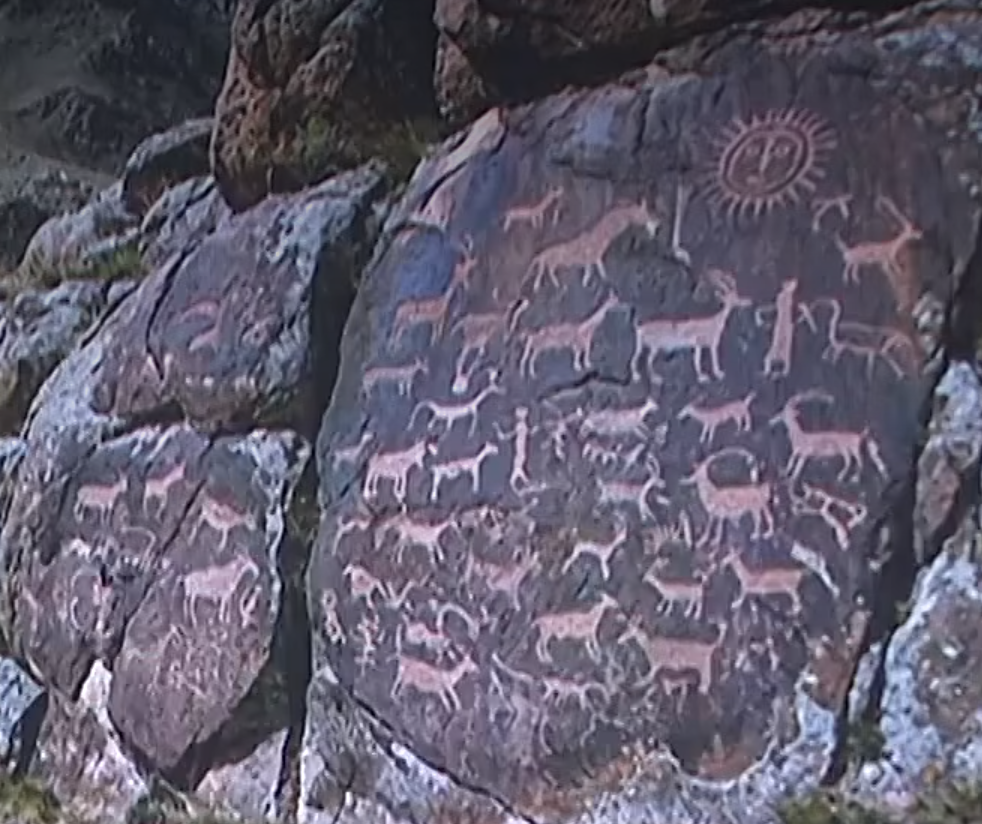
More than a thousand years ago, someone named Aba carved his name into a rock in southern Kazakhstan. Archaeologists have now found that short Old Turkic sentence among more than 1,200 petroglyphs in Burkhansai Gorge. The discovery was made in the Jambyl Region, in Zhualy District, where researchers began systematic work in 2024. The site…
-
A 1,100-Year-Old Turkic Inscription Linked to the Oghuz Discovered in Kazakhstan
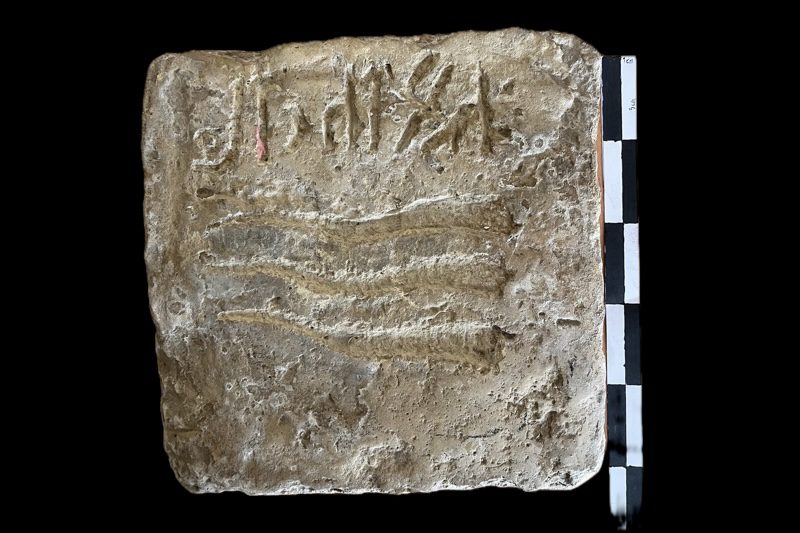
A modest stone kept for years inside a small school museum in southern Kazakhstan is now reshaping scholarly views on early Turkic literacy. Identified in August 2025, the Kultobe Inscription provides rare evidence that the Oghuz Turks were using written Turkic well before the 13th century—long before Oghuz Turkic is traditionally thought to have emerged…
-
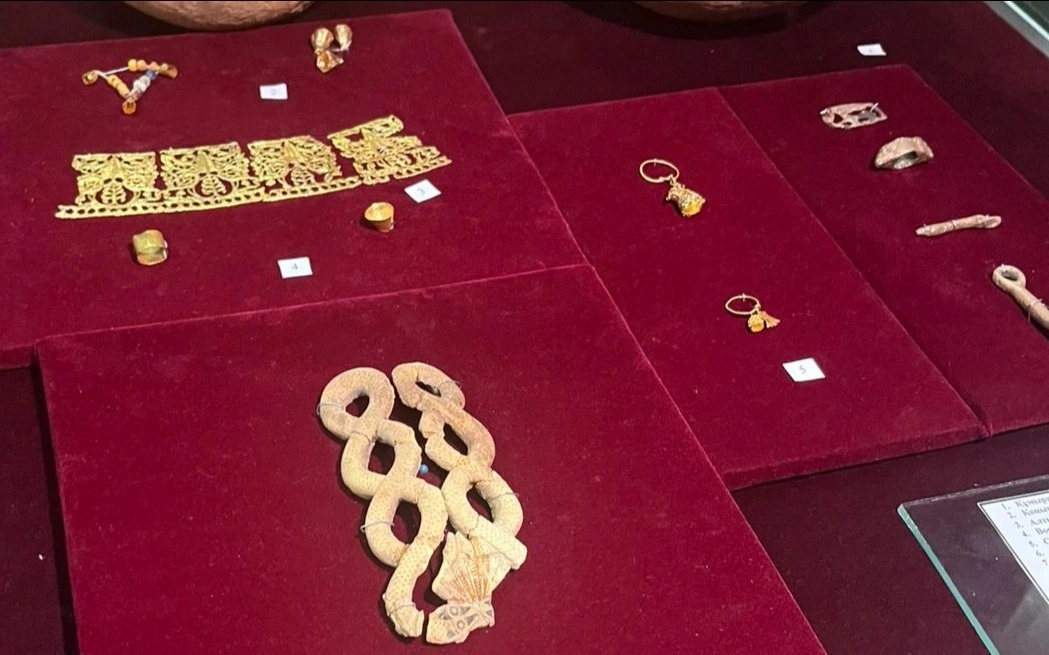
Kazakhstan Archaeologists Unearth Rare Gold Ornaments and a Unique Snake-Dragon Ritual Object at the Ancient Dauylbai Necropolis
A paired burial, elite Saka weapons, and ritual goldwork reshape understanding of Zhetysu’s ancient societies Archaeologists working in the Zhetysu region of southeastern Kazakhstan have uncovered an exceptional group of artifacts at the Dauylbai necropolis—one of the most expansive yet least explored archaeological landscapes in the country. The new discoveries, dating to the 4th–3rd centuries…
-
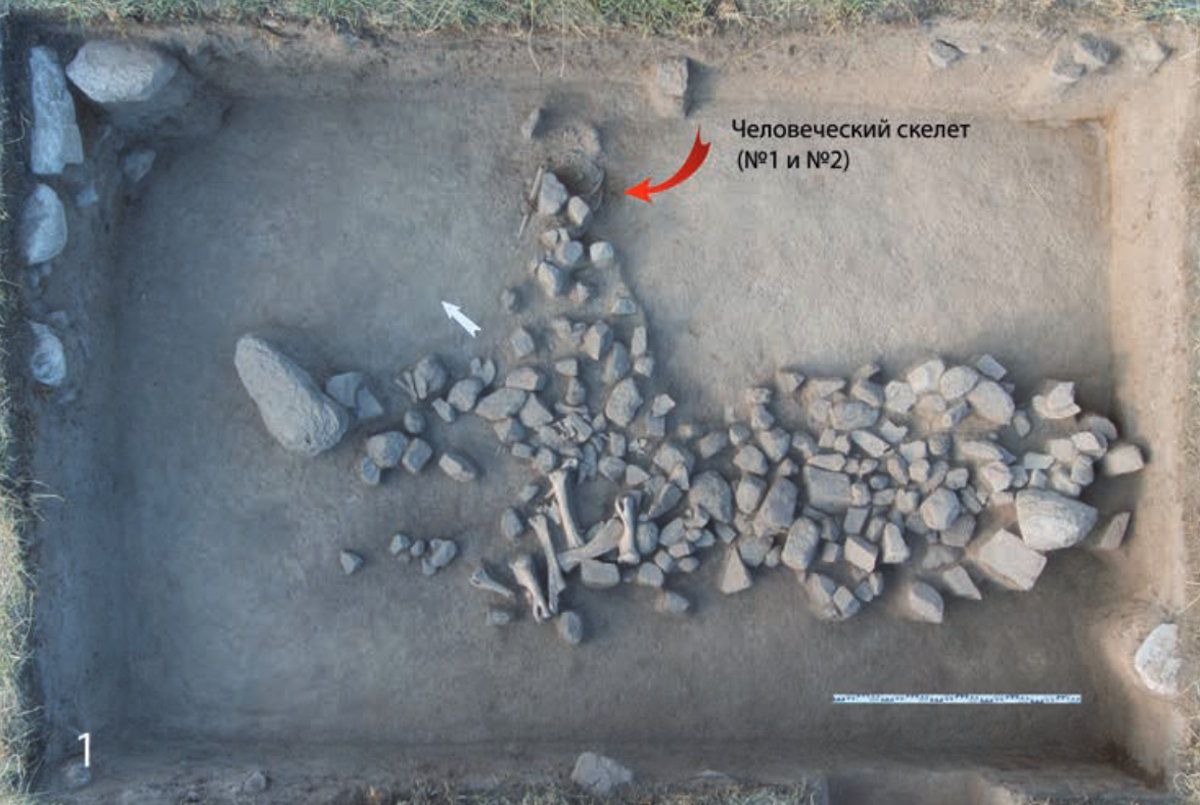
7,000-Year-Old Neolithic Burial Unearthed in Kazakhstan Marks the Country’s Earliest Known Human Grave
A team of archaeologists has uncovered Kazakhstan’s oldest known human burial at the Koken settlement, revealing a chapter of human history that predates the dawn of herding and agriculture in the region. Radiocarbon analysis dates the discovery to around 7,000 years ago, offering the first direct evidence of human presence in the Kazakh steppe during…
-
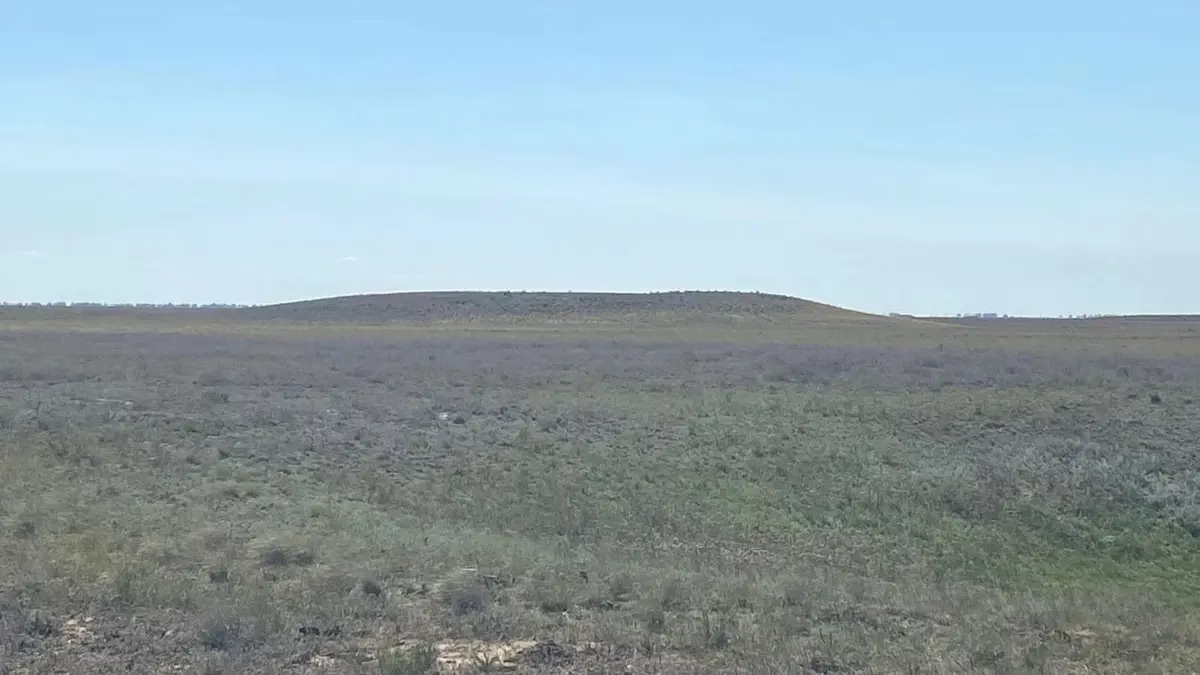
West Kazakhstan Reveals 150 Mysterious Burial Mounds of the Early Iron Age
Archaeologists working in Kazakhstan’s West Kazakhstan Region (WKO) have uncovered a cluster of roughly 150 burial mounds, or kurgans, whose unusual forms may rewrite our understanding of early steppe civilizations. Dating back to the Early Iron Age, these mounds could belong either to the Sarmatians—nomadic tribes known across the Eurasian steppes—or to a previously unknown…