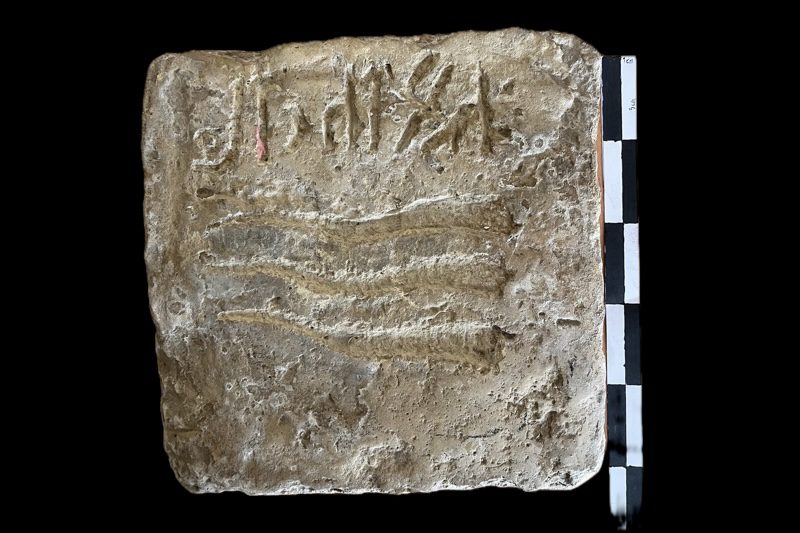
A modest stone kept for years inside a small school museum in southern Kazakhstan is now reshaping scholarly views on early Turkic literacy. Identified in August 2025, the Kultobe Inscription provides rare evidence that the Oghuz Turks were using written Turkic well before the 13th century—long before Oghuz Turkic is traditionally thought to have emerged as a written language.
The inscription, carved into limestone and consisting of a single line of text, was documented in the village of Oranghay, near Turkistan, within Kazakhstan’s Turkistan Region. Until now, it had never been the subject of a scientific publication.
Identified Inside a Rural School Museum
The inscription was recorded on 6 August 2025 by Hayrettin İhsan Erkoç and Alparslan Kavaklı during a visit to a small museum housed in the Mukhtar Auezov Secondary School in Oranghay village.
The stone originated from Kultobe, an Oghuz-associated settlement located within the village. It had reportedly been uncovered during an illicit excavation in the 1990s and subsequently handed over to the school museum, where it remained largely unnoticed for decades.
A review of existing literature confirmed that the inscription had never been formally studied or published.
A Short Text with Complex Features
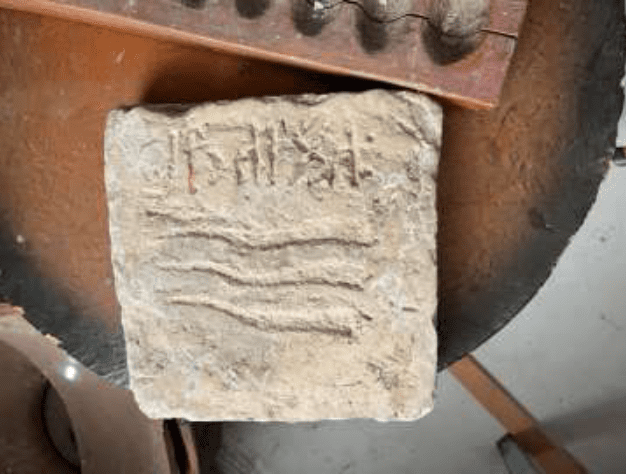
The Kultobe Inscription consists of a single line carved onto a limestone block. Beneath the text appears a carved symbol, interpreted as either a tribal tamga or possibly a stylized representation of flowing water—both elements carrying strong cultural significance in Turkic traditions.
Despite its brevity, the inscription presents substantial epigraphic challenges. Several characters appear in unusual or variant forms, complicating the reading process. As a result, the researchers proposed two alternative readings, both of which are grounded in comparative Old Turkic epigraphy.
The carved symbol below the text introduces further interpretive questions. While its precise meaning remains unresolved, it closely resembles known Oghuz tribal marks, strengthening the cultural attribution.
Why the Inscription Belongs to the Early Oghuz
Multiple lines of evidence point toward an early Oghuz attribution and a dating to the 9th–10th centuries CE.
First, additional Turkic inscriptions have previously been discovered in the immediate vicinity of Kultobe, indicating a broader epigraphic landscape rather than an isolated find. Second, both archaeological data and historical sources confirm that Oghuz groups were present in the Turkistan region during this period, before large-scale migrations westward in the 11th century.
Taken together, these factors strongly suggest that the Kultobe Inscription belongs to the early Oghuz horizon.

Rethinking the History of Written Oghuz Turkic
Perhaps the most significant implication of the Kultobe Inscription concerns the history of Oghuz Turkic as a written language. Scholarly consensus has long held that Oghuz Turkic began to appear in written form only in the 13th century, primarily through texts written in the Arabic script.
The inscriptions from the Turkistan region—including Kultobe—challenge this assumption. They demonstrate that Oghuz Turkic was already functioning as a written medium centuries earlier, using Turkic runiform script rather than Arabic letters.
This finding does not merely add a new inscription to the corpus. It compels a reassessment of early Oghuz literacy, political organization, and cultural self-expression in Central Asia.
A Small Stone with Large Consequences
The Kultobe Inscription underscores how easily critical historical evidence can remain hidden in plain sight. Preserved not in a major museum but in a village school collection, the stone reminds scholars that early Turkic history is still far from fully documented.
As further analyses continue, the Kultobe Inscription stands as one of the clearest indicators that the written traditions of the Oghuz Turks began earlier, and were more geographically diverse, than previously believed.
Academic Reference
This article is based on findings presented by Hayrettin İhsan Erkoç and Alparslan Kavaklı in “Kültöbe Yazıtı: Erken Oğuzlarda Yazı Kullanımına İlişkin Yeni Bir Buluntu.”