Gold, horses, weapons, and monumental kurgans have long shaped the image of Scythian elite power. But a new study published in Science Advances suggests that power among some Scythian and Saka groups may also have depended on something less visible in the archaeological record: family ties.
Based on ancient DNA from Iron Age burials across the Eurasian Steppe, the research indicates that high status was not simply earned through warfare, wealth, or personal achievement. In several elite burial groups, it appears to have been inherited and maintained through extended family networks.
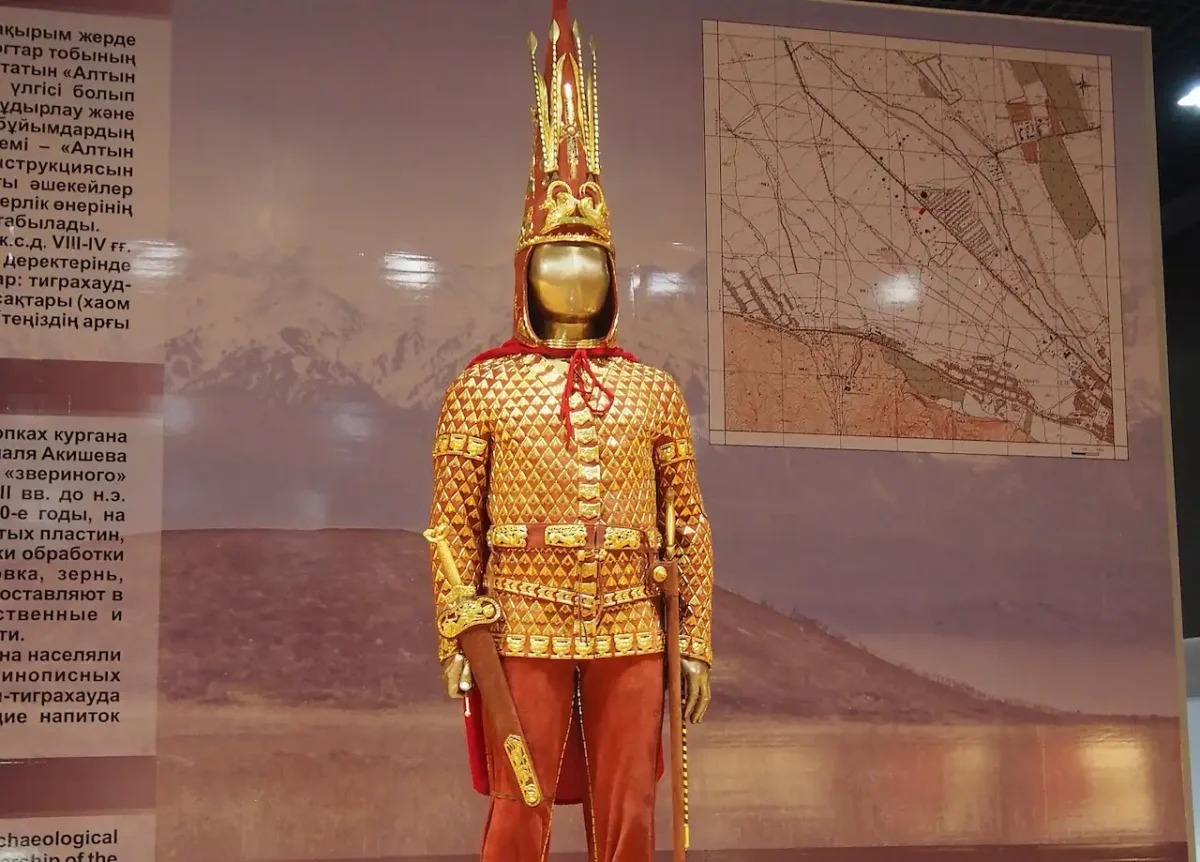
The research analyzed genome-wide DNA from 85 individuals buried across Central Eurasia, including 38 people from elite graves and 47 from lower-status burials. The dataset includes 46 newly sequenced genomes and the first genome-wide data from Kazakhstan’s famous Saka “Golden Man,” one of the best-known archaeological finds from the Central Asian steppe.
The result is not a simple claim that one royal family ruled the whole steppe. The evidence points instead to something more specific: in several regions, high-status individuals were biologically connected to one another, sometimes across different cemeteries more than 100 kilometers apart.
DNA behind the kurgans
The Scythians and Sakas were mobile Iron Age groups who lived across a vast zone stretching from the Black Sea region to Central Asia and the Altai. The word “Scythian” is often used for western steppe groups known from Greek sources, while “Saka” is usually associated with eastern groups known from Persian and Central Asian contexts. They did not leave written records of their own, so archaeology has carried most of the weight in reconstructing their society.
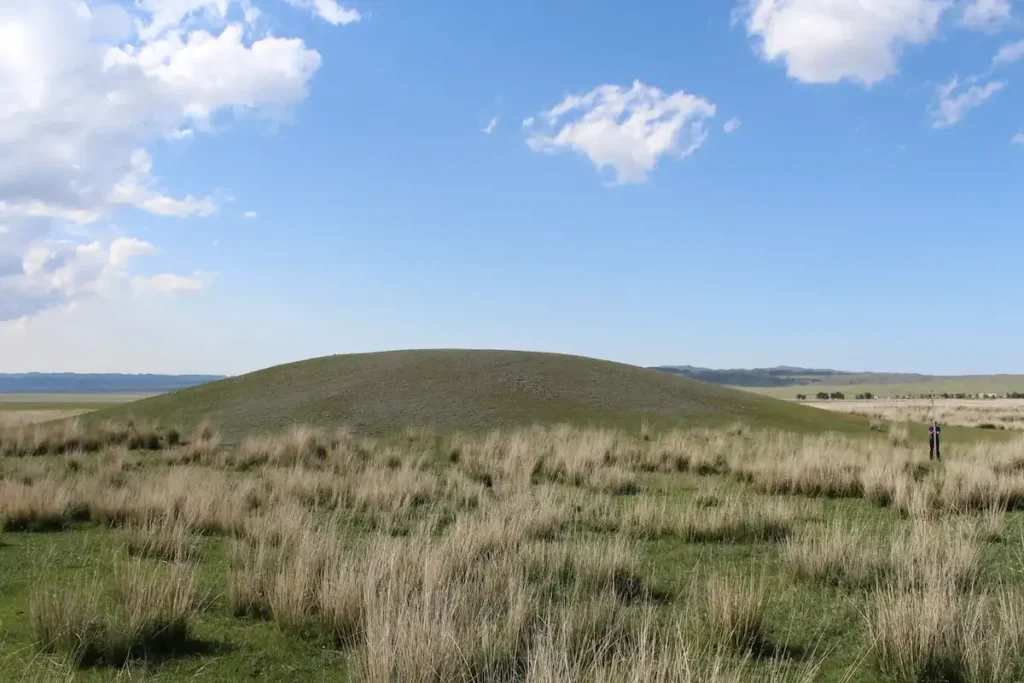
Their most visible monuments are kurgans, large burial mounds built for high-status individuals. Many contained gold ornaments, weapons, horse equipment, sacrificed animals, wooden chambers, and objects decorated in the animal style strongly associated with steppe art. Other burials were far smaller and simpler, with few or no grave goods.
Those differences have long suggested social inequality. But grave goods alone cannot show whether status was earned during life or inherited through birth. The new DNA study gives researchers a way to test that question directly.
The team found that elite individuals were much more closely related to one another than to non-elite people buried at the same or nearby sites. Among the elite burials, researchers identified close biological links, including siblings, parent-child relationships, and grandparent-grandchild pairs. In some cases, relatives were buried in different elite cemeteries.
That pattern matters. If two close relatives were both buried with elite treatment, especially when separated by distance or age, it becomes harder to explain their status only through individual achievement. The evidence supports the idea that elite rank could pass through family lines.
What the “Golden Man” really shows
The study also includes the famous “Golden Man” from the Issyk burial mound in Kazakhstan, about 50 kilometers east of Almaty. Discovered in 1969, the burial dates to around 400–300 BC and contained more than 4,000 gold ornaments, weapons, a tall decorated headdress, animal-style objects, and a silver bowl bearing an undeciphered inscription.
The burial became a national symbol of Kazakhstan and one of the most recognizable images of the Saka world. For decades, however, the sex of the individual was debated because the skeletal remains did not provide a clear answer.
The new genetic data indicates that the Golden Man was most likely male. Researchers also place him within the genetic variation of Iron Age Saka individuals. But this point needs care: the study does not identify his name, title, language, or exact political role. It also does not present him as a direct relative of the other elite individuals sampled in the study.
His importance is different. For the first time, one of Central Asia’s most iconic elite burials can be placed inside a wider ancient DNA dataset. The Golden Man becomes part of a broader picture of Saka and Scythian elite life, rather than an isolated treasure burial.
The individual’s young age, around 17 according to previous skeletal assessment, also fits the larger argument. A teenager buried with such extraordinary wealth is difficult to explain purely as a self-made warrior or leader. It is more consistent with a system in which social rank could be inherited.
Elite women were not exceptions
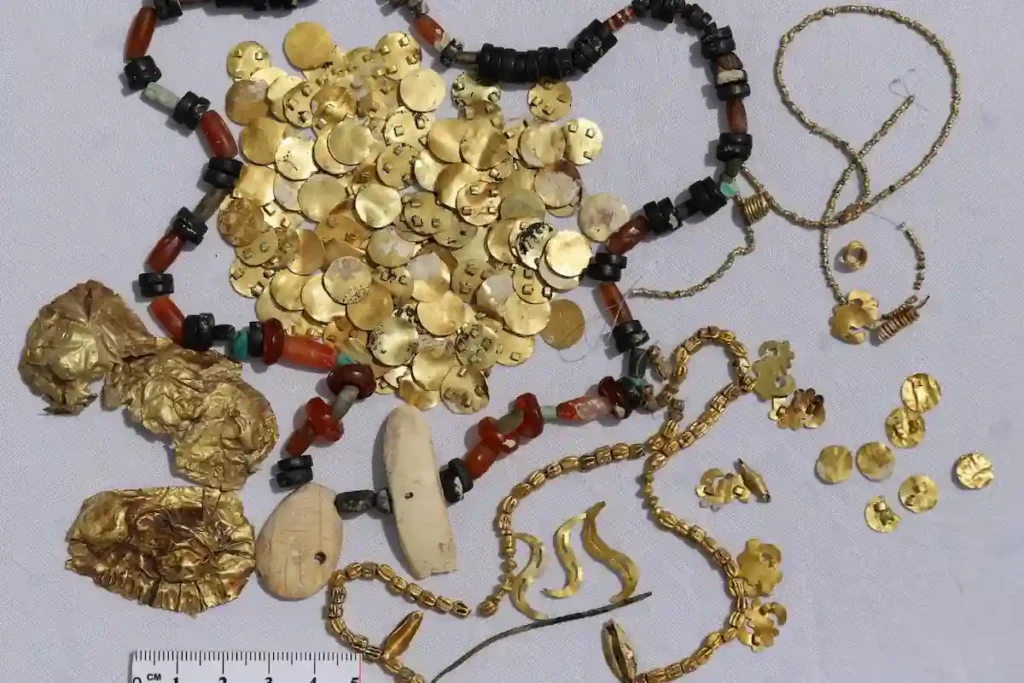
Another important result is the presence of elite women. Nearly half of the elite individuals in the dataset were genetically female, showing that high status among Scythian and Saka groups was not restricted to men.
This does not mean every richly buried woman was a warrior or ruler. That would go beyond the evidence. But the data does show that women could belong to the highest-ranking social circles and receive elite burial treatment. This agrees with earlier archaeological finds from the steppe, where some female burials contain weapons, ornaments, and other markers of status.
The researchers also did not find a simple pattern showing that elite organization followed only the male line or only the female line. In other words, the social structure appears more complicated than a basic patrilineal or matrilineal model.
A cautious but important shift
The study does not solve every question about Scythian society. Ancient DNA cannot tell us what language these people spoke, how they described themselves, or exactly how political power was exercised. It also cannot turn every rich kurgan into proof of a dynasty.
What it does show is more limited, and more useful: biological kinship and elite burial status were connected in measurable ways.
For a society known mostly through outside writers and spectacular burials, that is a significant advance. The gold and weapons in Scythian kurgans were not only signs of wealth. In many cases, they appear to have marked families that held power across generations and across distance.
The image that emerges is not just one of horse-riding warriors moving across the steppe. It is a picture of mobile societies with organized elite networks, inherited status, and women as visible members of high-ranking families.
Cover Image: Museum display showing a reconstruction of the Saka “Golden Man,” one of Kazakhstan’s most iconic archaeological finds. Credit: Wikimedia Commons
Source:
Ghalichi, A., Seidualy, M., Rohrlach, A. B., Musralina, L., Gnecchi-Ruscone, G., Hermes, T., et al. (2026). Ancient DNA reveals elite dynastic rule among Iron Age Eurasian Steppe nomads. Science Advances, 12(27).DOI: 10.1126/sciadv.aef0108