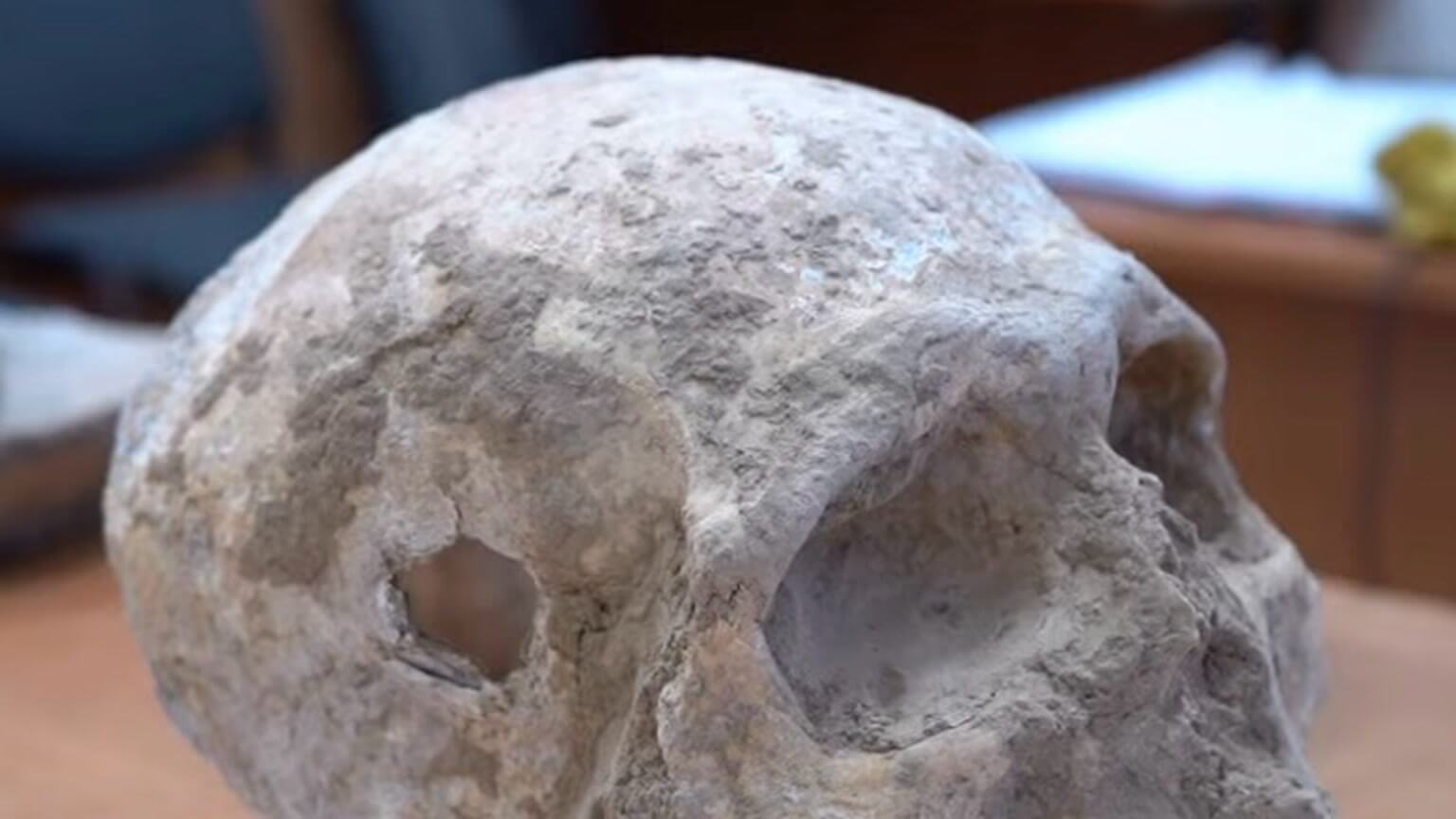
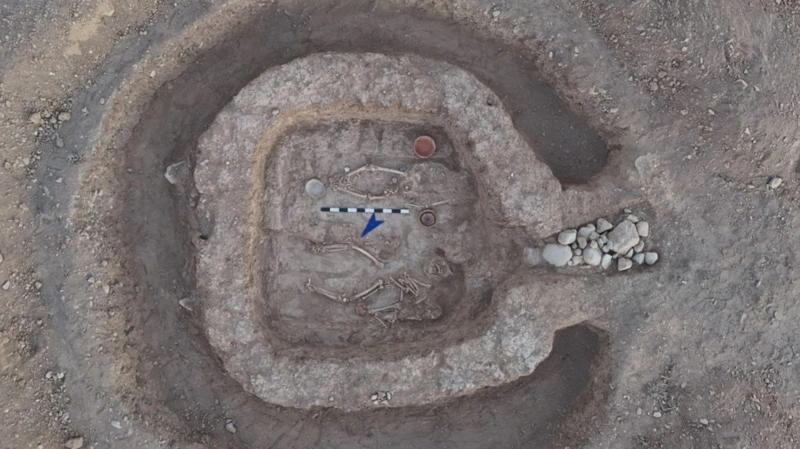
A woman was buried beside a man and two children in southern Kazakhstan. An injury near her temple has left archaeologists with a question the grave cannot yet answer: was she wounded in a fight, or killed during a burial ceremony?
The remains came from a family grave beneath a mound at the Kyzylkol-1 burial ground in the Turkistan Region’s Sozak district. Archaeologists also found an unusual amulet made from the bone of a marten or fox. But it was the mark on the woman’s skull that drew the team’s attention.
What the injury can tell us
The skull bears a rounded injury near the temple that researchers attribute to a blow from an ancient weapon. They believe she sustained it while alive and that it may have caused her death. The wound alone, however, cannot show who inflicted it or what led to the blow.
Alexander Podushkin, a professor at South Kazakhstan Pedagogical University who led the excavation, has put forward two possibilities. The woman may have been wounded during a conflict and died from her injuries. She may instead have been killed during a funeral ceremony and buried with the man found in the grave. Both remain hypotheses.
Podushkin cautioned that a custom of killing women so they could be buried with men is not known from the Kangju period. He also said the possibility that she took part in a fight should remain open. Some Sarmatian women fought, he noted, and Sarmatian groups formed part of the wider Kangju world. That historical context offers a possible line of inquiry, but it does not establish that this woman was a warrior.
Another burial nearby
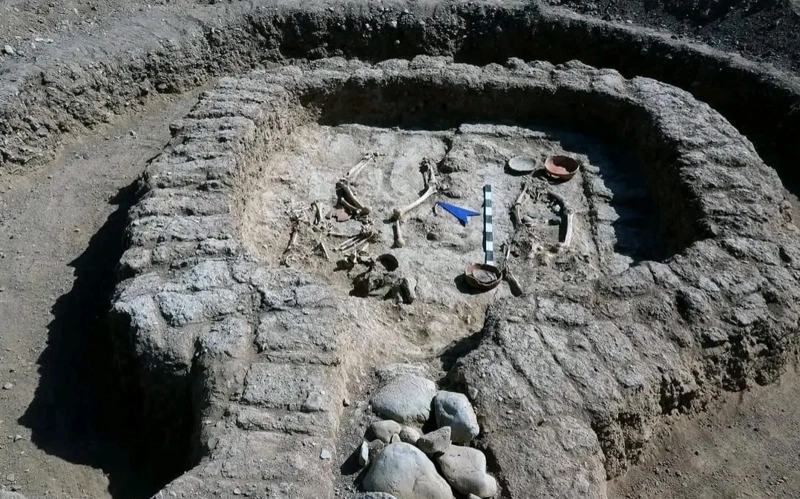
The team investigated a second site in the Kyzylkol area: a circular monument about 10 meters across, ringed by upright stone slabs. At its center were a stone-lined grave and a separate burial structure with masonry walls. Although the monument had been looted in antiquity, archaeologists recovered pottery fragments and a stone amulet.
Those finds date the circular monument to the Late Bronze Age, around the 14th to 12th centuries BCE. That date does not apply to the woman’s grave at Kyzylkol-1. Podushkin said the monument’s circular construction stands apart from other Bronze Age burials known in the region, making it a significant find in its own right.
Anthropologists plan to examine the woman’s bones and skull injury more closely. Their findings may help determine how she was hurt and whether the wound caused her death. The grave preserves evidence of a violent injury, but not yet the story behind it.
Cover Image: A skull shown in footage of the Kyzylkol excavation. Researchers are investigating whether the injury near the temple caused the woman’s death. Credit: Otyrar.kz / video still.