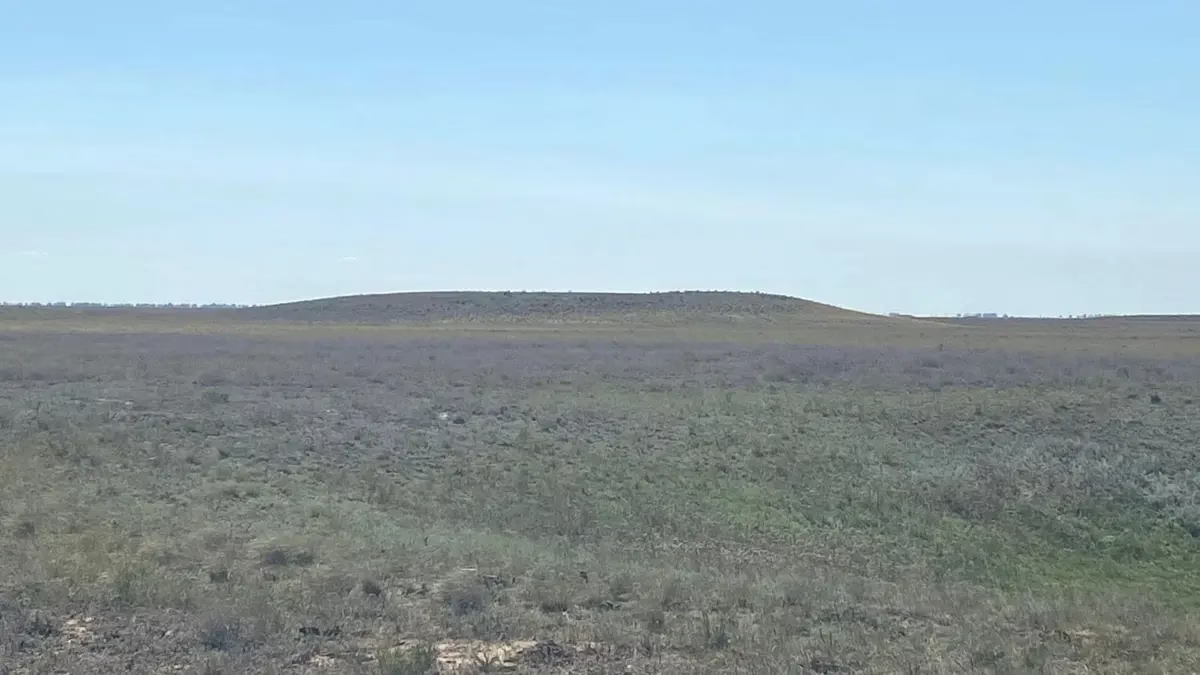
Archaeologists working in Kazakhstan’s West Kazakhstan Region (WKO) have uncovered a cluster of roughly 150 burial mounds, or kurgans, whose unusual forms may rewrite our understanding of early steppe civilizations.
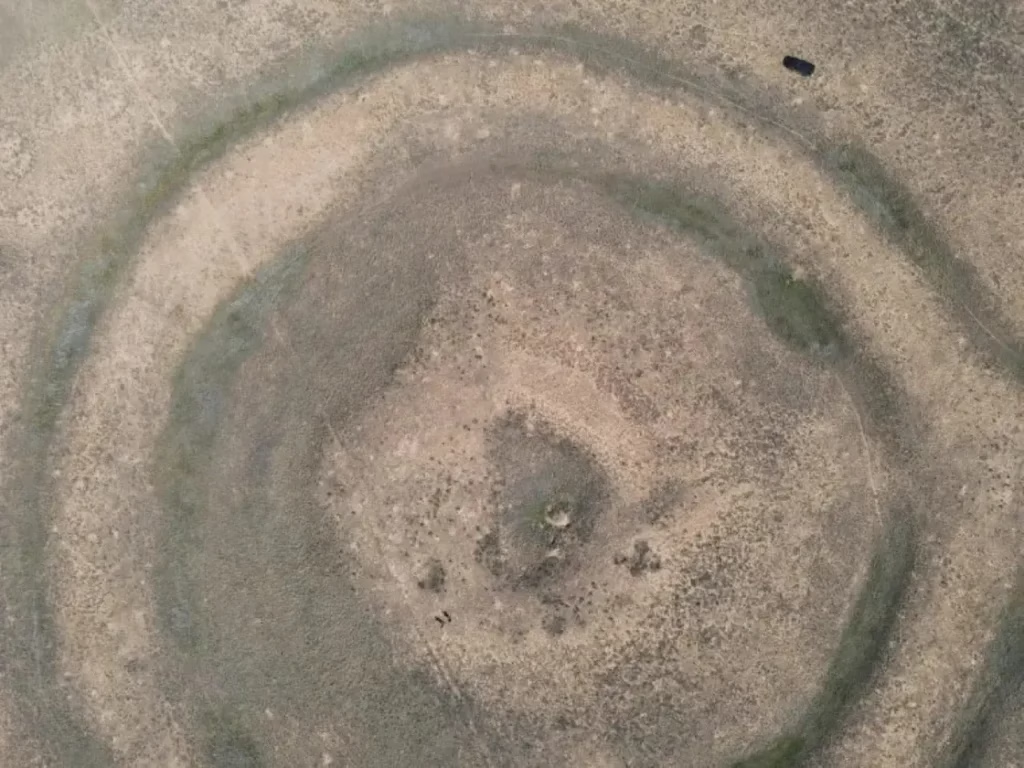
Dating back to the Early Iron Age, these mounds could belong either to the Sarmatians—nomadic tribes known across the Eurasian steppes—or to a previously unknown cultural group. Among the discoveries, one mound stands out with a surrounding moat nearly 140 meters wide, indicating it may have belonged to an elite individual. Its scale far exceeds typical Iron Age burials, hinting at the social significance of the person interred there.
A Variety of Shapes Suggest Complex Traditions
The newly found kurgans differ from conventional burials. Archaeologists documented rectangular, circular, and double-ring formations, rare even in Eurasian steppe archaeology. Such diversity points to intricate cultural or ritual practices, suggesting a society that may have distinguished status, lineage, or ceremonial function through burial design.
Officials stress that these sites require careful study. Excavations cannot begin immediately, as authorities must first complete proper documentation, secure funding, and issue tenders for licensed archaeological organizations. Once examined in detail, the site may gain official protection as a cultural heritage monument in Kazakhstan.
Legends and Local Lore
For nearby villagers, the mounds have long held spiritual and mysterious significance. Some report unusual lights hovering above the mounds, while others recount vehicles stalling unexpectedly near the area. These stories, blending folklore with history, underscore the enduring presence of ancient landscapes in local culture—even as researchers maintain a cautious approach.
Kazakhstan’s Growing Archaeological Profile
This discovery comes amid a series of notable finds across Kazakhstan. In Atyrau, a cache of 13th-century Golden Horde coins and remnants of a medieval settlement were uncovered, while in Ulytau, a Saka warrior’s burial from the Iron Age revealed new insights into nomadic life.
Experts hope that systematic excavation of the West Kazakhstan complex will shed light on the social structures, rituals, and daily life of early inhabitants of the steppe. Whether tied to the Sarmatians or an unknown group, the findings promise to deepen our knowledge of Iron Age Central Asia.
Potential for Cultural Tourism
Beyond its academic value, the site may attract cultural tourism, offering visitors a glimpse into the enigmatic past of the Eurasian steppes.
The 150 burial mounds of West Kazakhstan stand not merely as silent hills, but as echoes of a long-lost civilization, awaiting the stories they have carried for millennia.
Cover Image Credit: West Kazakhstan Region Inspectorate for the Protection of Monuments