A paired burial, elite Saka weapons, and ritual goldwork reshape understanding of Zhetysu’s ancient societies
Archaeologists working in the Zhetysu region of southeastern Kazakhstan have uncovered an exceptional group of artifacts at the Dauylbai necropolis—one of the most expansive yet least explored archaeological landscapes in the country. The new discoveries, dating to the 4th–3rd centuries BCE, include gold ornaments, bronze and bone items, elite weaponry, and a rare child-and-woman paired burial that researchers describe as “a first for the region.”
The multi-year research, conducted in 2023–2024 under the leadership of Dr. Dossbol Baigunakov, has revealed cultural and social practices of the Saka communities who once controlled the Karatal river valley. All artifacts were transferred in late 2024 to the Mukhamedzhan Tynyshpaev Regional Local History Museum, where restoration work was completed this year.
Elite burials emerge from the foothills of Dauylbai ridge
The Dauylbai ridge spans more than 100 square kilometers and contains over 190 archaeological sites, including 150 burial complexes and multiple petroglyph clusters spanning the Bronze Age to recent times. Yet only a fraction of its mounds had been scientifically studied until now.
Excavation of a 40-meter-wide burial mound uncovered the remains of an elite Saka warrior. The individual was buried with a finely crafted iron akinak sword, gold plates, and decorative ornaments—items typically reserved for high-ranking figures. The richness of the burial confirms that the valley functioned as a significant ceremonial and political zone for Saka clans.
A rare woman-and-child burial captivates researchers
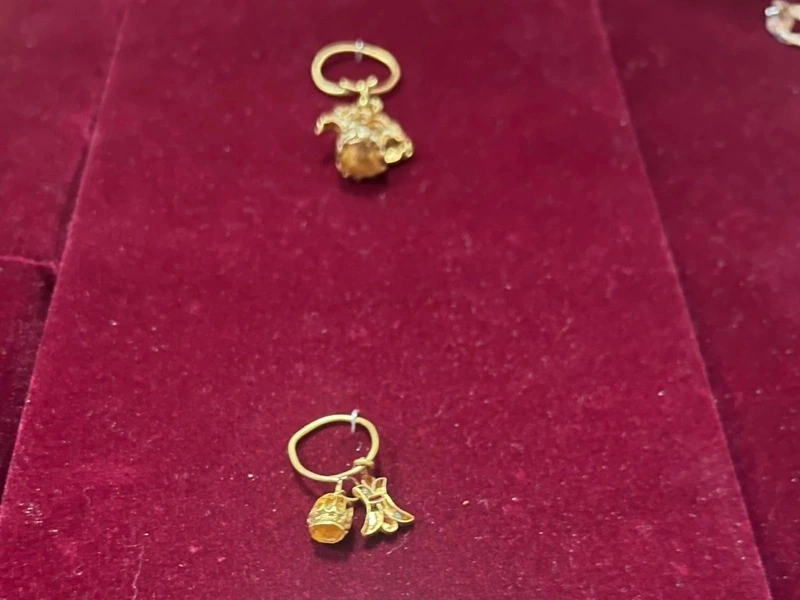
Perhaps the most striking find of the recent campaigns is the discovery of a paired burial containing a woman and a young child. According to Maksat Olzhibek, curator at the Tynyshpaev Museum, the child’s skull was adorned with delicate gold earrings, a feature that has not been documented previously in the region. The child is estimated to have been around 95 cm tall, suggesting an age of approximately three to four years.
Researchers note that child burials with gold adornments are extremely rare across the eastern Eurasian steppe, making this discovery a landmark contribution to steppe archaeology.
Goldwork of the Saka world: varvorka pendants and animal-style bronze plates
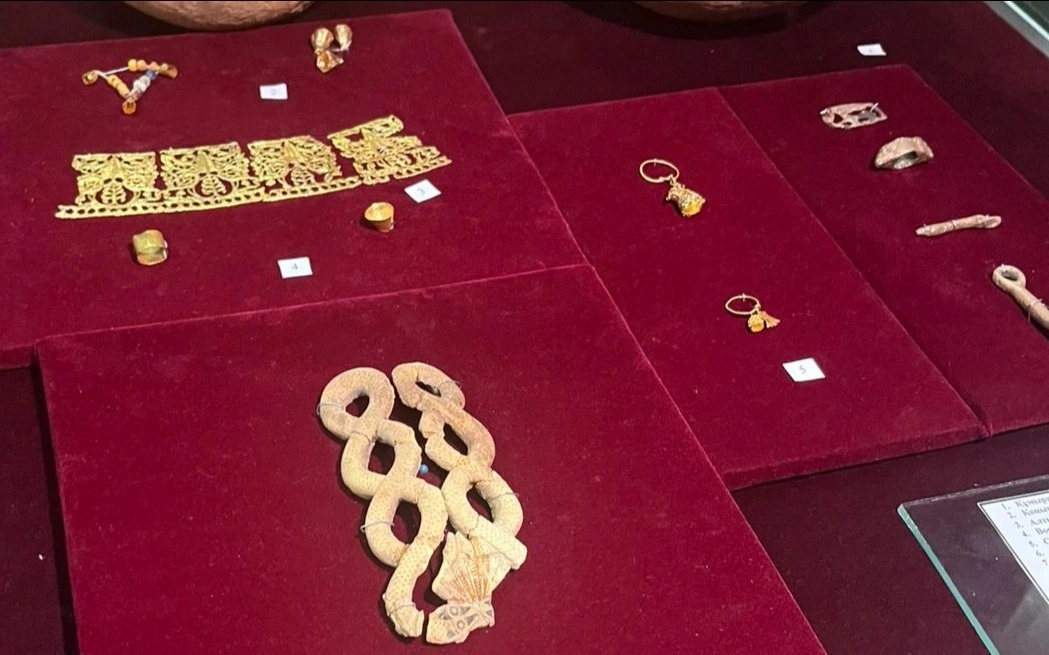
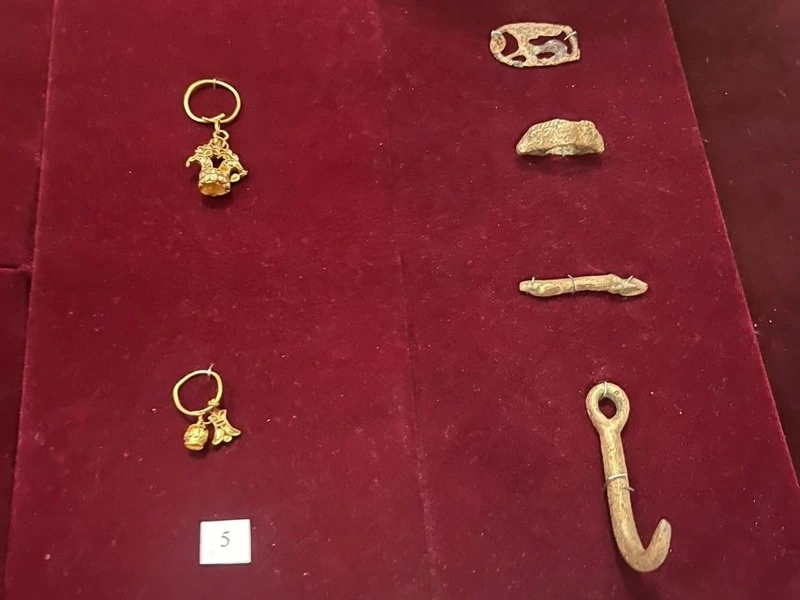
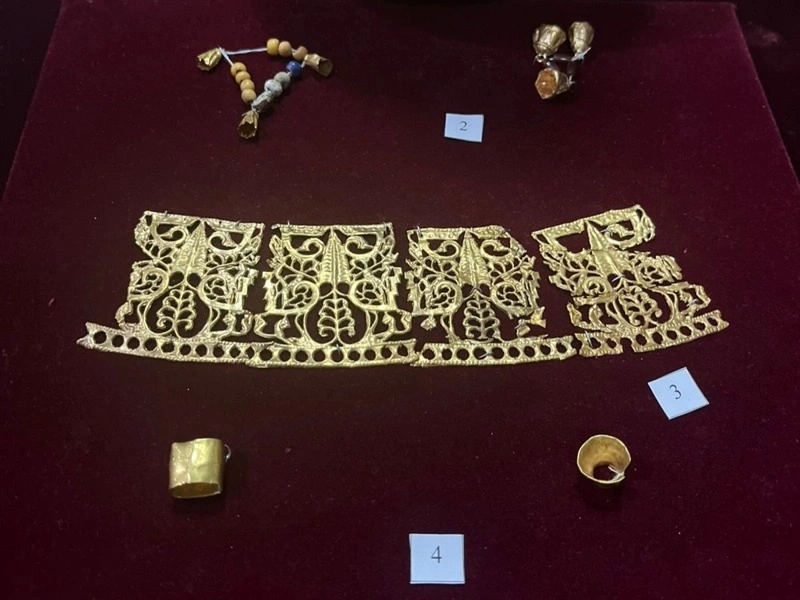
Among the most important artifacts are fragments of Saka gold jewelry, including beads, earrings, bone buttons, bronze buckles, and a variety of ceramic vessels. Especially notable are decorative gold plates and the varvorka—a thread-strung gold pendant used in ritual attire, symbolizing status and clan identity.
Excavators also recovered bronze plaques featuring imagery of deer, a central motif of the Saka animal style. These finds underline the technical artistry and symbolic vocabulary that shaped Saka material culture across the Eurasian steppe.
A mysterious ritual object: the bone “snake-dragon”
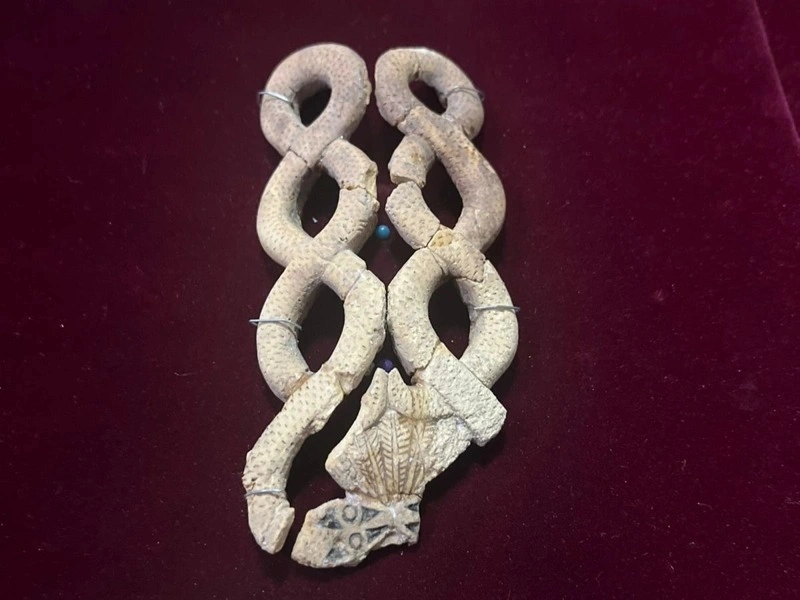
One of the most distinctive artifacts unearthed at the necropolis is a carved bone object in the form of a snake-dragon, believed to have had ritual use. Its hybrid, serpentine morphology fits within the Saka cosmological repertoire, where zoomorphic beings often mediated between the human world and ancestral or spiritual realms.
Restoration and museum display
Throughout 2025, specialists cleaned corrosion from metal objects and stabilized fragile bone and ceramic artifacts. The newly restored collection is now part of a temporary exhibition at the Tynyshpaev Museum, where it is being presented to the public for the first time.
The results confirm that Dauylbai—long overshadowed by better-known steppe sites—is a high-value archaeological zone with significant potential for future research.