
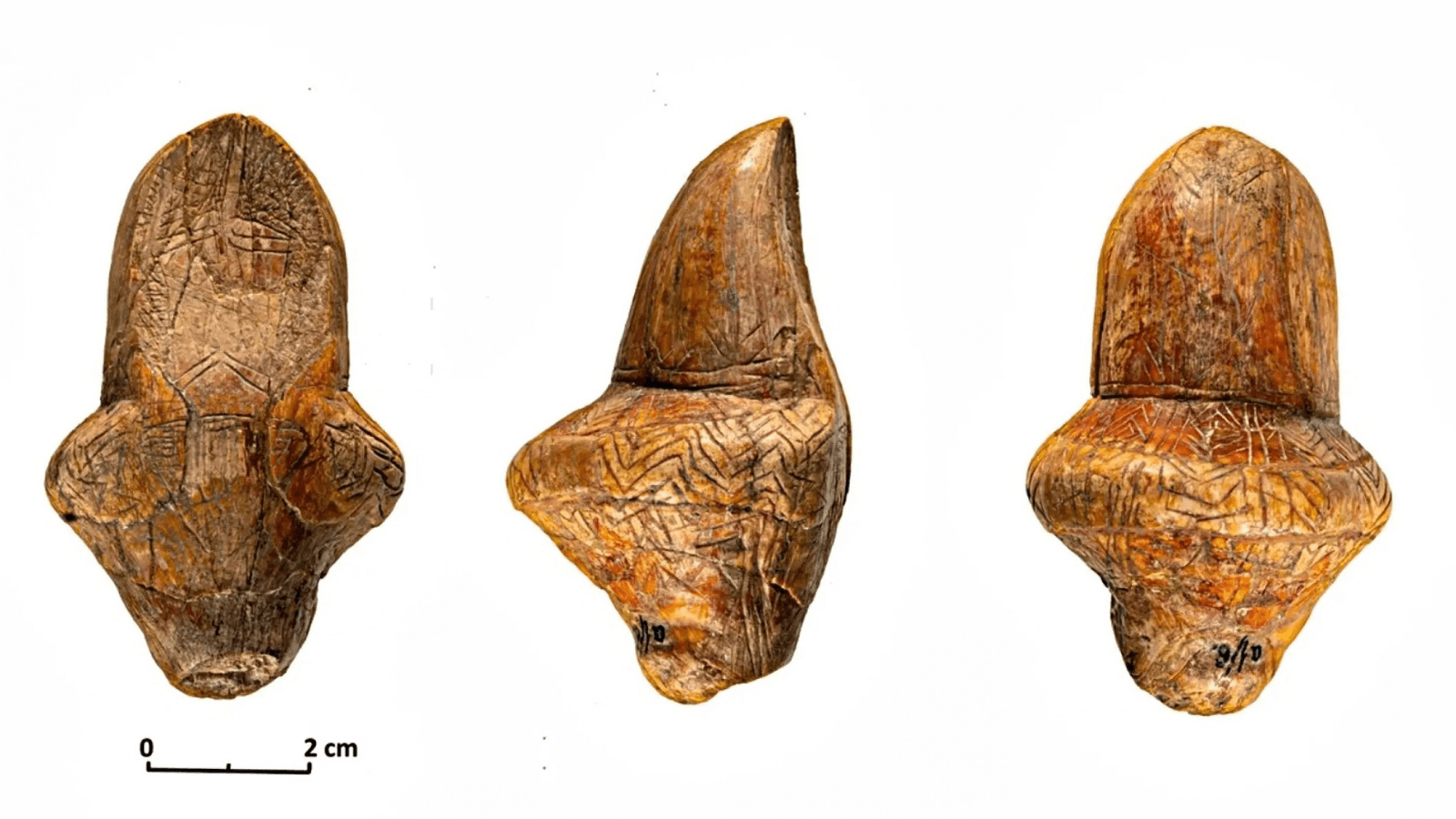
For decades, archaeologists have uncovered the enigmatic details of small, intricate female figurines found at Mizyn, an ancient campsite in northern Ukraine. But one mystery lingered: where did the elaborate patterns on these 18,000-year-old ivory sculptures originate?
A groundbreaking new study suggests that the artists of the Ice Age drew their inspiration directly from the natural forms embedded in the mammoth tusks. Instead of creating the designs from scratch, they meticulously replicated the existing patterns, turning the organic lines of the ivory into masterpieces of art.
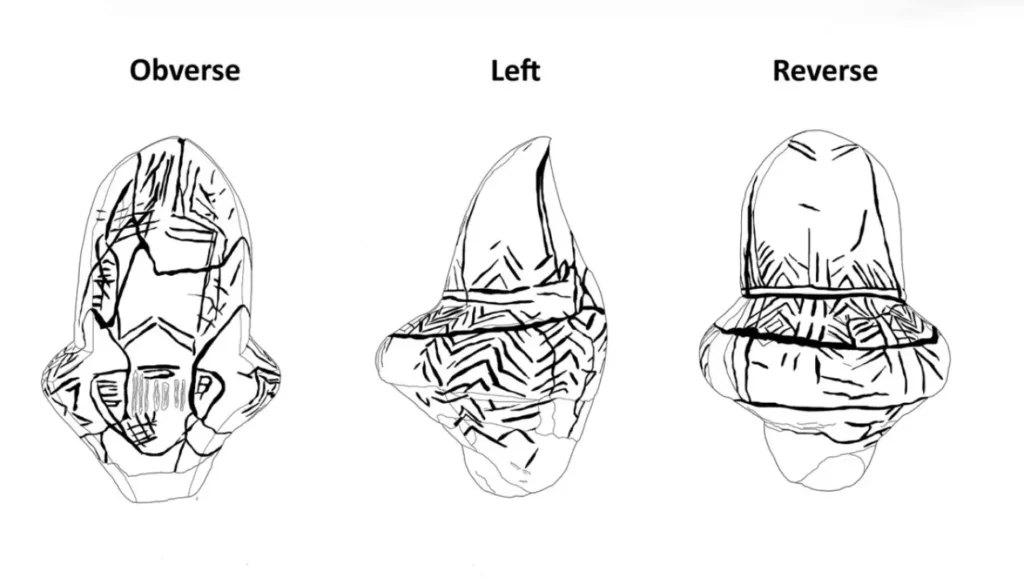
The research, led by Simon Radchenko of the University of Stavanger’s Museum of Archaeology, was based on a meticulous examination of the figurines using microscopes and the creation of detailed three-dimensional models. The team discovered that the ancient craftsmen followed two specific natural structures within the ivory—called Schreger and Owen lines—with astonishing precision.
In some instances, the carved decorations mirrored these patterns almost exactly, shifting them by less than half a millimeter. This level of detail has long been a subject of speculation among historians and archaeologists, but the new findings offer the most compelling evidence yet of a direct link between the ivory’s internal structure and the artistic designs.
The hypothesis, first proposed in the 1960s, has now been substantiated through advanced digital scanning and surface analysis. This discovery not only sheds light on the skill of prehistoric artisans but also deepens our understanding of how early humans adapted their environment to create enduring cultural artifacts.
More Than Decorative Patterns
A team of researchers has made a significant contribution to the understanding of prehistoric art by creating high-resolution 3D models of six of the 18 figurines they examined. This work is part of a broader initiative to digitally preserve Ukraine’s cultural heritage, a project that has become especially vital in the context of the ongoing conflict.
In an era where physical access to archaeological collections is growing increasingly restricted, digital documentation offers a powerful tool for preserving and studying delicate artifacts. The research not only provides new insights into the artistic techniques used by ancient artisans but also highlights the importance of safeguarding cultural heritage in times of uncertainty.
Oleksandr Naumenko, a researcher involved in the study, emphasizes that the decorative elements on the figurines were not merely aesthetic choices. Instead, they likely held symbolic significance, reflecting the ways in which Ice Age communities interpreted and engaged with the natural world. The intricate designs suggest a deep connection between the people and their environment, revealing how their cultural practices were shaped by their observations and experiences.
The study also offers a glimpse into the creative process of the artisans. By analyzing the internal structure of mammoth ivory, the researchers uncovered evidence that the artists had a thorough understanding of the material. This knowledge allowed them to integrate two-dimensional representations of female figures with three-dimensional sculptures, resulting in objects that required both technical skill and a nuanced grasp of the material’s properties.
These findings challenge the perception of the figurines as simple carvings, instead suggesting that they were deliberate expressions of cultural identity and natural transformation. The work underscores the value of digital preservation in unlocking the stories hidden within ancient artifacts, ensuring that future generations can continue to explore and appreciate the artistic and historical legacy of our past.
A Turning Point in Ice Age Art
The discovery of these small ivory sculptures in the Ukrainian region of Mizyn has offered a fascinating glimpse into the artistic evolution of prehistoric peoples. Researchers have compared the figures with known female figurines from across Europe, situating the find within a broader narrative of artistic development during the Ice Age. What makes these artifacts particularly intriguing is their apparent revival of artistic expression after the Last Glacial Maximum, a period when the climate reached its most extreme conditions.
The analysis suggests that female figurines experienced a resurgence in popularity following this climatic shift. Mizyn, in particular, appears to be one of the earliest and most significant examples of this renewed interest in figurative art. Earlier abstract representations of female bodies, though, were found in more western regions, such as those associated with the Magdalenian and Gönnersdorf traditions. This indicates a regional variation in the development of artistic styles.
What sets Mizyn apart is the deliberate use of mammoth ivory’s natural internal patterns. These patterns, though not immediately apparent to the sculptors, were intentionally incorporated into the figures, suggesting a sophisticated understanding of the material’s properties. The deliberate application of such natural features is a distinctive trait of the Mizyn artifacts.
Establishing a precise chronology remains challenging due to the uncertainties in radiocarbon dating. However, available evidence points to a revival of artistic practices that followed a gap of approximately 3,000 to 5,000 years. This revival is particularly evident in the Epigravettian period of Eastern Europe, where Mizyn provides valuable evidence of renewed artistic experimentation.
The research was supported by the Marie Skłodowska-Curie Actions program, bringing together specialists from Ukraine, Norway, the United Kingdom, and Germany. The findings were published in the journal Heritage Science, offering a comprehensive look at the cultural and artistic context of the period.
Today, these small ivory sculptures reveal much about the people who lived in northern Ukraine 18,000 years ago. Rather than simply carving images into mammoth tusks, the sculptors recognized patterns already present in the material and transformed them into meaningful expressions. This suggests a deep connection between the artists and the natural world, as well as a sophisticated sense of artistic intention.
In a time when Ukraine’s cultural heritage faces significant challenges, these artifacts highlight the importance of preserving both the physical and digital traces of the past. Even thousands of years later, the sculptures still offer a window into the imagination of Ice Age artists, reminding us of the enduring power of human creativity.
Cover Image: Technical drawings of the front (Obverse), left side (Left), and back (Reverse) of one of the Mizyn figurines. In these drawings, researchers clearly demonstrated how the natural growth lines of the mammoth tusk are replicated in the decorations. Photo: Radchenko et al., 2026