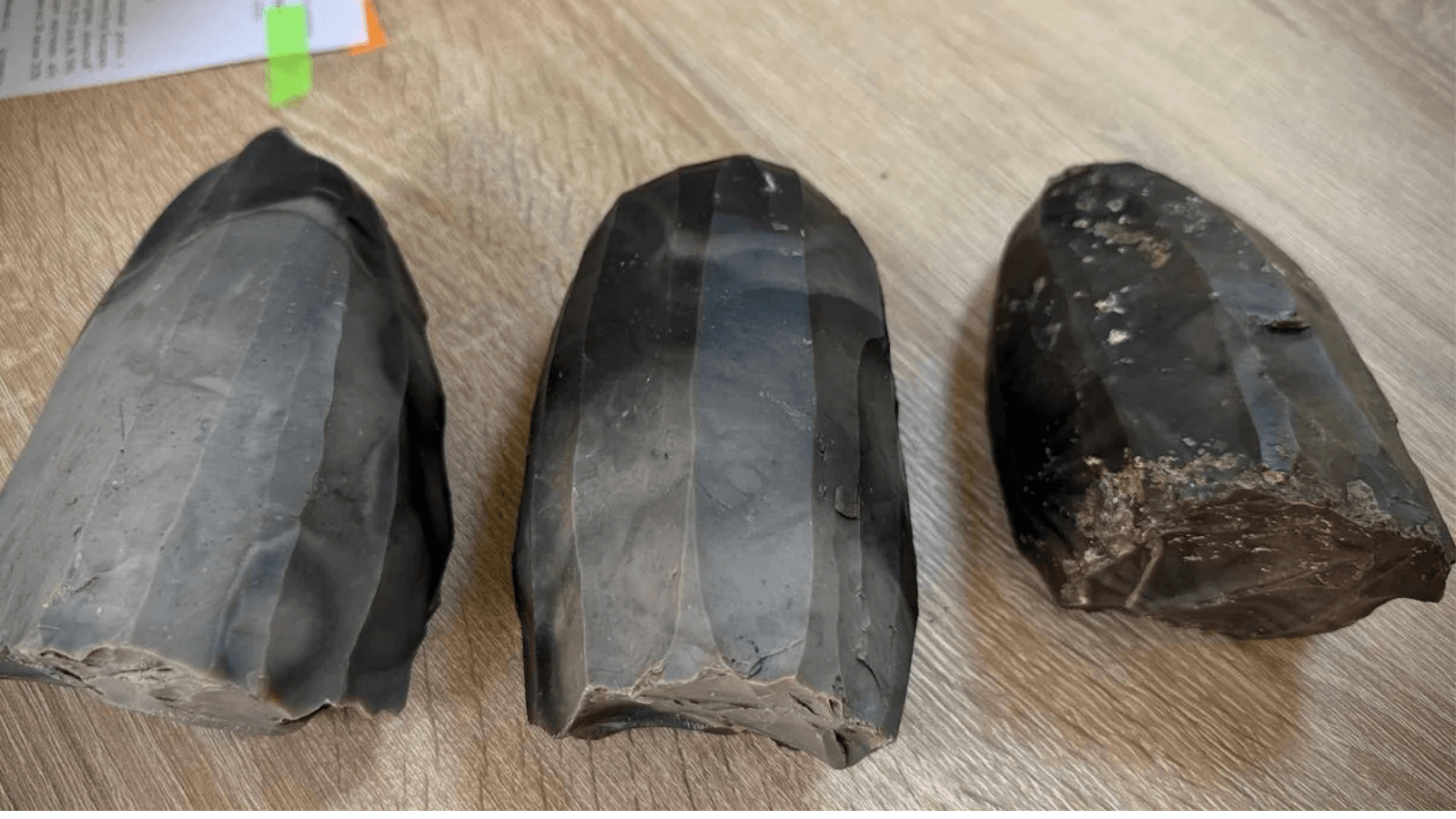
Three prehistoric stone artifacts discovered inside an international postal parcel traveling from Ukraine to the United States have been transferred to a museum, more than two years after customs officers intercepted the shipment.
The objects are authentic flint cores — pieces of stone from which prehistoric people struck sharp blades for use as tools, including knives. Experts place the archaeological material broadly within the Neolithic to Bronze Age, approximately the 6th to 2nd millennia BC, a chronological range beginning around 8,000 years ago.
Ukraine’s State Customs Service said the three artifacts have now been transferred to the Ovruch Region History Museum in Zhytomyr Oblast, where they will become part of Ukraine’s state museum collection.
Ancient artifacts inside an international parcel
The case began in April 2024, when Kyiv customs officers inspected an international postal shipment traveling from Kryvyi Rih in central Ukraine to the United States.
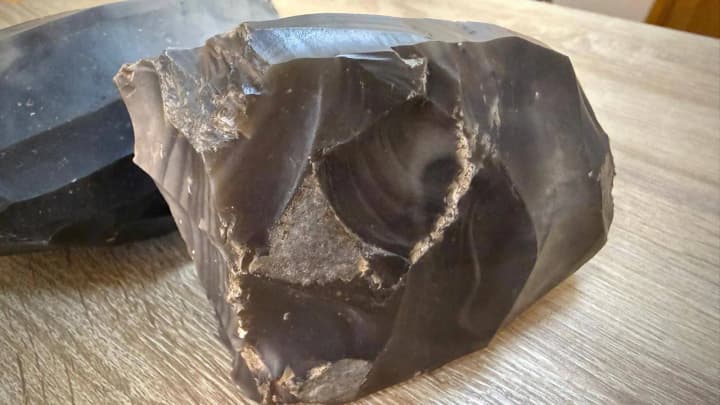
Inside were three unusually shaped pieces of stone with worked surfaces and clearly defined edges. Their appearance suggested that they might be archaeological objects rather than ordinary stones, prompting customs officials to send them to the National Museum of the History of Ukraine for expert examination.
Museum specialists confirmed that the objects were authentic prehistoric flint cores, also known as nuclei. According to the State Customs Service, they originated in western and northwestern Ukraine, and the largest measures approximately 15 centimeters (6 inches) long.
The objects belong broadly to archaeological cultures dating from the Neolithic through the Bronze Age, approximately the 6th to 2nd millennia BC.
That broad range is significant. Although official announcements have highlighted the 6th millennium BC when describing the artifacts, the expert assessment does not establish that all three cores date specifically to that earliest period.
How prehistoric people used flint cores
A flint core can appear relatively simple, but it was an essential part of prehistoric stone-tool production.
Rather than representing a finished tool itself, a core is the piece of raw material from which flakes or blades were deliberately removed. Skilled toolmakers struck the stone in controlled ways to produce sharp pieces that could then be used or further shaped into cutting tools.
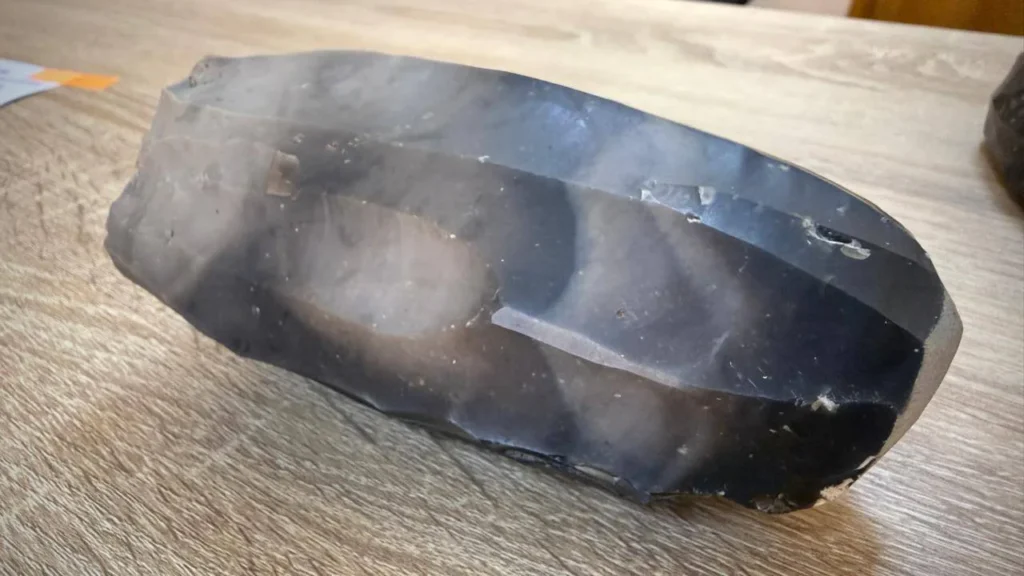
The scars left by those repeated removals create the angular surfaces still visible on archaeological cores thousands of years later.
In this case, those characteristics were among the clues that led customs officers to question the contents of the parcel.
From customs seizure to a museum
According to the State Customs Service, archaeological objects cannot be exported from Ukraine as ordinary private goods, while the export of cultural and historical property requires appropriate authorization from the country’s Ministry of Culture. Customs officials said no such certificate had been presented for the shipment.
A customs violation report was subsequently drawn up against the sender, and the three artifacts were seized.
More than two years later, their legal status has now been resolved. The artifacts were transferred to the Ovruch Region History Museum under procedures governing cultural objects assigned to the state section of Ukraine’s Museum Fund.
Instead of leaving the country in an international postal parcel, the three prehistoric flint cores will now be preserved in a public museum collection in Ukraine.
Cover Image: The three prehistoric stone artifacts, identified as flint cores, were intercepted by Kyiv customs officers in a parcel bound for the United States. Credit: State Customs Service of Ukraine.