
A 1,200-year-old Maya inscription from Xultun, Guatemala, has identified a previously unknown mathematician who tracked the movements of Venus and Mars.
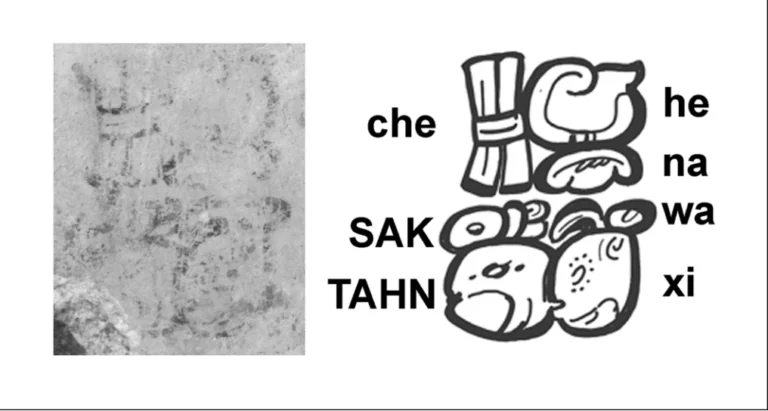
Researchers analyzing the find report that the name appearing at the end of a set of astronomical calculations is Sak Tahn Waax, meaning “White-chested Fox.” The study, published in the journal Antiquity, marks the first time a specific individual has been directly linked to mathematical work from the Classic Maya period.
A 2,920-Day Calculation on a Wall
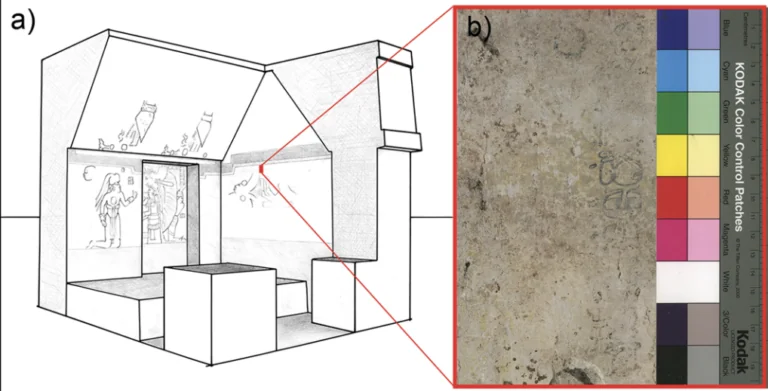
The inscription, labeled “Text 19,” was discovered in a small room in the ancient city of Xultun in northern Guatemala’s Petén region. Archaeologists uncovered the room in 2010; its walls contain more than 52 texts dealing with astronomy, calendars, and mathematics.
Though Text 19 consists of only 11 hieroglyphic blocks, it records a sophisticated calculation spanning 2,920 days. This interval equals five Venus cycles (each roughly 584 days) and eight solar years of 365 days each. Sak Tahn Waax’s figures interweave the motions of Venus and Mars with multiple units of the Maya calendar. Scholars interpret the arrangement as an effort to explore the mathematical relationships among different celestial cycles rather than a simple observational record.
A Numerical Pattern Echoing the Fibonacci Sequence
One notable feature is that the numbers resemble the Fibonacci sequence (1, 1, 2, 3, 5…), in which each term is the sum of the two preceding ones. The Maya calculation incorporates a 20-day month, a 260-day ritual calendar cycle, two Mars cycles, three 360-day periods, and five Venus cycles within a comparable pattern.
Researchers caution, however, that the resemblance does not prove Sak Tahn Waax intentionally discovered or used the Fibonacci sequence; it remains unclear whether the pattern was deliberate.
The study proposes 11 November 781 CE as the likely starting point of the calculation, though this date marks the beginning of the astronomical reckoning rather than the day the inscription was written.
The First Named Maya Mathematician
The final two glyphs of the text are especially significant. After the calculations appears the phrase “thus says,” followed by the name Sak Tahn Waax.
While Maya artists and sculptors sometimes signed their work, no other known example from the Classic period attributes a mathematical computation to a named individual in this manner. It is still uncertain whether Sak Tahn Waax himself performed the calculations and wrote them on the wall, or whether a later scribe recorded the work of a respected mathematician and credited him by name.
The room at Xultun appears to have functioned as a place where scientific knowledge was developed and transmitted. Differences in the quality of the writing, together with evidence of book-making activity, suggest that young scribes may have been trained there.
The find underscores the sophistication of Maya astronomy while restoring the name of one of its practitioners after more than a millennium.
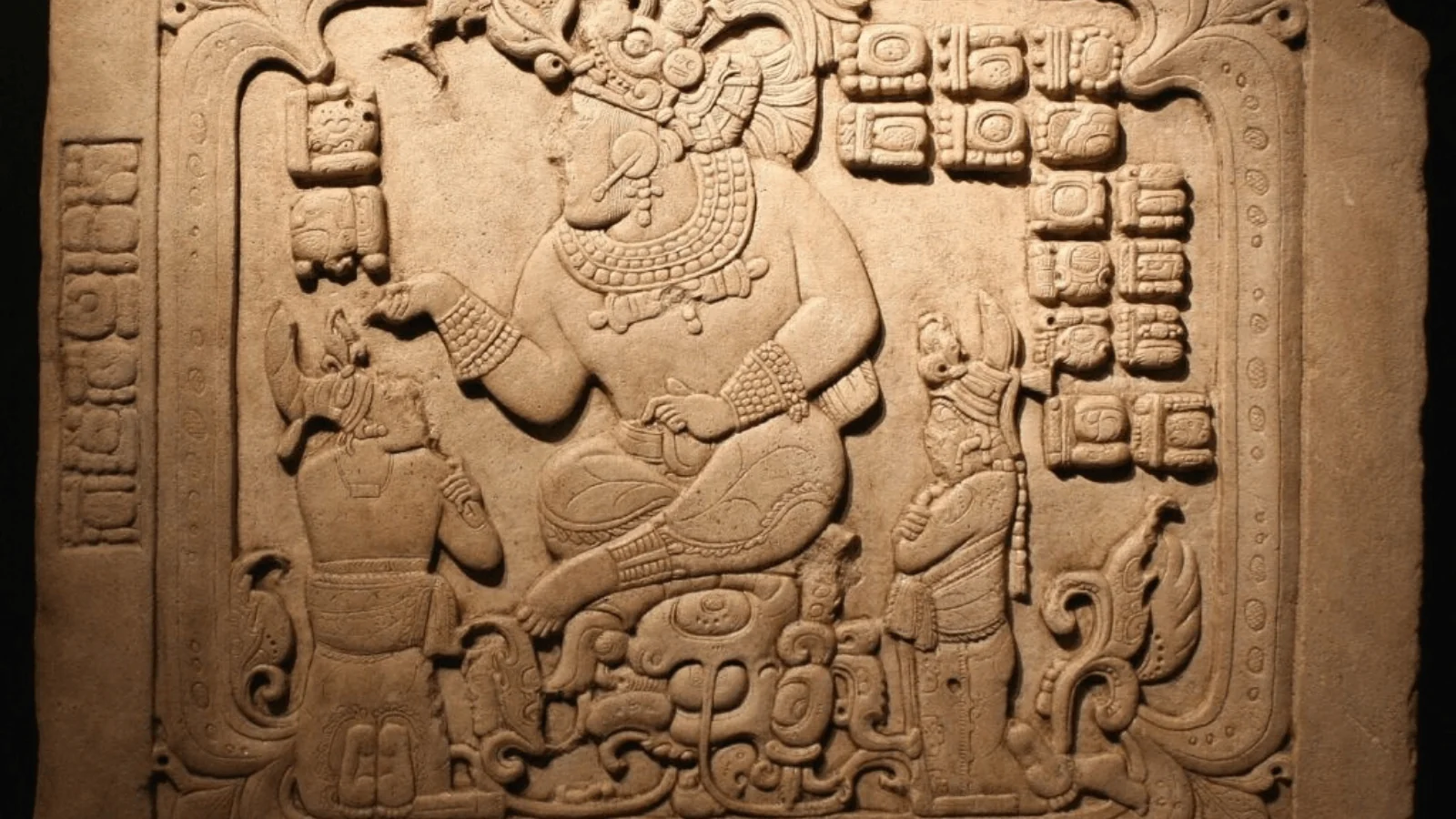
Cover Image: A stone relief from the Classic Maya period. It depicts a noble or ruler figure seated in the center wearing an ornate headdress, flanked by two small figures, with blocks of hieroglyphs on the right. Credit: Wikimedia Commons