
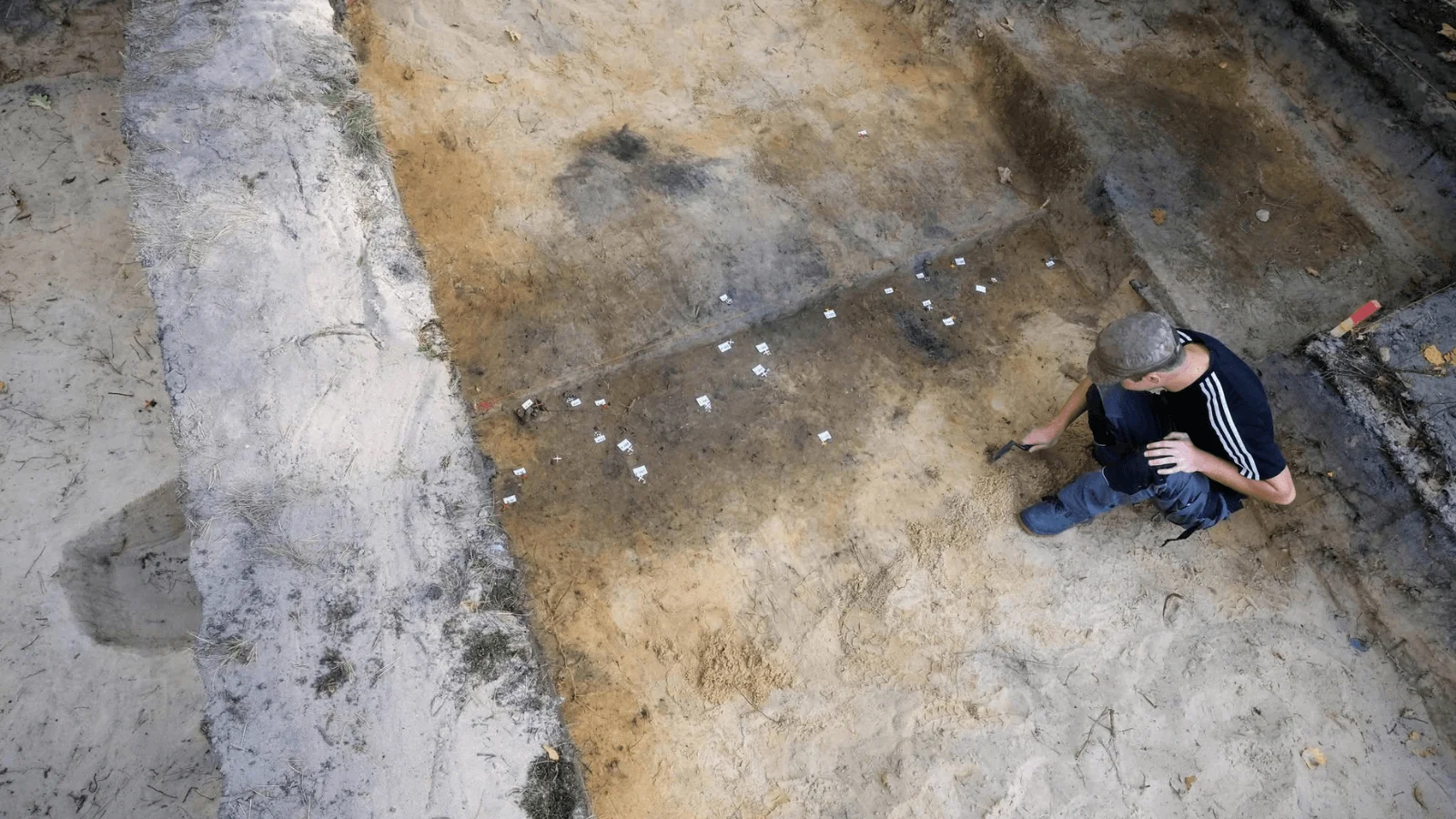
In Chodlik, in the Lublin region, a boat burial—extremely rare among Early Medieval Slavic communities—has been uncovered. This type of burial, typically found along the coasts of Scandinavia and the Baltic Sea, is the first example ever recorded in the historical region of Małopolska (Lesser Poland).
A team led by Dr. Łukasz Miechowicz of the Institute of Archaeology and Ethnology of the Polish Academy of Sciences (IAE PAN) discovered a canoe-shaped structure between a burial mound and a monument resembling a “house of the dead” while working at a cremation cemetery dating to the 8th–10th centuries. Approximately 4.5 meters long and 1–1.5 meters wide at its widest point, the burial structure resembles an early medieval dugout (dłubanka) canoe carved from a single tree trunk. Although the wood has completely rotted away, leaving behind only a dark stain, the shape and traces indicate the presence of an actual vessel.
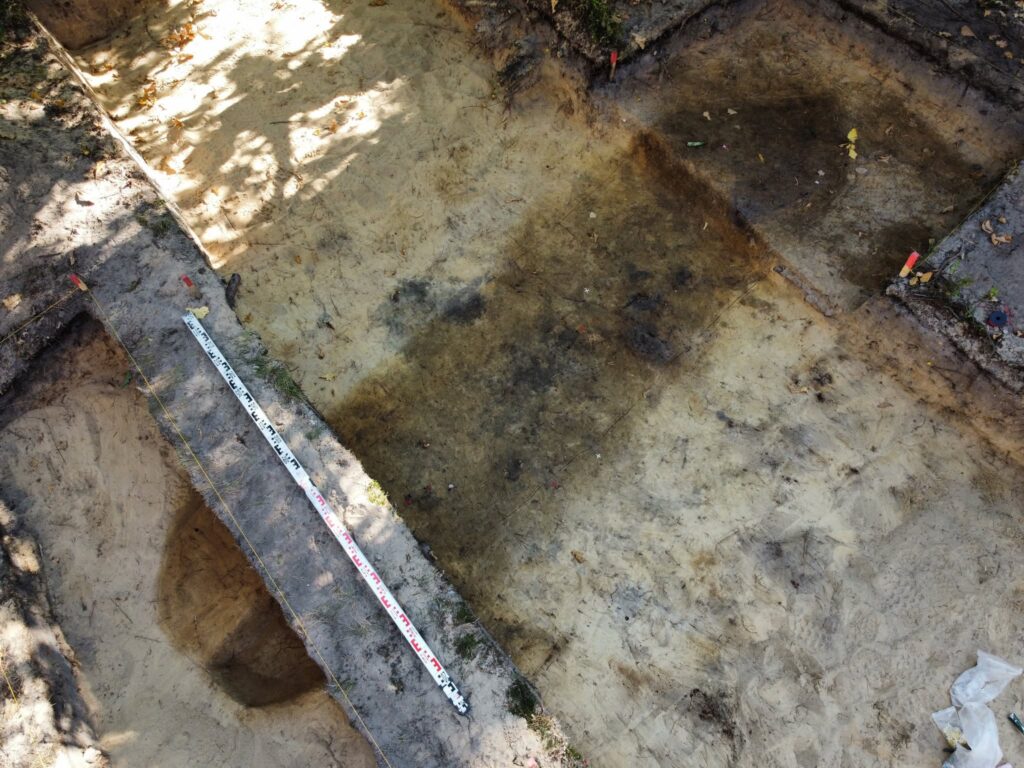
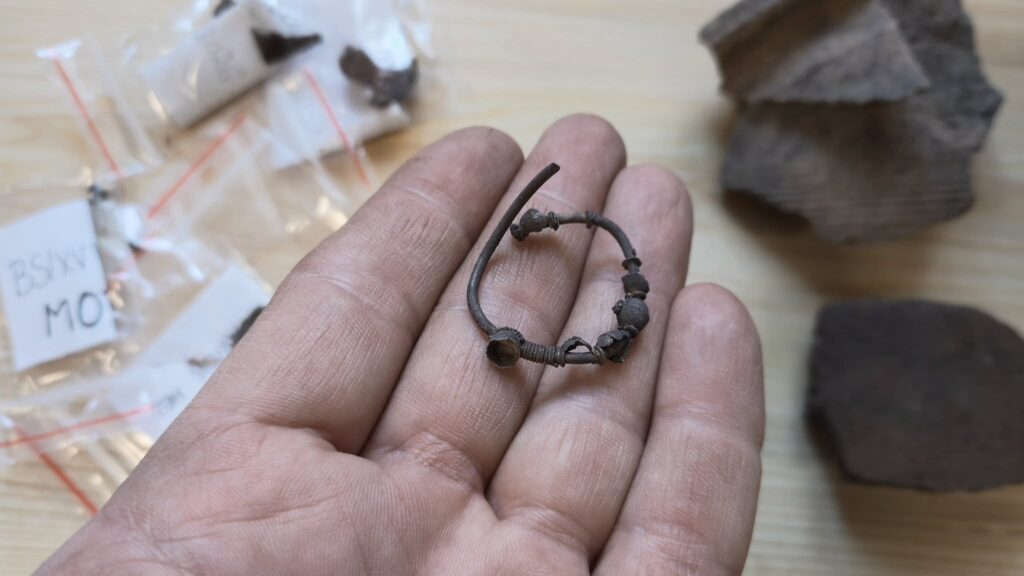
Researchers will make a final determination after laboratory analyses.The grave contains some notable finds: at the top, an extremely well-preserved silver temple ring (zausznica) decorated with hollow beads and granulation; more than a dozen pieces of silver jewelry that were partially melted due to the fire; shards of ceramic vessels, charcoal, and charred human and animal bones. In particular, a horse tooth stands out as an unusual element in Slavic funeral traditions. Although cremation graves containing horse remains have been found in Chodlik before, this tooth is nonetheless surprising.
Chodlik is a significant early medieval complex located in the Chodelka Valley near the Vistula River, at the center of a castle settlement covering more than 8 hectares. The region had long-distance connections with Rus, the Rhine, and Great Moravia; this provides a context that could explain the grave’s potential cultural influences. While boat graves are known among the Scandinavians and Baltic Slavs, their rarity in inland regions heightens the grave’s special significance. Researchers are refraining from directly labeling the find as a “Viking grave”; instead, they are examining it within the context of West Slavic funerary practices.
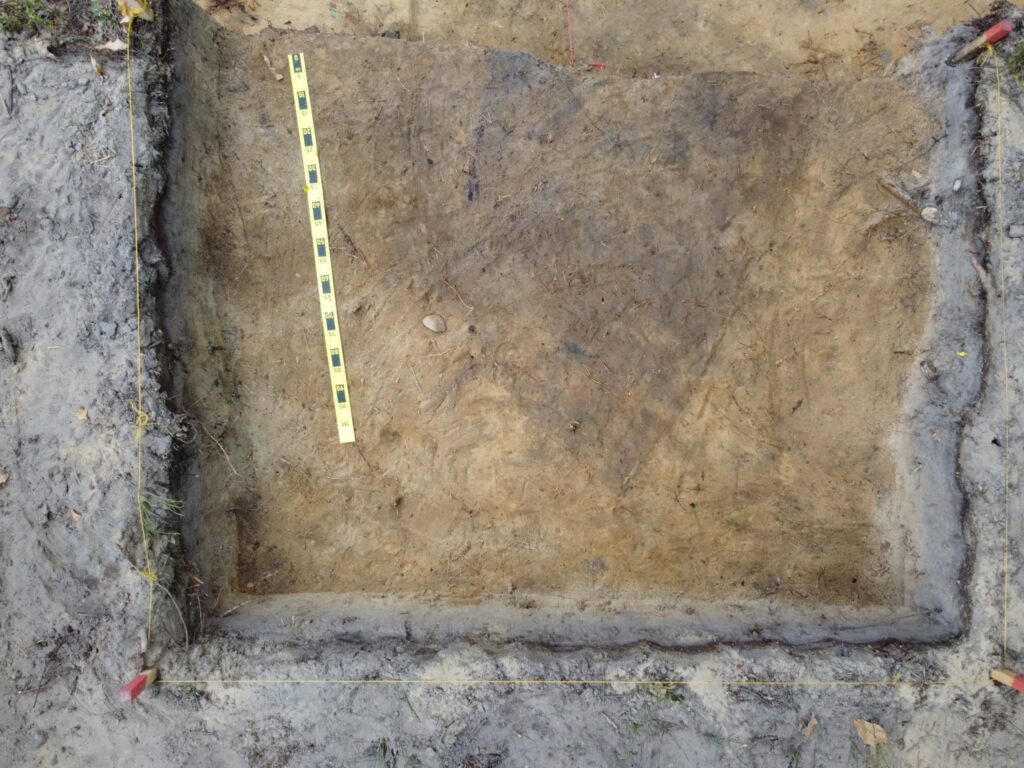
The team is currently conducting flotation of the entire site for macro-remains and creating a 3D model using digital documentation, planimetry, and stratigraphic records. A detailed reconstruction of the grave will be prepared following anthropological, archaeological, dendrochronological, and C14 analyses. If the surviving teeth prove suitable for isotope analysis, clues about the deceased’s origins and lifestyle may also be obtained.
This discovery once again highlights the diversity of burial practices in the early medieval Slavic world and suggests possible long-distance cultural interactions.
Cover Image: An archaeologist from the excavation team is collecting data for a 3-dimensional reconstruction by marking the locations of the finds inside the tomb one by one. Credit: Archeologia i starożytności Chodlika / Facebook