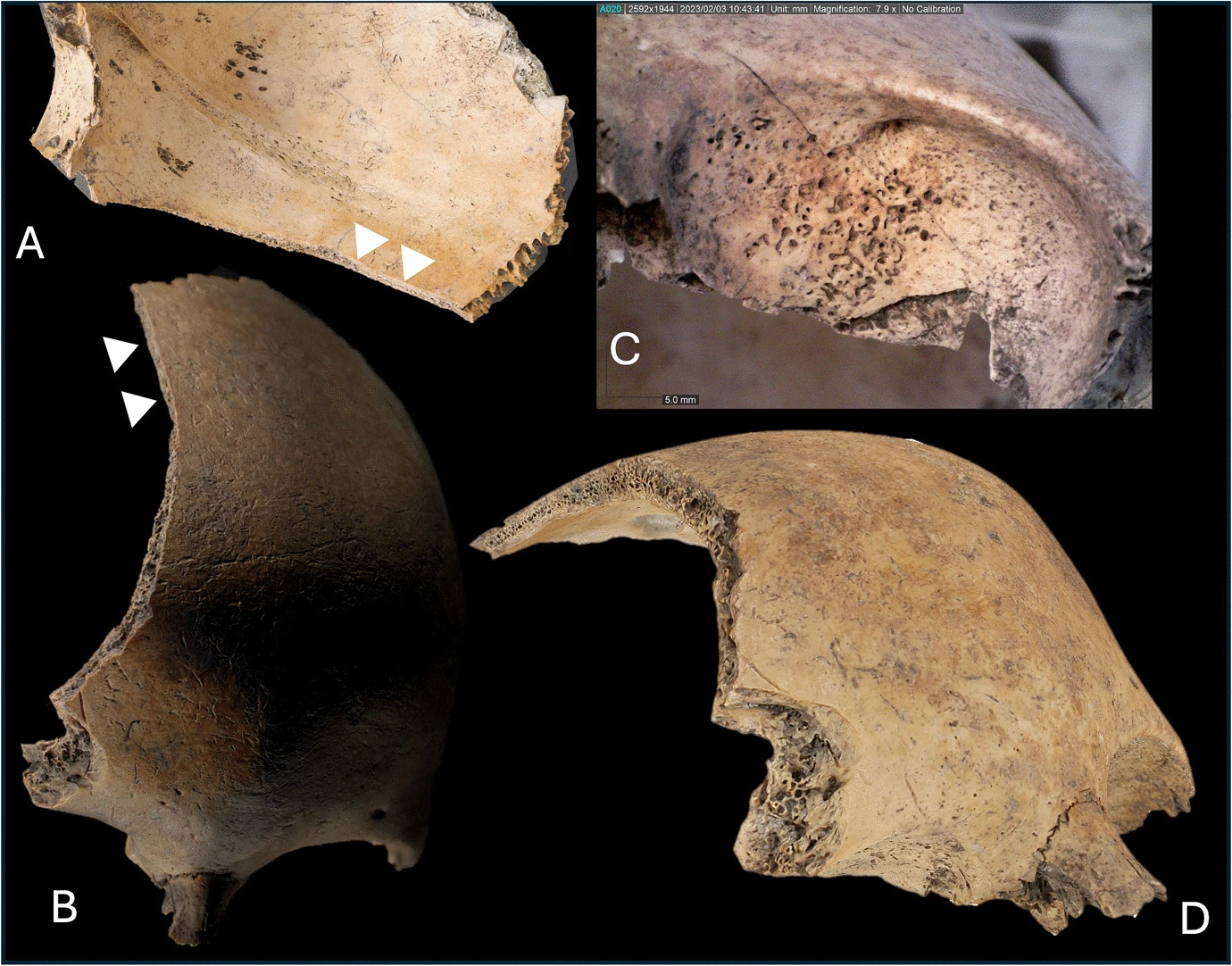
A fragment of a child’s skull bearing signs of sharp-force trauma was placed beneath the floor of an Iron Age house in Denmark, offering a disturbing glimpse into violence and the treatment of human remains in ancient Scandinavia.
The child is one of 12 individuals with traumatic injuries examined in a new study of human remains found not in cemeteries, but inside settlements across Denmark, Norway and Sweden. Their bones came from houses, wells, pits, hearths and other places connected with everyday life, suggesting that some victims of violence were treated very differently after death.
The research, published in the Journal of Archaeological Method and Theory, covers material dating from roughly 500 BCE to 1050 CE, spanning the Scandinavian Iron Age and Viking Age.
A child beneath an Iron Age house
One of the most striking cases comes from Postgården VI, a large Iron Age settlement in Jutland, Denmark. Osteological and genetic analysis showed that a skull fragment once thought to belong to a young adult woman actually came from a boy only two to four years old.
The right side of the child’s frontal bone carries a sharp-force injury that may have been caused by a sword or another heavy-bladed weapon. Researchers also identified a second fracture above the right eye socket, although the fragmentary nature of the remains means they cannot determine exactly what happened or whether the injuries caused his death.
The skull fragment was eventually deposited between two floor layers inside a three-aisled house. Radiocarbon dating suggests the bone may be around 200 years older than the building itself, raising the possibility that it had been kept for generations before being placed beneath the floor.
Violence beyond the cemetery
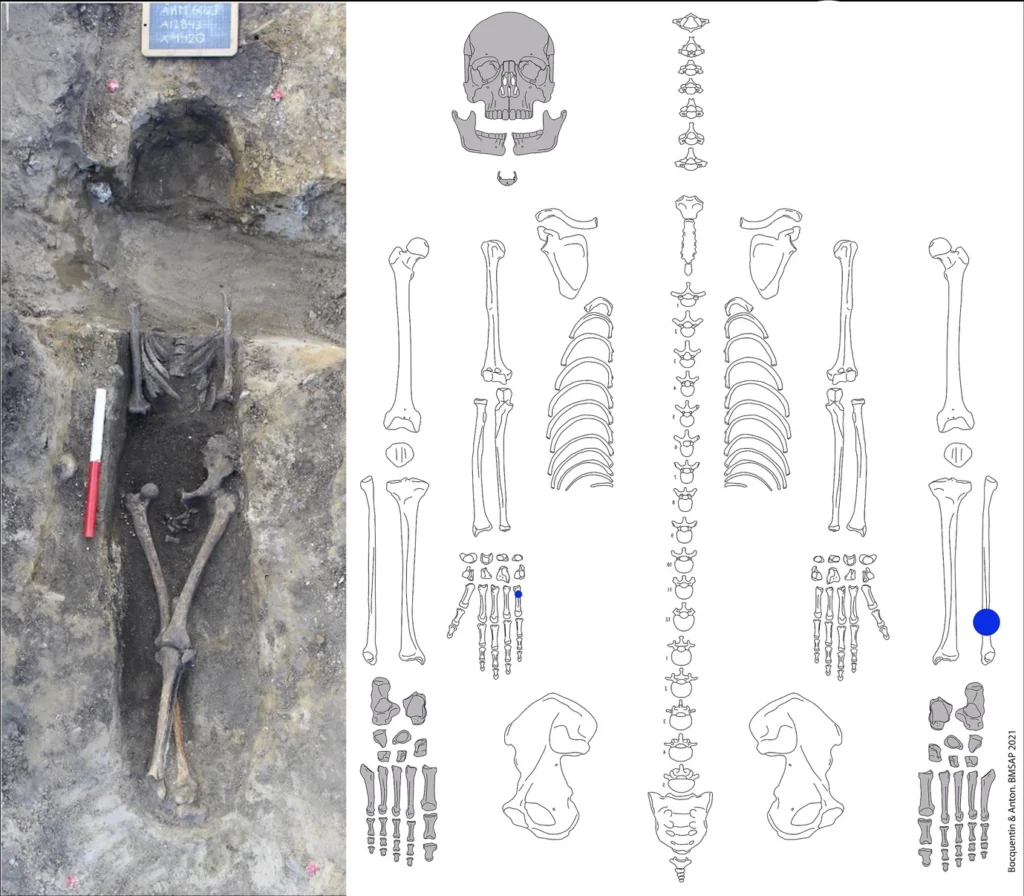
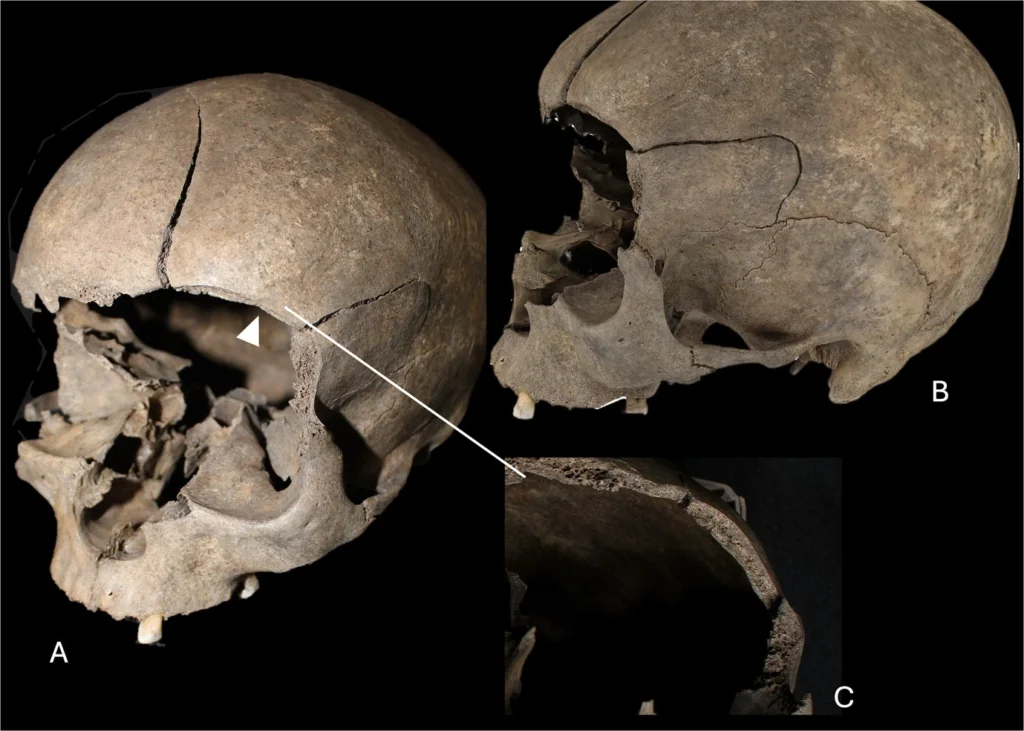
The child was not an isolated case. Researchers identified 19 injuries among the 12 individuals included in the trauma study, with at least eight and possibly nine showing evidence of deliberate violence.
Six individuals had injuries considered potentially lethal. The group included both men and women as well as the young child, showing that violence was not restricted to adult male warriors.
Some of the remains had also been fragmented, exposed or otherwise handled before their final deposition. This makes the study important because previous research on violence in ancient Scandinavia has often focused mainly on complete skeletons from formal cemeteries.
Why were human remains kept inside settlements?
The injuries themselves could have resulted from warfare, interpersonal violence, execution or other forms of conflict. More difficult to explain is what happened to some of the bodies afterward.
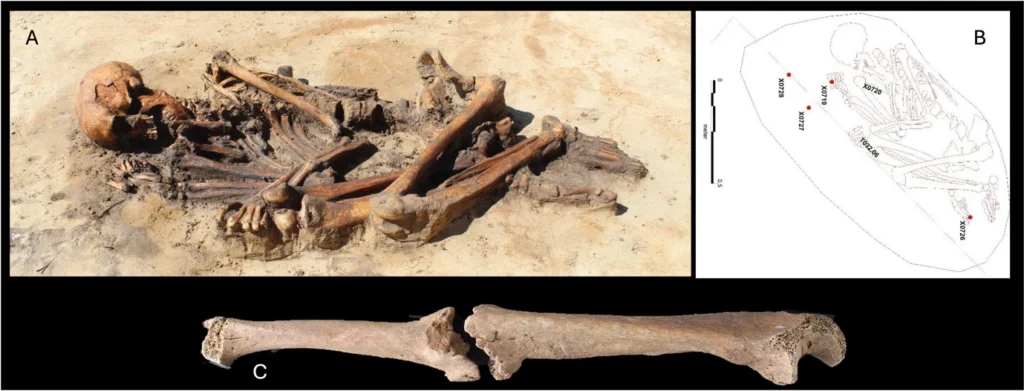
Human remains were placed in locations closely connected with daily life, including floors, postholes, wells and working areas. The study suggests that these bones may have acquired particular meanings after death rather than simply being discarded.
Other examples from the broader research include skull fragments modified in ways that may indicate use as amulets and a human femur found among materials associated with comb production. Such finds suggest that human bones could remain part of the social and physical landscape long after death.
A hidden side of Iron Age Scandinavia
The wider project examined remains representing 192 individuals found in settlement contexts. Twelve showed identifiable skeletal trauma, although many survived only as isolated bones or small fragments, meaning additional injuries may simply be impossible to detect.
That limitation is central to the study’s argument. If archaeologists look only at conventional graves, they may miss people whose bodies were fragmented, relocated or incorporated into houses and other parts of settlements.
The findings therefore reveal more than evidence of violence. They show that in Iron Age and Viking Age Scandinavia, some human remains continued to occupy the same spaces as the living, sometimes for generations after the individuals themselves had died.
Cover Image: Frontal bone of a 2–4-year-old child from Postgården VI in Denmark, showing sharp-force trauma that may have been caused by a sword or similar heavy-bladed weapon. Credit: The BODY-POLITICS Project.