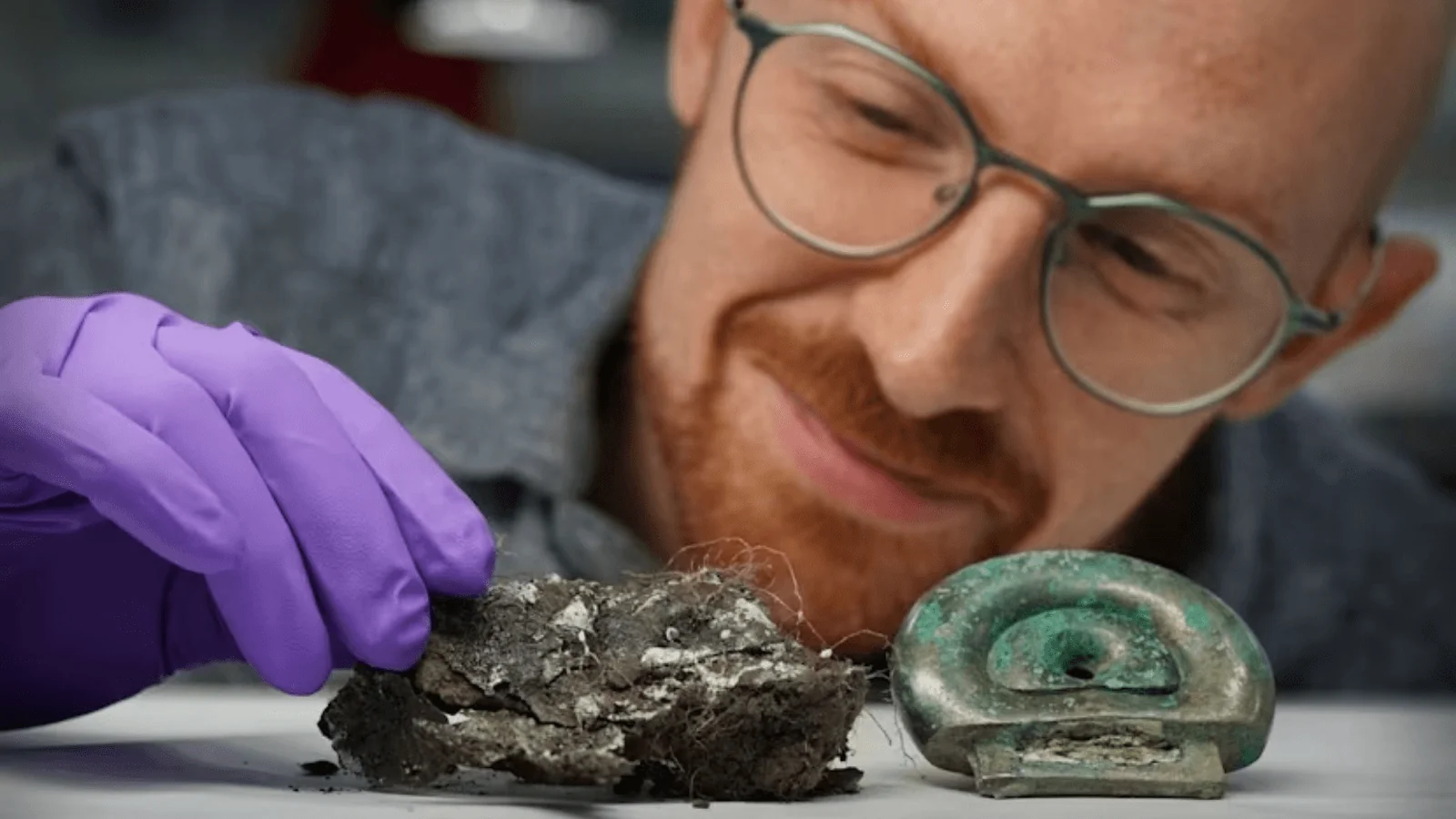
A metal detectorist has discovered his second major Bronze Age hoard in Scotland in just two years, this time uncovering bronze axes, rare clay casting moulds and a complete copper ingot dating back around 3,000 years.
Mariusz Stepien discovered the Blyth Hoard in the Scottish Borders in 2022, only about seven miles from the Peebles Hoard he had found in 2020. Archaeologists are now investigating whether the two discoveries could be connected, as some of the newly recovered moulds may have been used to make unusual bronze fittings found in the earlier hoard.
A second Bronze Age hoard in just two years
Stepien’s latest discovery began when his metal detector picked up an axe head. After noticing other bronze objects still in the ground, he reported the find to Scotland’s Treasure Trove Unit, which notified archaeologists from National Museums Scotland.
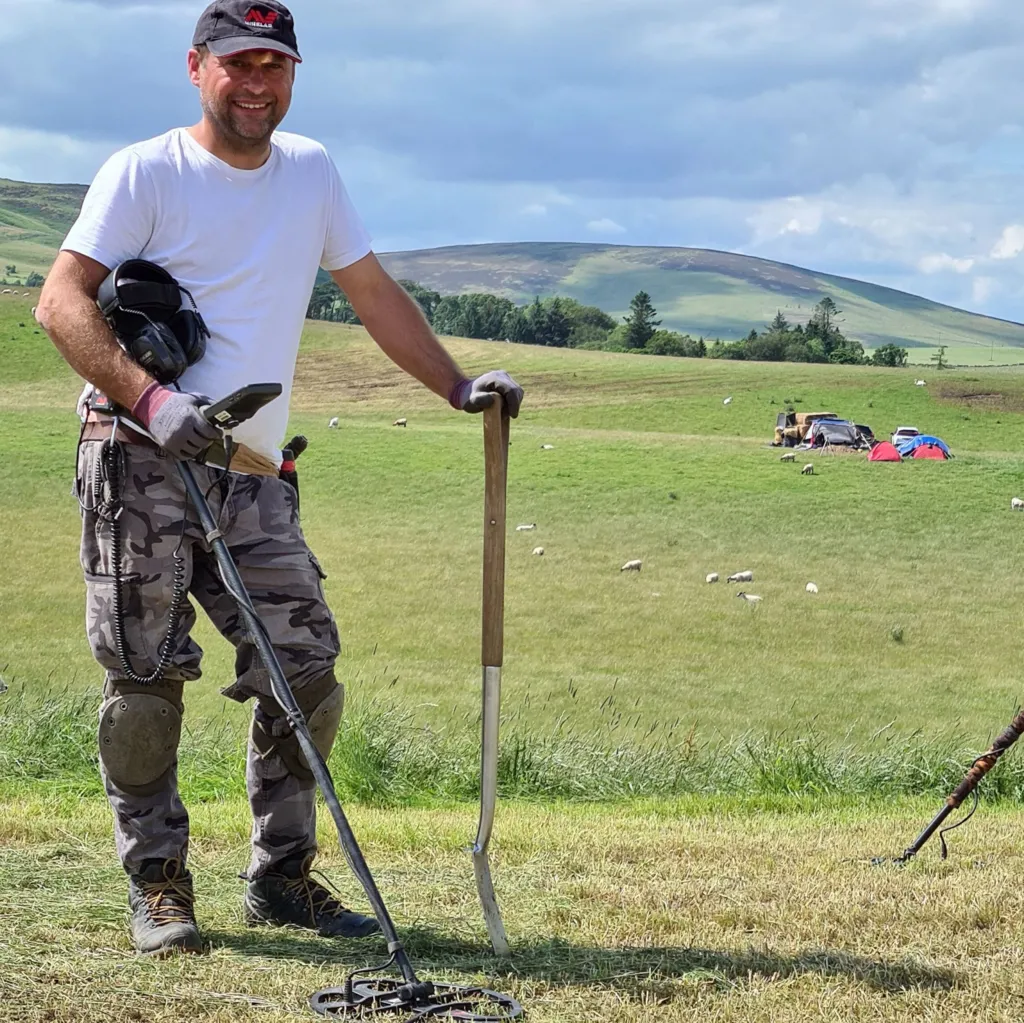
The subsequent excavation revealed two bronze axe heads, fragments of clay casting moulds and a complete copper ingot. Archaeologists also uncovered an ancient stone cairn during their work at the site. The objects, collectively known as the Blyth Hoard, date to the Late Bronze Age, approximately 1150–800 BCE.
The finds have since been taken to the National Museums Collection Centre in Edinburgh for conservation and analysis. For Stepien, however, this was not his first encounter with an important prehistoric deposit: only two years earlier, he had discovered the Peebles Hoard nearby.
Rare evidence of Bronze Age metalworking
The clay moulds are among the most significant objects in the new hoard. Mould material rarely survives, making the Blyth examples valuable evidence for how Bronze Age craftspeople produced metal objects.
Dr Matthew Knight, curator of prehistoric Bronze Age collections at National Museums Scotland, described their survival as particularly rare. He also pointed to the proximity of the Peebles Hoard and the possibility of a relationship between the two discoveries.
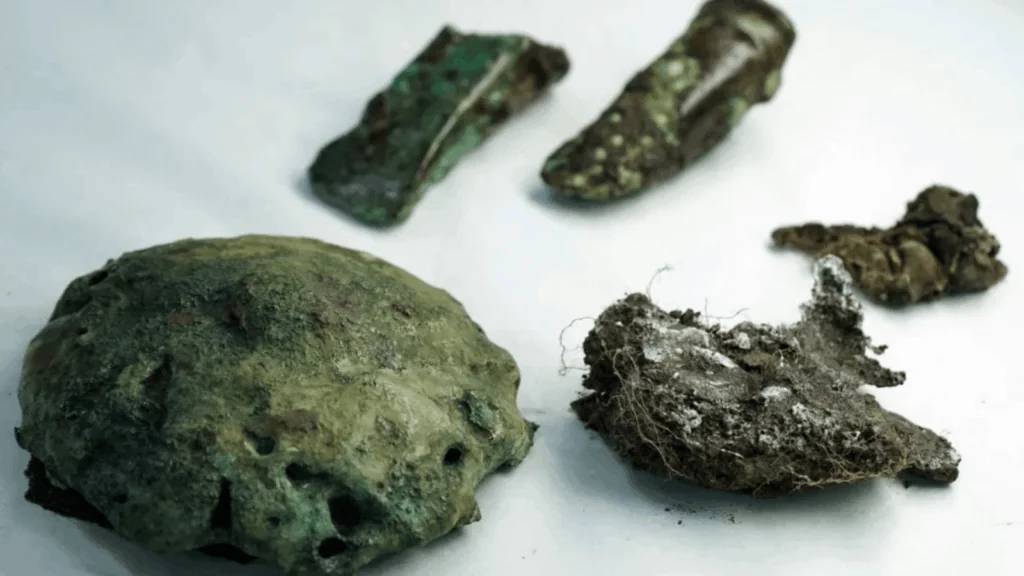
Some of the Blyth moulds may have been used to manufacture distinctive bronze fittings recovered at Peebles. Researchers have not yet demonstrated such a direct connection, but the possibility gives them an unusual opportunity to compare evidence for production with finished objects found only seven miles away.
Together with the copper ingot and finished bronze axes, the moulds also preserve different parts of the metalworking process, from raw material to casting and completed objects.
Scotland’s first complete copper ingot of its kind
The Blyth Hoard also produced a complete copper ingot, described as the first of its kind found in Scotland.
Copper was one of the essential ingredients of bronze, normally combined with tin to produce the harder alloy used for tools, weapons and other objects. Researchers hope analysis of the ingot can help identify the geographical source of the metal used in the two hoards.
That question could prove particularly important if the Blyth and Peebles finds are related. Comparing their metals may reveal whether Bronze Age craftspeople in the region obtained raw materials through the same supply networks or worked with metal from different sources.
His first discovery was the Peebles Hoard
Stepien discovered the Peebles Hoard while metal detecting in the Scottish Borders in June 2020. Dating to roughly 1000–800 BCE, it contains several hundred elements made from bronze, leather and wood and ranks among the most important Bronze Age hoards ever discovered in Scotland.
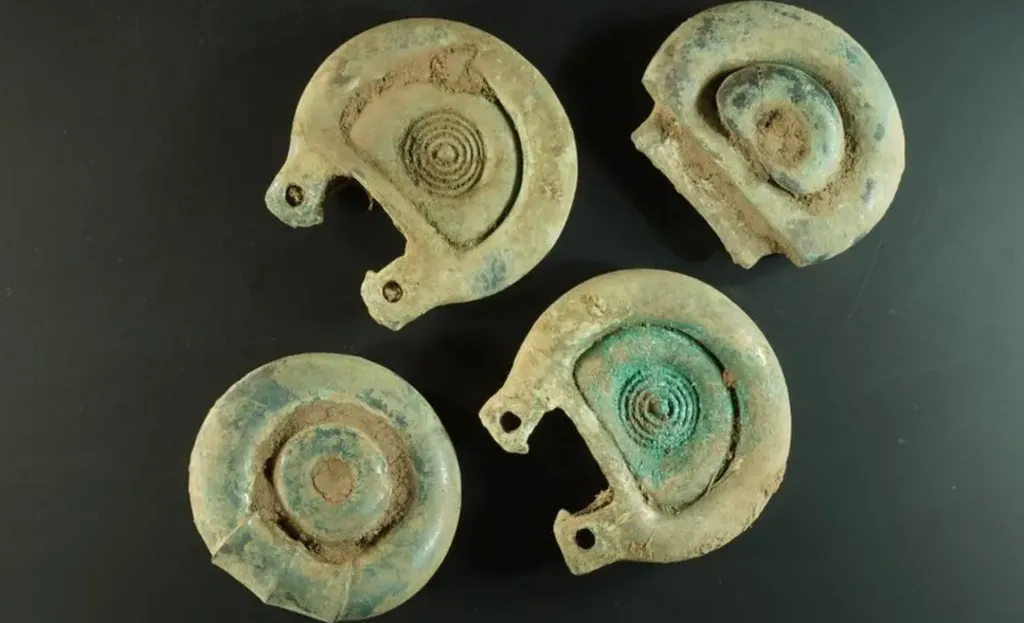
Among the objects is a complete bronze sword with remains of its wooden scabbard, alongside unusual fittings and other pieces, some without known parallels in Scotland.
Conservation has already revealed unexpected details. Some of the bronze objects have a silvery appearance caused by high levels of tin at their surfaces, something researchers believe resulted from deliberate treatment by highly skilled Bronze Age craftspeople.
The possibility that clay moulds found at Blyth could relate to unusual metalwork from Peebles therefore adds another dimension to the new discovery.
Two extraordinary finds only seven miles apart
Archaeologists have not yet established that the two hoards were made by the same craftspeople or belonged to the same community. Further conservation and scientific analysis will examine the moulds, metals and manufacturing techniques in an effort to understand whether the similarities reflect a direct relationship.
Stepien himself described it as “quite extraordinary” that two discoveries he made so close to one another could potentially be connected.
Whatever further research reveals, the circumstances are already unusual. Within two years, the same metal detectorist discovered two major Late Bronze Age hoards only seven miles apart in the Scottish Borders, opening a new window onto the people who worked with and buried valuable metal there around 3,000 years ago.
Cover Image: Dr Matthew Knight of National Museums Scotland examines objects from the 3,000-year-old Blyth Hoard, a discovery he described as “really incredible.” Photo: Stewart Attwood/PA