
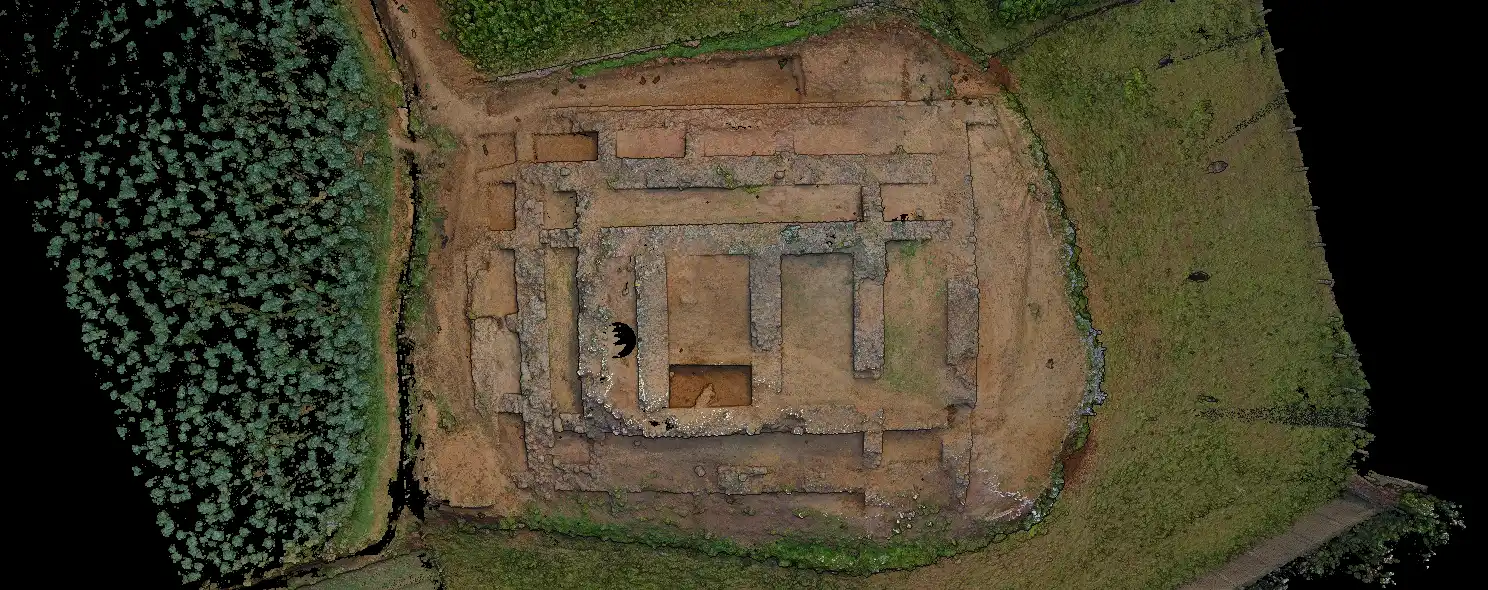
Archaeologists working near Sirkap in northern Pakistan have uncovered remains of a monumental structure that is approximately 100 meters long. Scholars have known about this enormous building since the 19th century, yet it has largely been neglected for generations and may still provide fresh understanding of ancient Gandhara’s religious and public life.
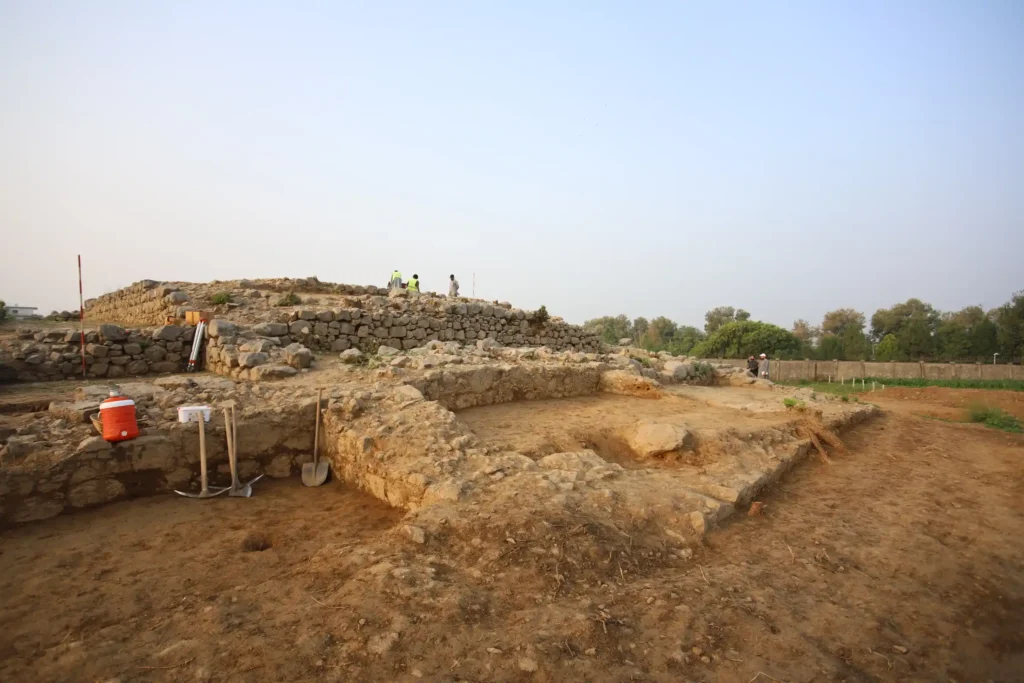
A joint Italian-Pakistani team started fresh digs at the Jandial D archaeological site in the Taxila region during August 2026, which yielded this discovery. The building spans approximately 100 meters in length and 50 meters across, while its standing walls stand no less than a meter tall and surpass this height in certain areas.
The investigation is being directed by Ca’ Foscari University of Venice and is occurring outside Sirkap’s ancient fort, close to Jandial Temple. Even though past archaeologists viewed Jandial D as a potential temple site, its initial role has never been fully determined.
A Monument First Excavated More Than 160 Years Ago
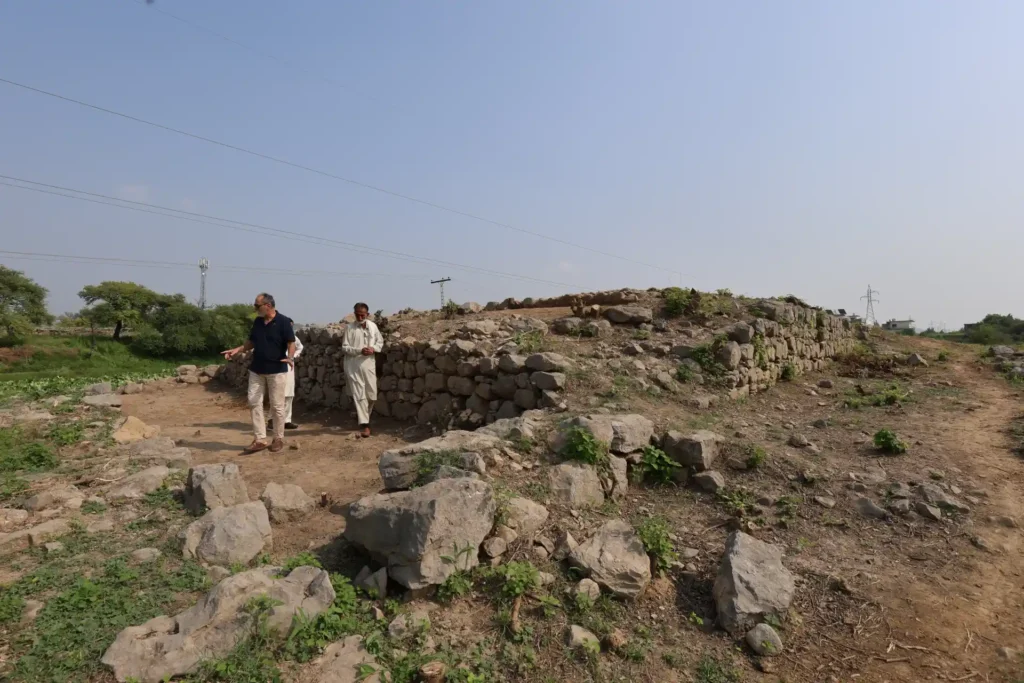
Jandial D represents a site that has been known for some time rather than being a brand-new find. During his 1863-1864 excavation at Taxila, British archaeologist Alexander Cunningham found architectural evidence suggesting another large monument stood near Jandial Temple.
Despite its remarkable size, the structure garnered relatively scant archaeological interest throughout the subsequent decades. Researchers focused their efforts on Sirkap’s fortified settlement and the larger ruins of Jandial Temple, which left significant portions of Jandial D’s architectural past unexplained.
The 2026 excavation campaign has come back to this site that had gone unnoticed for so long, uncovering standing stone walls and giving archaeologists a clearer view of its arrangement. With an estimated footprint measuring roughly 100 by 50 meters, the structure stands as one of the major architectural complexes identified in this section of Taxila, approximately matching the dimensions cited in earlier descriptions.
The construction date of Jandial D, its internal organization, and any potential changes in how it was used remain subjects of investigation. For now, the surviving remains do not provide enough evidence to establish whether Jandial D was primarily a religious sanctuary, a public building, or a complex serving several purposes.
An Enormous Building Beside Sirkap’s Ancient Fortifications
The building stands out just as much for how big it is as for where it sits. Jandial D is located close to the renowned Jandial Temple on a historic path that stretches from the north entrance of Sirkap. The Kacha-Kot fortifications are nearby remains consisting of an earth-built defensive system linked to the ancient settlement.
As a UNESCO World Heritage Site, Sirkap is integrated into Taxila, where traces of interaction among South Asian, Central Asian, and the Hellenistic civilizations have been safeguarded across many years.
After Alexander the Great’s campaigns ended, the broader region came under the influence of successive political and cultural traditions. Sirkap’s urban layout reflects elements of Hellenistic planning, while the nearby Jandial Temple, with its Ionic columns, remains one of the area’s most distinctive ancient monuments.
The closeness of Jandial D to this temple has long encouraged suggestions that the two buildings may have shared a religious function. Yet their location alone cannot establish a direct connection, and archaeologists have not demonstrated that both monuments were constructed during the same period.
Luca Maria Olivieri from Ca’ Foscari University, leading these excavations, sees this project as a chance to study a section of ancient Sirkap that has been overlooked compared to the rest of the walled city.
New Excavations in Ancient Gandhara
This inquiry serves as a component of Khyber PATH, which is an Italian-Pakistani archaeology program that carries out investigation, digging, recording, and preservation work at locations throughout the Taxila area and Swat Valley.
For over a century, Sirkap’s streets, dwellings, and places of worship have drawn archaeological attention, yet massive structures beyond its walls stay less fully known. Jandial D presents a chance to study how those outer areas grew and how they connected with the fortified city.
Earlier archaeologists had noted this monument’s impressive size but failed to fully examine it until now that its remains have been uncovered. Further excavation and architectural analysis are required to establish the structure’s date, original purpose, and connection to adjacent buildings such as the Jandial Temple.
For now, the most significant finding indicates that major elements of ancient Sirkap’s architectural environment remain undiscovered within a massive site currently under new study.
Cover Image: An aerial view of archaeological remains at Jandial D is being studied by researchers near Sirkap in Pakistan to examine a monumental ancient structure. Credit: Khyber PATH Project.