
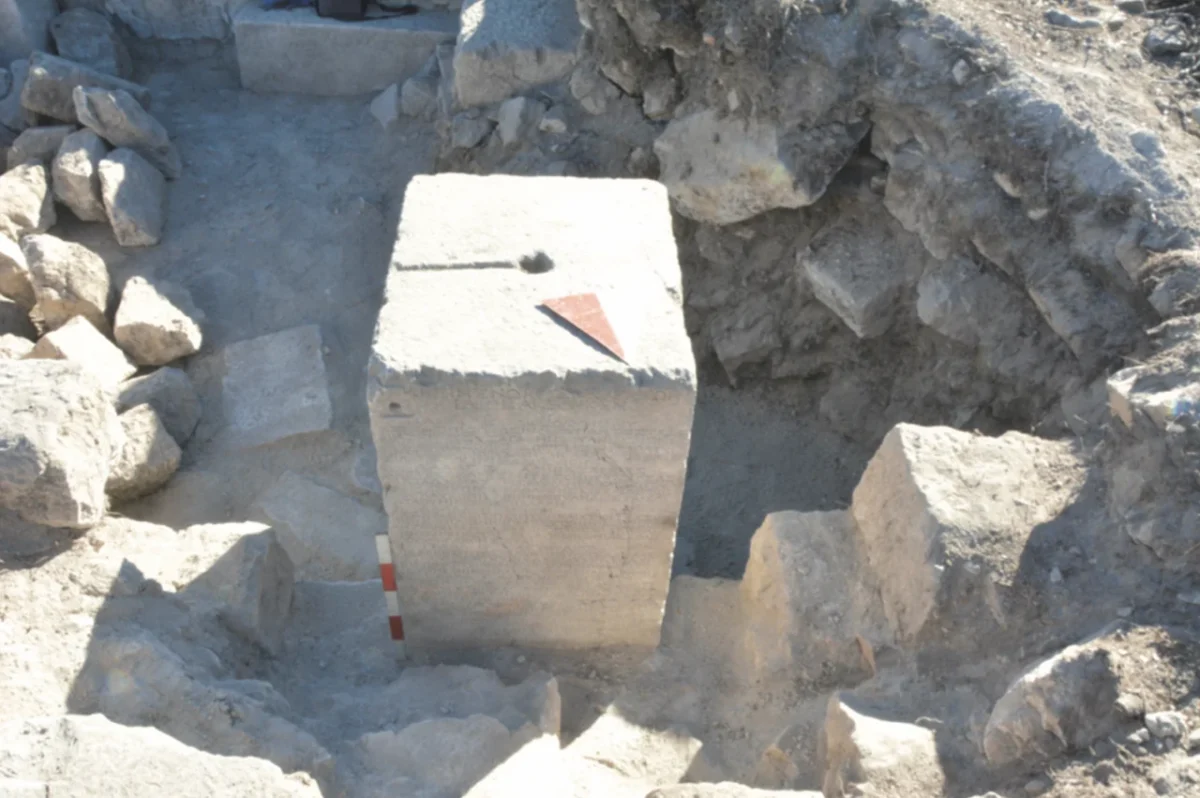
In southwestern Turkey at Kibyra, individuals seeking guidance on future matters could consult a stone monument bearing messages from deities by throwing five animal knucklebones in the ancient city of Kibyra. The specific outcome of this ritual depended upon how those bones landed. A person might then receive one of about 56 different possible answers based on the result.
A study on an oracle monument from Kibyra dating roughly 1,800 years has been published in Gephyra. A four-sided limestone monument provides an uncommon view of a fortune-telling method used during the Roman Imperial era for inquiries regarding journeys, commerce, sickness, and individual choices that prompted individuals to request divine direction.
Deriving 56 Possible Answers from Five Bones
The practice called astragalomancy involved throwing small ankle bones or astragali that were usually obtained from sheep or goats. Unlike modern six-sided dice, these irregularly shaped bones had four usable faces assigned the numerical values 1, 3, 4, and 6.
Consulting an oracle required throwing five knucklebones together and summing their numerical values to identify the matching combination. The system included 56 possible combinations, each paired with a specific divine response inscribed in Greek verse. These bones possessed four usable faces rather than six, allowing them to represent the numbers one, three, four, and six instead of the standard dice range.
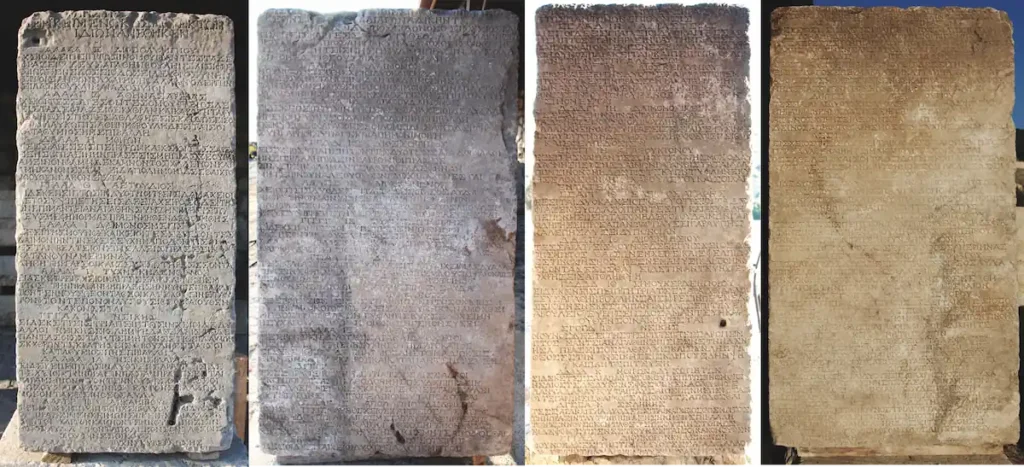
The inscriptions adhered to an identifiable pattern as they recorded a number sequence, recognized a god, and delivered an uplifting warning counsel message. Although some of the Kibyra monument’s original sections have been lost, its surviving inscriptions preserve valuable details about how the system operated.
The process did not need either intricate rituals or sophisticated gear. Five small bones together with written instructions allowed individuals to seek divine guidance on difficult choices.
Divine Guidance on Everyday Problems
Ancient oracles were frequently connected to leaders who sought predictions regarding wars or political matters. Yet knucklebone divination addressed more everyday needs, such as financial exchanges, travel arrangements, legal conflicts, and health issues.
Some messages urged individuals to move forward with their planned activities, while others suggested waiting or cautioned against bad results. Rather than forecasting a specific sequence of future occurrences, these communications provided practical direction influenced by religious convictions. Ancient oracles are frequently linked to leaders seeking foresight on conflicts or political matters, yet knucklebone divination addressed more common issues such as financial deals, journeys, legal problems, and well-being.
Such consultations were especially widespread in southern Anatolia during the second and early third centuries AD. Although some ancient city texts differ, inscriptions from several such places indicate that various communities employed a shared divination system, even though their surviving texts were not always identical.
A Monument Erected Next to the Statue of Hermes
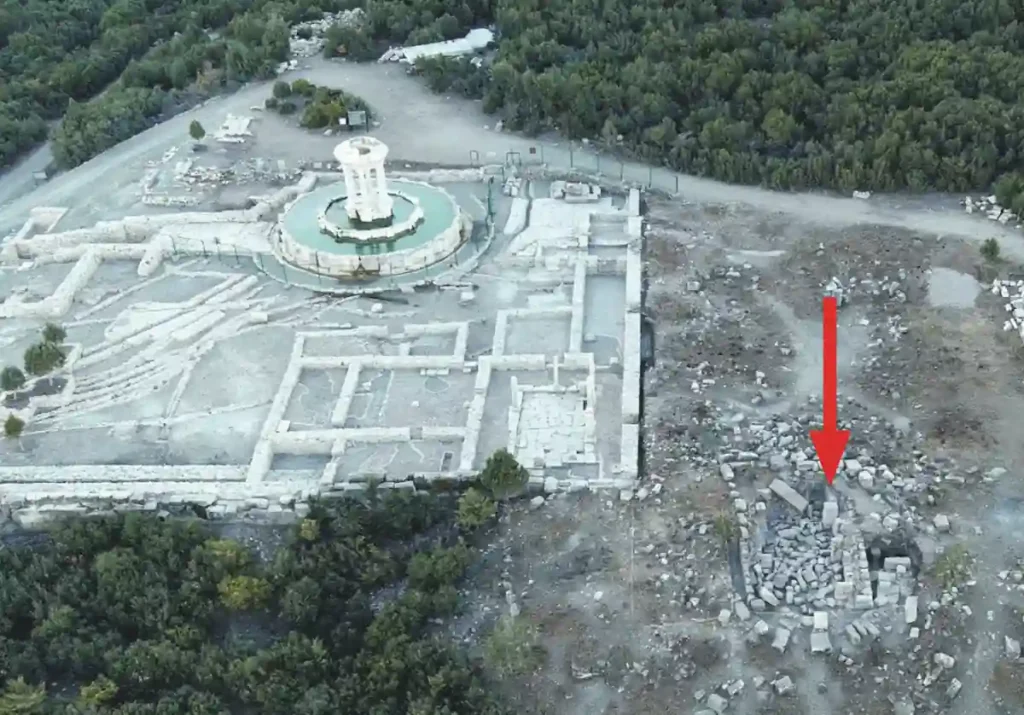
In 2024, archaeologists found the Kibyra monument within a chapel building that is later in location on the third terrace of the Agora. Because the stone was reused following its first period of use, where it originally stood is still unknown.
Şenkal Kileci, Nihal Tüner Önen, and Şükrü Özüdoğru conducted a study that included an examination of an introductory inscription regarding the monument’s dedication.
Researchers indicated that an unidentified benefactor covered the cost of an oracle monument, which was a statue of Hermes along with architectural features surrounding it. Hermes, the Greek god connected to travel, commerce, and communication, appeared suitable in a place where individuals sought guidance concerning their everyday matters.
No one has preserved the name of the benefactor who funded the oracle monument, a statue of Hermes, and architectural elements around it. The missing sections of this structure stop researchers from recreating its full initial look. Hermes, that Greek deity linked to journeys, business dealings, and messaging, suited an environment where individuals sought guidance on their everyday concerns.
An Original Version of an Ancient Prophecy
The researchers compared the Kibyra inscriptions with similar examples from other cities across southern Asia Minor, including Kremna and Termessos. Their analysis revealed both close similarities and differences in the wording and arrangement of individual responses.
One particularly important feature is that the numerical casting instructions were preserved throughout the surviving sequence. Several other similar structures lack full details, which makes the Kibyra inscription particularly valuable for explaining the operation of the oracle.
Grammatical errors, irregularities in the meter of the poem, and passages that diverge from prior texts were all discovered by the research. There is nothing similar to record for the 29th oracle, whereas another response appears at a location distinct from its peers found elsewhere.
The Kibyra inscription appears to be more than just a direct copy of a standard text, since these variations suggest that distinction. Distinctive features may have resulted from local copying practices, alterations, or stonecutting errors.
Unusually detailed evidence regarding a divination tradition that linked communities across Roman Anatolia survives in inscriptions, even though parts of the monument’s upper and lower sections are missing.
Source: Kileci, Ş., Tüner Önen, N., & Özüdoğru, Ş. (2026). A new astragalos oracle text from Kibyra: A comparative study with parallels from Southern Asia Minor. Gephyra, 31, 257–294.