
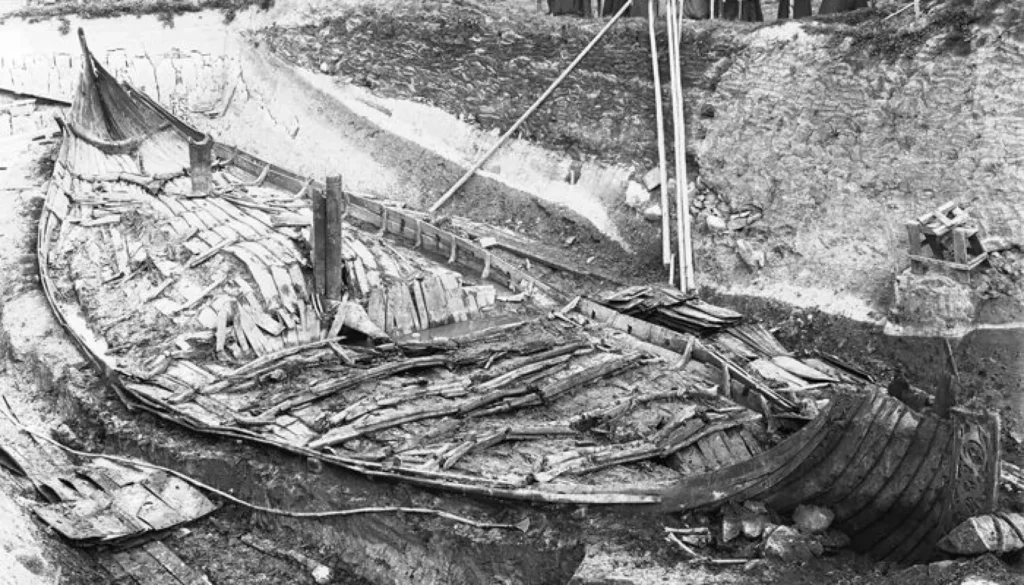
When archaeologists uncovered the Oseberg ship burial in 1904, most of what they found had already been crushed by time. Wood splintered. Stone collapsed inward. Objects meant for eternity were flattened under a millennium of pressure.
One item, however, refused to disappear.
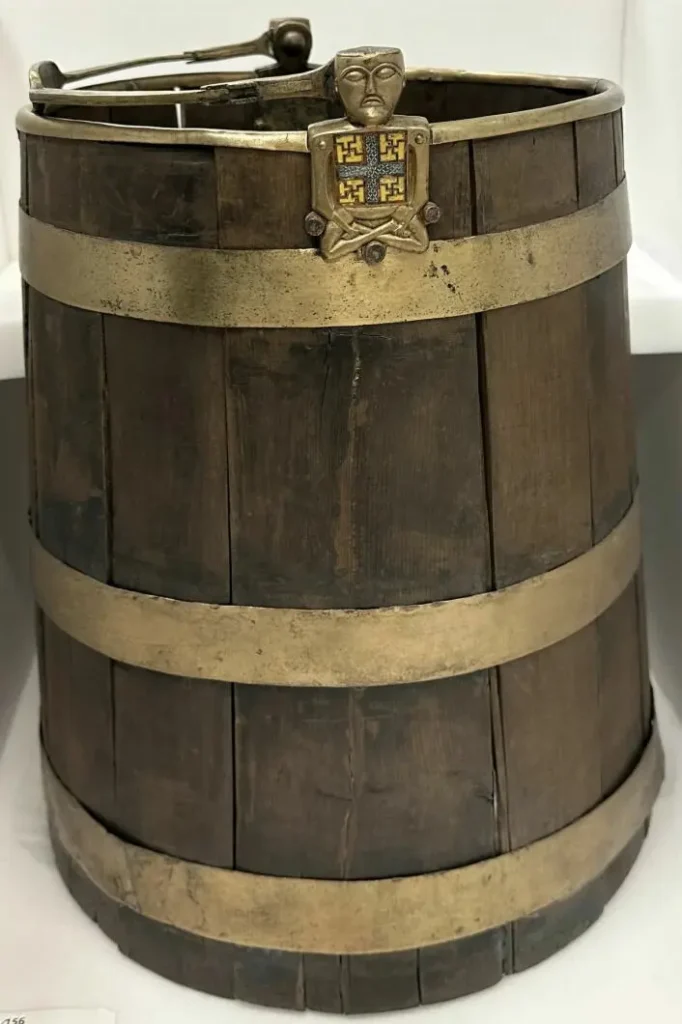
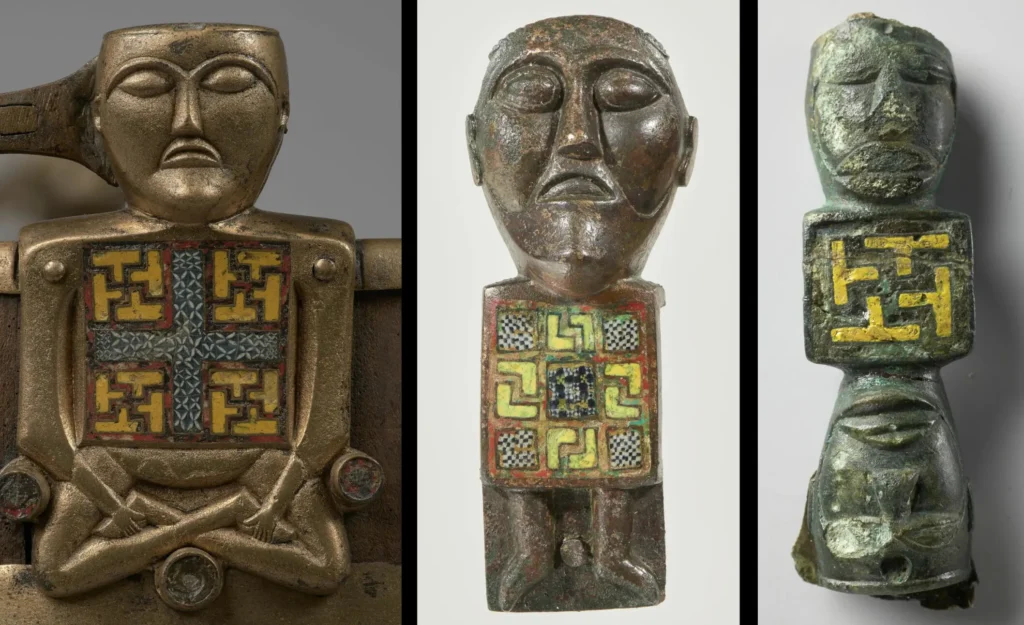
A wooden bucket—slightly warped, yet astonishingly intact—emerged from the grave almost whole. Attached to it was a small bronze figure, seated cross-legged, its posture so unfamiliar to early excavators that it earned an unexpected nickname: the “Buddha bucket.”
The name stuck. The explanation, as it turned out, was far more complex.
A Viking Object That Should Not Have Survived
The bucket was carved from yew wood, a material both exceptionally durable and notoriously toxic. Bronze bands reinforced its body, preserving its shape even as surrounding grave goods were crushed. When the burial mound was opened, this vessel stood out immediately—not pristine, but unmistakably resilient.
Inside the Oseberg grave, which held two women of unusually high status, most organic materials had suffered badly. The bucket did not. Its survival alone made it extraordinary. The figure attached to its bronze band made it enigmatic.
At first glance, the seated male form resembled Buddhist iconography. But archaeologists now agree: the resemblance is superficial.
Not Buddhist—But Deeply Symbolic
According to research led by archaeologists at Oslo’s Museum of Cultural History, the bronze figure has nothing to do with Asia or Buddhism. Its style, proportions, and metalworking techniques instead point westward—to early medieval Celtic monastic workshops in Ireland and the British Isles.
Cross-legged figures appear in Celtic ritual imagery recorded by Roman authors centuries earlier. While those rituals had long faded by the 8th century, their symbolic language persisted in decorative art. By the time this bucket was made, such imagery had become aesthetic rather than ceremonial—yet still meaningful.
Comparable figures have been identified elsewhere in Scandinavia, including the so-called Myklebust man from western Norway, suggesting these motifs traveled widely through contact, trade, and exchange.
Older Than the Grave That Held It
Radiocarbon analysis and stylistic study indicate that the bucket itself predates the Oseberg burial by at least a century. In other words, it was already an heirloom when it was placed inside the ship.
How it reached Norway remains uncertain. Vikings moved constantly through the British Isles—not only as raiders, but also as traders, diplomats, and allies. Elite families exchanged gifts, fostered children abroad, and cultivated long-distance relationships.
The bucket may have been seized during a raid. It may have been acquired through trade. It may even have arrived as a diplomatic gift. What matters is the choice that followed.
Unlike many imported objects, which were stripped for their metal fittings and repurposed as jewelry, this bucket returned intact. That decision suggests it carried significance beyond raw material value—perhaps political, aesthetic, or symbolic.
An Empty Vessel With a Purpose
One detail continues to puzzle researchers: the bucket was empty.
Other containers in the Oseberg grave held food offerings for the afterlife. This one did not. The reason may lie in its material. Yew wood, while incredibly long-lasting, is toxic—especially when in prolonged contact with liquids. That property would have made the bucket unsuitable for storing food or drink.
Rather than a practical container, archaeologists now believe it served a ceremonial or symbolic role. Botanists have added another layer to the story, noting that yew grows slowly and produces dense, resilient timber—qualities that may explain why the bucket endured where others failed.
Disruption, Loss, and Survival
The Oseberg grave itself did not remain untouched. Around the year 953, centuries after the burial, grave robbers broke into the chamber. Beds and chests were overturned. Bones were scattered. Priceless artefacts vanished.
Because of this looting, archaeologists cannot reconstruct the original placement of many objects—or determine whether the bucket once held something that was later removed. What survives is fragmentary. And yet, the bucket remains.
In that sense, it reflects the site itself: damaged, incomplete, but still eloquent.
Cover Image Credit: The bucket was placed in the grave when two influential women were buried in 834. A thousand years later, when the Oseberg ship was excavated, almost everything had collapsed — except the remarkably preserved bucket. Aksel Kjær Vidnes