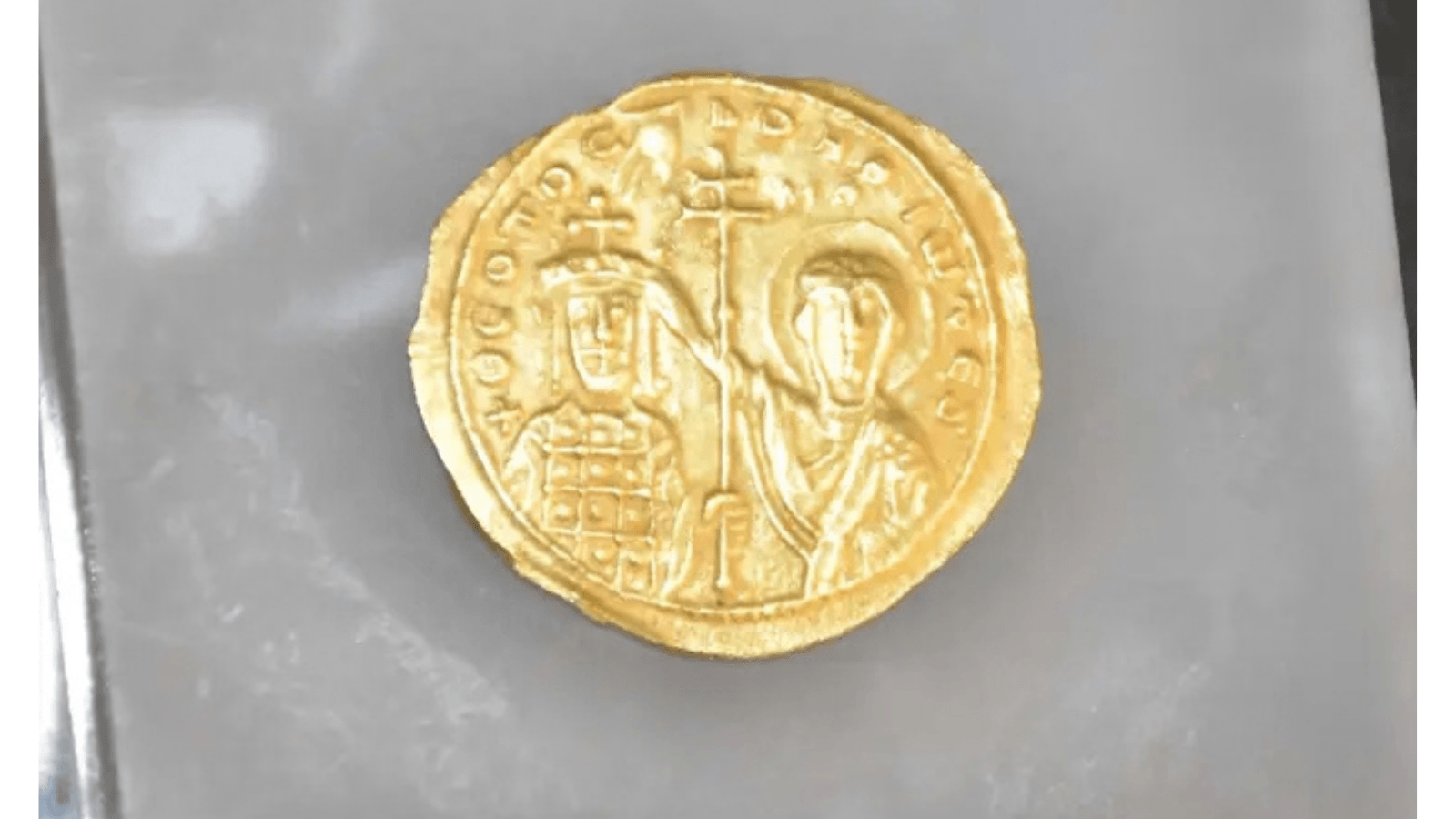
A gold coin dating back more than 1,000 years has been discovered in shallow waters off the coast of western Turkey. The Byzantine coin was found by an amateur diver near Karaburun, in İzmir Province, at a depth of only two to three meters.
The discovery was made in April, and the coin was later handed over to the İzmir Archaeology Museum. Museum specialists identified it as belonging to the reign of Byzantine emperor John I Tzimiskes, who ruled from AD 969 to 976.
Christ, the Virgin and the emperor
Despite spending centuries in a marine environment, the coin preserves imagery that helped specialists identify its period.
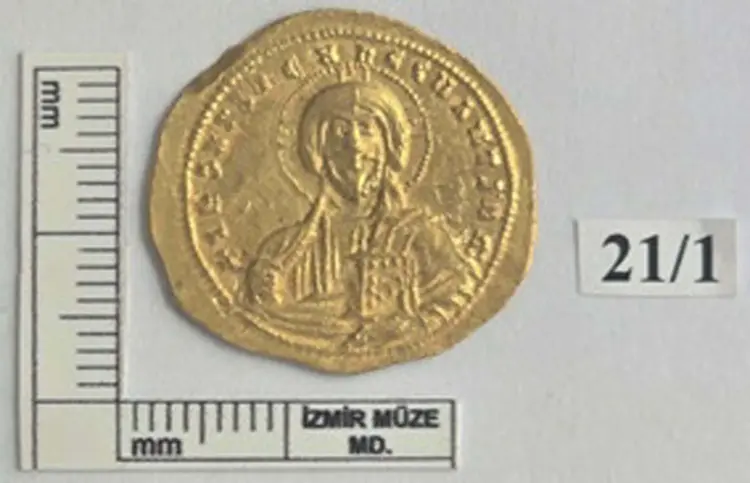
One side depicts Christ with a halo, raising one hand in blessing while holding the Gospels. On the other, the Virgin Mary appears beside the emperor and places a crown upon him.
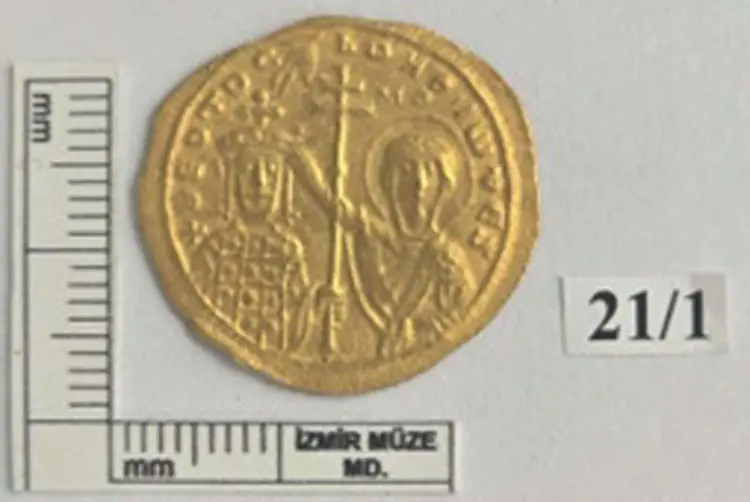
The imagery reflects the close relationship between imperial authority and Christianity in Byzantine coinage, where rulers were often presented alongside sacred figures as a visual expression of divine legitimacy.
John I Tzimiskes ruled the Byzantine Empire for seven years during a period of renewed military strength and territorial expansion in the eastern Mediterranean.
Found only meters below the surface
The location of the discovery makes the find particularly unusual. The diver encountered the coin only two to three meters below the surface off Karaburun, a peninsula extending into the Aegean Sea west of İzmir.
It remains unclear how the coin reached the seabed. No associated archaeological remains have been reported, and a single coin found underwater is not enough to indicate the presence of a shipwreck or submerged archaeological site.
The coin has now entered the collection of the İzmir Archaeology Museum. Museum director Savaş Gürbüz said specialists will complete its documentation and evaluation before placing it in storage.
According to Gürbüz, the coin could later be included in a museum display, allowing the public to see an object that circulated during the reign of one of the Byzantine Empire’s 10th-century rulers.
Cover Image: Gold coin of Byzantine emperor John I Tzimiskes, showing the emperor beside the Virgin Mary, who crowns him. The coin was discovered in shallow waters off Karaburun, İzmir. Credit: DHA