
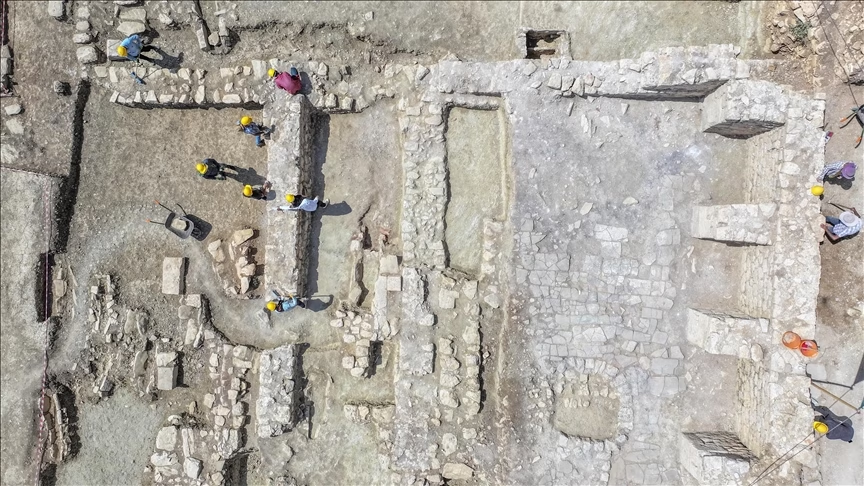
Archaeologists in Turkey’s southeastern Diyarbakır province have uncovered a 1,700-year-old church whose remains shed light on the spread of Christianity and Byzantine influence east of the Euphrates River. The church, located in Kulp district’s İnkaya neighborhood, has been dated to the reign of Roman Emperor Constantius II (A.D. 337–361) after a coin bearing his image was unearthed, pushing its construction date back two centuries earlier than previously thought.
The excavations, launched in 2021 by the Diyarbakır Museum Directorate, followed the discovery of a bronze cross during a surface survey. A team of 17 specialists and 30 workers is now leading the intensive excavation campaign.
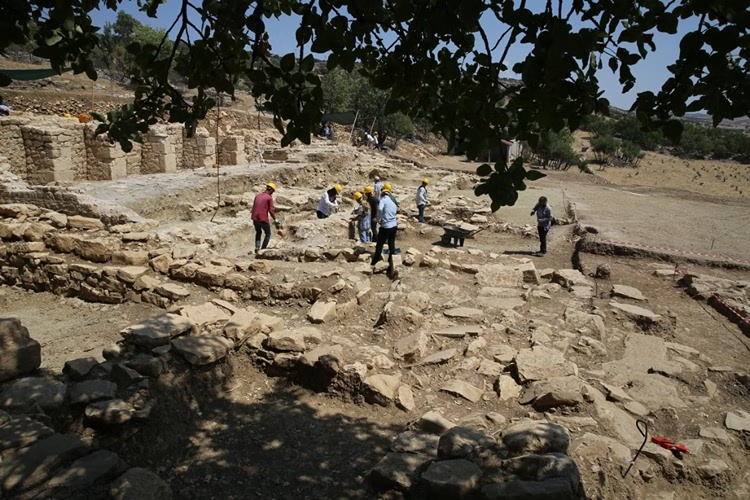
124 Graves and Over 130 Artifacts
To date, archaeologists have uncovered 124 graves containing the skeletal remains of 170 individuals, including infants, children, and adults. Several burials were placed in stone cists and a heavily damaged sarcophagus. The excavation has also yielded 30 registered artifacts—such as columns, oil lamps, and a rare fossilized starfish—along with 100 additional study pieces that provide insight into the region’s material culture.
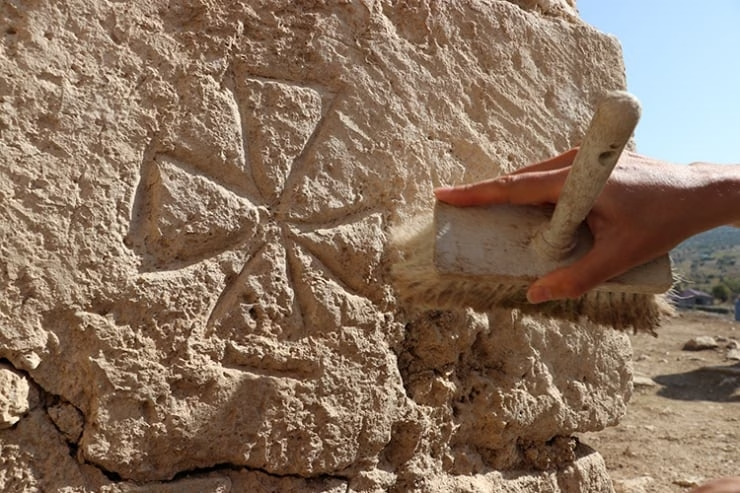
From Rome to Byzantium
The church was initially believed to date back around 1,500 years, based on a coin from Byzantine Emperor Anastasius I (A.D. 491–518). The discovery of an even older coin, however, indicates that the structure may have been built in the 4th century, during the Christianization of the Roman Empire.
Müjdat Gizligöl, Acting Director of Diyarbakır Museum, emphasized the significance of the find:
“We now have evidence that the Byzantine Empire maintained a strong and lasting presence beyond the Euphrates. This site reveals a sophisticated settlement and offers a unique glimpse into the region’s early Christian history.”
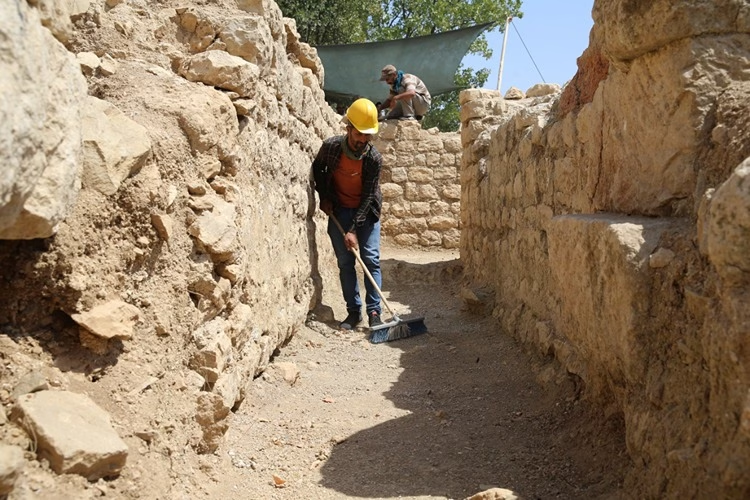
A Window Into Eastern Roman History
Diyarbakır, a strategic hub of Anatolia, was a key frontier region during the Roman and Byzantine periods. The early construction date of the church challenges previous assumptions about imperial policies and Christianization in the East. Excavations will continue to expose the full layout of the building, with researchers expecting further discoveries that could push its history even deeper into antiquity.