
A stone unearthed outside a dwelling in Egypt prompted archaeologists to uncover two massive royal statues, one of which honors Pharaoh Ramesses II and may have reached a height of 8.5 meters (28 feet). This surprising find within the Nile Delta region provides new proof of imperial activity at a location primarily recognized for a temple erected long after that ruler’s rule ended.
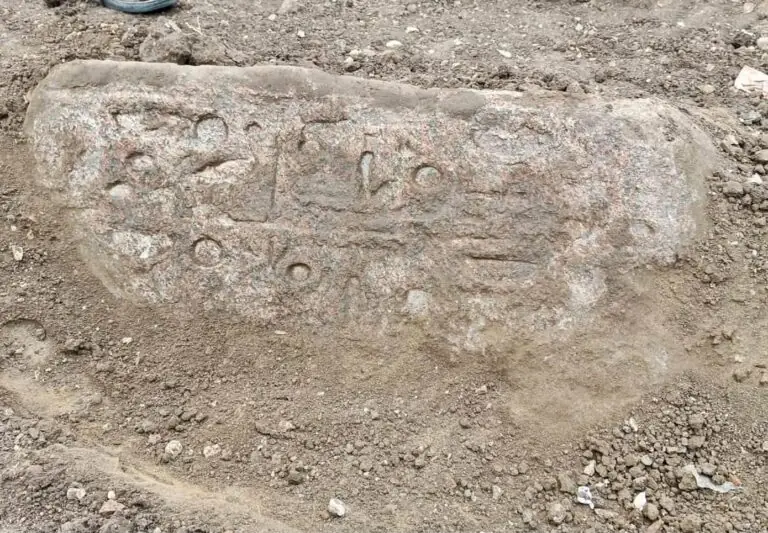
A resident living in Behbeit el-Hagar within Egypt’s Gharbia Governorate discovered the find after noticing an inscribed stone during work on land situated before his home. Following his report to antiquities authorities, a group from the Supreme Council of Antiquities began a rescue dig that revealed the statues along with a slab of pink granite carrying hieroglyphic text.
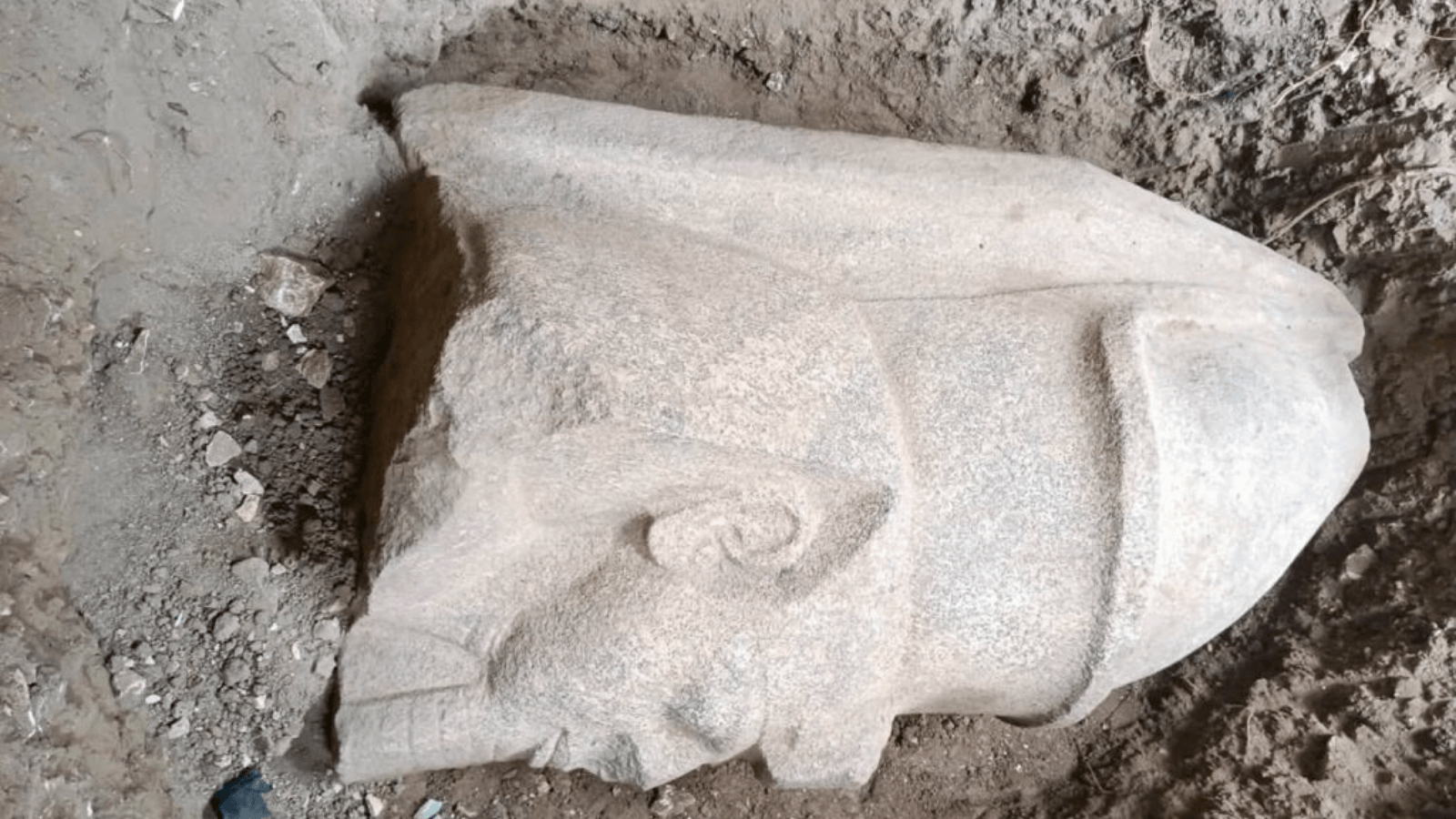
A Colossal Head of Ramesses II
The most impressive discovery uncovered is a colossal head standing roughly 1.60 meters tall, with its size described as approximately that measurement. This sculpture portrays Ramesses II adorned in the double crown representing both Upper and Lower Egypt, which stands for the pharaoh’s authority over the united kingdom.
A remaining part of the statue’s rear column carries the ruler’s Horus title, which verifies its identity. Ramesses II reigned over Egypt’s New Kingdom approximately between 1279 BC and 1213 BC as one of its most powerful rulers.
Secretary-General of the Supreme Council of the Antiquities Hisham El-Leithy says that although only the head and a section of the pillar remain, the dimensions suggest an imposing royal monument existed; he adds that the full statue, with its foundation included, may originally have stood 8.5 meters tall.
A second royal statue measuring about 2.40 meters in surviving length was also found by archaeologists. Although the statue’s legs and base have been lost, its face is still identifiable under the broken nemes headdress.
The visual similarity between the two statues suggests that the second figure might represent Ramesses II, even though its identity has not been confirmed. While its legs and foundation are absent, facial details remain distinguishable under the damaged headdress. The resemblance implies a possible connection to Ramesses II for the second sculpture, although this identification remains unverified; it may also depict him.
A pink granite block located nearby is approximately 1.30 meters in size and preserves hieroglyphic inscriptions that contain two royal titles of the pharaoh: “King of Upper and Lower Egypt” and “Son of Ra.”
An Ancient Site With a Much Older History
The discovery is particularly significant because Behbeit el-Hagar is best known for its monumental Temple of Isis, whose surviving remains largely date to the fourth century BC, during the reign of Nectanebo II. Later Ptolemaic rulers contributed to its decoration.
Ramesses II lived roughly nine centuries before that temple was built, raising the possibility that monumental structures already occupied the area during the New Kingdom.
Earlier archaeological evidence supports the possibility of activity during his reign. In a 2017 study, Egyptologists Mahmoud Emam and Ehab Abd el-Zaher examined two architectural fragments bearing the cartouches of Ramesses II that had previously emerged near the temple.
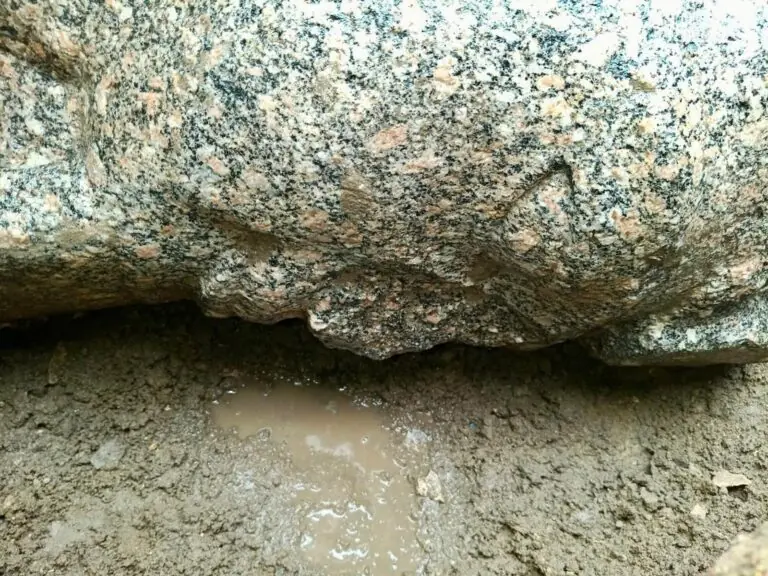
The newly discovered statues recently uncovered provide significant proof of royal monuments linked to the pharaoh. However, archaeologists have yet not decided if those sculptures originally occupied a spot at Behbeit el-Hagar or arrived there from somewhere else.
Excavations and research continue to define how the sculptures, an inscribed granite block, and nearby remains relate to one another. The exact location where these artifacts originally stood is still unknown, yet their recent find has already opened a new chapter in understanding a place whose most famous structures date to centuries following the reign of Ramesses II.
Cover Image: A closer view of the newly discovered colossal head of Ramesses II, showing the pharaoh’s facial features and royal crown. Egyptian Ministry of Tourism and Antiquities.