
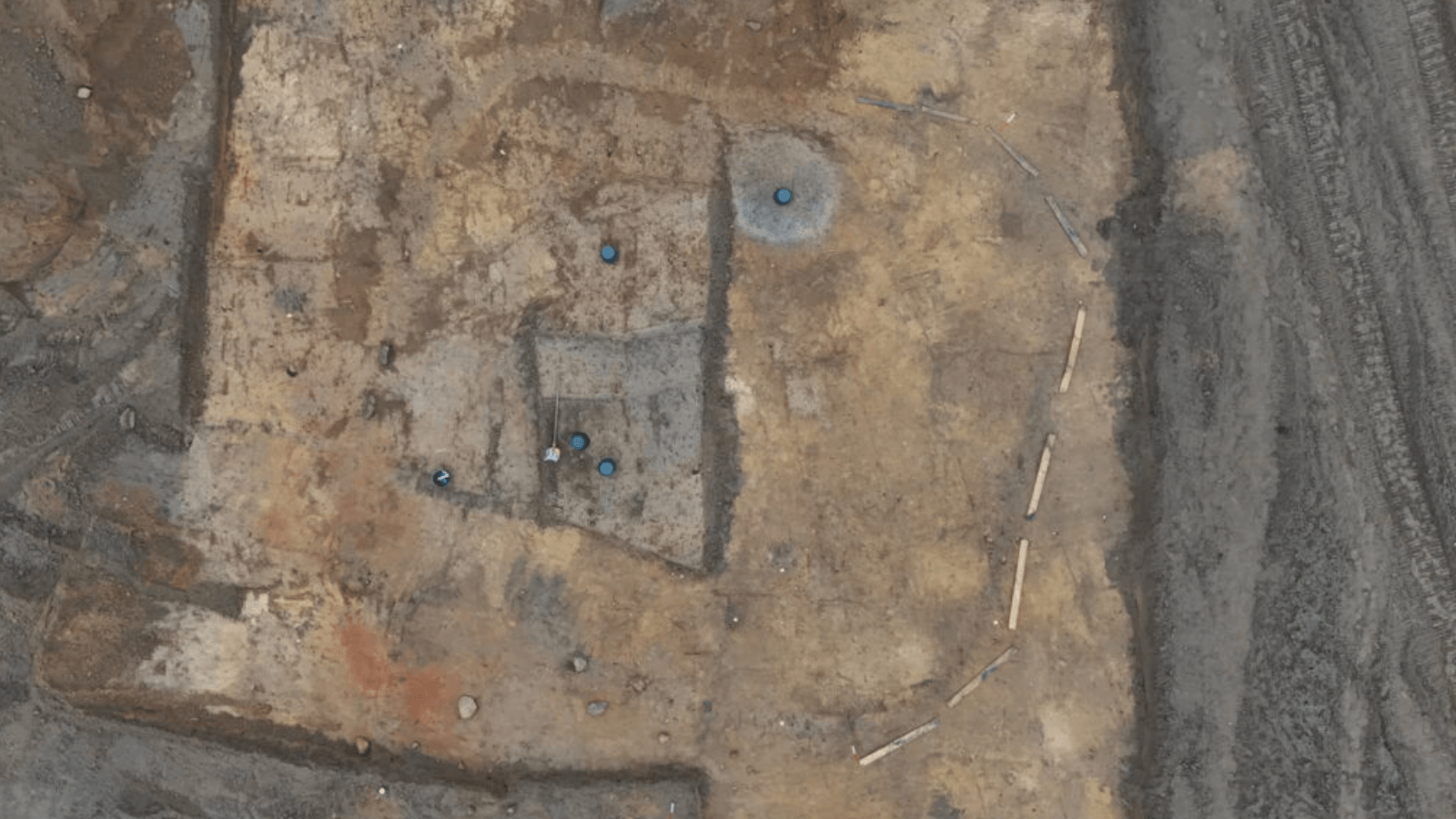
Archaeologists working near a notable Bronze Age royal tomb in Germany have uncovered an enigmatic square structure that might functioned as a temple or site for ceremonial assemblies nearly 2,800 years ago. Large pottery vessels and unusual concentrations of burned animal bones suggest that ancient communities may have gathered here for feasts or religious rituals.
On October 14, the Brandenburg State Office for Monument Preservation and Archaeological State Museum (BLDAM) announced a find following work at Seddin in northeastern Germany. The excavation team uncovered a distinct square structure that dates back roughly three millennia. Evidence from large ceramic containers and clusters of charred animal remains indicates groups likely assembled there for communal meals or rites.
An Unusual Building in a Bronze Age Settlement
In September 2026, a structure measuring 10.6 by 11.4 meters was unearthed; its almost square layout caught the eye right away since Late Bronze Age buildings usually stretched long and rectangular. Finding such nearly square plans is exceedingly uncommon across European prehistory.
The building stood on slightly elevated ground and included narrow foundation trenches filled with stones, a method that had also been identified in the monumental hall excavated before this site at Seddin. While its square shape made it unusual because typical structures from that era were long and rectangular, such forms are exceptionally uncommon throughout prehistoric Europe.
The objects found around the structure offer stronger clues about its possible purpose than the striking similarities suggest.
Burned Animal Bones and Evidence of Ancient Feasts
Vessels with rim diameters greater than 50 centimeters were found in unusually large amounts around the building by archaeologists. Earlier excavations at Seddin generally yielded smaller vessels, with storage containers typically measuring between 30 and 40 centimeters across.
The large ceramic vessels imply that sustenance might have been ready for big assemblies instead of typical domestic dining.
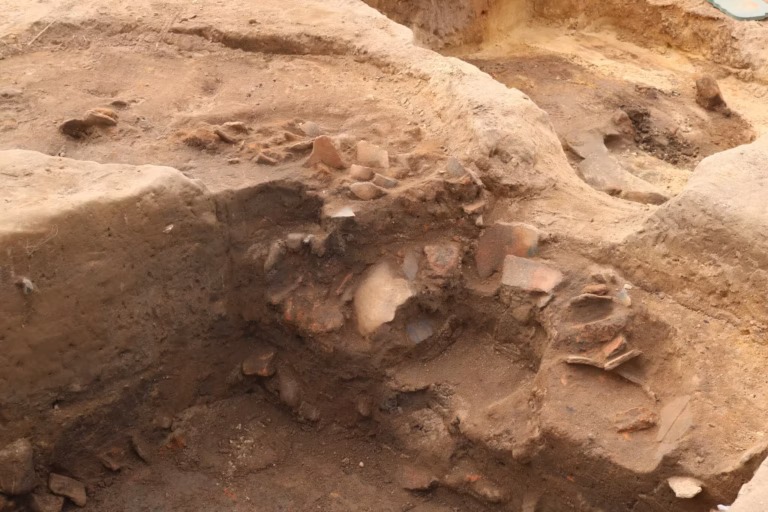
Animal remains offer yet another interesting piece of proof. Between 2015 and 2025, excavations throughout the settlement produced merely two animal bones. Every large pit found near the recently uncovered building held pieces of charred animal remains.
Researchers believe animals eaten at shared meals had their bones later set alight. They have also raised the possibility that entire animals were sacrificed and burned during religious ceremonies, with their remains subsequently burned after being consumed.
Further scientific analysis is required to differentiate among these explanations.
A Sacred Place Near the Tomb of King Hinz?
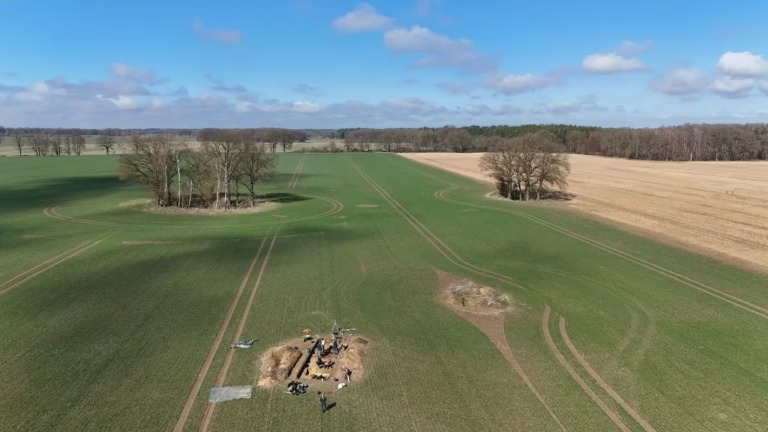
The legendary King Hinz’s royal tomb at Seddin is situated approximately 900 meters away from this structure, traditionally associated with him. The burial monument dates from the same era as pottery remains and radiocarbon measurements indicate.
Seddin has already produced one of Germany’s most remarkable Bronze Age discoveries. In 2023, archaeologists uncovered the largest known hall of the Nordic Bronze Age dating to the 10th-9th centuries BCE. That monumental building pointed to Seddin’s importance as a regional center during the Late Bronze Age.
Recent findings indicate that rituals might have been significant within this settlement. The structure is distinguished by its unique design, unusually big containers, and burnt animal bones.
Whether this structure served as a sanctuary, an assembly room for rituals, or a venue for shared meals remains undetermined at present. For now, what is available offers a scarce view of actions that could have united Bronze Age groups almost three thousand years ago. The latest discovery indicates that ritual functions might also have been significant within the community. Its distinctive design, oversized containers, and charred meat fragments set it apart from typical homes.
Cover Image: Aerial view of the nearly square Bronze Age structure uncovered at Seddin in Brandenburg, Germany. Credit: S. Weinberger / University of Göttingen.