Senegal’s Falémé Valley has revealed a rare glimpse into the lives of the last hunter-gatherers of West Africa, uncovering a 9,000-year-old quartz toolmaking site that is reshaping our understanding of African prehistory.
Archaeologists from the University of Geneva (UNIGE) and their partners have unearthed an exceptionally well-preserved early Holocene site in eastern Senegal, offering unprecedented insight into the lifestyles and craftsmanship of prehistoric hunter-gatherers. The discovery, published in PLOS One, highlights sophisticated stone-knapping techniques used to produce highly standardized microlithic tools, challenging long-held assumptions about early African societies.
A Rare Window Into the Early Holocene
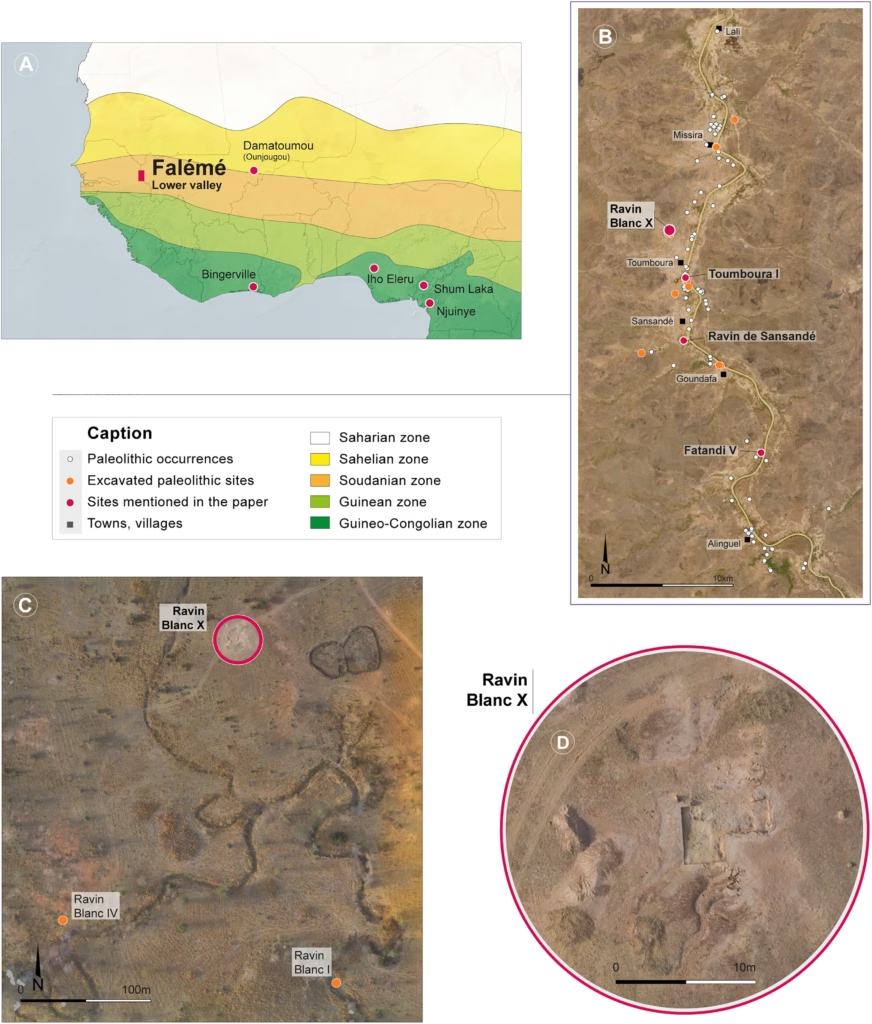
The excavation site, known as Ravin Blanc X, lies in Senegal’s Falémé Valley and measures just 25 square meters. Despite its modest size, its deep archaeological layers have remained untouched for millennia, buried beneath later Neolithic deposits. The site dates back over 9,000 years to a period when the African savannah was emerging from 10,000 years of severe drought.
“This region’s geology and climate rarely preserve stratified sites, making Ravin Blanc X an extraordinary discovery,” said Dr. Anne Mayor, director of the ARCAN Laboratory at UNIGE. “Stratification is essential to reconstruct past human lifeways, environmental shifts, and cultural evolution.”
Reconstructing a Quartz Knapping Workshop
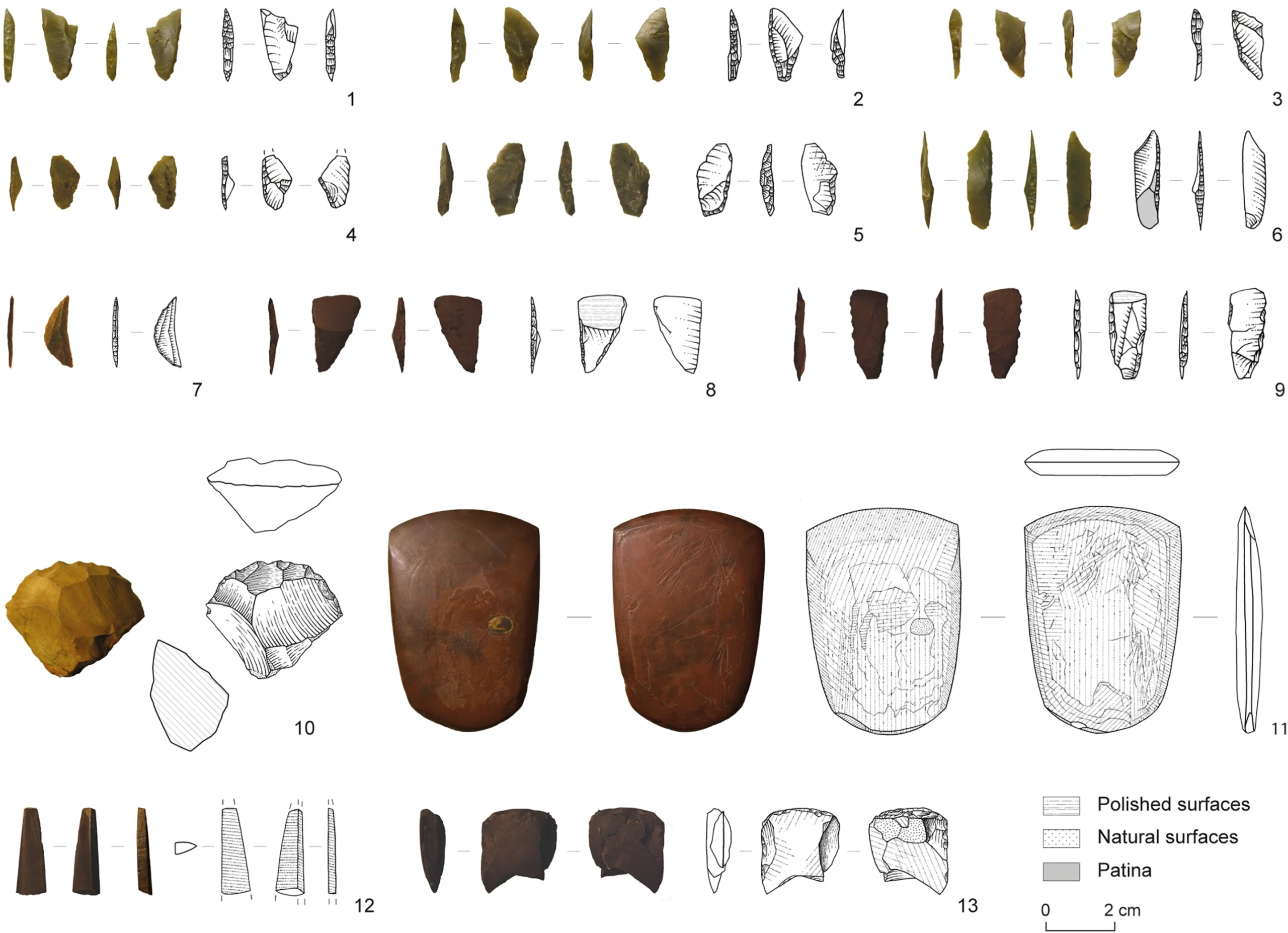
The excavation, led by doctoral researcher Charlotte Pruvost in collaboration with Senegal’s Institut Fondamental d’Afrique Noire, uncovered a fireplace and a unique quartz knapping workshop. Although no finished tools were left behind—likely carried away by their makers—archaeologists recovered a cache of quartz flakes and cores.
By painstakingly piecing these fragments together, researchers reconstructed the techniques and criteria prehistoric toolmakers used to select and work high-quality quartz. “It was like solving a 9,000-year-old jigsaw puzzle,” said Pruvost, lead author of the study. “Their level of precision and craftsmanship was remarkable.”
Evidence of Distinct Cultural Traditions
Microlithic tools—tiny, standardized stone implements mounted on wooden or bone shafts—dominated the hunter-gatherer toolkit of this era. By comparing Ravin Blanc X with other rare West African sites, researchers identified striking similarities among savannah-based groups, suggesting shared cultural traditions across vast territories.
In contrast, toolkits from contemporaneous tropical forest sites show less standardization, indicating that prehistoric communities were already culturally distinct, adapting their technologies to different ecological environments.

Interdisciplinary Research
The findings stem from a broad international collaboration involving experts from Switzerland, Senegal, France, and Germany. Radiocarbon analysis of charcoal from the site revealed the types of wood used for fires, while geomorphologists, sedimentologists, and paleoenvironmentalists studied plant phytoliths preserved in the soil to reconstruct ancient climates and vegetation.
“This discovery not only illuminates the diversity of early Holocene cultures but also underscores West Africa’s pivotal role in global prehistory,” said Mayor.
Why It Matters
West Africa’s archaeological record for the early Holocene remains scarce, largely due to preservation challenges. This study provides a rare, detailed look into a period of profound cultural, climatic, and environmental transformation, offering evidence that African hunter-gatherer societies were far more technologically advanced and regionally diverse than previously assumed.
Charlotte Pruvost et al, A Later Stone Age quartz knapping workshop and fireplace dated to the Early Holocene in Senegal: The Ravin Blanc X site (RBX), PLOS One (2025). DOI: 10.1371/journal.pone.0329824