
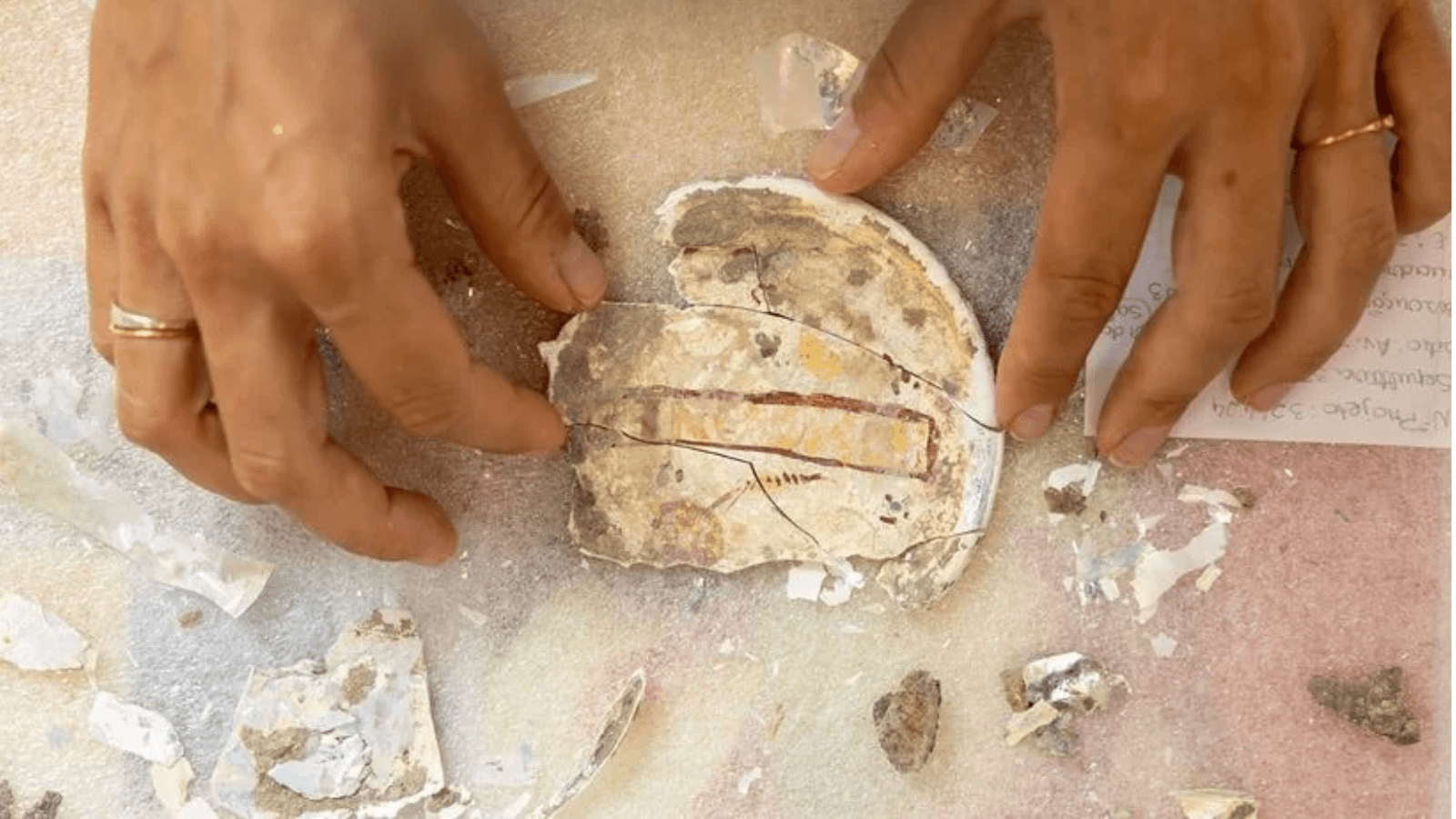
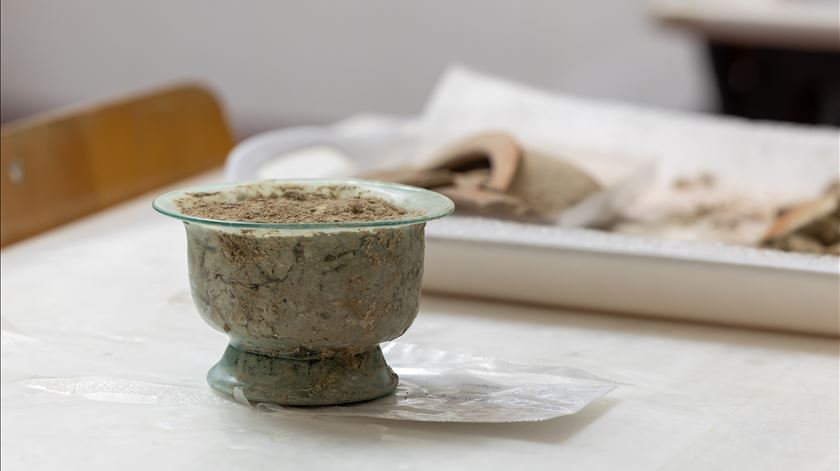
A 2,000-year-old Roman glass object recovered from an ancient cemetery in southern Portugal has revealed traces of Egyptian blue, the world’s oldest known synthetic pigment. The discovery offers new insights into ancient craftsmanship and the spread of a manufacturing tradition that originated in Egypt thousands of years before the rise of the Roman Empire.
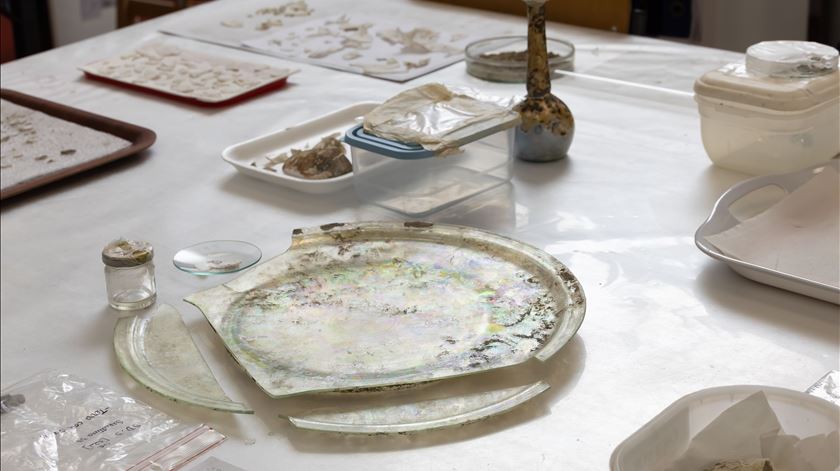
Archaeologists from ERA Arqueologia recovered the decorated object during excavations at the cremation necropolis of Salacia, modern-day Alcácer do Sal, in Portugal’s Setúbal district. Several graves contained collections of glass and ceramic objects, some in remarkably good condition.
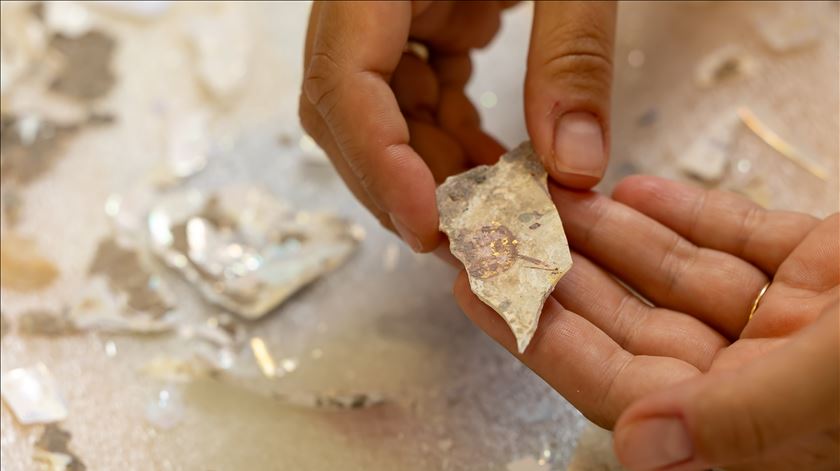
Researchers from the NOVA School of Science and Technology (NOVA FCT) identified the pigment during an ongoing investigation into the archaeological material. Their work could help establish how ancient craftspeople manufactured and decorated such objects and how these goods circulated throughout the Roman world.
A Colour with a 5,000-Year History
Egyptian blue emerged in ancient Egypt approximately 5,000 years ago, marking a significant achievement in the history of materials technology. Unlike pigments obtained directly from naturally occurring minerals, its manufacture required carefully selected ingredients and controlled heating.
Ancient craftspeople combined silica, calcium and copper-bearing materials at high temperatures to produce cuprorivaite, the crystalline compound responsible for the pigment’s characteristic blue colour. This sophisticated process demonstrates the practical knowledge of chemistry that ancient artisans developed through experimentation.
Egyptian blue offered an alternative to valuable blue minerals such as lapis lazuli and turquoise. Over the centuries, its use spread throughout the Mediterranean, where Greek and Roman artists employed it in wall paintings, sculptures and decorative objects.
In 2025, a research team led by Washington State University successfully recreated ancient Egyptian blue, testing different combinations of ingredients and heating conditions to better understand its manufacture. The experiments also demonstrated how variations in production could generate a surprisingly wide range of colours.
The identification of this ancient pigment on Roman glass in Portugal illustrates the geographical reach of a technological tradition that began thousands of years earlier.
Roman Trade Networks Along the Atlantic Coast
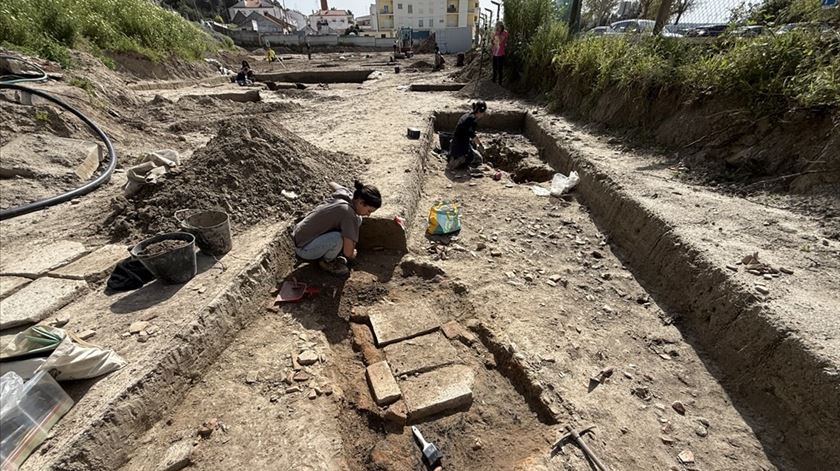
Known in antiquity as Salacia Urbs Imperatoria, Alcácer do Sal occupied a strategic position along the Sado River. Its access to the Atlantic Ocean connected the settlement with maritime routes linking western Iberia to the Mediterranean.
Salt production, fish processing and maritime commerce contributed to the economic importance of the surrounding region during Roman rule. These activities connected local communities with wider markets through which goods, raw materials and manufacturing knowledge circulated.
According to a statement issued by NOVA FCT and shared with the Portuguese news agency Lusa, archaeologist Paula Pereira of ERA Arqueologia highlighted the scientific importance of identifying Egyptian blue for understanding ancient manufacturing processes and the circulation of materials.
The diversity of the objects recovered from the necropolis also suggests that Salacia’s inhabitants had access to long-distance commercial networks, including connections with the eastern regions of the Roman Empire.
However, the presence of Egyptian blue does not necessarily establish an Egyptian origin for the glass object. By the Roman period, knowledge of the pigment’s manufacture had spread widely across the Mediterranean. Its precise production centre remains unknown.
What Roman Graves Reveal About the Living
The investigation brings together specialists from VICARTE, a research unit dedicated to glass and ceramics, under the coordination of Inês Coutinho, head of NOVA FCT’s Department of Conservation and Restoration. Researchers, master’s students and specialists from Spain’s University of Granada are participating in the interdisciplinary project.
Beyond identifying ancient materials, the team aims to better understand consumption habits, funerary customs and Salacia’s place within Mediterranean exchange networks.
Objects deposited in graves can reveal much about the communities that buried their dead. Their materials, decoration and manufacturing techniques offer evidence of economic resources, aesthetic preferences and access to goods from distant regions.
For researchers studying the Salacia necropolis, the surviving blue decoration is more than a detail of ancient craftsmanship. It offers an opportunity to investigate how one of humanity’s earliest synthetic materials became part of the material culture of a Roman community on Europe’s Atlantic coast.
Cover Image: Researchers examining fragments of a decorated Roman glass artefact recovered from the ancient necropolis of Salacia in Portugal. Photo: João Lima / NOVA FCT.