
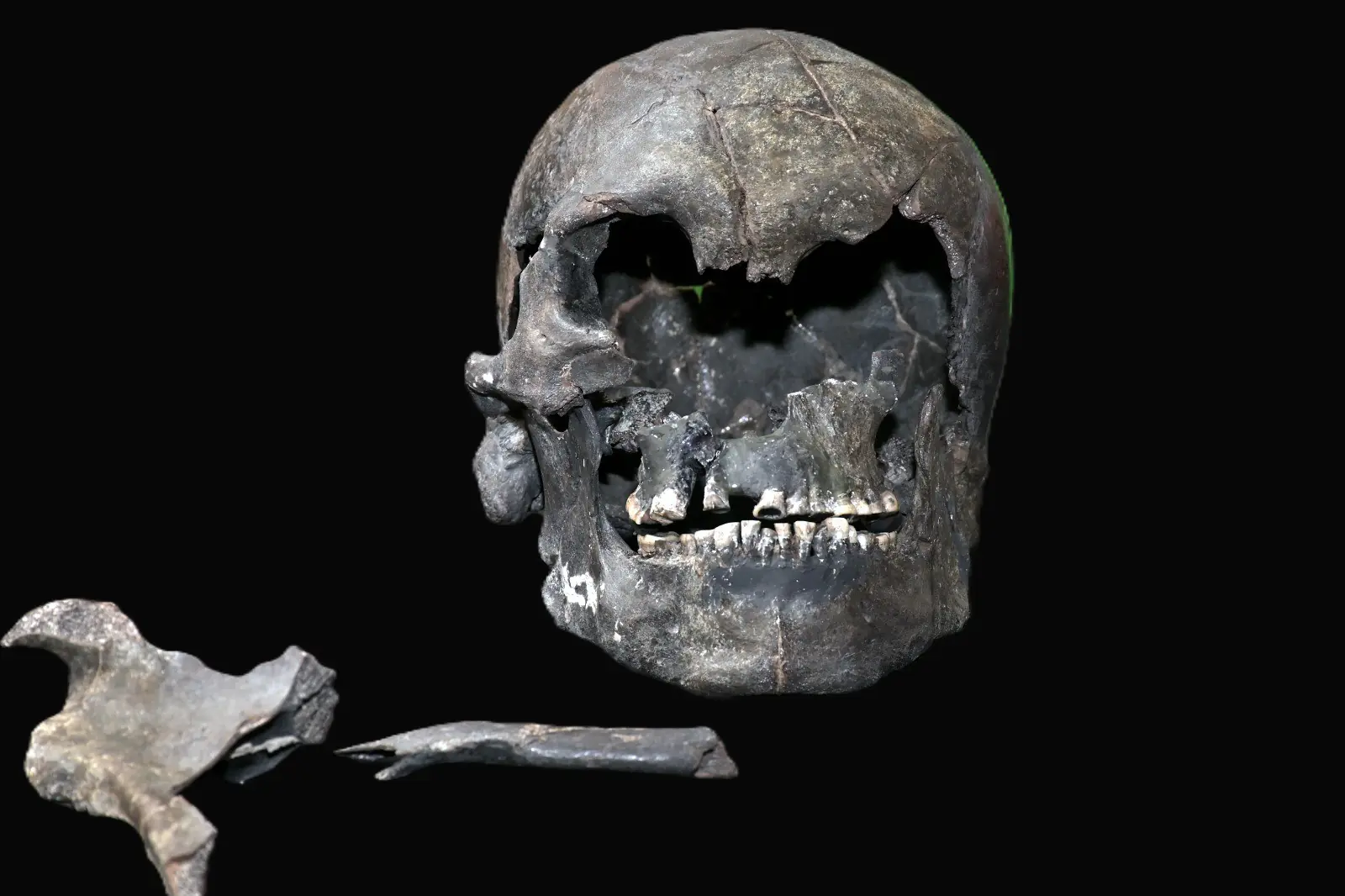
A human skeleton discovered beneath a modern airport construction site in central Mexico has been dated to approximately 13,000 years ago, placing it among the oldest known human remains from the Basin of Mexico. The individual, named Yotzin, lived near the end of the last Ice Age, when mammoths and prehistoric camels still roamed the region. His remarkably robust bones, heavily worn teeth, and distinctive skull are now helping researchers investigate the lives of people who inhabited central Mexico thousands of years before the rise of its earliest civilizations.
The findings, announced by Mexico’s National Institute of Anthropology and History (INAH) on November 20, 2026, follow five years of investigation into the skeleton discovered during construction of Felipe Ángeles International Airport in 2021. Although two laboratory methods produced different age estimates, both place Yotzin in a remote period of human prehistory. Genetic research now underway in Spain could provide further evidence of his ancestry and possible connections to other early populations in the Americas.
An Ice Age Skeleton Discovered Among Mammoth Fossils
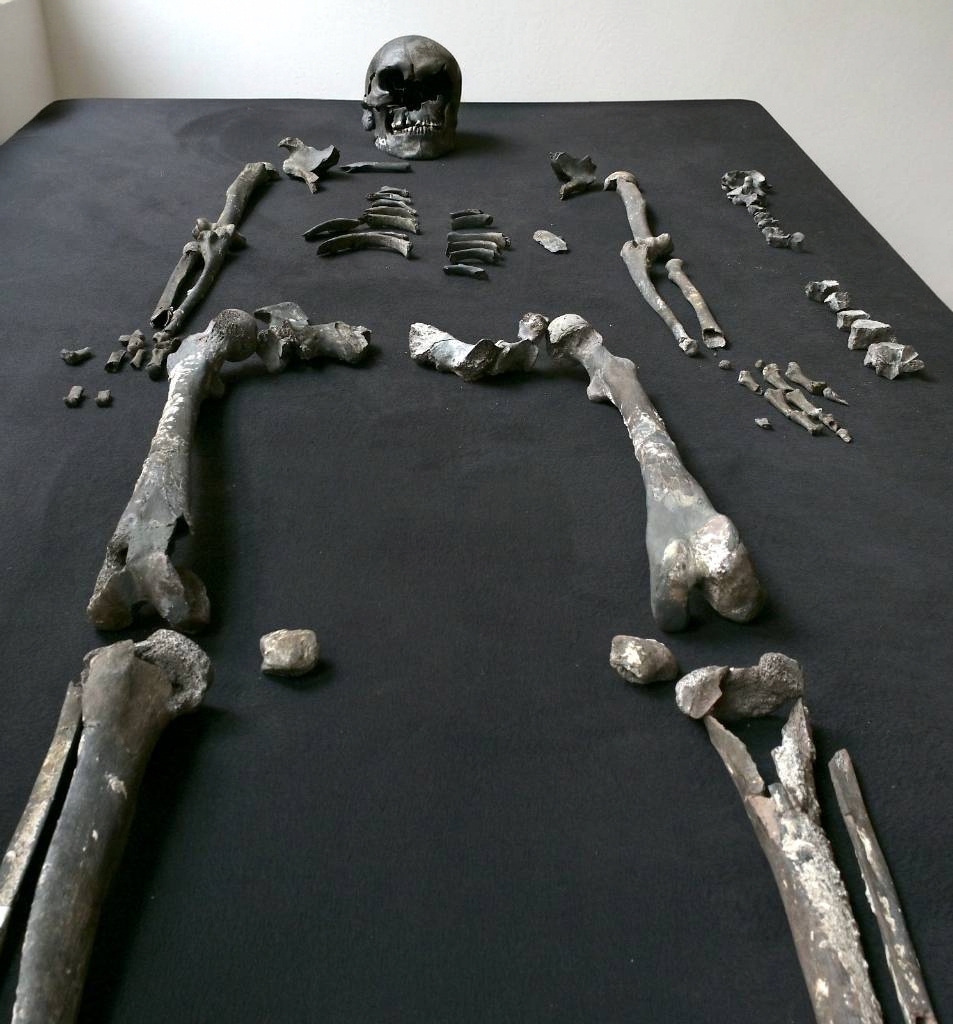
Yotzin was discovered in 2021 during archaeological rescue excavations at Santa Lucía, northeast of Mexico City. The investigations, directed by archaeologist Rubén Manzanilla López, accompanied construction of Felipe Ángeles International Airport, where extensive prehistoric animal remains had already been recovered.
Archaeologist Israel Peña encountered the skeleton in the northwestern section of the construction site, within sedimentary deposits associated with the Late Pleistocene.
Initially, the bones appeared to belong to a prehistoric camel. Their dark coloration and substantial size resembled animal fossils found in the same geological layers. Only after extending the excavation did the team realize that the remains were human.
The skeleton was recovered from Stratigraphic Unit IV, a deposit of fine sediments identified by researchers as Solonchak, associated with ancient marsh environments.
Mammoth and prehistoric camel fossils were also present in the surrounding geological deposits, suggesting that the area had once formed part of a landscape inhabited by large Ice Age mammals.
Within the approximately 25-by-30-meter excavation area, Yotzin was the only human skeleton discovered. Archaeologists found no associated offerings or artifacts that might have helped identify his cultural background.
Despite these limitations, the controlled excavation preserved valuable evidence. Researchers documented the skeleton’s position, recorded the surrounding sedimentary layers, and collected samples for future investigations.
These records would become particularly important when scientists attempted to establish how long Yotzin had remained buried.
Laboratory Tests Place Yotzin Around 13,000 Years Ago
When physical anthropologist Arturo Talavera González first examined Yotzin, the skeleton’s unusual characteristics immediately suggested considerable antiquity.
Its exceptionally robust bones and heavily worn teeth resembled features associated with prehistoric hunter-gatherer populations. However, confirming its age required direct scientific dating.
Researchers extracted a sample from Yotzin’s third molar for analysis in two laboratories.
At ISOTOPIQ AGING INC in Belgium, dating based on endogenous collagen produced a calibrated age range of 13,087 to 12,987 years before present.
A separate analysis of bioapatite at the University of Georgia’s Center for Applied Isotope Studies in the United States yielded a younger estimate of 12,050 to 11,700 years before present.
The difference between the results remains important. Rather than producing an identical date, the two analyses establish a broader chronological range extending from approximately 13,100 to 11,700 years ago.
INAH has described the skeleton as approximately 13,000 years old, placing it among the 23 oldest human specimens identified in the Basin of Mexico.
For researchers, this represents more than an exercise in determining the age of an ancient skeleton. Human remains from the transition between the Pleistocene and Holocene are relatively uncommon in the region, leaving significant gaps in the archaeological record.
The new dates provide a firmer chronological foundation for investigating one of the individuals who inhabited this landscape near the end of the Ice Age.
Worn Teeth and Powerful Bones Offer Clues to His Life
Yotzin was a man between 25 and 30 years old when he died. He stood approximately 1.75 meters (5 feet 9 inches) tall, and around 80 percent of his skeleton survived, including much of his skull.
His physical characteristics have attracted particular attention from researchers.
Talavera described the skeleton as exceptionally robust, with substantial bone mass and features consistent with a physically demanding lifestyle.
He believes Yotzin was probably a hunter accustomed to walking long distances and undertaking strenuous activities.
The condition of his teeth provides another intriguing detail. They displayed extensive wear, yet dental specialist Sandra López Flores found no evidence of cavities.
Talavera associates this pattern with the activities and dietary practices of prehistoric hunter-gatherers.
In addition to chewing fibrous plants and tough foods, teeth could be used as tools for processing animal hides, cutting plant fibers, and manipulating materials.
Such repeated activities can produce substantial dental wear over time.
However, neither the absence of cavities nor the degree of tooth wear is sufficient to reconstruct an individual’s complete diet. Both characteristics must be interpreted alongside other archaeological and biological evidence.
Together, Yotzin’s skeletal features suggest a life involving considerable physical effort, although the exact activities he performed remain unknown.
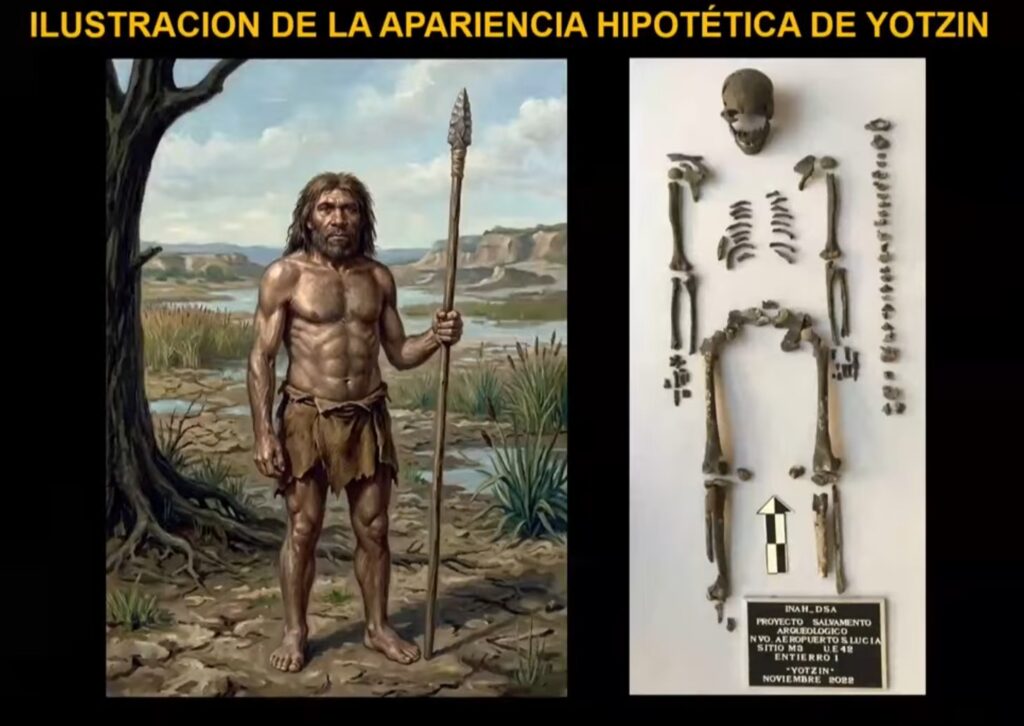
An Unusual Skull Could Reveal His Ancient Ancestry
One of Yotzin’s most distinctive features is his elongated skull, which Talavera says differs from those of other ancient human specimens recovered in the Basin of Mexico.
The anthropologist has noted morphological similarities with skeletal remains from northern Mexico, including those associated with the Pericú people of the Baja California Peninsula.
These observations raise questions about the biological diversity of the populations that inhabited ancient Mexico.
Yet similarities in skull shape do not establish direct ancestry or genetic relationships. Determining whether Yotzin shared a biological connection with other early populations requires additional evidence.
Researchers are now pursuing that evidence through genomic studies at the University of Burgos in Spain.
According to INAH, preliminary results could become available during the first quarter of 2027.
The analysis may help determine Yotzin’s genetic lineage and explore how he relates to other ancient populations across the Americas.
Such findings would be valuable to researchers studying the complex history of human settlement across the continent, including genetic evidence of ancient population changes in Colombia, although a single individual cannot establish when or how the first people arrived.
For Talavera, understanding Yotzin’s origins is ultimately more important than securing an exceptionally ancient date.
The investigation now has the potential to move beyond the physical characteristics of one skeleton toward a broader understanding of the people who occupied central Mexico during the final stages of the Ice Age.
A New Addition to Mexico’s Earliest Human History
Yotzin’s discovery was first presented in detail by INAH in June 2024, when researchers suggested that he belonged to the Late Pleistocene or early Holocene.
At that stage, the proposed chronology depended largely on the skeleton’s physical characteristics and its geological context. Direct dating results were still pending.
The newly announced laboratory analyses have strengthened the case for Yotzin’s considerable antiquity, establishing him as an important addition to the region’s early human record.
The National Museum of Anthropology in Mexico City currently preserves a collection of 22 preceramic human specimens from the Basin of Mexico. Yotzin is expected to join that collection once the ongoing studies are completed.
His name, derived from the Nahuatl word for “unique,” reflects the distinctive features that initially set his remains apart from other specimens examined by researchers.
Although the circumstances of his death and burial remain uncertain, the skeleton preserves evidence of a human life in a landscape that has changed dramatically over thousands of years.
Five years after his discovery, Yotzin’s age is now better understood. The next challenge is to establish his ancestry, a question that could help researchers understand the diversity of the early communities that once inhabited central Mexico.
Cover Image: Close-up of Yotzin’s skull, part of a human skeleton discovered at Santa Lucía in Mexico and recently dated to approximately 13,000 years ago. Photo: INAH.