
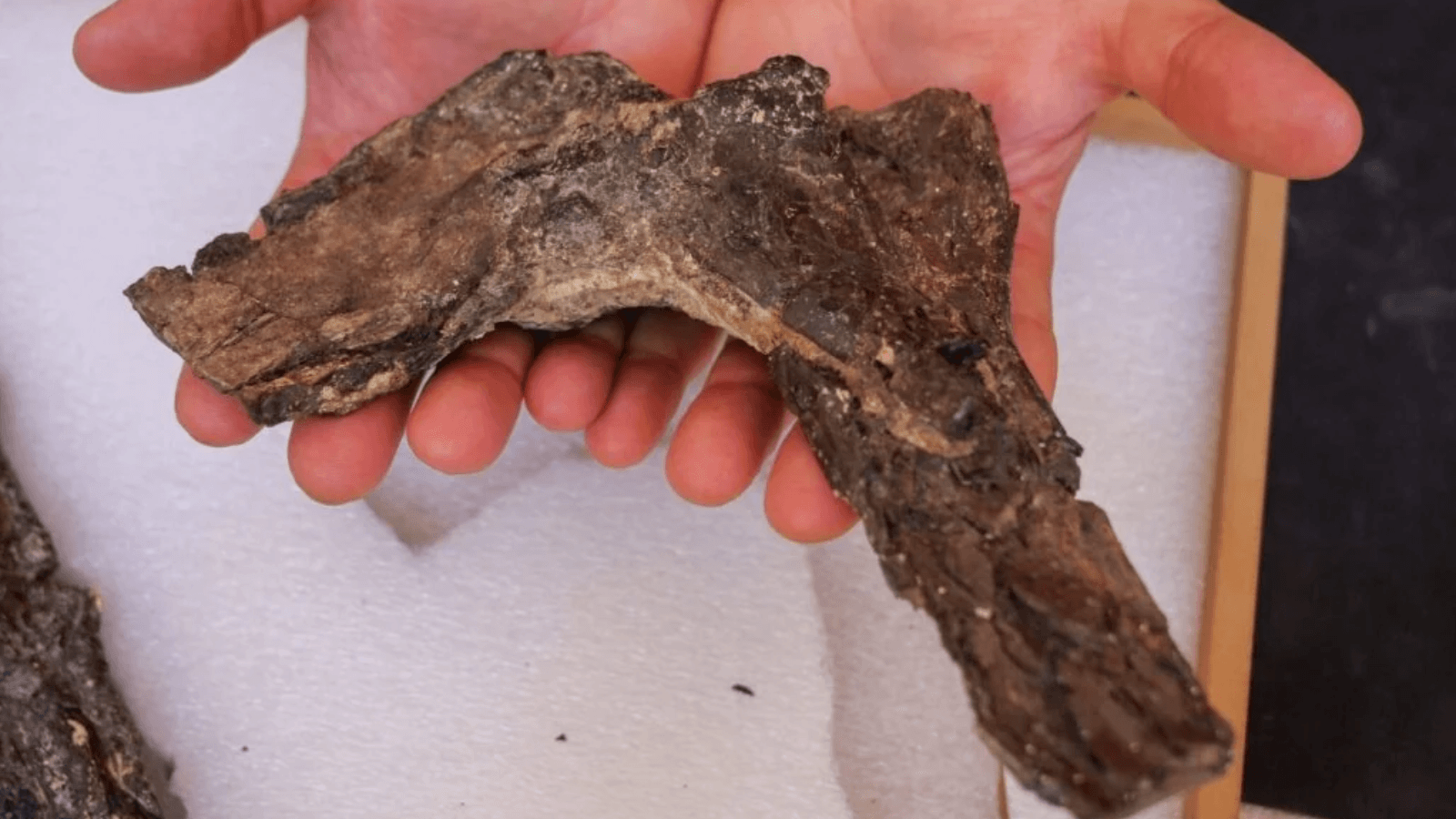
A dinosaur that roamed Brazil 115 million years ago may have left behind something far more unexpected than fossilized bones: traces of its blood. Scientists examining the remains of a young meat-eating dinosaur have identified microscopic structures resembling red blood cells, raising new questions about how long biological material can survive.
An international research team led by Curtin University in Australia discovered the structures inside the leg bones of Aratasaurus museunacionali, a dinosaur that lived during the Early Cretaceous period. Chemical analysis also detected molecules associated with hemoglobin, the protein that carries oxygen in the blood of vertebrates.
The findings, published in the scientific journal Proceedings of the National Academy of Sciences (PNAS), provide some of the strongest evidence yet that blood-related material can survive in dinosaur fossils for more than 100 million years.
A Dinosaur Fossil Preserved More Than Bones
Paleontologists discovered the fossil in 2008 at a quarry near Santana do Cariri in northeastern Brazil. The remains came from the Araripe Basin, a region known for its exceptionally preserved Cretaceous fossils.
The animal was approximately four years old when it died and had not yet reached full maturity. Researchers estimate that it measured about 10 feet (3 meters) long.
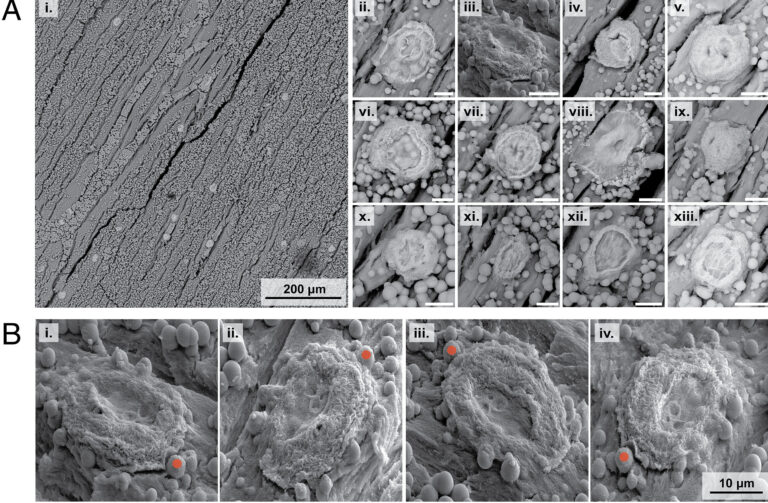
While examining thin sections of its fossilized leg bones, scientists noticed numerous oval structures inside tiny channels that once carried blood vessels through the living animal’s skeleton.
The structures measured roughly 20 micrometers across, making them far too small to see without a microscope. Their shape and position suggested that they could represent mineralized red blood cells.
But identifying ancient blood cells requires more than finding something that looks like a cell. Minerals and other geological processes can produce remarkably similar structures, making chemical evidence essential.
Chemical Evidence Strengthens the Discovery
To investigate the structures, the researchers used powerful microscopes and chemical techniques capable of identifying molecular traces within fossilized material.
Their analysis detected heme, an iron-containing component of hemoglobin, along with chemically altered forms of the molecule. Heme plays a central role in oxygen transport, making its possible preservation particularly significant.
The team also examined the surrounding sediment to determine whether the chemical signatures might have come from outside the dinosaur’s body.
While the sediment contained compounds associated with ancient microorganisms and plant pigments, the bone showed a different chemical pattern dominated by heme-related molecules. The researchers interpret this distinction as evidence that the material originated within the dinosaur rather than from external contamination.
Professor Kliti Grice, an organic geochemist at Curtin University who led the study, described the results as an important development in molecular paleontology.
In an official statement from Curtin University, Grice said the discovery challenges long-standing assumptions about how quickly biological molecules disappear from the fossil record.
The researchers emphasize that they did not recover liquid blood or living cells. Instead, the fossil contains mineralized structures and chemical remnants that they interpret as evidence of the dinosaur’s original blood.
How Blood Traces May Have Survived for 115 Million Years
The study also offers a possible explanation for how such delicate biological material endured for an extraordinary length of time.
Researchers believe the dinosaur was rapidly buried in a low-oxygen environment rich in microorganisms. These conditions may have slowed decomposition and allowed minerals to replace or stabilize some of the original cellular structures.
One mineral appears especially important. Scientists identified hausmannite, a manganese oxide mineral, closely associated with the suspected blood cells.
The team proposes that hausmannite helped protect the structures and their chemical components as the surrounding bone gradually fossilized.
This process may explain why some fossils preserve molecular evidence that disappears from most ancient remains. Similar advances in molecular research have allowed scientists to recover ancient proteins from 400,000-year-old Homo erectus teeth in China, demonstrating how fossilized tissues can preserve biological information long after DNA has degraded.
Questions Remain About the Ancient Blood Evidence
Although the chemical findings strengthen the case for preserved blood-related material, scientists have not reached a universal agreement about the identification of the microscopic structures.
The suspected cells differ in size and shape from red blood cells found in living birds and crocodilians, the closest surviving relatives of dinosaurs. Researchers suggest that fossilization may have changed their appearance, but alternative explanations require consideration.
Paleobiologist Maria McNamara of University College Cork, who was not involved in the study, has acknowledged the strength of the investigation while urging caution about interpreting the structures as genuine red blood cells.
The research team argues that the combination of anatomical location, microscopic appearance, mineral composition, and chemical evidence makes a biological origin more likely than a purely geological explanation.
Further examination of similarly preserved fossils will be important in determining how widely these findings apply.
The discovery does not provide dinosaur DNA or a way to reconstruct the animal’s genetic identity. Its importance lies elsewhere: the possibility of studying biological processes that conventional fossils cannot directly document.
If researchers can reliably identify blood-related molecules in other ancient specimens, they may eventually learn more about how extinct animals transported oxygen, regulated their metabolism, and adapted to their environments.
Fossils collected decades ago could still contain microscopic evidence that scientists have yet to recognize. The bones of Aratasaurus suggest that some of the most valuable information about prehistoric life may survive in places researchers have only recently learned how to examine.
Cover Image: A fossilized dinosaur bone from Brazil’s Araripe Basin. Researchers identified possible traces of ancient blood in 115-million-year-old dinosaur remains. Credit: Curtin University.