
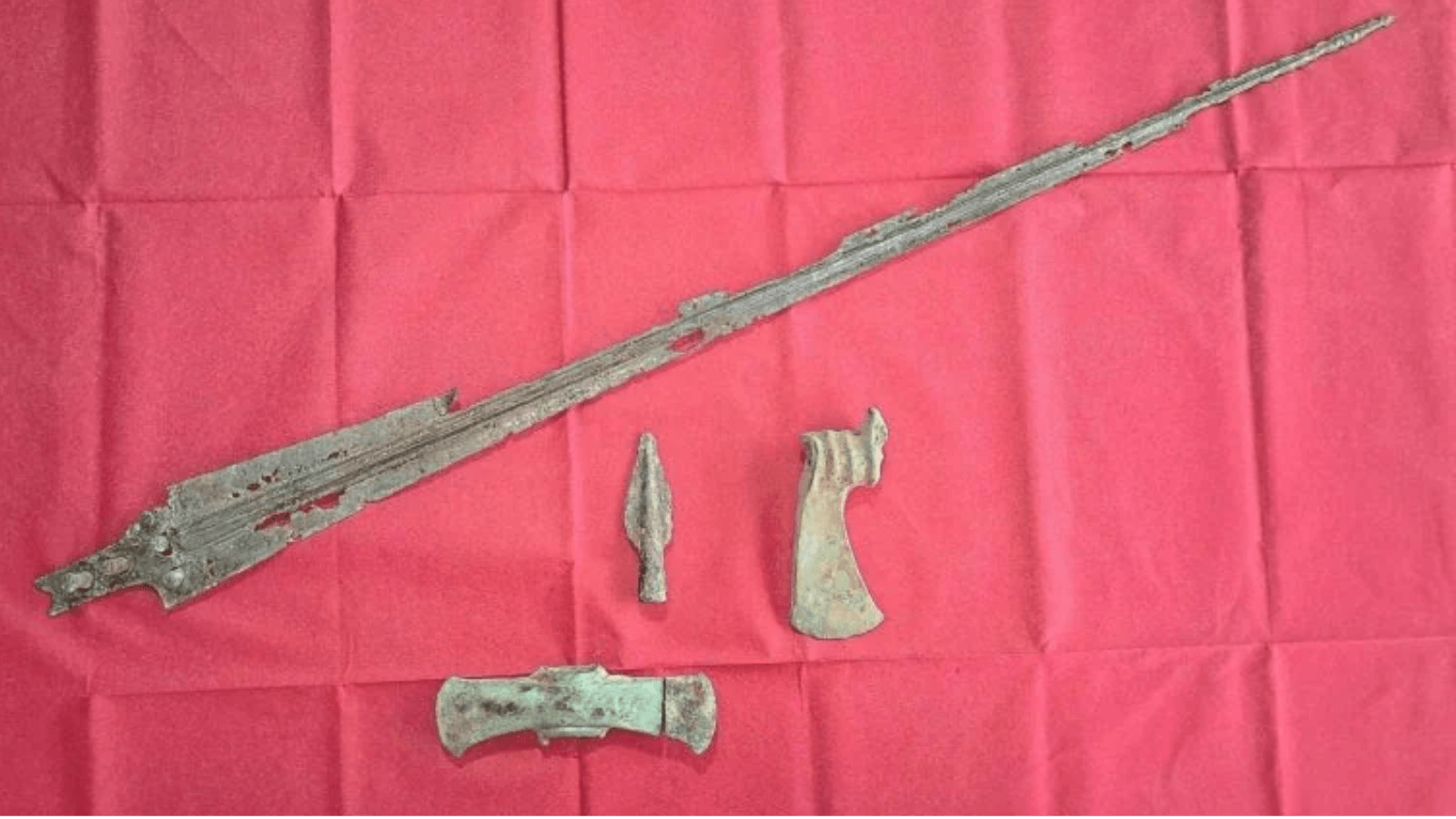
Archaeologists excavating a prehistoric settlement on the shores of Lake Dojran in southeastern North Macedonia have discovered a 3,500-year-old Mycenaean-type bronze sword, battle axes and a spearhead. Described by excavation director Zoran Rujak as the oldest sword discovered in the country, the weapon offers new insights into the connections between Bronze Age communities across the Balkans and the Aegean.
The excavations at Mrdaja also revealed casting molds and the remains of an elaborately decorated house believed to have belonged to a metalworker. Together, the discoveries paint a picture of a lakeside community with sophisticated craftsmanship and far-reaching cultural connections.
Bronze Age Weapons Reveal Long-Distance Connections
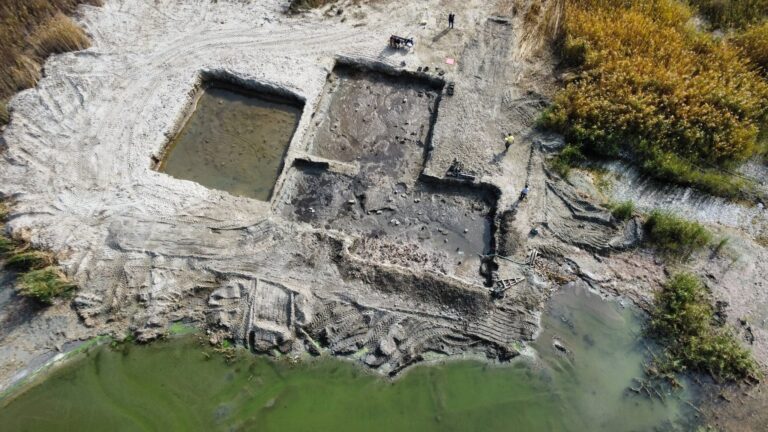
During the 2026 excavation season, a small archaeological team investigated approximately 350 square meters in less than two months. Researchers identified the remains of at least three houses built on wooden platforms and connected by bridges.
Among the most remarkable discoveries was a slender bronze sword resembling the thrusting weapons of Mycenaean civilization. Other finds include a Carpathian-type socketed battle axe, a Kilindir-type double-edged bronze axe and a leaf-shaped spearhead.
The weapons represent different regional traditions, suggesting that Mrdaja participated in networks through which objects, designs and technological knowledge circulated.
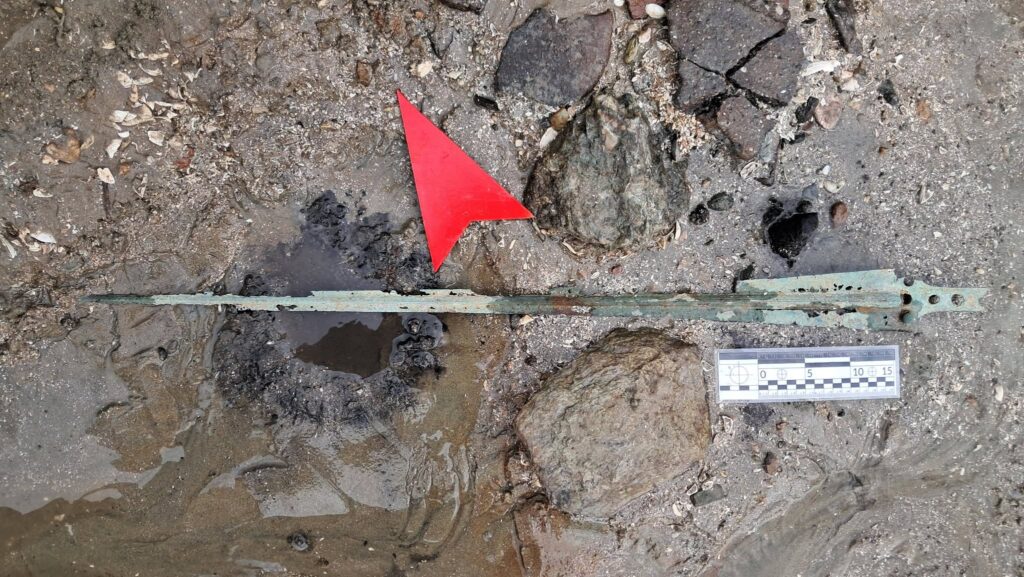
Lakeside settlements elsewhere in Europe have yielded similarly remarkable discoveries, including a well-preserved Bronze Age sword found beneath Italy’s Lake Mezzano.
According to the excavation findings reported by Sve o arheologiji, the concentration of weapons around one building suggests that Mrdaja may have witnessed a violent confrontation during the mid-second millennium BCE. Archaeologists have yet to confirm this interpretation.
The Elaborately Decorated Home of a Metalworker
Casting molds for double-edged bronze axes led researchers to identify one building as the probable home of a metalworker. The finds demonstrate that the inhabitants possessed the technical knowledge needed to manufacture bronze objects locally.
The building itself was unusually elaborate. Surviving plaster fragments suggest that its exterior featured raised circular patterns, concentric rings and a decorative spiral frieze.
Archaeologists also recovered cinnabar, a mineral that may have been used to give the facade a vivid red color. Rujak believes the building’s distinctive appearance could reflect the metalworker’s privileged position within the community.
The importance of specialized Bronze Age craftsmanship has also been highlighted by recent scientific investigations of a 3,400-year-old bronze sword discovered in Germany.
Life and Beliefs Along the Shores of Lake Dojran
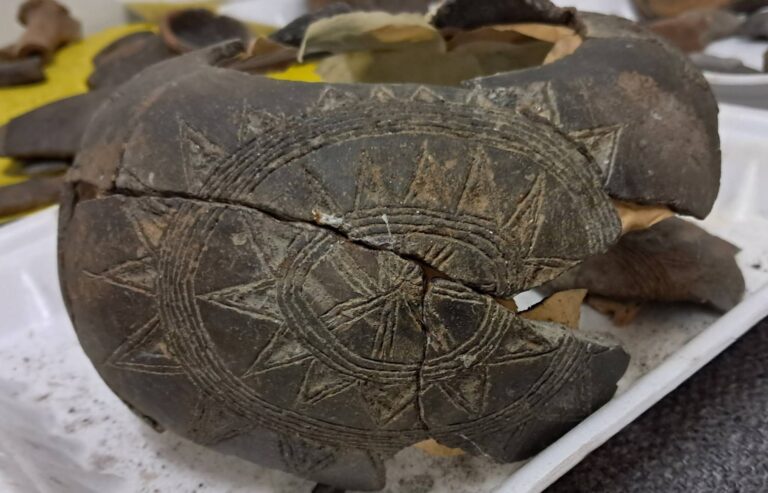
Beyond the weapons and metalworking equipment, the excavations produced pottery decorated with solar motifs, a sea snail shell amulet, spiral bronze wire rings and ceramic objects potentially used as fishing weights.
As detailed in the November 24 report by Arkeonews, these objects provide valuable evidence of the community’s daily activities, personal adornment and symbolic traditions.
Plans are underway to establish an open-air museum in Stari Dojran, where visitors could explore the architecture and material culture of the prehistoric settlement.
The discoveries at Mrdaja demonstrate that even relatively small lakeside communities played a part in the extensive networks of craftsmanship and cultural exchange that connected Bronze Age Europe.
Cover Image: A 3,500-year-old Mycenaean-type sword, bronze battle axes and a spearhead discovered at the prehistoric settlement of Mrdaja. Photo: Zoran Rujak.